
全球治理倡议

Search documents
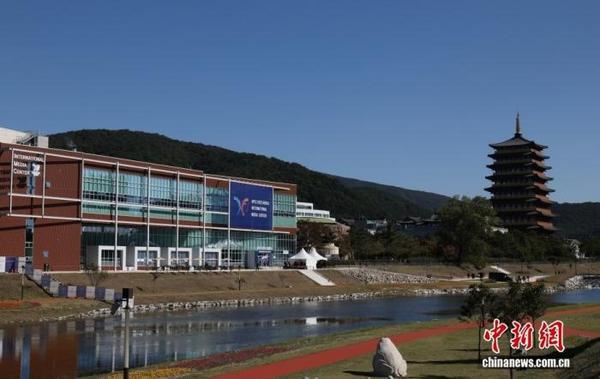
外媒聚焦APEC:中国展现韧性,为国际合作贡献智慧与力量
Zhong Guo Xin Wen Wang· 2025-10-30 08:15
Group 1 - APEC's 32nd informal leaders' meeting will be held in Gyeongju, South Korea from October 31 to November 1, attracting global attention as the Asia-Pacific region is seen as a key engine for global growth [1][2] - APEC has evolved over 30 years into the highest-level and most influential economic cooperation mechanism in the Asia-Pacific region, playing a significant role in promoting regional openness and prosperity [2] - The International Monetary Fund (IMF) projects that the Asia-Pacific region's economic growth rate will be 4.5% in 2025, an increase of 0.6 percentage points from previous forecasts, contributing approximately 60% to global growth over the next two years [2] Group 2 - China's exports have shown remarkable resilience amid the current global economic situation, with a reported GDP growth of 5.2% year-on-year for the first three quarters [3] - The core of current technological competition lies in establishing global industrial standards, with China emerging as a significant "rule-maker" in the manufacturing sector, impacting countries like Thailand [3] - The Asia-Pacific region is not only a crucial engine for global economic growth but also a key force influencing the direction of world development, highlighting the increasing significance of Asia-Pacific cooperation [3][4] Group 3 - China's initiatives, such as the Belt and Road Initiative and various global governance proposals, reflect its growing influence in international cooperation, emphasizing equality, mutual benefit, and win-win outcomes [4] - These initiatives aim to empower developing countries by expanding their growth space through cooperation rather than dominance, showcasing a valuable wisdom in today's world [4]

中国代表呼吁国际原子能机构为推动伊核问题政治解决发挥建设性作用
Xin Hua Wang· 2025-10-30 05:52
Core Viewpoint - The Chinese representative at the UN emphasizes the need for the International Atomic Energy Agency (IAEA) to play a constructive role in the political resolution of the Iranian nuclear issue and to support dialogue among relevant parties [1][2] Group 1: IAEA's Role and Responsibilities - The IAEA should adhere to its objective, impartial, and independent technical attributes while fulfilling its responsibilities strictly according to its mandate [1] - The IAEA is urged to pay close attention to differing opinions and concerns of member states on sensitive issues that affect their common interests [1] Group 2: Iran Nuclear Issue - China, along with Iran and Russia, has issued a joint letter regarding the expiration of UN Security Council Resolution 2231, calling for dialogue and the abandonment of sanctions to create favorable conditions for a political resolution of the Iranian nuclear issue [1] - China calls for the IAEA to cease discussions related to Resolution 2231 and for the IAEA Director General to stop submitting related quarterly reports [1] Group 3: Nuclear Safety and Security - The IAEA is urged to firmly oppose armed attacks on peaceful nuclear facilities and to avoid human-made nuclear accidents, particularly concerning the safety and security of nuclear facilities in Ukraine [2] - China supports the IAEA's "seven pillars" and "five principles" for ensuring the safety and security of Ukrainian nuclear facilities and calls for cooperation from relevant parties [2] Group 4: Nuclear Non-Proliferation Concerns - The IAEA is encouraged to engage in open, inclusive, democratic, and transparent discussions regarding the AUKUS nuclear submarine cooperation, which is seen as a violation of the Non-Proliferation Treaty and poses serious proliferation risks [2] - The discussions are expected to enhance understanding of the complexities and sensitivities of the issue among the IAEA Secretariat and member states [2] Group 5: China's Commitment to Global Nuclear Governance - China has been committed to supporting the IAEA's work for over 40 years and aims to contribute to global nuclear governance and development [2] - A recent global governance initiative proposed by China is highlighted as significant for promoting global nuclear governance [2]
“完善全球治理法治新平台”主题边会在联合国举行
Xin Hua Wang· 2025-10-30 05:52
Core Points - The International Mediation Institute, the world's first intergovernmental international legal organization dedicated to resolving international disputes through mediation, officially opened on October 20 in Hong Kong, China [2] - The establishment of the International Mediation Institute reflects China's commitment to uphold the authority of the UN Charter, promote true multilateralism, and advance adherence to international legal governance [1] - The Institute aims to mediate disputes between countries, between countries and foreign investors, and international commercial disputes, offering unique advantages such as flexibility, cost-effectiveness, convenience, and efficiency [1] Summary by Sections International Mediation Institute - The International Mediation Institute is headquartered in Hong Kong and is the first of its kind to focus on mediation for international disputes [2] - It officially commenced operations on October 20, 2023 [2] China's Role - China is the founding and host country of the International Mediation Institute, showcasing its determination and proactive actions in defending the UN Charter and promoting international law [1] - The Chinese government encourages participation from various countries and aims to strengthen cooperation between the Institute and international organizations, including the UN [1] Global Reception - Representatives from countries such as Pakistan, Venezuela, Nicaragua, and Serbia expressed that the Institute aligns with the spirit of the UN Charter and fosters international cooperation [1] - The establishment of the Institute is seen as an innovative development in international law and a vivid representation of multilateralism, as well as a practical implementation of China's global governance initiative [1] - The UN Commission on International Trade Law indicated a willingness to collaborate actively with the International Mediation Institute, reflecting the growing recognition of mediation in the international community [1]
以人类前途为怀 以人民福祉为念(深入学习贯彻习近平新时代中国特色社会主义思想·访谈录)
Ren Min Ri Bao· 2025-10-29 22:41
Core Ideas - The article discusses the significance of Xi Jinping's diplomatic thought, emphasizing its humanistic appeal and its role in addressing global challenges and promoting cooperation among nations [1][3][19]. Group 1: Xi Jinping's Diplomatic Thought - Xi Jinping's diplomatic thought is an integral part of the Xi Jinping Thought on Socialism with Chinese Characteristics for a New Era, rooted in Marxist principles and Chinese civilization [1][3]. - The thought emphasizes a people-centered approach, linking the fate of the Chinese people with that of other nations, and aims to address global challenges through a focus on humanity's overall interests [3][4]. Group 2: Humanistic Appeal - The concept of a community with a shared future for mankind, proposed by Xi Jinping, seeks to answer fundamental questions about humanity's direction and aims to foster cooperation and shared prosperity [4][5]. - This humanistic spirit is reflected in the emphasis on peace, development, and mutual benefit, advocating for a global governance model that transcends traditional power struggles [5][6]. Group 3: Cultural Foundations - Xi Jinping's diplomatic thought is deeply influenced by traditional Chinese culture, which values harmony, mutual respect, and the well-being of all [9][12]. - The principles of inclusivity and respect for cultural diversity are central to this thought, promoting dialogue and cooperation among different civilizations [10][11]. Group 4: Global Initiatives - The article highlights various global initiatives proposed by Xi Jinping, including the Belt and Road Initiative, which aims to enhance cultural exchanges and economic cooperation among participating countries [18][24]. - These initiatives are seen as practical expressions of Xi Jinping's humanistic approach, aiming to create a more equitable and prosperous global environment [22][25].
“中国勇做全球治理改革的实干家”
Ren Min Ri Bao· 2025-10-29 22:41
Core Viewpoint - The 23rd Blue Hall Forum, hosted by the China Public Diplomacy Association and supported by the Ministry of Foreign Affairs, focused on "Improving Global Governance and Building a Community with a Shared Future for Mankind," emphasizing the importance of global governance initiatives in addressing global challenges and promoting multilateralism [1] Group 1: Global Governance Initiative - The global governance initiative has received support from over 140 countries and international organizations, highlighting its broad international appeal [1] - Former Jordanian Prime Minister Omar Razzaz stated that without a comprehensive global governance system, a "beautiful future for humanity" is unattainable, and the initiative aligns with global needs and addresses contemporary issues [1] - Former UN Deputy Secretary-General Erik Solheim noted that the rise of the Global South is crucial for reforming the global governance system, yet these countries still face underrepresentation and lack of voice [1] Group 2: Multilateralism and Cooperation - The initiative strongly advocates for multilateralism, with former UNESCO Director-General Irina Bokova asserting that unilateralism is not a solution to global challenges [1] - Harvard Professor Graham Allison emphasized that the effectiveness of the UN system over the past 80 years is largely due to a functional international security order, which the global governance initiative aims to enhance [1] - The initiative combines the spirit of the UN Charter with traditional Chinese wisdom, advocating for a people-centered approach to governance that enhances public welfare [1] Group 3: China's Role in Global Governance - China is portrayed as a responsible and constructive force in global governance, contributing significantly over the years [1] - The establishment of the International Mediation Institute in Hong Kong is seen as a new platform for peaceful resolution of international disputes, reinforcing China's commitment to global governance reform [1] - The initiative is positioned as a practical Chinese solution to global governance challenges, aiming to create a more just and equitable global governance system [1]
委工商界:中国高水平对外开放为委带来广阔机遇
Xin Hua Wang· 2025-10-29 07:18
新华社加拉加斯10月28日电(记者田睿)中国驻委内瑞拉大使馆和委工商农业联合会28日在加拉加 斯共同举办"推动高水平对外开放,构建普惠包容的经济全球化"主题研讨会,中委代表300余人参加。 研讨会上,委工商界代表高度评价中国高水平对外开放为委内瑞拉带来的广阔发展机遇,表示愿同 中方携手,抓住机遇、应对挑战,为双边合作注入更多活力,共同续写委中合作新篇章。 中国驻委大使蓝虎在致辞中说,当前单边主义、保护主义横行,中国愿以更高水平开放拥抱世界。 中国共产党二十届四中全会审议通过"十五五"规划建议,中国将稳步扩大制度型开放,高质量共建"一 带一路",为委对外出口和吸引外资提供广阔空间。 委内瑞拉对外贸易部长戈多伊表示,中方提出全球治理倡议,推动全球普惠、合作共赢,在新时代 引领了新的世界经济走向。作为全天候战略伙伴,中国成为委农、渔产品主要出口地。依托双边经贸合 作的历史基础,秉持建设多极化世界的美好愿景,委方将以中方为典范,推动更多委产品走向中国、走 向世界。 ...
喀麦隆学者:全球治理倡议为世界发展提供思想引领
Xin Hua Wang· 2025-10-29 06:20
Core Viewpoint - The global governance initiative proposed by China is significant for promoting a more just and reasonable international order, providing ideological guidance for world development in the new era [1][2] Group 1: Global Governance Initiative - The initiative emphasizes sovereign equality, adherence to international law, multilateralism, a people-centered approach, and action orientation, aligning with the purposes and principles of the UN Charter [1] - It offers a comprehensive and innovative framework for reforming and improving the global governance system, meeting the needs of the current world and resonating with public sentiment [1] Group 2: Development Path for Global South - Countries in the Global South are exploring a development path distinct from Western modernization, with China's development experience serving as a valuable reference [1] - The initiative actively responds to the demands of Global South countries, promoting high-quality development in mechanisms like BRICS and the Shanghai Cooperation Organization [1] Group 3: Current Global Challenges - The world is facing frequent regional turmoil, economic development setbacks, rising anti-globalization sentiments, and a lack of rule of law, leading to an increasing governance deficit [2] - In this context, the global governance initiative is timely, as the world urgently needs a new blueprint for governance that emphasizes coexistence, fairness, justice, and win-win cooperation [2]
韩国韩中联合会会长:期待庆州APEC共绘亚太合作新图景
Zhong Guo Xin Wen Wang· 2025-10-29 05:29
Core Points - The APEC meeting in Gyeongju, South Korea, aims to reaffirm multilateral cooperation and explore new collaboration opportunities among member economies [1] - Key discussion topics include multilateral trade cooperation, artificial intelligence collaboration and governance, low birth rates and aging population, and sustainable development [1] - The meeting is seen as a crucial opportunity to rebuild trust and consensus in the Asia-Pacific region amid complex international circumstances [1] Group 1: Economic Cooperation - The foundation of economic cooperation between South Korea and China is strong, built over 33 years of diplomatic relations [1] - South Korea has competitive advantages in sectors like semiconductors, batteries, and hydrogen energy, while China offers unique conditions in industrial chains and market scale [1] - There is significant potential for collaboration between the two countries in various sectors [1] Group 2: Key Issues for Discussion - Artificial intelligence collaboration and addressing demographic changes are highlighted as two major topics for the APEC meeting [1] - Strengthening cooperation in AI technology research and ethical governance is essential for creating a tighter innovation ecosystem in the Asia-Pacific region [1] - Both countries have valuable experiences in elder care services and smart healthcare that can be mutually beneficial [1] Group 3: China's Role in APEC - Since joining APEC in 1991, China has made notable contributions to maintaining the multilateral trade system and promoting sustainable development [2] - China's "Global Governance Initiative" exemplifies the spirit of open cooperation and multilateralism [2] - The upcoming APEC meeting in China is anticipated to foster cooperation and inclusivity, addressing geopolitical competition and protectionism [2]
刘小涛主持召开省政府党组会议
Xin Hua Ri Bao· 2025-10-28 23:25
Group 1 - The provincial government emphasizes the importance of implementing Xi Jinping's recent speeches and directives, particularly regarding women's development and empowerment [1] - The government aims to address key issues faced by women, including marriage, childbirth, healthcare, and rights protection, by integrating these concerns into local government projects [1] - There is a focus on promoting the "her economy" and encouraging businesses to incorporate women's and children's welfare into their corporate social responsibility strategies [1] Group 2 - The government highlights the significance of food security as a top priority, advocating for the "store grain in the ground and technology" strategy to ensure stable production and supply of food and key agricultural products [2] - Emphasis is placed on optimizing agricultural practices through the "five optimizations" strategy, which includes improving soil, seeds, production, storage, and sales to enhance agricultural productivity and farmer motivation [2] - The government is committed to deepening international cooperation in various fields, including trade, investment, and cultural tourism, while aligning with national strategies for global development and governance [2]
韩正出席第九届未来投资倡议大会并发表演讲
Xin Hua Wang· 2025-10-28 21:13
Core Viewpoint - The speech by Vice Premier Han Zheng at the Future Investment Initiative Conference emphasizes the importance of development and prosperity as a common goal for the international community, particularly for developing countries, and highlights China's commitment to global cooperation and innovation [1][2] Group 1: Innovation and Green Development - The initiative calls for strengthening innovation-driven approaches to promote green development, with China aiming to build a globally competitive open innovation ecosystem and enhance cooperation across traditional and emerging industries [1] - China is committed to facilitating a green and low-carbon transformation of the global economy [1] Group 2: Open Cooperation and Mutual Benefits - The speech reiterates China's stance on open cooperation, positioning the country as a beneficiary and contributor to economic globalization, and aims to enhance the resilience and efficiency of global supply chains [1][2] - China seeks to inject more certainty and positive energy into global economic recovery and development [1] Group 3: People-Centric Development - The focus is on a people-centered development approach, promoting inclusive economic globalization to ensure that different countries and social groups can share in development outcomes [2] - China expresses willingness to collaborate with developing countries to share development opportunities and advance modernization [2] Group 4: Global Governance and Multilateralism - The speech advocates for deepening unity and cooperation among nations to address global challenges, emphasizing the need for mutual respect and common ground in ideologies [2] - China aims to practice true multilateralism and promote a fairer global governance system, contributing to the construction of a community with a shared future for mankind [2] Group 5: Cooperation with Middle Eastern Countries - China expresses a long-standing commitment to friendly cooperation with Middle Eastern countries, particularly Saudi Arabia, focusing on high-quality collaboration in the Belt and Road Initiative and energy cooperation [2] - The Future Investment Initiative Conference is highlighted as the largest investment and innovation forum in the Middle East, featuring over 250 events and participation from leaders and officials from 16 countries [2]