养老金融

Search documents
申万宏源:打造一流投行 助力金融强国建设
Zheng Quan Shi Bao· 2025-12-11 18:38
炒股就看金麒麟分析师研报,权威,专业,及时,全面,助您挖掘潜力主题机会! 申万宏源党委书记、董事长 刘健 一是强化功能定位,深入践行金融工作的政治性、人民性。"十四五"时期公司助力实体企业股债融资总规模超1.5 万亿元,证券客户托管资产超4万亿元;公司持续入选证监会白名单,在投行业务质量、投资者教育等评价中均获 评A类最高等级。公司将持续发挥"研究+投资+投行"综合金融服务优势,坚定履行直接融资"服务商"、资本市 场"看门人"、社会财富"管理者"职责,在服务资本市场发展大局中实现自身高质量发展。 二是聚焦主责主业,加快推动业务模式转型升级。公司始终坚持客户为先、专业至上,不断提高投资研究、产品 创设、风险定价、金融科技等核心能力,围绕强化"渠道力、服务力、产品力、数字力"建设丰富完善矩阵式客户 服务,财富管理转型逐步深入,大机构生态圈初具规模,投行业务股债全面进入行业第一梯队,证券投资交易业 务综合实力保持行业领先,国际业务发展质效提升显著。公司将牢牢把握"十五五"发展机遇,聚焦主业、做强主 业,持续深化改革发展,着力培育和打造长期竞争优势,努力建设值得长期信赖的一流投资银行。 三是统筹发展与安全,筑牢高质量 ...



暖心金融服务护航“银龄”幸福晚年
Qi Lu Wan Bao· 2025-12-11 16:27
Group 1 - The core viewpoint of the articles emphasizes the commitment of the Bank of China Dezhou Power Plant Branch to enhance elderly-friendly financial services, aiming to transition from "pension" to "enjoying old age" for the elderly population [1][2] Group 2 - The bank has implemented various elderly-friendly service upgrades, including large-font calling screens, provision of reading glasses and emergency medical supplies, and clear signage to create a safe and comfortable environment for elderly clients [1] - For elderly clients with mobility issues, the bank offers home services for frequently needed tasks such as password resets and card loss reporting, embodying the principle of "more service runs, less running for the public" [1] - The bank has introduced a "senior mode" in its online and mobile banking platforms, featuring simplified interfaces, clearer fonts, and voice guidance to help elderly clients navigate digital services [1] - Regular activities such as "Silver Hair Class" and fraud prevention campaigns are organized to enhance elderly clients' awareness of common scams [1] Group 3 - In terms of pension financial planning, the bank integrates various products like personal pension accounts, pension insurance, and family trusts to provide comprehensive solutions that address stable savings and healthcare needs [2] - The bank aims to continuously enhance its pension service capabilities, offering professional, safe, and convenient financial services to support the elderly in leading a warm and secure life [2]
总保费迈上7000亿平台中国人寿递交新时代为民答卷
Yang Guang Wang· 2025-12-11 09:26
Core Viewpoint - China Life Insurance Company has achieved a significant milestone by surpassing a total premium of 700 billion yuan by November 30, 2025, reflecting its commitment to serving national strategies and enhancing people's well-being [1] Group 1: Business Performance - As of the first half of 2025, China Life reported total premiums of 525.09 billion yuan, marking a year-on-year increase of 7.3% [1] - In the first three quarters of 2025, total premiums reached 669.65 billion yuan, with a year-on-year growth exceeding 10% [1] - The company aims to exceed 700 billion yuan in total premiums, showcasing its robust operational performance and resilience [1] Group 2: Product Innovation and Customer Service - China Life has developed over 500 new insurance products during the "14th Five-Year Plan" period, covering various types such as medical, nursing, and accident insurance [2] - The introduction of long-term care insurance has significantly reduced family care costs by 90% for clients like the Zhou family, demonstrating the positive impact of innovative insurance solutions [2] - The company has enhanced customer satisfaction by continuously improving its product offerings to meet diverse insurance needs [2] Group 3: Health Insurance and Social Responsibility - China Life actively participates in building a multi-tiered health insurance system, contributing to national health strategies and providing comprehensive coverage [3][4] - The company has processed over 43.4 million health insurance claims by the end of Q3 2025, with claims amounting to over 56 billion yuan, reflecting its commitment to health insurance [5] - China Life has donated 21 million yuan to its charity foundation in 2024, emphasizing its dedication to social responsibility and community support [16] Group 4: Aging Population and Pension Services - In response to the aging population, China Life has developed a range of pension products and services, including the "National Life Silver Age Health Insurance" [6][7] - The company has launched 20 institutional pension projects across 16 cities, focusing on high-quality elderly care services [7] - China Life's initiatives align with national strategies to address aging, ensuring a comprehensive approach to elder care [6] Group 5: Rural Revitalization and Economic Support - China Life has engaged in rural revitalization efforts, supporting over 1,445 assistance points and increasing its outreach to help prevent poverty [8][9] - The company has invested over 31 million yuan in consumption assistance for farmers, enhancing their income and economic stability [9] - By developing insurance products tailored to rural needs, China Life aims to provide adequate protection against specific risks faced by rural communities [9] Group 6: Investment in the Real Economy - China Life has achieved a net profit of over 167.8 billion yuan in the first three quarters of 2025, reflecting a 60.5% increase year-on-year [10] - The company has strategically invested in key sectors such as advanced manufacturing, technology innovation, and green energy, supporting national economic development [11] - By maintaining a focus on long-term investments, China Life aims to foster a sustainable financial ecosystem that benefits both the economy and its stakeholders [10][11] Group 7: Enhancing Services for Foreign Nationals - China Life has optimized its service processes to improve financial service accessibility for foreign nationals in China, setting a benchmark for the industry [12][13] - The company has introduced English-language support in its customer service, enhancing the experience for foreign clients [13] - By addressing specific needs of expatriates, China Life aims to provide tailored insurance solutions that cater to their unique circumstances [14] Group 8: Commitment to Charity and Community Engagement - China Life has actively engaged in community service and disaster relief efforts, demonstrating its commitment to social welfare [15][16] - The company has organized various charitable activities, including support for vulnerable groups such as the disabled and left-behind children [15] - Through its volunteer programs, China Life encourages employee participation in community service, fostering a culture of social responsibility [15]

聚焦 “银发机遇” 上海银行以金融之力绘就养老美好生活
2 1 Shi Ji Jing Ji Bao Dao· 2025-12-11 09:08
12月10日下午,由解放日报社与上海银行(601229)联合主办、复旦大学老龄研究院提供学术支持 的"大城养老 银发机遇"金融赋能产业融合构建银发经济新生态主题论坛在上海报业集团成功举行。上 海银行行长施红敏、副行长陈雷,解放日报社总编辑丁波,上海市民政局相关领导,上海市老年基金会 副理事长孙萍,中欧国际工商学院教授盛松成,复旦大学老龄研究院副院长胡湛等领导与专家,以及政 府、金融、产业、学术、公益组织代表齐聚一堂,共话应对老龄化挑战的金融方案与产业融合路径。 未来三年将落地1500家"美好生活工作室" 论坛的重头戏之一是上海银行"美好生活工作室"服务体系的升级发布及相关联盟的启动。上海银行副行 长陈雷介绍,"美好生活工作室"是突破传统银行网点边界、深入社区的综合服务平台,旨在让老年人在 家门口即可享受便捷公益服务,被老人们亲切地称为"家门口最温暖的俱乐部"。目前,该网络已在全国 扩展至超400家,年活动超3000场,服务超5万人次。 现场,上海银行正式发布了全新"美好生活工作室"八大公益助老服务行动,并携手解放日报社与首批合 作伙伴共同启动了"美好生活服务联盟"和"公益助老志愿者联盟"。陈雷表示,未来三年计 ...

提质、升温 精耕区域惠民生
Bei Jing Wan Bao· 2025-12-11 07:25
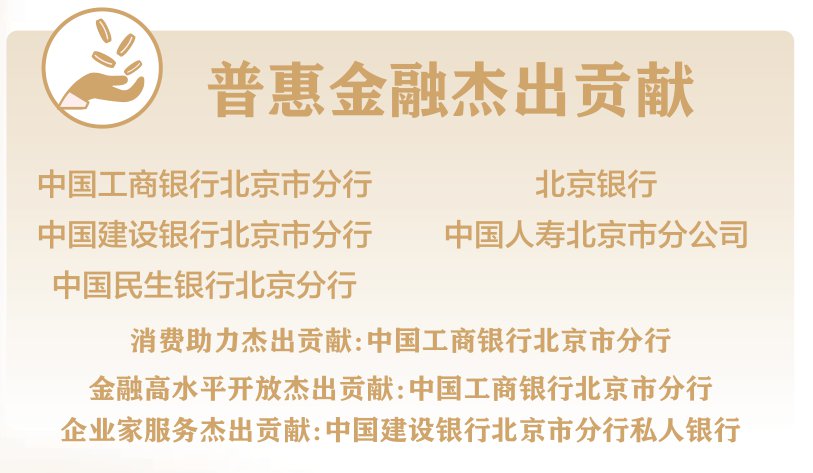
Group 1: Financial Services Development - The high-quality development level of inclusive finance in China is continuously improving, with the balance of inclusive microloans reaching 32.93 trillion yuan by the end of 2024, a year-on-year increase of 14.6%, which is 7 percentage points higher than the growth rate of all loans [1] - Beijing's inclusive finance development focuses on serving the real economy and improving people's livelihoods, creating a financial service ecosystem with regional characteristics and inclusive attributes [1] - The Industrial and Commercial Bank of China (ICBC) Beijing Branch emphasizes online, intelligent, and ecological development paths for inclusive finance, utilizing digital technology to address financing difficulties for small and micro enterprises [1][2] Group 2: Consumer Demand and Financial Services - ICBC Beijing Branch actively expands emerging consumption areas and provides customized financial service solutions for key promotional activities, leveraging its global layout and comprehensive operational advantages [2] - China Construction Bank (CCB) Beijing Branch enhances the quality and efficiency of inclusive finance by upgrading its services and providing comprehensive service plans to meet diverse customer needs [2] - CCB has provided over 20.5 billion yuan in credit to nearly 12,100 enterprises by the end of October 2025, focusing on small and micro enterprises [2] Group 3: Support for Small and Micro Enterprises - Minsheng Bank Beijing Branch has conducted over a hundred "thousand enterprises and ten thousand households" visits to understand and address the needs of small enterprises, covering nearly 10,000 businesses [3] - Beijing Bank implements a combination of credit resource tilt and policy tools to enhance financial services for key industries such as foreign trade and technology [3][4] Group 4: Elderly Financial Services - The elderly population in Beijing has surpassed 5.14 million, accounting for 23.5% of the total population, making pension finance a core focus for financial institutions [6] - Various banks, including China Merchants Bank and Shanghai Pudong Development Bank, are developing specialized pension financial services and products to cater to the needs of the elderly population [6][7][8] - Beijing Rural Commercial Bank is enhancing its pension financial product offerings and establishing dedicated financial service points in numerous locations to support the elderly community [8][9] Group 5: Insurance and Pension Products - Ping An Life Beijing Branch is integrating technology with elderly services to create a comprehensive pension protection system, including smart policies and rapid claims services [9] - Beijing Life is actively participating in the construction of the third pillar of pension finance, offering diverse pension financial products tailored to different customer needs [9]
做那束光,微微向暖——建设银行开展“为民办实事”工作
Zhong Guo Jin Rong Xin Xi Wang· 2025-12-11 06:24
Core Viewpoint - The company emphasizes a customer-centric approach, implementing various initiatives to enhance financial services for the public, particularly focusing on accessibility and satisfaction [1]. Group 1: Principles and Mechanisms - The company adopts a "total and sub-coordination, matrix output" principle to ensure effective consumer rights protection and policy implementation across all levels [2]. - A "service first, highlighting effectiveness" principle is maintained, targeting diverse customer groups with proactive financial education and community engagement [3]. - The company leverages technology to enhance service efficiency, utilizing AI for customer support and big data for risk management [4]. - A "problem-oriented, information transparency" principle is followed, focusing on reducing fees for small and micro enterprises while ensuring clear communication of product terms [5]. Group 2: Initiatives for Small and Micro Enterprises - The company organizes initiatives like "thousands of enterprises and ten thousand households" visits to better understand and meet the needs of small and micro enterprises [6]. - It provides tailored financial service solutions to support the development of private enterprises and entrepreneurs [6]. Group 3: Rural Revitalization and Disaster Recovery - The company actively supports rural revitalization by enhancing credit systems and expanding financial products for agricultural and rural enterprises [7]. - It has established a mechanism for disaster recovery, providing financial support for infrastructure and ecological restoration post-disaster [8]. Group 4: Retail Services and Community Support - The company has optimized personal banking services, including a streamlined process for deceased account holders, enhancing customer experience [9]. - It promotes personal pension services, focusing on the elderly and improving their access to financial education and services [9]. - The company emphasizes account security management, conducting regular safety checks and promoting awareness of fraud prevention [10]. Group 5: Inclusive Services - The company provides specialized services for disabled individuals, ensuring accessibility in financial education and service delivery [11]. - It has developed multilingual financial service manuals to assist foreign nationals in China, facilitating their financial transactions [12].

敬老情更浓 织就“幸福网”
Bei Jing Wan Bao· 2025-12-11 06:17
人口老龄化背景下,养老金融服务已成为关乎民生福祉、社会和谐的重要课题。高质量的养老金融不仅 是财富的守护,更是晚年幸福的底气,承载着老年人对美好生活的向往。作为金融服务民生的践行者, 兴业银行北京分行主动扛起社会责任,精准锚定银发族金融需求,以"专业+温度"为核心,构建多元化 敬老服务体系,让金融服务既护好"钱袋子",又温暖"心窝子",为老年群体的幸福晚年保驾护航。 奥森健步走 运动里藏着金融"干货" 11月10日,奥林匹克森林公园迎来了一群精神矍铄的身影——花园路支行组织多位老年客户开展健步走 活动。支行工作人员全程贴心陪护,沿途递水引路,反复叮嘱"慢步赏景,注意脚下安全"。秋阳洒在金 黄的落叶上,老人们或结伴闲谈,或驻足拍照定格美景,全部顺利完成5公里,更收获了支行定制的奖 牌。 社区反诈行 开户过程中,人脸识别环节遇到了问题——因老人是躺卧姿势,系统多次验证失败。为不打扰老人休 息,工作人员耐心在床边不断调整设备角度、优化光线条件,经过多次尝试,最终顺利完成操作。 在合影确认环节,为保障流程合规、影像清晰,工作人员用牙齿咬住工牌挂绳固定证件,双手稳持设备 完成拍照流程。专业又暖心的服务,让老人家属深受感 ...

以党的二十届四中全会精神为指引 奋力为中国式现代化贡献中金力量
Jin Rong Shi Bao· 2025-12-11 03:47
Core Viewpoint - The 20th Central Committee's Fourth Plenary Session outlines a grand blueprint for the "15th Five-Year Plan" period, emphasizing the importance of financial work in supporting China's modernization and national rejuvenation efforts [1] Group 1: High-Level Opening and International Cooperation - The company recognizes the need for a capital bridge to facilitate the new domestic and international economic collaboration, positioning itself as a leader in this dual circulation [2] - The company has completed over 3 trillion yuan in overseas equity financing and over 4.2 trillion yuan in offshore bond financing, serving approximately 5,500 overseas institutional clients [2] - The company has introduced nearly 160 billion yuan in foreign capital this year, enhancing international cooperation and promoting efficient cross-border capital flow [2] Group 2: Capital Market Development - The company has actively promoted high-level capital market openness, assisting in the establishment of international consensus and facilitating cross-listings [3] - It has launched a 1 billion yuan investment fund for economic and trade development between China and Portugal, and participated in high-profile economic and financial forums in Japan and Singapore [3] - The company has supported the issuance of the first RMB bond in Central Asia and has been a leader in issuing RMB government bonds in Macau [3] Group 3: Financial Services for the Real Economy - The company is committed to enhancing financial services for the real economy, focusing on five key areas: technology finance, green finance, inclusive finance, pension finance, and digital finance [4][5][6] - It has supported technology innovation projects exceeding 1 trillion yuan and established multiple thematic funds totaling over 36 billion yuan [4] - The company has managed over 180 billion yuan in pension assets and has been recognized for its leadership in social security services [5] Group 4: Strategic Development and Future Goals - The company aims to align its strategy with the national "15th Five-Year Plan," enhancing its role as a leading international investment bank [7][8] - It will focus on serving the real economy, supporting technological innovation, and promoting green transformation [8] - The company plans to strengthen its global presence and act as a bridge for Chinese enterprises going abroad, enhancing its competitiveness in the international financial landscape [8][9] Group 5: Risk Management and Innovation - The company emphasizes the importance of risk management as a lifeline, developing a comprehensive risk management system to ensure stability in the financial market [9] - It aims to foster innovation and improve corporate governance, enhancing internal vitality through optimized incentives and talent development [9]

总保费迈上7000亿平台,中国人寿递交新时代为民答卷
Jin Rong Jie Zi Xun· 2025-12-11 03:13
Core Viewpoint - China Life Insurance Company has achieved a significant milestone by surpassing a total premium of 700 billion yuan, reflecting its commitment to serving national strategies and enhancing the well-being of the people [1][27]. Group 1: Business Performance - As of November 30, 2025, China Life's total premium is projected to exceed 700 billion yuan, marking a substantial achievement in its operational development [1]. - The company reported a total premium of 6,183.27 billion yuan in 2021, with steady growth leading to 6,696.45 billion yuan in the first three quarters of 2025, representing a year-on-year increase of over 10% [1]. - By the end of the third quarter of 2025, the company had paid out over 560 billion yuan in claims, with a 2.2% increase year-on-year [6]. Group 2: Product Innovation and Customer Service - China Life has developed over 500 new insurance products during the "14th Five-Year Plan" period, covering various types of insurance to meet diverse customer needs [2]. - The company has actively participated in the construction of a multi-layered health insurance system, providing services in critical illness insurance, long-term care insurance, and urban commercial medical insurance [3]. - The introduction of long-term care insurance has significantly reduced family care costs by 90% for clients like the elderly couple in Hanzhong City [2]. Group 3: Social Responsibility and Community Engagement - China Life has committed to social responsibility by donating 21 million yuan to the China Life Charity Foundation in 2024 [25]. - The company has implemented various community support initiatives, including disaster relief efforts and programs for vulnerable groups such as the disabled and left-behind children [26]. - In 2024, China Life supported over 1,445 poverty alleviation points, increasing its outreach and assistance to rural communities [15]. Group 4: Strategic Initiatives in Aging and Rural Revitalization - The company is actively addressing the challenges of an aging population by developing innovative pension products and services tailored to different age groups [9][11]. - China Life has launched the "Health and Elderly Care Ecological Project" to integrate insurance with health and elderly care services [11]. - The company has introduced 20 rural revitalization insurance products in Shaanxi, providing risk coverage for over 249 million people [16]. Group 5: Investment and Economic Support - China Life has achieved a net profit of over 167.8 billion yuan in the first three quarters of 2025, reflecting a 60.5% increase year-on-year [18]. - The company has increased its investment in key sectors such as advanced manufacturing, technology innovation, and green energy, supporting national strategic initiatives [20]. - By the end of the first half of 2025, China Life had increased its public market equity by over 150 billion yuan, demonstrating its commitment to long-term investment [18].
规模、效益、质量三重奏:苏州银行奏响高质量发展强音
Huan Qiu Wang· 2025-12-11 02:39
【环球网财经综合报道】在规模扩张、效益增长与质量稳固的协同推进下,苏州银行绘就了一条清晰而稳健的上行曲线。该行2025年三季度业绩报告,向市 场展现了其在复杂经济环境中"稳中有进、质效双升"的发展态势。 苏州银行深化银政合作,积极响应国家养老金融政策号召,通过深化产品服务体系、优化服务流程、强化资源整合,致力于构建全方位、多层次的养老金融 服务生态。社保卡发卡量超480万张,尊老卡发卡量超36万张。丰富苏心零售"smile+"品牌矩阵,发布"苏心未来"青少年金融品牌。 与此同时,苏州银行积极拓展财富管理、投行、支付结算等中间业务,通过产品与服务创新,有效增厚中收规模,推动利息收入与中间收入协同增长。前三 季度,利息净收入与手续费及佣金净收入分别为65.08亿元和9.32亿元,同比分别增长8.90%和0.50%,为盈利结构优化与收益稳健提升提供了有力支撑。 在此基础上,苏州银行实现营业收入94.77亿元,同比增长2.02%;归属于上市公司股东的净利润44.77亿元,同比增长7.12%,凸显出较强的盈利韧性。 精细运营、风控护航,稳健经营铸就优质底色 规模筑基、效益提质,结构优化夯实发展根基 苏州银行三季报显示, ...