区块链

Search documents
区块链赋能美业收银:交易可溯源,数据防篡改
Sou Hu Cai Jing· 2025-12-30 13:46
Core Insights - The article discusses the potential of blockchain technology in enhancing the trust and transparency of cash register systems in the beauty industry, addressing the skepticism surrounding traditional systems and their vulnerabilities [1][2][5]. Group 1: Traditional Cash Register Issues - Traditional cash register systems, even those using SaaS software, store data on service providers' servers, leading to a lack of trust among business owners regarding data security and accuracy [2]. - Key issues include data black box concerns, where critical data like transactions and employee commissions may be tampered with, making it difficult for owners to verify [3][4]. - The lack of a universally trusted "public ledger" creates a trust deficit among owners, customers, and employees [5]. Group 2: Blockchain's Role - Blockchain is described as a "distributed, tamper-proof public ledger," which can significantly enhance cash register systems in the beauty industry by ensuring every transaction is recorded and immutable [6]. - It allows for complete transaction traceability, meaning every customer transaction is logged from order generation to payment and redemption, providing undeniable proof of financial records [6]. - Enhanced internal controls can be achieved through strict permission management, where every employee action is recorded on the blockchain, increasing transparency and accountability [8]. Group 3: Business Value of Blockchain - Blockchain addresses specific needs for trust and transparency, particularly for beauty businesses that prioritize brand reputation and have high customer transaction volumes [10]. - It can free business owners from concerns about theft and reconciliation, allowing them to focus on service and operations, while providing a solid data foundation for financing and expansion [10]. - Customers benefit from clear consumption records, enhancing their trust and loyalty, while the industry as a whole can improve its reputation and attract higher-quality clients [10]. Group 4: Practical Considerations - The current application of blockchain may be costly for most small to medium-sized beauty businesses, and it is still in the exploratory phase [12]. - A more pragmatic approach is to adopt mature SaaS systems that ensure data security, operational transparency, and robust after-sales service, addressing immediate digitalization needs [12]. - As businesses grow and demand for data trust and security increases, integrating advanced technologies like blockchain can become a natural progression [12]. Group 5: Industry Reflection - Blockchain serves as a reflection of the beauty industry's fundamental need for trustworthy digital transformation, shifting from mere tool efficiency to a desire for system credibility [13]. - The digitalization journey in the beauty sector involves connecting and online processes initially, followed by a focus on trust and intelligence to build deep customer relationships and a stable operational foundation [13].


中证协召开新一届风险管理专业委员会全体会议
Zhong Zheng Wang· 2025-12-30 13:32
Core Viewpoint - The eighth session of the Risk Management Professional Committee of the China Securities Association aims to enhance the industry's risk management capabilities and ensure sustainable development while preventing systemic financial risks [1][3]. Group 1: Committee Meeting Outcomes - The first plenary meeting of the new committee was held on December 24, 2025, in Beijing, discussing key work for 2026 and announcing the appointment of new committee members [1]. - The previous committee achieved significant results in improving the comprehensive risk management system and enhancing the industry's risk management capabilities [1]. Group 2: 2026 Key Work Focus - The committee emphasizes the need to respond proactively to the current era and align with the strategic deployment of the "14th Five-Year Plan" in the financial sector, focusing on risk prevention, regulatory strengthening, and promoting high-quality development [2]. - Continuous improvement of the self-regulatory rule system is prioritized, with a focus on revising risk management regulations to create a comprehensive and efficient self-regulatory framework [2]. - The committee will strengthen risk prevention in key areas by identifying risk control challenges and promoting advanced experiences to enhance overall industry risk management capabilities [2]. - There is a push for exploring emerging technologies like artificial intelligence and blockchain in risk management to improve the industry's ability to handle new and complex risks [2]. - Establishing a regular communication platform for industry training and information sharing is essential to foster a collaborative risk management ecosystem [2]. Group 3: Future Directions - The China Securities Association will continue to implement the spirit of the 20th Central Committee's Fourth Plenary Session and the Central Economic Work Conference, enhancing the committee's role in improving the comprehensive risk management system [3]. - The focus will be on guiding securities firms towards proactive risk control and elevating the industry's risk management standards to support high-quality development during the "14th Five-Year Plan" period [3].
构筑产业信用新基建:朗尊软件供应链金融方案如何重塑企业资金血脉
Sou Hu Cai Jing· 2025-12-30 13:16
Core Concept - The article emphasizes the transition from "subject credit" to "data credit" and "transaction credit" in supply chain finance, addressing the challenges faced by small and medium-sized enterprises (SMEs) in obtaining financing due to traditional financial models [2] Technology Architecture - The solution is built on a dual-engine technology architecture centered around blockchain and a data platform, which supports the secure, efficient, and scalable operation of complex supply chain finance [3] Credit Penetration - The core of the solution is to utilize real, continuous, and traceable transaction data to digitize and certify supply chain assets, enabling multi-level credit flow from core enterprises to upstream suppliers [4] - The integration of business flow, logistics, capital flow, and information flow into a unified system ensures the authenticity and uniqueness of trade backgrounds, reducing risks such as double financing and false transactions [4] Business Model - The solution offers a comprehensive financing service matrix that covers the entire supply chain and adapts to various industry scenarios, meeting the diverse funding needs of upstream and downstream enterprises [6] Ecological Value - The supply chain finance solution creates significant value for all participants by reconstructing credit and capital flow methods, promoting digital transformation in industries [7] Financing Modes - Accounts receivable financing is a core application where upstream suppliers can convert their receivables into electronic certificates for financing [8] - Inventory pledge financing allows SMEs to digitize inventory information and obtain financing against electronic warehouse receipts [8] - Prepayment financing enables downstream distributors to secure goods with minimal funds by applying for financing based on verified purchase orders [8] - Data credit financing provides SMEs with financing based on historical transaction data and credit scores, shifting the risk assessment from collateral-based to data-driven [8] Benefits for Stakeholders - SMEs can overcome financing bottlenecks and achieve sustainable growth by leveraging their position in the supply chain [8] - Core enterprises can optimize their financial structure and enhance their position in the supply chain by converting payables into financeable electronic certificates [8] - Financial institutions can access a previously underserved market of quality SMEs with reduced risks through a digitalized and blockchain-enhanced platform [8] - The solution enhances overall chain efficiency and supports the real economy, providing a valuable tool for local governments to promote digital transformation and stabilize supply chains [8]

加密货币“去中心化”现实很骨感:资产代币化最大赢家或仍是银行
智通财经网· 2025-12-30 12:56
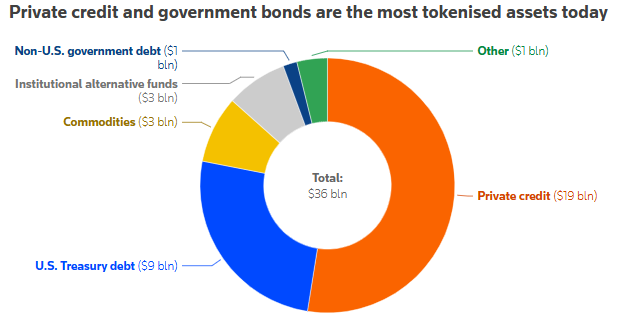
Group 1 - The core ideal of the cryptocurrency movement was to build financial services on decentralized infrastructure, bypassing banks and intermediaries that charge fees [1] - Tokenization, the process of recording real-world assets on the blockchain, is expected to change the current state of cryptocurrency adoption, with banks and their clients likely to benefit the most [1] - Standard Chartered analysts predict that the market value of all tokenized real-world assets (RWA) will reach $2 trillion by 2028, excluding stablecoins [1] Group 2 - Banks are positioned to capitalize on cost savings from the new system, with institutions like Citigroup and HSBC already offering tokenization services to select corporate clients [2] - Alibaba plans to leverage technology developed by JPMorgan to launch a tokenized global payment network, aiming to accelerate international business transactions [2] Group 3 - Skeptics argue that banks are developing these products to counter the competitive threat posed by stablecoins, as customers may withdraw funds from the banking system [3] - Tokenized stocks traded on platforms like Robinhood may not grant individual investors the same rights as traditional shareholders, leading to regulatory caution in markets like the U.S. [3] - The dream of decentralized finance is being replaced by a more practical reality where cryptocurrency payment systems help banks eliminate friction in existing infrastructures, making traditional lenders important participants in the cryptocurrency landscape [3]
六部门发文推动现代物流标准化建设 引领物流企业数字化转型
Zheng Quan Ri Bao Wang· 2025-12-30 11:27
Core Viewpoint - The issuance of the "Key Work Plan for Modern Logistics Standardization (2025-2027)" by six government departments is a significant step towards the high-quality development of China's logistics industry and digital transformation [1][2]. Group 1: Logistics Infrastructure Enhancement - The Work Plan emphasizes the development of standards for key logistics infrastructures such as national logistics hubs, logistics parks, and warehousing and distribution centers, aiming to improve connectivity and establish a modern logistics operation system [1]. - Standards for national logistics hubs are expected to clarify indicators for multi-modal transport efficiency and emergency material storage capacity, enhancing logistics timeliness and flexibility [1]. Group 2: International Competitiveness - The standardization of logistics infrastructure is crucial for China's logistics industry to align with international standards, thereby improving its competitiveness in the global logistics market [2]. - The Work Plan is anticipated to enhance the overall competitiveness of the logistics industry and facilitate its integration into the global logistics system, providing new development opportunities for logistics companies [2]. Group 3: Quality Improvement in Logistics Services - The Work Plan aims to accelerate the development of standards related to cold chain logistics, pharmaceutical logistics, multi-modal transport, and safety standards for hazardous goods, thereby supporting the resilience and safety of supply chains [3]. - The emphasis on digital transformation and the adoption of advanced technologies like big data, AI, and blockchain is expected to enhance operational efficiency and reduce costs for logistics companies, making them more attractive to investors [3].
RadexMarkets瑞德克斯:2026加密趋势展望与巨头布局
Xin Lang Cai Jing· 2025-12-30 11:26
Core Insights - The digital asset market is at a pivotal point for institutional adoption, with 2026 predicted to be a key year for the integration of tech giants and traditional finance into the crypto space [1][2] - The focus of wealthiest companies is shifting towards neutral infrastructure rather than closed ecosystems dominated by single entities [1][2] Industry Applications - The banking and fintech sectors are expected to be the primary areas where the Fortune 100 companies will engage with blockchain technology [3] - Institutions are likely to utilize existing toolkits like Avalanche or OP stack to build permissioned chains, ensuring data privacy while maintaining interaction with public chains [3] - Major tech companies such as Google, Meta, and Apple are anticipated to potentially launch crypto wallets by 2026, which could introduce billions of new users to the crypto market [3] Caution on L1 Blockchain - RadexMarkets expresses caution regarding fintech companies attempting to build their own Layer 1 (L1) blockchains to compete with Ethereum or Solana, noting that such "enterprise chains" often underperform in active addresses, stablecoin traffic, and real-world asset integration [4] - The lack of decentralization in these enterprise chains may hinder their ability to achieve significant network effects [4] Price Predictions - Bitcoin is projected to surpass $150,000 by the end of 2026, although its market dominance may decline due to the growth of altcoin ecosystems [4] - The stablecoin market is expected to grow by 60%, with traditional leaders like USDT facing competition from emerging players [4] - While the crypto market is predicted to remain vibrant, the integration of crypto and AI may be limited to security applications in the short term rather than large-scale economic payments [4]



四部门:建立高效便利安全的汽车行业数据跨境流动机制,指导企业强化重要数据出境保护
Xin Lang Cai Jing· 2025-12-30 09:47
Group 1 - The core viewpoint of the article is the issuance of the "Automobile Industry Digital Transformation Implementation Plan" by the Ministry of Industry and Information Technology and three other departments, focusing on enhancing data security in the automotive sector [1] Group 2 - The plan aims to improve the data security protection system and technical capabilities within the automotive industry [1] - It emphasizes the establishment of a comprehensive data security management system and standards, ensuring that significant data from large-scale automotive enterprises is identified, cataloged, and protected [1] - The initiative includes the creation of an efficient and secure mechanism for cross-border data flow in the automotive industry, guiding companies to strengthen the protection of important data when it is exported [1] Group 3 - The plan encourages the adoption of advanced technologies such as privacy-preserving computing and blockchain to foster a secure and trustworthy environment for the development and utilization of automotive data [1]
四部门:建立高效便利安全的汽车行业数据跨境流动机制
Xin Lang Cai Jing· 2025-12-30 09:46
Core Viewpoint - The Ministry of Industry and Information Technology and three other departments have issued the "Implementation Plan for Digital Transformation in the Automotive Industry," emphasizing the need for a robust data security protection system and technical capabilities [1] Group 1: Data Security Management - The plan aims to accelerate the establishment of data security management systems and standards in the automotive industry [1] - It targets comprehensive coverage of important data identification, cataloging, graded protection, and risk assessment for large-scale automotive enterprises [1] Group 2: Cross-Border Data Flow - A mechanism for efficient, convenient, and secure cross-border data flow in the automotive sector will be established [1] - Companies are guided to enhance the protection of important data when it exits the country, including the development of technical capabilities for monitoring, logging, emergency response, and inspection support [1] Group 3: Technological Advancements - The plan encourages the deepening of technologies such as privacy-preserving computation and blockchain [1] - It aims to guide the creation of a secure and trustworthy environment for the development and utilization of automotive data [1]
数字人民币将迈入计息时代
21世纪经济报道· 2025-12-30 06:37
Core Viewpoint - The digital renminbi is transitioning from a "digital cash era" to a "digital deposit currency era," with the implementation of a new action plan by the People's Bank of China starting January 1, 2026, aimed at enhancing management and service capabilities [1][3]. Group 1: Digital Renminbi Development - The research and development of digital renminbi began in 2014, with a theoretical framework proposed in 2016, leading to the successful trial of a dual-layer operational system [3]. - As of November 2025, digital renminbi has processed 3.48 billion transactions, amounting to 16.7 trillion yuan, with 230 million personal wallets opened [3]. - The digital renminbi is currently leading among central bank digital currency projects globally [3]. Group 2: Challenges and Solutions - The digital currency faces four main challenges: modern digital payment tools affecting monetary control, risks of financial disintermediation, the relationship between central bank liabilities and commercial bank responsibilities, and the compatibility of centralized management with decentralized blockchain technology [4]. - The new action plan aims to optimize the dual-layer structure to address these challenges, marking the transition to a digital deposit currency [4][5]. Group 3: Key Changes in Digital Renminbi - Starting January 1, 2026, digital renminbi will be managed under a reserve system, with non-bank payment institutions required to maintain 100% reserves [5]. - Digital renminbi wallet balances will earn interest, aligning with the treatment of traditional bank deposits [5]. - This transition will enhance the monetary elasticity of digital renminbi, allowing it to support credit activities and deposit expansion [6]. Group 4: Technological Integration - The action plan emphasizes the integration of account-based management with blockchain efficiency, proposing a digital solution that includes "account systems + digital currency + smart contracts" [9]. - The establishment of a digital renminbi international operation center in Shanghai aims to enhance cross-border payment capabilities and support various financial services [10]. Group 5: Future Prospects - The People's Bank of China plans to expand the list of digital renminbi operating institutions, with current institutions including major banks like ICBC, ABC, and BOC [11]. - Some banks, such as SPD Bank, are actively preparing to become digital renminbi operating institutions, indicating a growing interest in this sector [12].

FTA跨境结算:全球跨境支付体系站在历史性变革的十字路口
Sou Hu Cai Jing· 2025-12-30 05:47
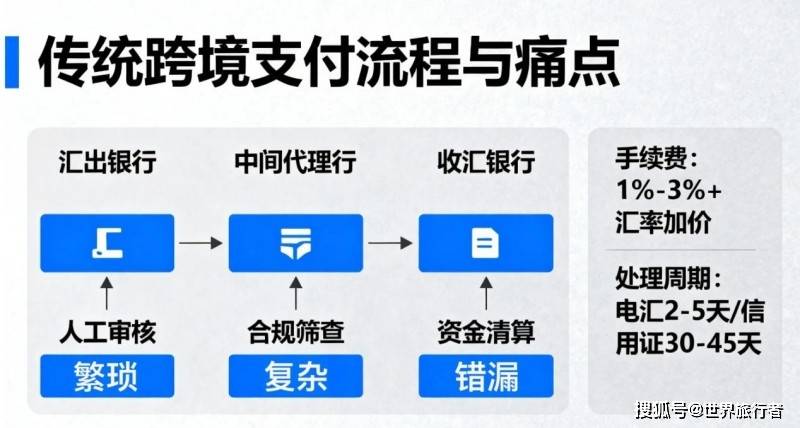
Core Insights - The global cross-border payment system is undergoing a significant transformation driven by technological advancements and the need for efficiency in a market that reached approximately $150 trillion in transaction volume in 2022, with nearly 90% stemming from business activities [1][4] Group 1: Market Size and Pain Points - The traditional cross-border payment system relies heavily on the SWIFT network, which involves multiple intermediaries, leading to high fees (typically 1%-3% of transaction value) and lengthy processing times (2-5 days for standard transfers and up to 30-45 days for complex transactions) [4] - This inefficiency poses substantial barriers for millions of SMEs, tying up working capital and eroding thin profit margins, while also stifling innovation in business models such as real-time settlements and cross-border e-commerce [4] Group 2: Technological Innovations - Blockchain technology offers a shared, immutable source of truth that can simplify or eliminate cumbersome reconciliation processes, enhancing transparency and reducing trust costs [5] - Smart contracts on blockchain can automate payment conditions, drastically reducing settlement times from weeks to minutes or even seconds, while mitigating counterparty risk [5] - AI is transforming operational aspects of payment chains by enabling real-time analysis of transaction data to identify anomalies, thus enhancing risk management and compliance [7] Group 3: Ecosystem Dynamics - The transformation of payment systems involves a complex ecosystem where traditional financial institutions are actively investing in and collaborating with new technologies to enhance cross-border payment efficiency [8] - Emerging fintech platforms leverage their technological advantages to create competitive ecosystems, exemplified by FTA's integration of various systems to unify data and cash flows [8][10] Group 4: Future Outlook - The ideal future cross-border payment network is envisioned to be seamless, intelligent, and inclusive, with payments processed in minutes and costs significantly reduced [12] - Automation and AI will optimize the payment process, transforming it into a proactive decision-making support system [13] - The inclusive nature of this transformation aims to lower barriers for SMEs and individuals in developing countries, promoting financial inclusion and unlocking economic potential [13] Group 5: Conclusion - The evolution of the global cross-border payment system is not a question of "if" but "how quickly" it will occur, with various stakeholders shaping the future landscape amid challenges such as standardization and regulatory coordination [14] - Companies like FTA that effectively integrate cutting-edge technology and understand global business needs are positioned to redefine the foundational agreements of future global trade [14]