智能体

Search documents
周鸿祎回应360没有做基座模型言 称360不是在做套壳
Ge Long Hui A P P· 2025-09-24 06:15
Core Viewpoint - The discussion between Luo Yonghao and Zhou Hongyi highlights the challenges and considerations in developing large-scale AI models, emphasizing that 360 has not pursued a general-purpose large model due to the significant financial investment required [1] Group 1: Investment and Financial Considerations - Zhou Hongyi stated that developing a general-purpose large model requires an investment of at least 10 billion USD, and major foreign companies have invested nearly 400 billion USD over the past few years, which 360 cannot afford [1] Group 2: Technical Aspects of AI Development - Zhou Hongyi clarified that 360 is not merely creating a shell for AI agents; substantial engineering efforts are necessary to support a complete intelligence foundation [1] - He emphasized that building an intelligent agent requires more than just a distilled model; it necessitates various specialized models, including reasoning, programming, intent prediction, and routing models [1] - Zhou Hongyi reiterated the importance of having a foundational model, stating that 360 maintains the capability to train models with parameters around 100 billion [1]

周鸿祎:大模型不是越大越好,“大”和“有能力”并不完全成正比
Xin Lang Ke Ji· 2025-09-24 05:29
Core Insights - The discussion between Luo Yonghao and Zhou Hongyi revolves around the relevance of product managers in the era of comprehensive AI models, suggesting that their importance will persist until AI capabilities surpass human expertise in all areas [1] - Zhou Hongyi emphasizes that large AI models may not possess the specialized knowledge required for complex tasks, indicating that local and specialized AI solutions are necessary for effective business integration [1] Group 1 - Luo Yonghao questions the definition of "full-time all-rounder" AI models, suggesting that product managers will remain valuable until AI can outperform humans in every aspect [1] - Zhou Hongyi agrees and provides examples of complex tasks, such as manufacturing aircraft engines and aircraft carriers, which require specialized knowledge not readily available on the internet [1] - Zhou also notes that the initial belief that larger models equate to better performance has been challenged, as smaller models can demonstrate significant capabilities [1]
周鸿祎:未来智能体不能被看成软件
Xin Lang Ke Ji· 2025-09-24 05:26
责任编辑:江钰涵 周鸿祎表示,所以为什么还是说要多智能,而多智能体之间?现在你知道国外有公司做了要多智能体协 议,那协议很扯。我这样说肯定有人会有些人骂我。他们是把智能体当成软件模块。实际智能体跟智能 体的协作,我们经过了很多挑战,终于把这条路探索出来了。它不是软件模块相互API调用,你可以想 象成是多个人的协作,他们要对齐。比如你弄了一个十人的团队是要开会,为什么要有总监,要副总 裁,要有memo?就你要把大家的价值观对齐了,大目标要对齐了,然后每个人还要分解工作。光是分 解工作,他对这个事儿的全貌没有一个了解,他也会出问题。(罗宁) 新浪科技讯 9月24日下午消息,今日,罗永浩与周鸿祎深度对谈,周鸿祎表示,未来智能体不能把它看 成软件。我再给你说几个有意思的东西,可能会回答你的一些问题。它非常像人,第一点我讲的它专业 化,第二个智能体会出错,但这个出错既不是幻觉,也不是训练的问题是它像人一样会倦怠。一个智能 体,你给他指令太多,让他干太多的活,他做到一定时候他会拒绝执行指令,或者开始乱执行指令,会 敷衍。它的注意力失效。就有点像你跟你的一员工谈话,你给他的让他一个实习生干50件事儿。你布置 到第48件的时 ...
智能体迈入L3时代,未来十年人均100个?
2 1 Shi Ji Jing Ji Bao Dao· 2025-09-23 09:05
Core Insights - The release of the "Opinions on Deepening the Implementation of 'Artificial Intelligence+' Action" sets a target for the application penetration rate of intelligent agents to exceed 70% by 2027 [1] - Huawei's "Intelligent World 2035" report emphasizes that intelligent agents will be the key carriers for the practical application of AI technology, transforming complex capabilities into actual value [1][4] - The industry is currently in a transitional phase from L2 to L3 in the development of intelligent agents, indicating a shift towards more autonomous capabilities [7][8] Industry Development - The intelligent agent development is compared to autonomous driving technology, categorized into five levels (L1-L5), with the current stage being L3, where agents can complete tasks but may still make errors [2][7] - The market for AI intelligent agents is projected to grow significantly, from $5.1 billion in 2024 to $47.1 billion by 2030, with a compound annual growth rate of 44.8% [16] - The implementation of intelligent agents is expected to penetrate various sectors, with predictions that by 2025, 25% of enterprises will deploy generative AI-driven agents, increasing to 50% by 2027 [16] Technological Challenges - Key challenges for the scaling of intelligent agents include enhancing autonomous decision-making, memory learning, and ensuring safety and reliability in critical decision-making [9][10] - The development of intelligent agents requires breakthroughs in technology, standards, ecology, and security to achieve large-scale application [10][11] Application and Ecosystem - Local governments and enterprises are actively exploring the application of intelligent agents, with cities like Wuhan and Beijing issuing plans to promote their development in various industries [15] - Companies like SenseTime and Hanwang Technology are already deploying intelligent agents in both consumer and business sectors, focusing on enhancing their capabilities [6][15] Future Outlook - The central government has set clear goals for the integration of AI into six key areas by 2027, with a broader aim for comprehensive AI empowerment by 2030 [5][16] - The intelligent agent ecosystem is expected to evolve, with a focus on breaking down vertical barriers and fostering innovative applications across different sectors [14][15]

越疆发布两款人形机器人,实现多形态协同作业
Xin Lang Cai Jing· 2025-09-23 06:42
Core Insights - The article highlights the launch of two humanoid robots, DOBOT ATOM and DOBOT ATOM-M, by the company Yuejiang Robotics at the 2025 China International Industry Fair (CIIF) [1] - The company announced the achievement of collaborative and normalized operations for multi-modal general-purpose robots [1] Group 1 - The newly released humanoid robots, along with multi-legged robotic dogs and collaborative robotic arms, successfully completed a full range of tasks from material sorting and transportation to precision assembly on the "super factory" demonstration platform [1] - Yuejiang Robotics aims to address the manufacturing industry's demand for flexible production by evolving robots from single execution tools to intelligent agents with integrated perception, decision-making, and execution capabilities [1]

启明星辰:公司安星智能体,已经应用于安全运营、威胁检测、数据安全等产品或服务中
Mei Ri Jing Ji Xin Wen· 2025-09-23 04:31
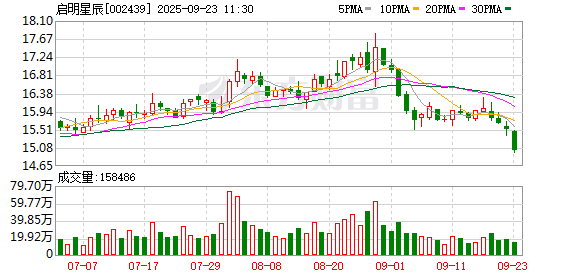
Group 1 - The core viewpoint of the article highlights the advancements in AI agents, with companies like DeepSeek and China Telecom developing new models to enhance AI capabilities [2] - The company Yingxingshen (启明星辰) has reported progress on its Anxing AI agent, which is already applied in security operations, threat detection, and data security, significantly improving product capabilities and service efficiency [2] - In the "AI agent + security operations" area, the Anxing AI operational system has established a "security intelligent agent collaborative architecture," providing custom agents, knowledge base management, and visual workflow capabilities, enhancing the intelligence level of security operations [2] - The Anxing AI agent is deeply integrated with the XDR system in the "AI agent + threat detection" area, greatly improving the effectiveness of threat hunting, analysis, and defense [2] - The company aims to continuously evolve and innovate the capabilities of the Anxing AI agent to empower more security scenarios [2]

范式转移!无问芯穹推出基础设施智能体蜂群,开启Agentic智能体基础设施新纪元
机器之心· 2025-09-23 03:16
Core Insights - The article emphasizes the evolution of AI Agents as a key direction in AI development, highlighting their potential to become fundamental units in future intelligent societies. It points out the need for a paradigm shift in the infrastructure supporting these agents to enable autonomous decision-making and collaboration [1][4]. Group 1: Infrastructure Challenges - Current AI infrastructure relies heavily on "glue code" and faces issues such as idle computational resources, sudden failures interrupting expensive training tasks, and overwhelmed operations teams due to traditional tools and manual operations [1]. - The existing operational methods for AI infrastructure are inadequate to handle the dynamic and complex nature of AI agent production, necessitating a comprehensive reform [1]. Group 2: Introduction of Intelligent Infrastructure - Wuyuan Xinqiong has launched the "Intelligent Infrastructure Agent Swarm," which integrates multi-agent collaborative architecture with industry-specific needs, providing a new generation of intelligent infrastructure solutions [2]. - This system encapsulates various intelligent agent modules, enhancing resource utilization, operational efficiency, and the reliability of AI systems, achieving a hundredfold expansion of operational capabilities with the same investment [2]. Group 3: Operational Efficiency - The Intelligent Infrastructure Agent Swarm unifies fragmented processes across development, operations, and management into a cohesive "perception-decision-execution" loop, enabling dynamic optimization and adaptive adjustments [3]. - The architecture allows for proactive service to research and business objectives, significantly improving resource utilization, energy efficiency, and reliability of computational platforms [3]. Group 4: Agentic Infra Paradigm - The Intelligent Infrastructure Agent Swarm represents a practical implementation of the next-generation AI infrastructure paradigm, "Agentic Infra," which fundamentally alters the traditional production model by creating a highly collaborative closed-loop system [4]. Group 5: Agent Roles - Within the swarm, various agents play specific roles: - The SOTA Model Selection Agent acts as a "technical sentinel," matching optimal models and environments to tasks, avoiding inefficient resource usage [5]. - The Infrastructure Platform Steward Agent manages daily operations, automating complex underlying tasks based on user intent [5]. - The Resource Operations Agent focuses on cost and benefit, dynamically balancing resource supply and demand to prevent idle GPU resources [5]. Group 6: Comprehensive Task Management - The architecture integrates heterogeneous computational resources and AI platform capabilities, enabling end-to-end execution, monitoring, and troubleshooting across the entire production chain [7]. - This allows for a simplified interaction where users can engage with AI and intelligent agents without needing to understand the underlying complexities [7]. Group 7: Real-World Applications - The Intelligent Infrastructure Agent Swarm has demonstrated effective implementation in real business processes, significantly reducing resource consumption in traditional AI development by automating scheduling and resource orchestration [8]. - Companies like Soul App have reported drastic reductions in innovation cycles and trial costs, enabling previously shelved ideas to be rapidly realized [10]. Group 8: Future Vision - Wuyuan Xinqiong envisions a future where businesses, especially smaller teams with domain knowledge, can participate in AI transformation with lower barriers and higher efficiency [14]. - The goal is to liberate human creativity by allowing machines to handle repetitive tasks, thus enabling developers to focus on strategic and imaginative aspects of AI application development [14].

大数据智能找矿预测系统获国家专利
Zhong Guo Zi Ran Zi Yuan Bao· 2025-09-22 09:43
Core Viewpoint - The recent development of a "multi-scale big data fusion-based mineral exploration prediction system" has been awarded a national invention patent, marking a significant advancement in intelligent mineral exploration prediction technology in China [1][2]. Group 1: System Development - The big data intelligent mineral exploration prediction team has created an innovative system that integrates geological big data management, data mining, multi-factor information extraction, multi-scale grid computing, intelligent prediction evaluation, and decision support [1]. - This system effectively combines geological exploration data, knowledge bases, algorithm libraries, model libraries, and software tools into a collaborative platform, enhancing the efficiency and accuracy of mineral exploration predictions [1]. Group 2: Future Directions - The construction of the big data intelligent mineral exploration prediction system is part of a demonstration initiative by the China Geological Survey to deeply integrate AI technology into geological survey applications [2]. - The team plans to further innovate by integrating cutting-edge technologies such as AI, large models, and intelligent agents into mineral exploration prediction, aiming to establish a new working model of "AI+" in geological exploration [2].
专访全球知名投资大佬:中国将在AI竞争中占据有利位置
21世纪经济报道· 2025-09-21 15:08
Core Viewpoint - The rapid development of artificial intelligence (AI) is transforming the economy and society, with 2024 marking the year of AI application and 2025 the year of intelligent agents. This shift will lead to a new economic paradigm where humans may become a minority in terms of intelligence compared to machines [1][4]. Group 1: AI and Economic Impact - AI is expected to contribute approximately 0.6% to 1% annual growth to GDP over the next decade, with some experts predicting even higher impacts due to unmeasured efficiencies [4][5]. - The productivity growth rate in the U.S. could rise to an average of 3% annually, driven by reduced reliance on human labor and advancements in AI technologies [5][6]. - The introduction of reasoning models like Deepseek and ChatGPT-5 is expected to enhance AI's capabilities, allowing for autonomous task completion without human intervention [5][6]. Group 2: Global AI Competition Factors - Key factors determining success in the global AI competition include talent, energy, technology, and legislation [8][9]. - China leads in talent availability, with a significant number of AI developers and scientists, many of whom are of Chinese descent [8]. - China also has a competitive edge in energy resources, which are crucial for AI development, while the U.S. faces challenges in this area [8][9]. Group 3: Future Economic Landscape - By 2050, the number of intelligent robots is projected to reach 4 billion, fundamentally altering the economic landscape and human roles within it [4]. - The competition among machines is expected to suppress inflation, leading to increased investment in non-scalable assets like luxury goods and collectibles [6]. - The current economic environment shows signs of a potential bubble, particularly in tech valuations, reminiscent of the internet bubble era [6]. Group 4: China's Economic Outlook - China's economic prospects are viewed positively, with expectations of a recovery from the real estate cycle and a shift towards urbanization driving growth [12][15]. - The valuation of Chinese tech companies is often lower than their Western counterparts, presenting attractive investment opportunities [15][16]. - The government is focused on stabilizing the economy, which is expected to create a favorable market environment for growth [15][16].
2025腾讯数字生态大会|腾讯云副总裁吴运声:把智能体做成生产力工具
Sou Hu Cai Jing· 2025-09-20 08:46
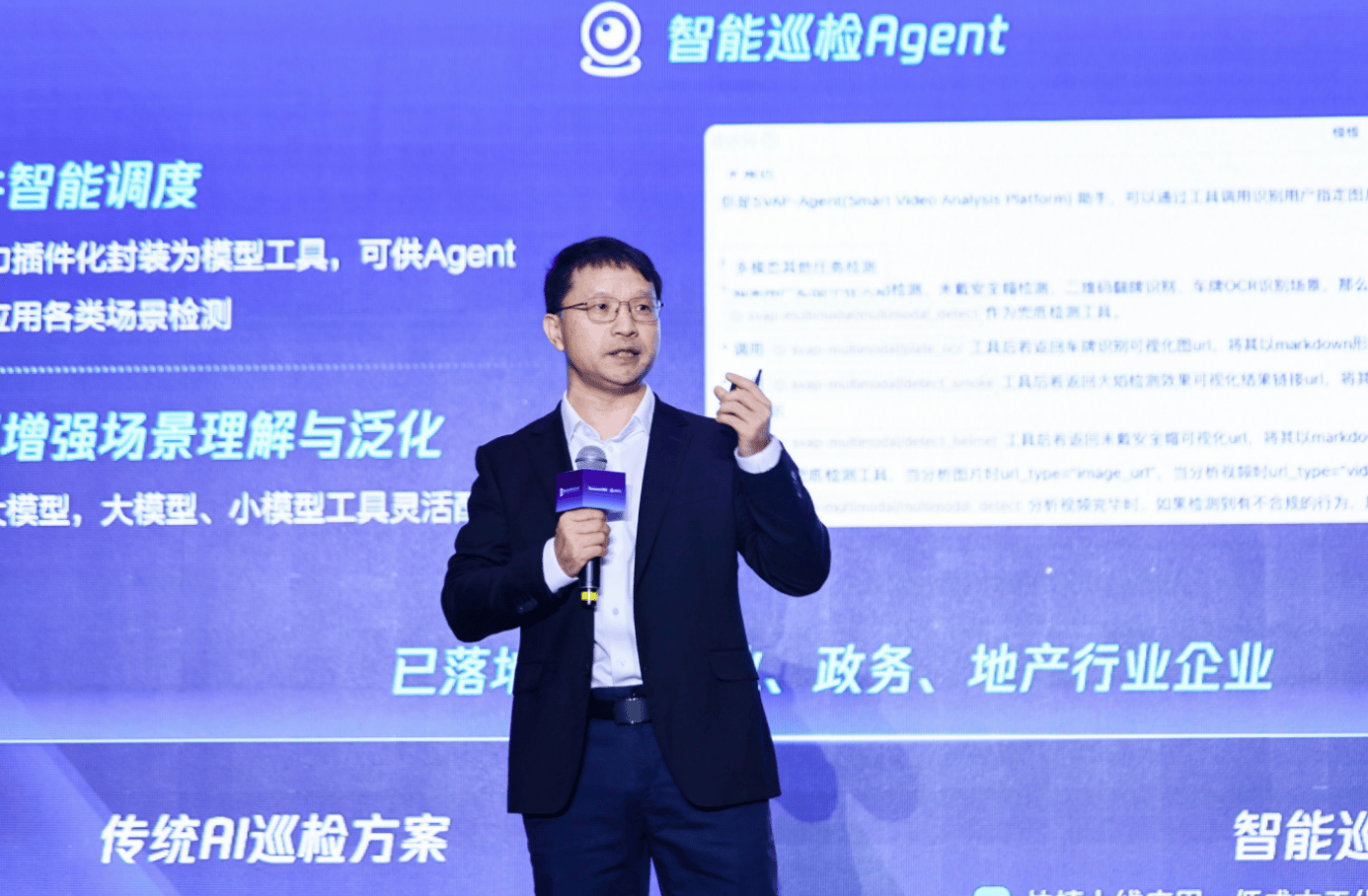
Core Insights - The core issue for enterprises regarding AI is its practical application and ability to solve real problems, rather than just being a concept or demonstration [1][3] - The rise of "intelligent agents" in 2025 is driven by business needs for tools that can effectively address challenges [3][4] Group 1: Intelligent Agents Development - The Intelligent Agent Development Platform 3.0 enhances features such as RAG (Retrieval-Augmented Generation), multi-agent collaboration, long-term memory, and plugin ecosystems, allowing agents to work continuously across tasks and scenarios [3][4] - Intelligent agents can now remember user interactions and follow up on needs, moving beyond one-time responses [3][4] Group 2: Real-World Applications - Intelligent agents are being applied in various sectors, such as hotel services where they can interpret guest requests and manage room conditions, and in industrial quality inspection where they identify product defects in real-time [4][5] - The media industry benefits from intelligent agents that streamline the entire content production process, enhancing efficiency [4] Group 3: Open Source and Industry Trends - Tencent's Youtu-Agent framework has been open-sourced, gaining over 2700 stars on GitHub, positioning it as a leading project in the intelligent agent domain [6] - The company emphasizes the importance of combining technology with real industry scenarios, as frameworks without genuine data and context may lack substance [6] Group 4: Future Directions - The focus is on addressing current pain points in the industry rather than rushing to define "super intelligent agents," with an emphasis on improving reliability and reducing erroneous outputs [7] - The industry is still in an exploratory phase, and overcoming obstacles is essential for the widespread adoption of intelligent agents as effective productivity tools [7]