财富管理

Search documents
招商银行东莞分行第五届招财节启动
Nan Fang Du Shi Bao· 2025-10-24 06:51
Core Insights - The event "Autumn Wealth Festival" organized by China Merchants Bank Dongguan Branch aims to provide a comprehensive wealth management experience for clients in Dongguan [1][3] - The festival highlights three key features: customized products, international high-end salons, and AI-driven service upgrades to help clients seize investment opportunities [3][7] Group 1 - The "Wealth Carnival" interactive experience includes four themed booths, allowing citizens to engage in fun games while learning about the bank's wealth management services [5] - During the festival, the bank will focus on three main directions: product diversification, digital service enhancement, and professional strategies, launching 16 selected products and hosting 108 exclusive activities for clients [7] - The bank emphasizes its commitment to aligning client wealth needs with regional economic trends, aiming to transform wealth management from a product-oriented to a demand-oriented approach [7]


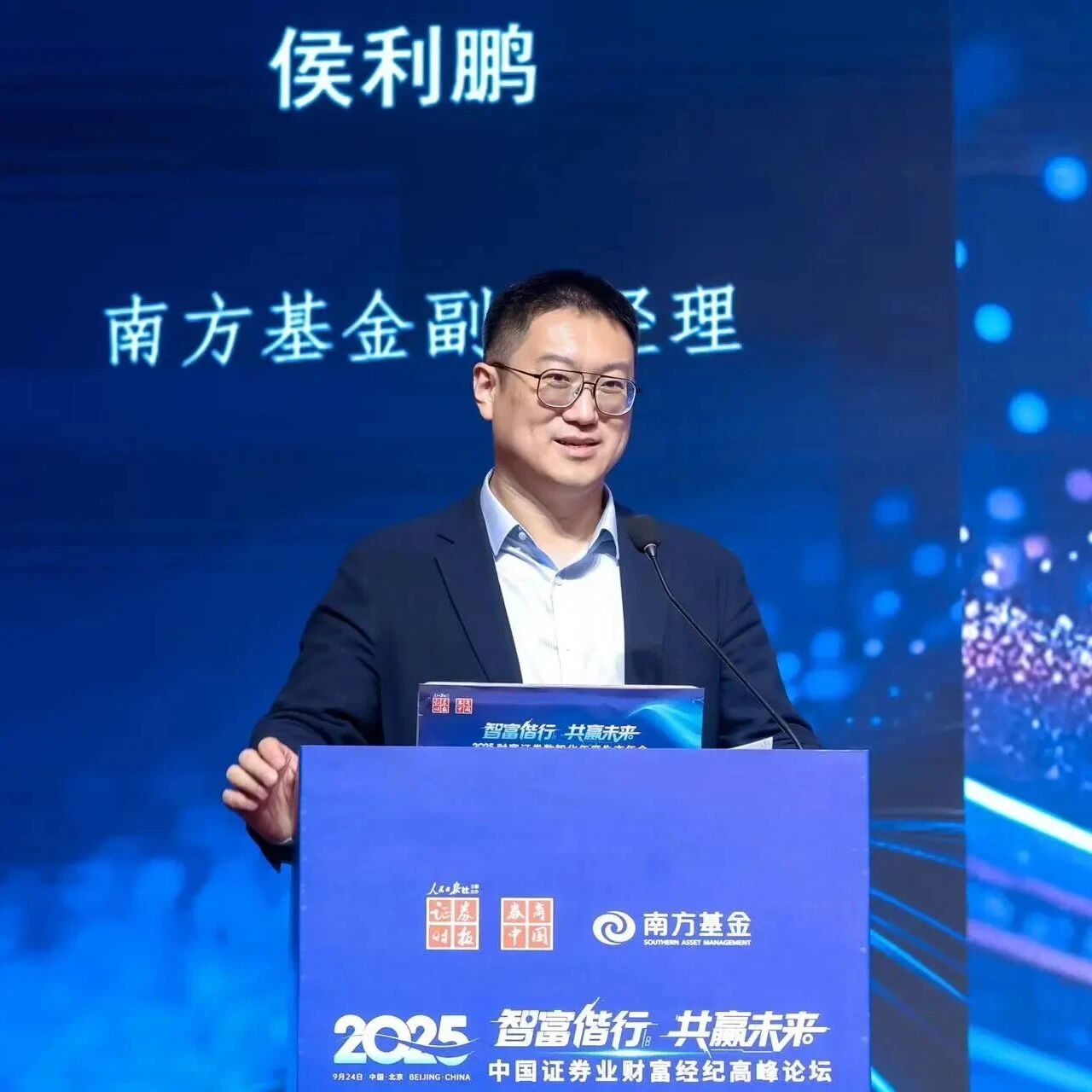
南方基金侯利鹏:以ETF为纽带,共建高质量财富管理生态
券商中国· 2025-10-23 03:45
Core Viewpoint - The wealth management market is transitioning from "scale expansion to quality cultivation," with ETFs playing a crucial role in injecting long-term capital into the stock market [1][2]. Group 1: ETF Market Insights - The Chinese capital market has achieved significant growth, with the technology sector now accounting for over 25% of the A-share market capitalization, enhancing the market's capacity to support technological innovation [2]. - As of the end of August, the total scale of ETFs in the Shanghai and Shenzhen markets has surpassed 5.1 trillion yuan, highlighting their critical role in guiding long-term capital into the market and supporting stable operations [2]. - South Fund has established a comprehensive ETF product matrix, including leading products like the CSI 500 ETF (510500) and CSI 1000 ETF (512100), covering various sectors and themes [2][3]. Group 2: South Fund's ETF Strategy - South Fund has been a pioneer in the ETF space since launching its first deep ETF in 2009, now managing 62 equity ETF products with a total scale of 312.5 billion yuan, maintaining a leading position in the industry [3]. - The firm emphasizes its core capabilities across the entire ETF business chain, including research, investment operations, risk management, and product sales, with a focus on innovation and collaboration with market makers [4]. Group 3: Future Collaboration Plans - South Fund plans to enhance cooperation with securities firms by providing more precise product support, sharing professional investment advisory resources, and building more efficient collaboration platforms [6][7]. - The company aims to optimize its ETF product offerings based on the diverse needs of different client groups, including institutions and retail investors, while also providing customized services to enhance client understanding and service efficiency [6]. - South Fund will open more research results to securities firms and conduct diversified investor education activities to improve investor trust and engagement [7].
券商晨会精华:公募新发放量,关注优质金融
Xin Lang Cai Jing· 2025-10-23 00:29
Market Overview - The market experienced weak fluctuations with all three major indices showing a decline after briefly turning positive. The trading volume in the Shanghai and Shenzhen markets was 1.67 trillion, a decrease of 206 billion from the previous trading day, marking the first drop below 1.7 trillion since August 5. The Shanghai Composite Index fell by 0.07%, the Shenzhen Component Index by 0.62%, and the ChiNext Index by 0.79% [1] Sector Performance - Sectors such as oil and gas, engineering machinery, and wind power equipment saw significant gains, while precious metals, coal, and batteries faced notable declines [1] Recommendations from Securities Firms - **CITIC Construction Investment**: Suggested focusing on high-quality construction companies in Shanghai, following the city's action plan to promote high-quality development in the construction industry. The plan aims to reduce homogeneous competition and strengthen the position of major construction groups [1] - **Huatai Securities**: Highlighted a significant increase in public fund issuance, with 6,778 new financial products launched in September, up 18% month-on-month. The new public fund issuance volume reached 167.5 billion, a 64% increase from the previous month. The firm recommends focusing on high-quality financial stocks due to ongoing capital market reforms [1] - **Tianfeng Securities**: Stated that the likelihood of a reduction in the Loan Prime Rate (LPR) within the year is low, citing the need to maintain healthy interest margins and reduce asset reallocation pressures for banks. The firm suggests that alternative measures such as fiscal subsidies and structural monetary policy tools may be preferred [2]



全国规模最大AIC母基金落地福田
Sou Hu Cai Jing· 2025-10-22 23:25
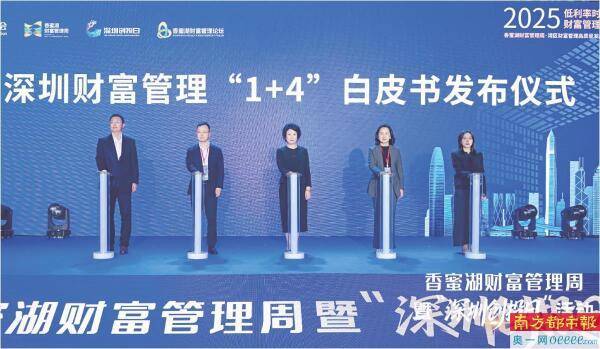
Core Insights - The "1+4" white paper on wealth management in Shenzhen was released during the "2025 Xiangmi Lake Wealth Management Week," aiming to establish Shenzhen as an international wealth management center [2] Group 1: Wealth Management Development - The event attracted over 900 representatives from various financial institutions, including banks, insurance asset management, and venture capital [2] - The total entrusted asset management scale in China has exceeded 100 trillion yuan, with a year-to-date increase of nearly 6% and a year-on-year increase of over 15% [3] - The banking wealth management and insurance asset management sectors have seen steady growth, with bank wealth management reaching 30.67 trillion yuan and insurance funds at 36.23 trillion yuan by Q2 2025 [4] Group 2: Shenzhen's Financial Landscape - Shenzhen's asset management scale has surpassed 31 trillion yuan, accounting for about 20% of the national total, nearing the levels of Hong Kong and Singapore [5] - The Futian District, as Shenzhen's financial center, manages over 18 trillion yuan, representing approximately 60% of the city's total asset management [6] - The establishment of the first AIC (Asset Investment Company) mother fund in Shenzhen, with a scale of 70 billion yuan, marks a significant milestone in local industry investment [8] Group 3: Future Outlook - The wealth management industry in Shenzhen and the Greater Bay Area is expected to continue enhancing its role as a capital market hub, integrating technology, industry, and finance [7] - The newly established AIC mother fund aims to support strategic sectors such as artificial intelligence, semiconductors, and new energy, creating a multi-layered fund ecosystem [8][9] - The fund's establishment aligns with national policies to promote high-quality development in venture capital and entrepreneurship [9][10]
联储证券:以数字引擎提效 构建“守护+”养老金融服务体系
Zheng Quan Shi Bao· 2025-10-22 18:15
近年来,作为坚定践行金融强国战略的积极力量,联储证券以青岛为根据地,以"新财富管理"和"资本 投行"为双轮驱动,持续锻造专业投资能力,在数字金融、养老金融、科技金融等重点领域取得突破性 进展。 据联储证券总经理张强介绍,公司创新构建"守护+"养老金融服务体系,护航银发群体安享晚年;以科 技引擎重塑数字金融新生态,将交易效能提升百倍;以并购赋能产业升级新格局,助力行业龙头重塑生 态。 构建"守护+"养老金融服务体系 证券时报记者了解到,联储证券正积极布局养老金融领域,创新推出"守护+"养老金融服务体系,通过 专业化的产品设计与全流程的服务升级,满足新时代居民养老需求。 在产品端,该公司针对不同客户需求提供差异化方案:为有理财需求的客户,严选以"低波稳健"为特色 的养老产品线,提供安心钱袋计划和悦享人生计划基金投资方案;为有股票交易需求的客户配备"金辉 管家"账户诊断和投顾服务。 在财富传承领域,联储证券为富裕银发客户提供传承FOF专户、家族信托等专业服务,帮助实现财富有 序传承,并推出覆盖家庭不同成员、不同生命周期的财富管理方案。 张强表示,"守护+"体系承载着公司对银发客户的多重承诺:守护财富,抵御通货膨胀, ...
共探资管行业高质量发展新路径 “全球资产管理中心上海国际活动周2025”财富管理专场在沪举办
Zhong Zheng Wang· 2025-10-22 11:56
Core Insights - The "Global Asset Management Center Shanghai International Event Week 2025" focuses on the theme of "Asset Management and Wealth Management Cycle Driven by New Opportunities" to address the transformation needs of asset management institutions in the new era [1][2] - Shanghai is positioning itself as a global asset management center, leveraging historical advantages and market factor aggregation to enhance wealth management and asset management practices [1] Group 1: Industry Trends - The asset management industry in China is experiencing a mismatch with technological demands, particularly in equity financing, where private equity funds have a higher participation rate [1] - The shift in the industry is moving from "scale growth" to "value creation" and from homogeneous expansion to differentiated professional capability building [2] Group 2: Company Initiatives - Shanghai Trust emphasizes the integration of asset management and wealth management, adhering to the principle that "technology makes finance more inclusive" [2] - Shanghai Trust's transformation journey has led to a breakthrough of 1.3 trillion yuan in assets under management, focusing on creating a wealth management trust account system and innovative asset management product systems [2] Group 3: Strategic Recommendations - The industry is encouraged to optimize investment stages and exit channels, particularly through private equity funds, and to convert insurance asset management into long-term capital for technological innovation [1] - There is a call for the establishment of a supportive environment for technological innovation, utilizing strategic scientists and optimizing exit mechanisms and regulations [1]

中信银行长沙分行落地同业客户首笔代销信银理财产品业务
Chang Sha Wan Bao· 2025-10-22 11:21
Core Viewpoint - CITIC Bank's Changsha branch has successfully launched a wealth management product through Hunan Bank, marking its first wealth management agency business in the Hunan market, which will help diversify non-interest income and strengthen integrated operations with key regional peers [1] Group 1 - The collaboration with Hunan Bank, a key peer client in the region, is significant due to its leading asset scale and wealth management clientele in Hunan [1] - The project took three years from initiation to implementation, highlighting CITIC Bank's commitment to deepening relationships with key client groups [1] - The Changsha branch effectively coordinated critical steps such as agreement signing, system integration, and product approval, earning high recognition from partners for its quality service [1] Group 2 - The next phase for CITIC Bank's Changsha branch is to aim for the goal of becoming a "leading wealth management bank," focusing on deepening integrated operations with peer clients [1] - The bank plans to enhance cooperation depth and breadth in wealth management agency business with regional key clients and accelerate the rollout of agency business with Changsha Bank and provincial associations [1] - This initiative is expected to inject stronger momentum into the bank's transformation in financial market business and high-quality development [1]

平安证券高管迎新,李谦将加盟拟任总经理
Di Yi Cai Jing· 2025-10-22 10:54
Group 1 - The former Vice President of GF Securities, Li Qian, is set to join Ping An Securities as the proposed General Manager, highlighting a strategic talent acquisition move by the company [1] - Li Qian holds a PhD in Economics from Renmin University of China and has extensive experience in various roles within the financial sector, including positions at the Industrial and Commercial Bank of China and GF Securities [1] - Ping An Securities is actively enhancing its wealth management capabilities and has adopted an integrated ATO service model, maintaining a leading position in personal customer numbers and app user engagement within the industry [1] Group 2 - Alongside Li Qian, Ping An Securities has promoted its Chief Risk Officer, Zou Li, who will expand her responsibilities to oversee the internal control system, aiming to strengthen management consistency and execution efficiency [2] - Zou Li, a graduate of Peking University, brings a diverse background in investment banking, fixed income, quality control, product management, and risk management, contributing to the company's leadership team [2] - Since the establishment of the new management team in 2018, Ping An Securities has maintained a clear strategic path, achieving robust growth with projected revenues of 11.382 billion yuan and net profits of 4.376 billion yuan for 2024, doubling figures from 2018 [2]

“80后”李谦,拟任平安证券总经理
Zhong Guo Ji Jin Bao· 2025-10-22 10:41
【导读】广发证券原副总经理李谦即将加盟平安证券 据了解,除外部引进专业化人才外,平安证券积极通过内部培养提拔优秀干部,去年晋升副总经理、分管公司核心板块经纪业务的姜学红,拥有丰富的证 券期货行业工作经验,在平安履职期间业绩表现突出。近一年来,平安证券加快推进财富管理能力建设,全面落地ATO一体化经营服务模式,个人客户数 稳居行业前三,App用户活跃度持续领先同业。 与姜学红同期晋升副总经理的还有首席风险官邹丽。据了解,邹丽的分管范围将进一步扩大,统筹公司内控体系建设,以强化内控管理体系的一致性,深 化协同与执行效能,提升内控质效。与此相关的任职资格或需监管部门进一步审批。 邹丽毕业于北京大学,拥有投行、固收、质控、产品、风控等多个业务条线及中台工作的领导经验,是平安培养的复合型人才干部。 平安证券董事长仍为何之江。何之江于2018年4月加入平安证券,2019年3月起担任公司董事长。加入平安证券前,何之江曾任平安银行副行长、行长特别 助理、浙江稠州商业银行总行行长等职务。 自2018年组建新一届班子以来,平安证券各方面都有不错的发展,业绩大幅增长。数据显示,2024年,平安证券实现营业收入113.82亿元,净利 ...

31万亿!深圳财富管理书写“十四五”亮眼答卷 ——相约香蜜湖·打造国际财富管理中心新名片
Sou Hu Wang· 2025-10-22 10:27
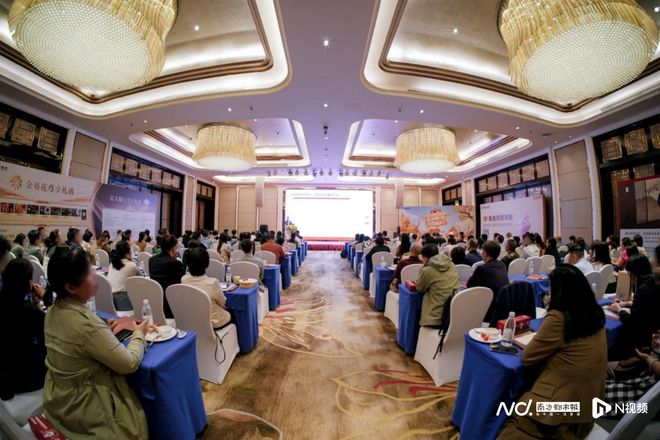
Core Insights - The "2025 Xiangmi Lake Wealth Management Week" is a significant annual event in Shenzhen aimed at promoting the city's wealth management ecosystem and aligning with national financial strategies [1][5][6] - The event attracted over 900 representatives from various financial institutions, highlighting the collaborative efforts between government, enterprises, and financial sectors [1][5] - Shenzhen's wealth management industry has reached an asset management scale of over 31 trillion, comparable to Hong Kong and Singapore, marking a significant achievement in the city's financial development goals [6][8] Group 1: Event Overview - The event was guided by the Shenzhen Municipal Financial Committee and supported by the China Insurance Asset Management Association, featuring multiple activities focused on high-quality development in wealth management [1][5] - Key government and financial leaders attended, including representatives from the People's Bank of China and various financial institutions, emphasizing the importance of collaboration in the sector [3][5] Group 2: Industry Growth and Statistics - As of now, there are 135 asset management institutions in China, with a total managed asset scale exceeding 100 trillion, reflecting a growth rate of nearly 6% year-to-date and over 15% year-on-year [5][7] - Shenzhen's wealth management scale is nearing that of Hong Kong and Singapore, with significant contributions from banks and private equity funds [6][8] Group 3: Strategic Directions - The wealth management sector in Shenzhen is focusing on enhancing its professional capabilities, supporting the real economy, and protecting investor rights [5][7] - The city aims to develop a multi-layered international wealth management center, with a focus on deepening cooperation between Shenzhen and Hong Kong [6][19] Group 4: Future Initiatives - The event included the signing of a 7 billion AIC fund to support innovation in technology enterprises, showcasing the commitment to fostering a robust financial ecosystem [15][19] - Future activities will include exploring family office services and roadshows for innovative enterprises, reinforcing Shenzhen's role as a key player in the wealth management landscape [25][26]