循环经济

Search documents
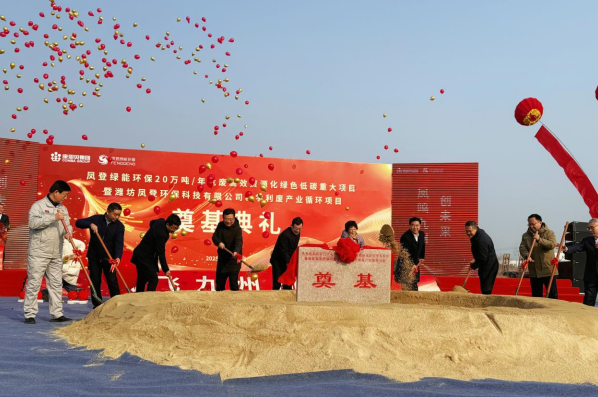
总投资近50亿元的化工项目,奠基!
Zhong Guo Hua Gong Bao· 2025-12-22 09:05
Group 1 - The project by Zhejiang Fengdeng Green Energy Environmental Co., Ltd. aims to establish a hazardous waste resource utilization and green low-carbon project with a total investment of nearly 5 billion yuan, divided into four phases [3] - The first phase of the project, with an investment of 1.04 billion yuan, will take 2 years to complete and is expected to process 200,000 tons of organic waste annually, producing green methanol and low-carbon hydrogen [3] - The project is designed to save approximately 100,000 tons of coal and reduce carbon emissions by about 400,000 tons annually compared to traditional disposal methods [3] Group 2 - The innovative technology developed by Fengdeng Green Energy for hazardous waste resource utilization integrates multiple advanced techniques, enabling the conversion of hazardous waste into high-value chemical products [4] - The project is recognized as a revolutionary innovation in waste disposal methods and serves as a benchmark for the green transformation of the petrochemical industry [4] - The estimated annual revenue from the project is projected to reach 1 billion yuan, with tax contributions of nearly 150 million yuan, alongside a reduction of 400,000 tons of carbon emissions per year [4]

嘉化能源接待9家机构调研,包括淡水泉投资、国泰海通证券、国信证券、国投瑞银等
Jin Rong Jie· 2025-12-22 08:17
Core Viewpoint - Jiahuan Energy is a core enterprise in the China Chemical New Materials (Jiaxing) Park, focusing on a circular economy model that integrates energy, chemicals, and new chemical materials into its industrial chain [1][3]. Group 1: Company Overview - Jiahuan Energy has established a circular economy model that includes both internal and external cycles, enhancing resource and energy utilization while reducing costs and improving operational efficiency [3]. - The company is a leading producer of fatty alcohols, benefiting from a stable supply chain and a mature production process, with a domestic market demand of approximately 1 million tons per year and a compound annual growth rate of 3-5% [1][4][5]. Group 2: Production and Capacity - The second phase of the fatty alcohol production line is currently in equipment debugging, with expected capacity release next year, and the company has coordinated with downstream customers for capacity absorption [5][6]. - The PVC second phase has entered trial production, aimed at ensuring stable operation of the chlor-alkali unit and enhancing the overall value of the industrial chain [2][8]. Group 3: Financial Strategy - The company maintains a policy of continuous cash dividends and share buybacks, reflecting its commitment to stable profitability and cash flow management [2][7]. - All related party transactions are essential for production operations and are conducted at market prices, ensuring fairness and compliance with necessary review procedures [6]. Group 4: Market Dynamics - The price of palm oil, a key raw material for fatty alcohols, has been high due to increased demand from downstream sectors and reduced supply caused by seasonal production declines in Indonesia [4][5]. - The company’s stable partnerships with upstream and downstream players contribute to its ability to maintain quality and meet market demands effectively [5].

报告:全固态电池正从实验室加速向中试阶段推进
Zheng Quan Shi Bao Wang· 2025-12-22 03:55
与新能源材料、可持续燃料两大赛道迅猛发展对应的是,中国资源循环利用产业规模呈现持续上升的趋 势。《报告》提到,未来,循环经济将与数字化、智能化等前沿技术深度融合,逐步构建数据驱动的新 型产业生态,而增强龙头企业竞争力是推动全产业链发展的核心路径。 毕马威中国客户及业务发展主管合伙人江立勤表示,循环经济、新能源材料与可持续燃料三大赛道紧密 相连、相互促进。循环经济可以为新能源材料的生产提供可持续的资源来源,而新能源材料的进步可以 推动可持续燃料的技术创新。在这个过程中,人工智能正在扮演着越来越重要的角色。通过人工智能赋 能,这些赛道将释放更大的潜力,为全球能源转型注入新的动力。 《报告》还总结了多家新能源材料企业在商业模式上展现出高度前瞻性。例如,它们通过"技术专利化 →专利产品化→产品场景化→场景规模化"路径构建下一代锂电池材料平台;通过战略投资强化储能与 AI(人工智能)控制能力;推动LOHC(有机液态储氢技术)技术在长距离、大规模氢能调度中的商业化落 地等等。 毕马威近日发布的《毕马威中国新能源科技企业50》报告(以下简称"报告")提到,钙钛矿等光伏材料技 术取得显著突破,未来将重构产业核心竞争力。全固态 ...
五粮液创新构建“土、热、电、水”四循环体系 入选联合国“创建可持续品牌”愿景倡议代表性案例
Feng Huang Wang Cai Jing· 2025-12-22 02:05
五粮液认为可持续发展不是选择题,而是必答题,是企业长期竞争力的根本来源,因此,五粮液创新构 建白酒行业首个系统化"四循环体系",以"土、热、电、水"重构资源利用方式,致力于打造负责任的商 业生态。 当地时间12月15日,由联合国环境规划署(UNEP)、可持续企业家论坛(SBLF)等机构联合主办 的"创建可持续商业与品牌高级别对话会"在位于肯尼亚内罗毕的联合国环境规划署总部举行,《五粮液 (000858):以"四循环"打造负责任的商业体系》的可持续发展实践,入选2025年"创建可持续品牌"愿 景倡议代表性案例。12月16日,五粮液以战略合作伙伴、晚宴指定用酒身份亮相"可持续企业家论坛 2025:创建地球友好的可持续商业"主题活动,携手全球伙伴共创绿色未来。 由可持续企业家论坛等共同发起的"创建可持续品牌"愿景倡议于今年9月在联合国日内瓦万国宫的发 布,标志着中国品牌正以集体行动携手塑造可持续全球新名 ,主动引领并构建可持续商业国际共识。 此后,为推动"创建可持续品牌"愿景倡议,从愿景共识落实为可借鉴、可遵循的实践路径,向世界讲述 中国品牌的可持续发展故事,可持续企业家论坛与联合国环境规划署(UNEP)、联合国环 ...

播客|黑水虻:一只虫如何“吃”出一个城市的循环方案?
Xin Lang Cai Jing· 2025-12-21 23:49
这一期播客有点特别,我们要聊一种小虫子——黑水虻。它可能是你从未听说过的,解决中国厨余垃圾 困境的一个关键"狠角色"。 从2019年开始,深圳大梅沙的万科中心就开始系统地用它们来管理园区产生的厨余。如今,在深圳市盐 田区产生的厨余垃圾都已经交给它们和背后的技术系统来处理。这不仅仅是一个技术突破,更是一个关 于循环经济、政策倡导和影响力投资的完整故事。 -本期对谈- 欢迎来到"临界点"播客! 10:59 厨余垃圾处理难题与黑水虻解决方案 15:09 黑水虻技术处理厨余垃圾的商业价值 22:35 养殖黑水虻是否能成为家庭餐厨垃圾的解决方案 主播 刁凡超 智通财经时事与评论中心记者、《临界点》主理人 嘉宾 连娟 万科公益基金会项目经理 刘敏 "熊家客厅"主播、资深媒体人 -时间轴- 00:19 昆虫蛋白未来能否成为可持续性蛋白的来源 06:10 探讨昆虫食品的未来发展 28:21 西二旗小学和深圳盐田区厨余垃圾处置方式探讨 34:42 逆转财政压力,利用替代物价值 38:32 养殖黑水虻的价值与挑战 41:25 生物技术对城市生活的影响展望 结束语 今天我们从宠物的饭碗,聊到了城市的垃圾站,再聊到了未来的餐桌。一只 ...
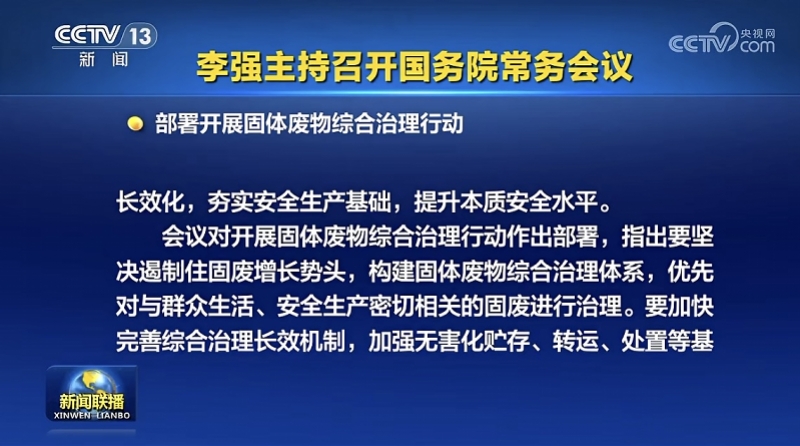
国务院总理李强主持召开国务院常务会议:提升固废资源化利用水平
Xin Lang Cai Jing· 2025-12-21 12:29
Group 1 - The State Council emphasizes the need for solid waste comprehensive governance to curb the growth of solid waste and enhance resource utilization levels [1][2] - The solid waste treatment sector in A-shares has shown remarkable performance this year, with a cumulative increase of 30.41% as of December 19, marking the best performance since 2018 [1] - The meeting highlighted the importance of adhering to the principle of "whoever pollutes, whoever governs" in solid waste management [2] Group 2 - As of October 2023, a total of 113,738 inspection points were identified nationwide, with 14,037 issues discovered, primarily related to construction waste, household waste, and general industrial solid waste [3] - The Ministry of Ecology and Environment plans to enhance special rectification efforts and monitor progress dynamically, ensuring effective remediation of identified issues [3]
香港瞄准报废飞机“后半生”,重塑全球航空产业链话语权
Guan Cha Zhe Wang· 2025-12-21 10:13
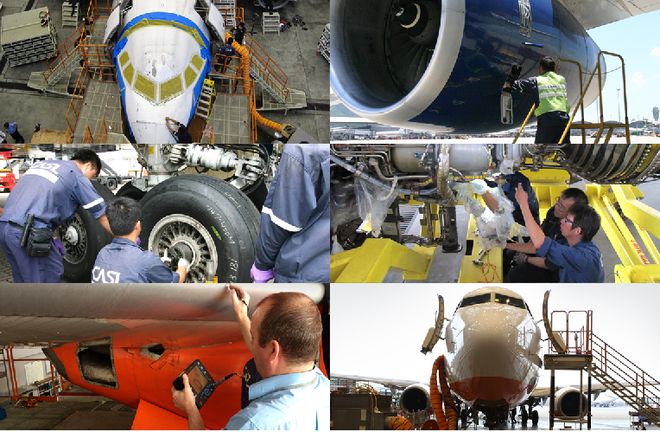
Core Viewpoint - The aircraft recycling and second-hand parts trading industry is emerging as a high-end sector that integrates high technology, finance, and the circular economy, transforming retired aircraft into valuable resources rather than waste [1][2]. Group 1: Industry Development - The Hong Kong International Aviation Academy has partnered with Elior Group to establish an aircraft engineering training center in Hong Kong, aiming to create a leading aircraft recycling and parts trading market in Asia [1][4]. - The training center is expected to commence courses in the first quarter of 2026, marking the beginning of high-quality development in Hong Kong's aircraft recycling and parts trading market [4][5]. - The industry is characterized by high barriers to entry, requiring significant capital and specialized talent, with Hong Kong positioned to become a new global center for aircraft asset management and technological innovation [2][5]. Group 2: Economic Impact - The collaboration between Hong Kong and Elior Group is anticipated to stimulate the development of related industries such as trade, insurance, finance, and leasing, creating high-value job opportunities [4][6]. - The training center will provide comprehensive courses for current aviation maintenance personnel, enhancing skills in aircraft structure, system operation, and relevant regulations [5][7]. - The global aircraft dismantling service market is projected to grow from approximately $97 million to $180 million by 2027, with the used parts market expected to reach $3 billion [7][8]. Group 3: Strategic Importance - The establishment of the training center and aircraft recycling market will enhance Hong Kong's influence and irreplaceability in the global aviation supply chain [6][8]. - The initiative aligns with global trends towards sustainability and circular economy, positioning Hong Kong as a key player in the aviation industry's asset lifecycle management [8][9]. - The project is seen as a strategic move to leverage Hong Kong's advantages in expanding high-end services, contributing to economic growth and providing a reliable supply chain for the aviation sector [9].
共话中国经济新机遇丨专访:海南将成为具备全球竞争力的枢纽——访世界自由区组织首席执行官昂鲁尼
Xin Hua She· 2025-12-21 01:42
Core Viewpoint - Hainan Free Trade Port's full island closure operation is a key measure for establishing a high-standard free trade system, demonstrating China's commitment to advancing institutional openness [1] Group 1: Hainan Free Trade Port Developments - The full island closure operation of Hainan Free Trade Port was launched on December 18, marking a significant step in China's efforts to expand high-level openness and build an open world economy [1] - The operation is expected to accelerate trade flow, promote industrial development, and attract investments in manufacturing, services, and advanced logistics, positioning Hainan as a globally competitive hub [1] Group 2: Global Supply Chain and Innovation - Free trade zones and ports are becoming comprehensive nodes in regional and global supply chains, serving as hubs for modern logistics, digital economy, high-value-added services, and sustainable development projects [1] - To maintain competitiveness and differentiation, free trade zones and ports must possess innovative capabilities, particularly in key areas such as digital customs, automation technology, and circular economy [1] Group 3: International Cooperation and Opportunities - Hainan Free Trade Port has well-developed infrastructure, efficient transportation systems, and high-quality hotel services, providing significant development advantages [2] - The port aims to strengthen cooperation with ASEAN, South Asia, and the Middle East in maritime, aviation, and digital economy sectors, potentially becoming an important platform for regional cooperation [2] - China's high-standard construction of Hainan Free Trade Port sends a clear signal to the world, showcasing its commitment to high-level openness and offering new development opportunities for developing countries and emerging market economies [2]
海南将成为具备全球竞争力的枢纽
Xin Lang Cai Jing· 2025-12-20 21:04
Core Viewpoint - The establishment of the Hainan Free Trade Port's full island closure operation is a key measure for building a high-standard free trade system, demonstrating China's commitment to advancing institutional openness [1][2] Group 1: Hainan Free Trade Port Operations - The Hainan Free Trade Port commenced its full island closure operation on December 18, marking a significant step in China's efforts to expand high-level openness and promote an open world economy [1] - The closure operation is expected to accelerate trade flow, promote industrial development, and attract investments in manufacturing, services, and advanced logistics, positioning Hainan as a globally competitive hub [1] Group 2: Global Supply Chain and Innovation - Free trade zones and ports have become comprehensive nodes in regional and global supply chains, serving as hubs for modern logistics, digital economy, high-value services, and sustainable development projects [1] - To maintain competitiveness and differentiation, free trade zones and ports must possess innovative capabilities, particularly in key areas such as digital customs, automation technology, and circular economy [1] Group 3: Development Advantages and Regional Cooperation - Hainan Free Trade Port boasts well-developed infrastructure, an efficient transportation system, and high-quality hotel services, providing significant development advantages [1] - Future efforts will focus on strengthening cooperation with ASEAN, South Asia, and the Middle East in maritime, aviation, and digital economy sectors, potentially establishing Hainan as an important platform for regional cooperation [1]
国常会最新部署:固废治理升格为国家行动 循环产业迎新机遇
Nan Fang Du Shi Bao· 2025-12-20 13:52
Core Viewpoint - The State Council has made clear deployments for the comprehensive management of solid waste, emphasizing the need for a systematic approach to curb the growth of solid waste and promote recycling and resource utilization [1][2]. Group 1: Policy Development - The concept of "comprehensive solid waste management action" was first introduced at the Central Economic Work Conference at the end of 2024, with a task set for 2025 to formulate an action plan [1]. - The pace of this initiative has accelerated since 2025, with the National Ecological Environment Protection Work Conference in January 2025 highlighting the formulation of the action plan as a key annual task [1]. - The Ministry of Ecology and Environment has been actively involved in discussions and workshops to address key issues in solid waste management, indicating that the action plan is nearing completion and expected to be implemented next year [1]. Group 2: Systematic Approach - The recent State Council meeting outlined a systematic and targeted approach to solid waste management, focusing on reduction, resource utilization, and harmless disposal [2]. - The meeting emphasized the importance of establishing a long-term mechanism for comprehensive management, adhering to the principle that "those who pollute should manage" [4]. - Infrastructure improvements for harmless storage, transportation, and disposal of solid waste are prioritized to enhance resource utilization and promote a circular economy [4]. Group 3: Alignment with National Strategy - The implementation of the solid waste management action aligns with China's strategy to develop a circular economy and improve resource efficiency [4]. - As of the end of 2024, approximately 150,000 waste recycling points and about 1,800 sorting centers are expected to be established, with a target for the comprehensive utilization rate of major solid wastes to reach 59% by 2024, an increase of 3 percentage points from 2020 [4].