
端侧AI

Search documents
【转|太平洋电子-达瑞电子深度】AI终端轻量化平台公司,服务头部品牌助力爆款品类
远峰电子· 2025-11-16 08:42
Core Insights - The company has established itself as a key supplier in the consumer electronics and new energy sectors, focusing on lightweight materials and functional components [5][10][20] - Revenue for Q3 2025 reached 2.278 billion yuan, marking a year-on-year growth of 28.59%, driven by increased demand for structural components in electronic products and new energy applications [14][17] - The company has a strong customer base, including major brands like Apple, Samsung, and Tesla, which enhances its market position and revenue stability [5][20] Revenue and Profitability - The company is projected to achieve revenues of 31.99 billion yuan, 46.53 billion yuan, and 55.73 billion yuan from 2025 to 2027, with corresponding net profits of 3.08 billion yuan, 4.55 billion yuan, and 5.78 billion yuan [32][33] - The compound annual growth rate (CAGR) for revenue from 2019 to 2024 is expected to be 24.24%, indicating robust growth despite recent economic challenges [13][14] - The gross margin for the consumer electronics segment has remained above 60%, with a notable increase to 66.38% in the first half of 2025, highlighting the segment's profitability [17][20] Strategic Initiatives - The company has made strategic acquisitions, such as the purchase of carbon fiber manufacturer Vistech, to enhance its capabilities in lightweight materials and strengthen its competitive edge [20][22] - The focus on large clients and the development of lightweight material technology platforms positions the company to capitalize on the growing demand for AI-enabled devices and new energy solutions [22][25] - The company is actively expanding its presence in the new energy sector, supplying components to leading firms like CATL and BYD, which broadens its market reach [5][10] Market Trends - The global edge AI market is expected to grow significantly, with a projected CAGR of 39.6% from 2025 to 2029, creating opportunities for companies involved in electronic device upgrades [22] - The demand for AI smartphones is anticipated to rise sharply, with expected shipments accounting for 54% of global smartphone sales by 2028, indicating a shift in consumer preferences [22][28] - The MR (Mixed Reality) market is also poised for growth, with projections suggesting that the VR industry in China could exceed 70 billion yuan by 2030, driven by technological advancements [29]



瑞芯微:在智能座舱领域,RK3588M量产车型已达几十余款
Ju Chao Zi Xun· 2025-11-15 03:53
Core Viewpoint - The company has made significant progress in multiple product lines within the automotive electronics sector, particularly in smart cockpit solutions and audio systems, with a strong focus on AI technology integration [2] Group 1: Automotive Electronics Progress - The company has closely collaborated with several domestic automakers in the smart cockpit field, resulting in the mass production of dozens of vehicle models, with more models and customers expected to be added next year [2] - In the in-vehicle audio sector, the company's RK2118M and RK2116M chips have been adopted in over thirty projects, with ongoing expansion of clients and projects, leading to the gradual release and mass production of new vehicle models [2] - The company is promoting its RK182X smart cockpit AIBox solution, which offers a convenient upgrade path for traditional vehicles through multimodal fusion perception technology [2] Group 2: AI Technology and Market Potential - Driven by innovations in AI technology, the application scenarios for edge AI are rapidly expanding across various fields, including automotive, robotics, education, healthcare, and agriculture, indicating vast market opportunities [2] - According to IDC research, the AIoT market in China is projected to exceed 3.2 trillion yuan by 2025 and is expected to reach 8.6 trillion yuan by 2030, positioning it as the largest AIoT market globally [2] Group 3: Future Product Development - The company is actively developing next-generation products, with flagship chip RK3688 and sub-flagship chip RK3668 currently in design, slated for release next year [2] - The next-generation edge computing co-processor RK1860 is being developed at an accelerated pace, with an expected launch in the first half of next year, contributing to a series of co-processor layouts [2]


芯原股份戴伟民:AI眼镜仍处于技术验证与生态构建阶段
Ju Chao Zi Xun· 2025-11-14 16:09
Core Insights - The AI market at the edge is currently in an "acceleration phase," with a focus on the application of new terminal forms, particularly AI glasses, which are becoming a focal point in the industry [1] - AI glasses are expected to reshape user experiences in digital life and social scenarios, with broad application potential across consumer electronics, industrial, and medical fields [1] - The current stage of AI glasses is characterized by technology validation and ecosystem building, with significant challenges remaining before widespread adoption, particularly in terms of power consumption and efficiency [1] Company Developments - The company is actively optimizing and industrializing technology platforms related to AI glasses, collaborating with several leading global AI/AR/VR eyewear manufacturers [3] - A recent announcement revealed a partnership with Google to launch the Coral NPU IP, aimed at "always-on," ultra-low power edge applications for large language models [3] - The company is developing verification chips based on this IP for AI/AR glasses and smart home scenarios, facilitating the deployment of large language models at the edge [3] Industry Challenges - For edge AI devices, especially AI glasses, transitioning from concept-heavy releases to true large-scale commercialization requires advancements in computing power, power consumption, algorithms, and content ecosystems [3] - Collaboration with international ecosystem partners on NPU IP and chip platforms is expected to strengthen the company's technical and ecological positioning within the edge AI industry chain [3]

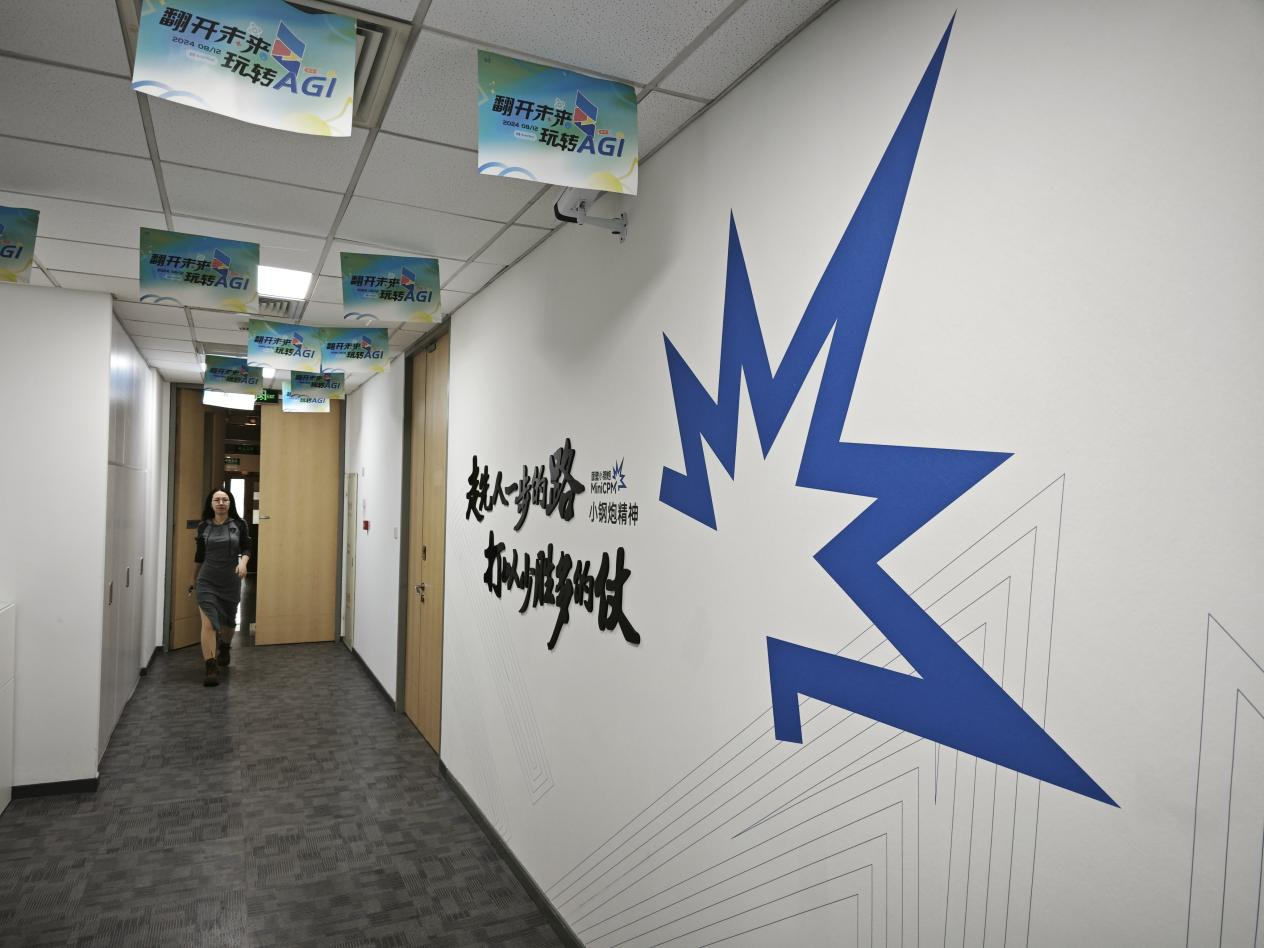
面壁智能:以小博大,清华园走出端侧AI“面壁者”
Xin Jing Bao· 2025-11-14 13:12
Core Insights - The article highlights the emergence of Beijing Mianbi Intelligent Technology Co., Ltd. as a significant player in the AI field, focusing on efficient edge AI models that operate smoothly on devices like smartphones and cars [1][2][3] - The company, founded by a team from Tsinghua University, has developed the MiniCPM series of edge models, which have outperformed larger models in terms of performance with fewer parameters [1][2][3] - Mianbi Intelligent's approach represents a shift in China's AI landscape from being a follower to an innovator, emphasizing the importance of efficiency and reducing reliance on extensive computational resources [1][2][3] Company Background - Mianbi Intelligent was established in August 2022, building on over a decade of deep learning experience from its core team at Tsinghua University [2][3] - The company trained the world's first Chinese open-source large model, CPM, in December 2020, which laid the groundwork for subsequent models [2][3] Technological Innovations - The company introduced the concept of "Density Law," which suggests that model capability can be increased without proportionally increasing the number of parameters, allowing for more efficient models [3][4] - The MiniCPM model, launched in February 2024, achieved performance exceeding that of models with over 100 billion parameters using only 2.4 billion parameters [3][4] - Recent releases, including MiniCPM 4.1 and MiniCPM V4.5, have demonstrated significant speed improvements and have gained recognition in the international open-source community [6][7] Future Vision - Mianbi Intelligent aims to develop autonomous reinforcement learning technologies, which would allow models to create their own data for learning, marking a significant advancement in AI capabilities [6][7] - The company anticipates a tenfold increase in the number of devices utilizing its edge models in the near future, indicating a strong growth trajectory [7]
未来领跑者|面壁智能:以小博大,清华园走出端侧AI“面壁者”
Bei Ke Cai Jing· 2025-11-14 13:06
Core Insights - The article highlights the emergence of Beijing Mianbi Intelligent Technology Co., Ltd. as a significant player in the AI field, focusing on efficient edge AI models that operate smoothly on devices like smartphones and cars [2][3][18] - The company, founded by a team from Tsinghua University, has developed the MiniCPM series of edge models, which have outperformed larger models in terms of performance with fewer parameters [2][12] Company Overview - Mianbi Intelligent was established in August 2022, leveraging over a decade of deep learning experience from its core team at Tsinghua University [7] - The company has positioned itself uniquely in the market by focusing on edge models rather than competing directly with large-scale models [8][9] Technological Innovations - The company introduced the concept of "Density Law" for large models, which emphasizes packing more knowledge into fewer parameters, allowing for significant performance improvements [10][12] - Mianbi's MiniCPM model, with only 2.4 billion parameters, has achieved performance levels comparable to models with over 100 billion parameters [12] Market Position and Strategy - Mianbi Intelligent has successfully avoided direct competition with major players in the large model space, instead building a strong knowledge base and methodology to create its own competitive advantage [13] - The company has released several models, including MiniCPM 4.1 and MiniCPM V4.5, which have gained recognition in the international open-source community [14] Future Vision - The company aims to develop autonomous reinforcement learning technologies, which would allow models to create their own data for learning, marking a significant shift in AI learning paradigms [16] - Mianbi Intelligent envisions a future where its edge models can be widely deployed in consumer devices, potentially leading to a tenfold increase in the number of devices using their technology by 2025 [18]
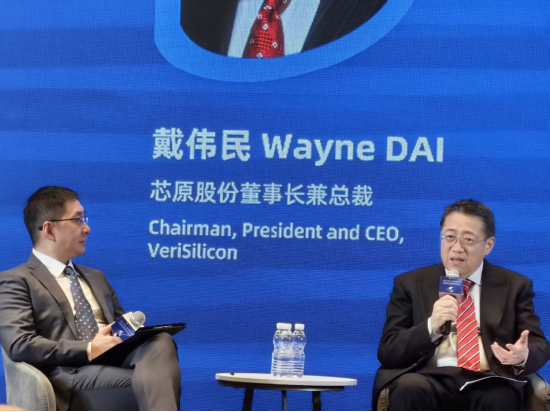
芯原股份董事长兼总裁戴伟民:当前AI眼镜仍处于技术验证与生态构建阶段
Zhong Zheng Wang· 2025-11-14 06:00
Core Insights - The AI edge market is in an acceleration phase with new applications emerging continuously, particularly in AI glasses, which are transitioning from a "hundred models" competition to a "hundred glasses" competition [1] - AI glasses are expected to revolutionize digital life and social interactions due to their natural human-computer interaction interfaces and enhanced local AI processing capabilities, showing significant potential in consumer electronics, industrial, and medical fields [1] - Current challenges for AI glasses include power consumption and efficiency, which are critical for achieving lightweight and long standby times, necessitating small model processing capabilities [1] Company Developments - The company is focusing on optimizing the technology platform and industrialization of AI glasses, collaborating with several leading global AI/AR/VR glasses clients [1] - On November 13, the company announced a partnership with Google to launch the Coral NPU IP, aimed at always-on, ultra-low power edge applications for large language models [1] - The company is developing verification chips based on Coral NPU IP for AI/AR glasses and smart home applications to accelerate the deployment of large language models at the edge [1]
芯原股份戴伟民:聚焦AIASIC芯片布局端侧小模型抢占增量市场
Xin Lang Cai Jing· 2025-11-14 04:35
Core Viewpoint - The Shanghai Stock Exchange International Investor Conference highlighted the trends in the AI chip industry, focusing on the company's technology layout and application scenarios, particularly in the AI ASIC chip sector [1] Group 1: AI ASIC Chip Industry Insights - The chairman of the company clarified the misconceptions regarding the technical layout and application directions of general-purpose GPU chips versus AI ASIC chips, emphasizing the ongoing updates of large models [1] - The company's customization capabilities have been validated in the market, establishing it as a leading entity in the domestic semiconductor IP sector, often referred to as "China's first semiconductor IP stock" [1] Group 2: Market Trends and Opportunities - The company asserted that "edge AI is crucial," indicating that while the market is currently focused on cloud training chips, the edge market is poised for significant growth [1] - In the consumer electronics sector, leading domestic smartphone manufacturers are already investing in edge AI technologies, suggesting a burgeoning demand in this area [1]
芯原股份戴伟民:聚焦AI ASIC芯片 布局端侧小模型抢占增量市场
Xin Lang Zheng Quan· 2025-11-14 04:04
Core Insights - The Shanghai Stock Exchange International Investor Conference was held on November 12-13, focusing on trends in the AI chip industry and the company's strategic positioning in AI ASIC chips [1] Group 1: Company Strategy and Market Position - The company clarifies the distinction between general-purpose GPU chips and AI ASICs, emphasizing that while GPUs support flexible computing needs in cloud environments, AI ASICs focus on performance, efficiency, and cost [3] - The company has established a strong presence in AI acceleration processors, including GPU, GPGPU, and ASIC, positioning itself favorably in the AI market despite not directly competing in AI chip products [3] - The company's stock price has increased approximately sevenfold from September 23 of last year to the same period this year, reflecting positive market recognition of its value [3] Group 2: Industry Trends - The company highlights the importance of edge AI, noting that while cloud training chips are currently in focus, the edge market is poised for significant growth [4] - Collaborations with leading domestic smartphone manufacturers for camera optimization demonstrate the company's proactive approach in the consumer electronics sector [4] - The urgency for upgrading edge computing capabilities is underscored by Microsoft's standard that AI PCs must have at least 40 TOPS of computing power, which the company is already addressing [4]
【消费电子分化中蓄势:个股涨跌互现,AI眼镜渗透率有望持续提升】
Mei Ri Jing Ji Xin Wen· 2025-11-14 02:14
Group 1 - A-shares experienced a collective decline on November 14, with the Shanghai Composite Index dropping by 0.15% during intraday trading [1] - The sectors showing gains included oil and petrochemicals, textiles and apparel, and real estate, while electronics and communications faced the largest declines [1] - The Consumer Electronics ETF (159732.SZ) fell by 1.84%, with notable performances from companies like Heatail (002402) up by 6.75%, Transsion Holdings up by 1.26%, and O-film (002456) up by 1.07% [1] - Conversely, companies such as Baiwei Storage and Zhaoyi Innovation (603986) performed poorly, with declines of 12.00% and 7.89% respectively [1] Group 2 - According to Loto Technology, the retail volume of smart glasses in China is expected to approach 1.4 million units by 2025, representing a year-on-year increase of 216% [1] - For XR devices (including VR/MR/AR), the total retail volume is projected to reach 646,000 units for the year, reflecting a year-on-year growth of 20.6% [1] - Shanghai Securities indicated that AI glasses, as a significant carrier of edge AI, are expected to see a continuous increase in penetration rate, driven by ongoing innovations in AI technology [1]
专访时空壶CEO:不惧苹果入局 AI翻译耳机远未到终局
3 6 Ke· 2025-11-13 00:32
Core Insights - The rise of AI translation technology is expected to disrupt the hardware market, particularly in the TWS (True Wireless Stereo) earphone segment, where major companies like Apple dominate with a 23% market share [1][2] - The translation industry is still in its early stages, with many companies, including Timekettle, striving to differentiate themselves in a crowded market [2][5] - Timekettle's founder emphasizes the importance of understanding cultural context in translation, suggesting that current AI capabilities only achieve 10-20% accuracy in this regard [3][16] Industry Overview - The demand for translation technology is evident, and it is anticipated that all major brands will eventually incorporate translation features into their earphones [2] - The market has seen an influx of white-label products since AI translation software became free around 2023, leading to increased competition [2] - Timekettle aims to maintain a hardware-first approach, focusing on delivering a natural conversation experience through its translation earphones priced around 1,000 yuan [2][10] Competitive Landscape - Timekettle's strategy contrasts with that of larger companies, which tend to add translation features to existing ecosystems rather than rethinking the entire communication system [8][9] - The founder of Timekettle believes that the current competition is not particularly intense, as the industry is still maturing [6][8] - Timekettle has achieved profitability and prioritizes sustainable growth over rapid revenue increases [10] Technological Development - The company is exploring "edge AI" to enhance performance in areas with poor network conditions, which is crucial for effective communication [10] - Timekettle is also researching multi-modal interaction methods, such as understanding tone and gestures, to improve user experience [11] - The goal is to elevate AI translation capabilities from L3 to L4 within the next 2-3 years, focusing on empathy and nuanced understanding in translations [15][18] Future Outlook - The translation industry is expected to evolve significantly, with advancements in AI technology leading to better cultural understanding and more natural communication [16][18] - Timekettle plans to leverage its expertise in specific cultural contexts to enhance its product offerings, while larger companies may focus on foundational technology [16][18]