
AI智能体

Search documents
AI智能体试水“抢购物券” 手机厂商转向:不拼参数拼应用
Di Yi Cai Jing· 2025-10-18 10:49
Core Insights - The article discusses the evolving landscape of AI in the smartphone industry, particularly focusing on Chinese manufacturers adapting to new strategies in AI application development and deployment [1][10]. Group 1: AI Development Strategies - U.S. AI companies are creating a new ecosystem by investing in computational power for large model applications, with OpenAI and NVIDIA leading the charge [1]. - Chinese manufacturers are shifting their focus from competing on large model parameters to utilizing smaller models for practical applications, emphasizing cost-effectiveness and real-world usability [1][2]. - The development of AI capabilities in smartphones is increasingly centered on enhancing user experience through practical applications rather than merely increasing computational power [10]. Group 2: Practical Applications of AI - Chinese smartphone brands are showcasing advancements in AI that allow for proactive user interactions, such as predicting user actions and automating tasks [3][4]. - Honor's CEO highlighted the ability of AI to enhance user experience by simplifying complex tasks into single-step actions, demonstrating the practical benefits of AI integration [3][4]. - Vivo and OPPO are also exploring AI applications, with Vivo focusing on content organization and OPPO developing features for automatic bill recognition and memory assistance [5][4]. Group 3: Challenges in AI Implementation - Despite initial successes, the smartphone industry faces challenges such as power consumption, computational demands, and cost pressures that hinder widespread AI adoption [7][8]. - The need for additional investments in specialized hardware, such as NPU chips, increases costs significantly, impacting profit margins for manufacturers [8]. - The reliance on cloud support for complex tasks indicates that current mobile AI capabilities are still limited, necessitating further development [7]. Group 4: Market Trends and Future Outlook - The number of AI-supported scenarios in smartphones is rapidly increasing, with manufacturers reporting significant growth in the capabilities of their AI systems [9]. - The trend towards integrating AI into smartphones is expected to continue, with projections indicating that the percentage of smartphones supporting generative AI will rise significantly by 2029 [9]. - The article concludes that Chinese smartphone manufacturers are at the forefront of AI development, with their focus on practical applications potentially leading to a new commercial cycle in the industry [10].
AI智能体试水“抢购物券”,手机厂商转向:不拼参数拼应用
Di Yi Cai Jing· 2025-10-18 10:44
Core Insights - The article discusses the shift in the Chinese AI market from competing on large model parameters to focusing on practical applications and smaller models, emphasizing cost-effectiveness and usability [1][11] - Chinese smartphone manufacturers are increasingly integrating AI capabilities into their devices, enhancing user experience through features like proactive assistance and improved interaction methods [2][5][10] Group 1: Industry Trends - Chinese companies are moving away from the costly race to build massive AI models, recognizing the unsustainable nature of such investments [1] - The focus has shifted to developing smaller, more efficient models that can be applied in real-world scenarios, allowing for faster deployment and better user experience [1][11] - The introduction of DeepSeek's open-source model has leveled the playing field, enabling smaller models to achieve comparable AI capabilities [8] Group 2: Technological Advancements - AI integration in smartphones is advancing, with features that allow for one-click operations and proactive suggestions based on user behavior [2][5] - Companies like Honor and Vivo are reporting significant increases in the number of AI-supported scenarios, indicating rapid growth in AI application [9] - The development of AI capabilities is not only about enhancing performance but also about optimizing hardware efficiency and user interaction [5][6] Group 3: Challenges and Considerations - Despite advancements, the industry faces challenges related to power consumption, computational demands, and cost pressures, which have hindered significant sales growth in smartphones [7][8] - The need for additional investments in specialized hardware, such as NPU chips, poses a risk to profit margins for smartphone manufacturers [8] - The industry is recognizing that merely increasing computational power is not a viable long-term strategy; practical application and user experience are becoming the primary focus [8][11]

为什么说AI智能体最大的价值,是悄悄嵌入工作流里?
3 6 Ke· 2025-10-18 00:06
Core Insights - The article emphasizes that AI agents are not standalone products but rather catalysts for business processes, urging a shift in perspective on their role in technology [1][12]. Group 1: Understanding AI Agents - AI agents are defined as large language model (LLM) agents, which can be simplified to LLM + tools + memory, highlighting their foundational components [1]. - The development of approximately 300 AI agents has provided insights into effective methods and future directions in the field [1][2]. Group 2: Frameworks and Development - The importance of focusing on core application processes rather than being limited by specific frameworks is highlighted, with various frameworks like crewai, dspy, and langgraph being utilized [3]. - A solid software engineering foundation is deemed essential for effectively utilizing AI agents, as the role often involves API calls and prompt engineering rather than advanced AI/ML skills [4]. Group 3: Context and Tools - The quality of an AI agent is significantly influenced by the context provided, including prompts, tools, and memory, rather than solely relying on the capabilities of the language model [5]. - Tools are essential for AI agents to function effectively; without them, agents become ineffective [6][7]. Group 4: Design and Evaluation - Simplicity in design is crucial for effective AI agents, with successful agents often having clear prompts, defined tools, and specific responsibilities [8]. - The importance of establishing testing and feedback loops is emphasized as a means to differentiate between toy projects and reliable production systems [9]. Group 5: Future Directions and Cultural Aspects - DSPy is identified as a promising framework for developing AI agents, with its features being user-friendly and intuitive [10]. - The collaboration with startups has underscored that the human element, including a culture of experimentation and clear vision, is more critical than technology alone [11]. - The development of AI agents is still in its early stages, with potential for integration into various products to enhance workflows and user experiences [12].
双十一购物入口的AI革命:荣耀MagicOS10自进化能力撬动生态价值重估
Zhong Guo Jing Ji Wang· 2025-10-17 13:27
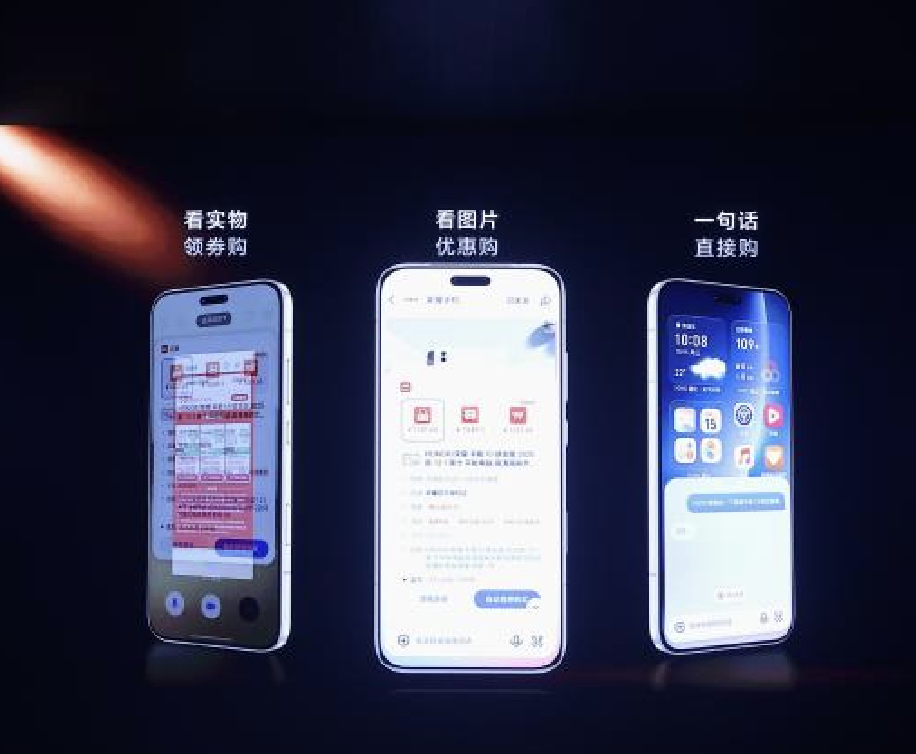
Core Insights - The 2023 Double Eleven shopping festival features an extended duration from October 9 to November 14, marking the longest event in its history. The festival promotes "extended duration + simplified rules + multiple subsidies" [1] - The introduction of AI smartphones, particularly the Honor Magic8 series with the YOYO AI assistant, transforms the shopping experience by automating price comparisons and coupon retrieval, shifting from a manual search process to an "intention as service" model [1][2] Group 1 - The evolution of AI assistants from mere tools to decision-making partners signifies a major shift in technology, moving towards autonomous learning and continuous evolution, which is essential for future AI capabilities [2] - The Honor Magic8 series features the industry's first growth-oriented hardware system, utilizing AI dynamic scheduling for intelligent performance and energy consumption balance, indicating a shift from static hardware to an organic growth model [2] - YOYO AI assistant has expanded its functionality beyond simple tasks to become a versatile companion for shopping, dining, travel, health, and work, integrating e-commerce platforms and developer ecosystems into a new user-agent-service model [3] Group 2 - The transformation of AI assistants into new traffic distribution centers allows for complex intent understanding and multi-step operation completion, fundamentally changing user interaction from app navigation to direct AI dialogue [3] - Honor's strategy is evolving from competing with iPhone to developing AI smartphones and eventually "robot phones," indicating a clear path for future AI terminal development [4] - Honor aims to create an open, co-creative, and shared AI terminal ecosystem centered on user needs, ushering in a new era of evolution for all [4]
智能体排名:金智维智能体、钉钉AI助理、百度文小言等分别擅长行业
Sou Hu Cai Jing· 2025-10-17 10:12
Core Insights - In 2025, AI agent technology is deeply integrated across various industries, reshaping work models with unprecedented momentum. The effectiveness of these agents is closely tied to their technological foundation and industry knowledge reserves [1]. Industry AI Agent Application Landscape - **Healthcare Sector: Jingyi Qianxun** Jingyi Qianxun, a product under JD.com, will be fully open-sourced in 2025, becoming the first fully open-source vertical large model in China's healthcare industry. It aims to build an AI health service matrix that leverages a robust medical knowledge base to facilitate precise online consultations and health management, advancing the smart transformation of medical services [2]. - **Financial Sector: Jinzhihui Ki-AgentS** Jinzhihui Ki-AgentS integrates large model decision-making capabilities with RPA verification engines, utilizing over a decade of accumulated financial expertise. It achieves high-precision execution in scenarios such as bank transaction analysis, bond report generation, and credit approval, effectively mitigating human errors and the risks associated with large model hallucinations [3]. - **Administrative Office Sector: DingTalk AI Assistant** The DingTalk AI Assistant is deeply integrated into the DingTalk ecosystem, focusing on the intelligent needs of daily office scenarios. It offers capabilities such as weekly report management, email processing, and meeting minutes generation, providing a convenient and efficient administrative efficiency enhancement solution for enterprises using DingTalk [3]. - **Search Services Sector: Wenxiaoyan** Wenxiaoyan, a new search intelligent assistant launched by Baidu, supports fuzzy questioning and multimodal interaction. Users can customize subscriptions for various information content based on their needs and enjoy scheduled push services, reshaping the personalized information retrieval experience [4]. - **Automotive Interaction Sector: Jinzhihui Vehicle Machine Intelligent Agent** Jinzhihui's vehicle machine intelligent agent adheres to the core concept of "voice as operation," supporting complex multi-task processing in various scenarios. Through API plugin configuration, it seamlessly integrates vehicle systems with external application ecosystems, enhancing the driving experience by allowing users to control smart home scenarios and devices via voice commands [4]. - **Gaming and Virtual Interaction Sector: NetEase Fuxi** NetEase Fuxi focuses on high-level needs such as virtual idol live streaming and metaverse construction, leveraging its technical advantages in gaming AI. It excels in the intricacy of virtual human interactions, meeting the stringent quality demands of game manufacturers and digital twin projects [5]. AI Agent and RPA Integration - AI agents, while superior in intelligence, face challenges in practical application, including the "hallucination risk" of large models and lower operational precision compared to RPA. In high-accuracy and compliance-demanding fields like finance and government, these risks are unacceptable. Therefore, AI agents and RPA are complementary rather than substitutive, creating a closed-loop system of "AI thinking + RPA execution" for secure and reliable enterprise-level intelligence [6]. AI Agent Selection Recommendations - Companies should prioritize the "industry fit" of AI agents rather than merely chasing superficial technical specifications. This involves clearly defining the attributes of their business scenarios, assessing the vendor's knowledge accumulation in the target field, and ensuring the reliability and safety of the AI agent's execution, particularly for critical systems. Selecting an AI agent that aligns with specific business needs is more crucial than pursuing cutting-edge technology [7][8].

《AI智能体的崛起》作者佩塔尔·拉达尼列夫出席可持续全球领导者大会
Xin Lang Zheng Quan· 2025-10-17 04:06
Core Insights - The 2025 Sustainable Global Leaders Conference will be held from October 16 to 18 in Shanghai, focusing on global action, innovation, and sustainable growth [1] - The conference is co-hosted by the World Green Design Organization (WGDO) and Sina Group, with support from the Shanghai Huangpu District Government [1] - Approximately 500 prominent guests, including 100 international attendees, will participate, featuring political figures, Nobel laureates, and leaders from Fortune 500 companies [1] Group 1 - The conference aims to explore new pathways for sustainable development and inject "Chinese momentum" into global sustainable governance [1] - It builds upon the previous four editions of the "ESG Global Leaders Conference" and will cover nearly 50 topics, including energy and "dual carbon," green finance, sustainable consumption, and technology and public welfare [1] Group 2 - Petar Radanliev, a researcher from the Alan Turing Institute and a lecturer at the University of Oxford, will deliver a keynote speech at the conference [2]
凯文·凯利:五年内,中国或做出世界上最好的人工智能芯片
新浪财经· 2025-10-16 23:39
Core Viewpoint - The 2025 Sustainable Global Leaders Conference emphasizes the importance of artificial intelligence (AI) in achieving sustainable development, as highlighted by Kevin Kelly, a prominent technology forecaster and founder of Wired magazine [2][4]. Group 1: AI and Sustainable Development - AI is a powerful enabling technology that can accelerate the realization of other technologies necessary for sustainable development [4]. - The complexity of the natural world makes it difficult for humans to understand and manage it, but AI serves as an effective tool for this purpose [4]. Group 2: Frontiers of AI - Kevin Kelly discusses three frontier topics in AI: spatial intelligence, emotional intelligence, and AI agents [5]. - Spatial intelligence is currently lacking in AI, which struggles with real-world tasks such as grasping objects or understanding physical puzzles [6]. - The development of smart glasses and augmented reality (AR) is crucial for enhancing spatial intelligence, allowing AI to interact with the physical world [6]. Group 3: Emotional Intelligence - Emotional intelligence in AI is identified as a key area for future development, enabling AI to perceive and respond to human emotions [7]. - The potential for AI to form emotional connections with humans, similar to relationships with pets, is highlighted as a significant advancement [7]. Group 4: AI Agents and Economy - AI agents represent a multitude of AI variations that can interact and collaborate, with the potential for a trillion AI agents to work together invisibly [8][9]. - The concept of an "AI agent economy" is introduced, where AI agents can autonomously conduct transactions and solve complex problems [9]. - Questions regarding ownership and control of AI agents are raised, emphasizing the need for trust in technology as society transitions to this new era [9]. Group 5: Future of AI and Human Value - AI is expected to evolve into a service that can be bought and sold, similar to electricity, with the true value lying in users who understand and utilize AI [10]. - Despite the rise of AI, human responsibility and the ability to learn continuously will remain valuable traits in the workforce [10]. - The competition between the US and China in AI development is noted, with a focus on how AI can enhance China's global standing and soft power [10][11]. Group 6: China's Role in AI and Sustainability - China is anticipated to lead in AI chip development and sustainable technologies, potentially returning to the moon ahead of the US [11]. - The vision for a "cool" China includes exporting self-operating factories and advanced technologies globally, contributing to sustainable development [11].

你口袋里的AI革命,开始了
华尔街见闻· 2025-10-16 13:36
Core Viewpoint - The article discusses the emergence of AI Phones, particularly the Honor Magic8 series, as a transformative force in the smartphone industry, marking a shift towards AI-driven consumer experiences and reshaping the e-commerce landscape [2][11][29]. Group 1: AI Phone Revolution - The Honor Magic8 series is the first "self-evolving AI native phone," which signifies the beginning of the AI Phone era, enhancing user experience from passive service seeking to active service provision [2][4]. - The YOYO intelligent system embedded in the Magic8 can optimize consumer decisions across various daily life scenarios, indicating a significant upgrade in the AI Phone industry chain [4][10]. - The AI Phone is expected to drive a new wave of growth in the smartphone market, addressing the long replacement cycles of devices, which have extended to an average of 43 months [16][17]. Group 2: E-commerce Transformation - The YOYO intelligent system addresses the complexities of shopping apps, enabling automatic discount calculations across multiple platforms, thus improving user decision-making efficiency [10][11]. - The introduction of AI intelligent systems is set to disrupt traditional e-commerce value chains by shifting the focus from traffic bidding to demand matching, allowing businesses to gain exposure by meeting user needs rather than competing for visibility [11][12]. - Analysts predict that the application market for enterprise-level intelligent systems in China could exceed $27 billion by 2028, highlighting the growing importance of AI in driving economic growth [12]. Group 3: Future of AI Devices - The Honor Magic8 series, equipped with the MagicOS 10, aims to create a fully interconnected ecosystem across various operating systems, marking a significant step towards a comprehensive AI terminal ecosystem [20][23]. - The exploration of future devices like the Robot Phone indicates a strategic shift for Honor from a smartphone manufacturer to an AI terminal ecosystem company, emphasizing the need for rich AI application scenarios [21][22]. - The focus on hardware-level security and localized data processing in AI Phones positions them as ideal carriers for user preference data, enhancing privacy and personalization [26][27].

AI场景新入口之争: 手机AI智能体正在撬动智能经济“新蓝海”
Zheng Quan Ri Bao· 2025-10-15 22:39
Core Insights - The article highlights a significant transformation in the mobile industry, driven by the emergence of AI agents, which are evolving from simple voice assistants to sophisticated, self-evolving AI systems that enhance user experience and decision-making [1][2][3]. Group 1: AI Agent Development - The introduction of the YOYO AI agent by Honor showcases the shift towards self-evolving AI native smartphones, capable of understanding user intent and automating tasks like coupon collection [1][2]. - Major smartphone manufacturers, including Honor, Huawei, Vivo, and OPPO, are competing to develop AI agents that can create new business models in various sectors such as shopping, travel, and home automation [1][2][3]. Group 2: Market Impact and Consumer Behavior - The upcoming "Double 11" shopping festival is expected to significantly change shopping behaviors, with AI agents replacing traditional search and comparison processes, thus becoming a new entry point for e-commerce [2]. - AI agents are transforming from passive tools to proactive partners, enhancing personalized services and reshaping user interactions with platforms [2][3]. Group 3: Industry Collaboration and Ecosystem Development - The shift towards AI agents is prompting a reconfiguration of relationships among hardware, software, and services, leading to a new ecosystem that integrates e-commerce platforms, developers, and hardware manufacturers [3][4]. - Companies are forming collaborative initiatives, such as the establishment of the IIFAA intelligent agent trust interconnection working group, to address challenges related to data privacy and standardization [6][7]. Group 4: Future Prospects and Economic Potential - The market for AI agents is projected to reach hundreds of billions, with self-evolving AI native smartphones becoming key entry points for the smart economy [5][6]. - Honor's upcoming global developer conference aims to further explore AI self-evolution technology and its implications for expanding the smart economy [7].
AI场景新入口之争:手机AI智能体正在撬动智能经济“新蓝海”
Zheng Quan Ri Bao· 2025-10-15 16:15
Core Insights - The article discusses the transformation of mobile phones from traditional smart devices to "self-evolving AI native phones," driven by the emergence of AI agents that enhance user interaction and decision-making [1][2][3]. Group 1: AI Agent Development - The YOYO AI agent, showcased by Honor, can automatically identify screen content and understand user intent, marking a significant advancement in mobile AI capabilities [1][2]. - AI agents are set to replace traditional shopping processes during events like "Double 11," becoming new entry points for e-commerce platforms [2][3]. - The shift from passive tools to proactive partners in user decision-making is highlighted, with AI agents now playing a central role in reshaping user interactions with platforms [2][3]. Group 2: Market Dynamics and Opportunities - The integration of AI agents into mobile devices is expected to create new business models in various sectors, including shopping, travel, and home automation [1][4]. - The overall market size driven by AI agents is projected to reach hundreds of billions, indicating a significant economic opportunity [5]. - The competition among major smartphone manufacturers, such as Honor, Vivo, and Huawei, is intensifying as they evolve from traditional voice assistants to advanced AI agents [2][3]. Group 3: Industry Collaboration and Challenges - The establishment of the IIFAA intelligent agent trust interconnection working group aims to address challenges related to data privacy, application execution, and ecosystem standards [6]. - Companies are increasingly focusing on collaborative innovation to overcome technical and commercial challenges in the AI landscape [6][7]. - Honor's upcoming global developer conference will further explore the AI self-evolution technology, emphasizing the importance of open standards and collaborative platforms in the industry [7].