大数据

Search documents
股东退出、机构清退!全年超4000家,哪些省份最多→
Jin Rong Shi Bao· 2026-01-20 10:24
2026年伊始,又一家金融租赁公司股权发生变更,多名股东退出。 根据1月12日国家金融监督管理总局四川金融监管局发布的公告信息,四川天府金融租赁股份有限公司 (以下简称"天府金租")的四家初始股东全部退出,四川锐丰投资管理集团有限公司、四川品信汽车集 团有限公司、万腾实业集团有限公司、四川南充康达汽车零部件集团有限公司这四家股东合计持有的6 亿股股份全部由四川天府银行受让,股权变更后,四川天府银行在天府金租的持股比例达到90%。 稍早前,冀银金租股东——北京建安特西维欧特种设备制造有限公司持有的约4.93亿股股份同样被"银 行系"的河北银行接管,河北银行在冀银金租的持股比例提升至85.5%。 放眼全国融资租赁行业,在监管持续收紧、行业回归本源、市场出清加快的背景下,退出的不只有个别 金融租赁公司的股东,还有一大批不符合监管要求、缺乏合规基础的"失联""空壳"等非正常经营公司。 据中国外资租赁委员会统计,2025年,已有北京、云南、山东、湖北、浙江、陕西、福建、四川、安 徽、江西、西藏、广东、上海、辽宁、重庆等20个省市的金融管理部门陆续公布清退名单,涉及融资租 赁公司共计4351家,行业出清速度创下近年新高。 ...
【干货】7天入门SQL?不用?一天就够,真不难!
Sou Hu Cai Jing· 2026-01-20 09:29
Core Insights - SQL (Structured Query Language) is the standard language for managing relational databases and is essential for data products [1] Group 1: Basic Concepts - A database is a repository for storing data, while a table is the logical organization of data within a database, consisting of rows (records) and columns (fields) [3] - A field represents a column in a table, with each field having a specific data type such as integer, text, or date [3] Group 2: SQL Functionality - SQL is categorized into four main types: Data Definition Language (DDL), Data Manipulation Language (DML), Data Query Language (DQL), and Data Control Language (DCL) [5][7] - DDL is used to define database objects like creating, modifying, and deleting databases and tables, with common statements including CREATE, ALTER, and DROP [5] - DML is for manipulating data within database tables, including operations like INSERT, UPDATE, and DELETE [5] - DQL is primarily for querying data from databases, with the SELECT statement being the most common [5] - DCL controls user access to the database, including granting and revoking permissions [5] Group 3: Database Management Systems - MySQL is an open-source relational database management system widely used in various web applications, with a straightforward installation process [8] - Microsoft SQL Server is a powerful relational database management system developed by Microsoft, suitable for enterprise-level application development [10] - SQLite is a lightweight embedded database that does not require a separate server process, making it ideal for beginners and small applications [11] Group 4: Basic Syntax and Queries - Simple queries can be executed using the SELECT statement to retrieve data from tables, such as SELECT * FROM employees [13] - Conditional queries can be performed using the WHERE clause to filter records based on specific conditions, e.g., SELECT * FROM employees WHERE department = 'Sales' [13] - Data can be inserted into tables using the INSERT INTO statement, updated with the UPDATE statement, and deleted with the DELETE FROM statement [14] Group 5: Joins and Multi-table Queries - Inner Join returns matching records from two tables, while Left Join returns all records from the left table and matching records from the right table [15] - Right Join returns all records from the right table and matching records from the left table, and Full Join returns all records from both tables regardless of matches [15] Group 6: Practical Application - It is recommended to create a small database application, such as a student information management system or a library management system, to enhance practical skills in database design and data manipulation [16]


久其软件:公司持续聚焦数字政府、数字企业、数字营销三大业务领域
Zheng Quan Ri Bao Wang· 2026-01-20 09:18
证券日报网讯 1月20日,久其软件(002279)在互动平台回答投资者提问时表示,公司多年深耕于政企 客户信息化建设、数字化转型与智能化升级服务,始终紧抓数字经济发展契机,坚持技术创新与实践探 索相结合,创新运用人工智能、大数据等前沿科技,加速融合AI通用大模型生态,持续聚焦数字政 府、数字企业、数字营销三大业务领域。未来,公司将致力于通过稳健经营与战略聚焦,继续加强投资 者交流,为投资者创造长期价值。 ...

FDA局长在JPM放话:效率与国家优先!美国药物监管正在急速转向
GLP1减重宝典· 2026-01-20 09:12
Core Viewpoint - The article discusses the recent changes in FDA's drug approval processes under the leadership of Marty Makary, emphasizing the need for modernization and efficiency in the pharmaceutical industry, particularly in the context of competition with China [3][5][8]. Group 1: FDA's New Drug Approval Processes - The FDA is revising its drug approval logic, allowing a single pivotal clinical trial to suffice for registration if the statistical design is robust, moving away from the previous requirement of two trials [5]. - Makary opposes traditional animal testing, advocating for the use of computational models and organ-on-chip technologies instead, as many drugs that pass animal tests fail in humans [7]. - The FDA is breaking down the traditional phase I, II, III trial structure, allowing for continuous trials and Bayesian statistical methods, enabling real-time data assessment [7]. Group 2: Competition and Efficiency - The U.S. is facing competition in biomedicine from China, with Makary highlighting that the lag is not in technology but in institutional efficiency, particularly in the speed of early clinical trials [8]. - Makary is pushing for centralized IRB and standardized contract mechanisms to reduce bureaucratic delays in trial initiation [8][10]. Group 3: Drug Pricing and AI Regulation - Makary views GLP-1 drugs as important tools for managing metabolic diseases, advocating for lower drug prices in the U.S. compared to Europe, and promoting negotiations for better pricing [11]. - The FDA is working to expedite the approval of biosimilars and convert some prescription drugs to over-the-counter status to foster market competition [13]. - In the realm of AI in healthcare, Makary believes that traditional drug regulation methods should not apply, as this could stifle innovation; instead, a more flexible regulatory framework is needed [13]. Group 4: Vaccine Strategy - Makary is taking a measured approach to vaccines, aiming to restore public trust by prioritizing a core vaccine list rather than expanding recommendations indefinitely [16]. - He questions the one-size-fits-all policy for newborn hepatitis B vaccinations, advocating for a more nuanced approach based on risk assessment [16].

西部蓝盾科技(四川)有限公司成立,注册资本200万人民币
Sou Hu Cai Jing· 2026-01-20 07:19
Core Viewpoint - Recently, Xibu Landun Technology (Sichuan) Co., Ltd. was established with a registered capital of 2 million RMB, focusing on various technology services and products in the fields of environmental monitoring, information technology, and artificial intelligence [1] Company Overview - Company Name: Xibu Landun Technology (Sichuan) Co., Ltd. [1] - Legal Representative: Wang Yongcheng [1] - Registered Capital: 2 million RMB [1] - Company Type: Limited Liability Company (Natural Person Investment or Holding) [1] - Business Duration: Until January 19, 2026, with no fixed term [1] - Registration Authority: Jinniu District Market Supervision Administration [1] Shareholding Structure - Wang Yongcheng: 51% [1] - Feng Qian: 19% [1] - Sichuan Huashengyangxu Technology Co., Ltd.: 15% [1] - Yuanshi Zhihui Technology (Chengdu) Co., Ltd.: 15% [1] Business Scope - The company’s business scope includes: - Technical services, development, consulting, exchange, transfer, and promotion [1] - Sales of optical instruments, software, and environmental monitoring instruments [1] - Information technology consulting and system integration services [1] - Satellite navigation, communication, and remote sensing data processing [1] - Climate feasibility consulting and environmental pollution prevention services [1] - Sales of industrial robots, smart drones, and various electronic and communication devices [1] - Big data services and security equipment sales [1] - Business training and exhibition services [1]
天智云(广州)软件开发有限公司成立,注册资本200万人民币
Sou Hu Cai Jing· 2026-01-20 07:02
Core Viewpoint - Tianzhiyun (Guangzhou) Software Development Co., Ltd. has been established with a registered capital of 2 million RMB, fully owned by Tianzhiyun (Shenzhen) Technology Co., Ltd. [1] Company Summary - The legal representative of the new company is Chen Yijin [1] - The registered capital is 2 million RMB [1] - The company is classified as a limited liability company (wholly foreign-owned enterprise) [1] - The business scope includes software development, sales, technical services, and various applications in artificial intelligence and big data [1] Industry Summary - The company operates within the scientific research and technical services industry, specifically in technology promotion and application services [1] - The address of the company is located in Nansha District, Guangzhou [1] - The business license is valid until January 19, 2026, with no fixed expiration date [1]
恒生电子跌2.01%,成交额13.72亿元,主力资金净流出9564.22万元
Xin Lang Cai Jing· 2026-01-20 06:23
Core Viewpoint - The stock price of Hengsheng Electronics has shown fluctuations, with a recent decline of 2.01% and a total market capitalization of 60.95 billion yuan. The company has experienced a net outflow of funds, indicating potential investor concerns [1]. Group 1: Stock Performance - Hengsheng Electronics' stock has increased by 6.73% year-to-date, but has decreased by 2.16% over the last five trading days. In the last 20 days, the stock rose by 10.32%, while it has seen a slight decline of 0.19% over the past 60 days [2]. - As of January 20, the stock was trading at 32.18 yuan per share, with a trading volume of 1.372 billion yuan and a turnover rate of 2.21% [1]. Group 2: Financial Performance - For the period from January to September 2025, Hengsheng Electronics reported a revenue of 3.49 billion yuan, representing a year-on-year decrease of 16.66%. However, the net profit attributable to shareholders increased by 2.16% to 455 million yuan [2]. - The company has distributed a total of 2.444 billion yuan in dividends since its A-share listing, with 682 million yuan distributed over the last three years [3]. Group 3: Shareholder Information - As of September 30, 2025, the number of shareholders for Hengsheng Electronics reached 213,800, an increase of 6.09% from the previous period. The average number of circulating shares per shareholder decreased by 5.59% to 8,863 shares [2]. - The top ten circulating shareholders include Hong Kong Central Clearing Limited, which holds 92.127 million shares, a decrease of 40.7807 million shares from the previous period [3].

新点软件股价涨5.06%,广发基金旗下1只基金重仓,持有400股浮盈赚取636元
Xin Lang Cai Jing· 2026-01-20 06:22
Group 1 - The core viewpoint of the news is that New Point Software has seen a stock price increase of 5.06%, reaching 33.01 CNY per share, with a total market capitalization of 10.629 billion CNY [1] - New Point Software, established on October 6, 1998, is located in Zhangjiagang Economic Development Zone, Jiangsu Province, and was listed on November 17, 2021. The company's main business involves software and information technology services [1] - The revenue composition of New Point Software is as follows: Smart Procurement 51.04%, Smart Government 29.39%, Digital Construction 18.81%, and Rental Income 0.76% [1] Group 2 - From the perspective of fund holdings, one fund under GF Fund has a significant position in New Point Software. The GF CSI Cloud Computing and Big Data ETF (021397) held 400 shares in the third quarter, accounting for 0.01% of the fund's net value, ranking as the fourth-largest holding [2] - The GF CSI Cloud Computing and Big Data ETF (021397) was established on June 12, 2024, with a latest scale of 80.9413 million CNY. The fund has achieved a year-to-date return of 12.74%, ranking 514 out of 5542 in its category, and a one-year return of 72.29%, ranking 395 out of 4235 [2] - The fund manager of GF CSI Cloud Computing and Big Data ETF is Cao Shiyu, who has been in the position for 2 years and 40 days. The total asset size of the fund is 33.465 billion CNY, with the best return during his tenure being 136.91% and the worst being 10.16% [3]

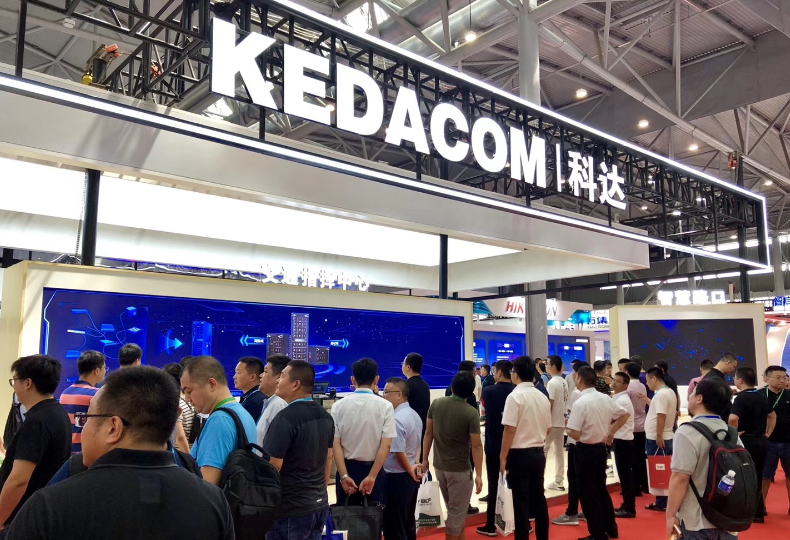
苏州科达2025年预亏3.2亿元-4.8亿元,低空赛道有望成新增长点
Ju Chao Zi Xun· 2026-01-20 04:01
Core Viewpoint - Suzhou Keda announced a projected net loss for 2025, estimating a loss of between 480 million to 320 million yuan, compared to a loss of 203 million yuan in the previous year, indicating an increase in losses by 117 million to 277 million yuan [2] Group 1: Financial Performance - The projected net profit attributable to shareholders for 2025 is expected to be between -480 million to -320 million yuan, with a previous year's loss of -203 million yuan [2] - For the fiscal year 2024, the total profit was -201.58 million yuan, with a net profit attributable to shareholders of -203.45 million yuan, and a net profit excluding non-recurring gains and losses of -213.65 million yuan, resulting in an earnings per share of -0.4007 yuan [2] Group 2: Business Challenges and Strategic Shifts - The increase in projected losses for 2025 is attributed to various macroeconomic factors and geopolitical influences, leading to a decline in revenue as traditional downstream customer demand has not recovered as expected [2] - The company is actively pursuing business transformation by reallocating resources to more growth-oriented markets and sectors, which has impacted short-term revenue from traditional key markets [2] - The company continues to invest heavily in R&D in cutting-edge fields such as artificial intelligence, big data, and localization, which is essential for strengthening long-term technological competitiveness [2] Group 3: Strategic Initiatives - The company is responding to changes in downstream customer demand by broadening its product and solution offerings across various industries, achieving positive progress in both domestic and overseas markets [3] - To deepen its strategic layout, the company has introduced a strategic investor with a strong background in the civil aviation sector through an agreement transfer, aiming to jointly promote business development in civil aviation infrastructure and low-altitude management platforms, marking entry into a new growth area [3]

浙江民营企业在册总量超370万户,平均每千人拥有56.5户
Sou Hu Cai Jing· 2026-01-20 02:40
Core Insights - Zhejiang's private enterprises are showing steady and positive development, with a total of 3.7689 million registered private enterprises expected by the end of 2025, equating to 56.5 private enterprises per 1,000 people in the province [1][3]. Group 1: Overall Development - The private enterprises in Zhejiang have made breakthroughs in new productive forces, global value chain layout, and cultural innovation, transitioning from "Zhejiang manufacturing" to "Zhejiang creation" [3]. - Private enterprises are a core engine for high-quality development and play a significant supporting role in the national new development pattern [3]. Group 2: Regional Distribution - The cities of Hangzhou, Ningbo, Wenzhou, and Jinhua host 70% of the province's private enterprises, with Hangzhou leading at 1.0096 million enterprises, accounting for 26.8% of the total [3][4]. - Other cities like Jinhua, Ningbo, and Wenzhou have 623,800, 569,100, and 442,100 registered enterprises, respectively [3]. Group 3: Industry Distribution - By the end of 2025, the registered private enterprises in Zhejiang will be distributed across three industries: 42,800 in primary, 905,400 in secondary, and 2,820,600 in tertiary, with nearly 75% operating in the tertiary sector [3][4]. - The main industries include wholesale and retail (1.2629 million), manufacturing (686,400), and rental and business services (448,500), collectively accounting for 92% of the total enterprises [4]. Group 4: Sectoral Characteristics - The private enterprises in Zhejiang exhibit distinctive characteristics in industry distribution, creating significant industrial clustering effects and competitive advantages [4]. - Hangzhou, recognized as the "digital economy capital," has seen strong development in private tech enterprises in AI, big data, and cloud computing, forming a complete industrial chain in the AI sector [4].