
文化传承创新

Search documents
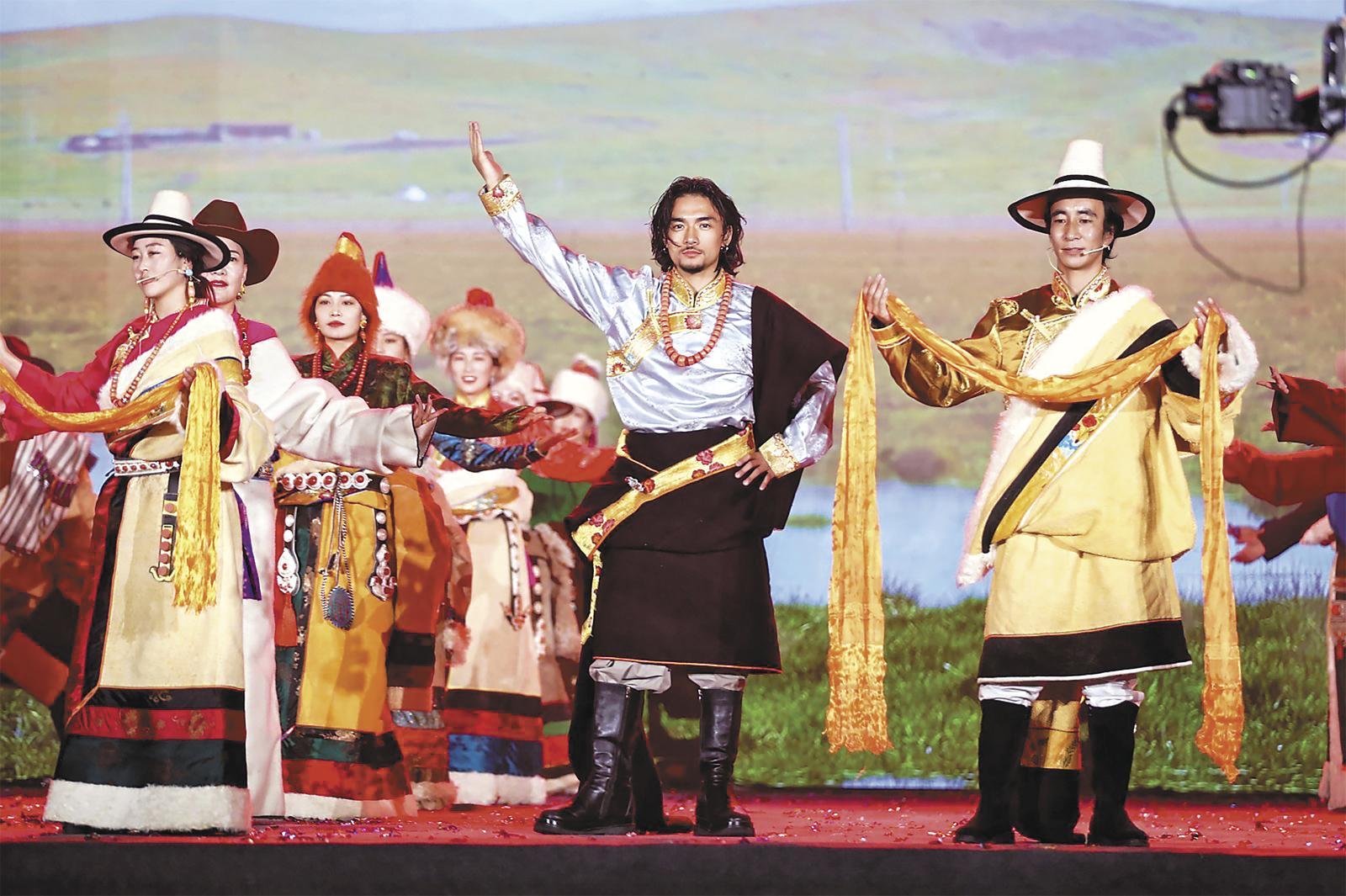
黄南:文化盛宴醉藏乡
Xin Lang Cai Jing· 2026-02-21 18:17
Group 1 - The article highlights the vibrant cultural activities in Huangnan Tibetan Autonomous Prefecture during the Spring Festival, creating a festive atmosphere of joy and unity [3] - Local cities and counties, including Tongren City, Jianzha County, and Zeku County, organized New Year cultural performances that showcase cultural heritage and innovation [3] - The events emphasize the integration of culture and tourism, presenting a high-quality cultural feast for various ethnic groups [3]

从年味读懂文脉绵延(今日谈)
Ren Min Ri Bao· 2026-02-20 23:09
Core Viewpoint - The article emphasizes the importance of inheriting and promoting Chinese civilization, particularly during the Spring Festival, which serves as a cultural and spiritual bond for the Chinese people and a cross-cultural "world language" [1] Group 1: Cultural Significance - The Spring Festival is highlighted as a time when traditional customs are revitalized, with events like temple fairs and street performances attracting significant public interest [1] - The festival embodies deep sentiments of family and national pride, reflecting the enduring and evolving nature of Chinese culture [1] Group 2: Technological Integration - Innovative experiences such as virtual reality (VR) red envelopes and intelligent mascots are becoming new customs among contemporary youth, showcasing the blend of tradition and modern technology [1] Group 3: Global Appeal - There has been a remarkable increase in foreign tourist bookings for Spring Festival flights, with a year-on-year growth of over 400%, indicating a growing global interest in experiencing Chinese cultural festivities [1]
依托人文资源优势塑造青年价值观
Xin Lang Cai Jing· 2026-02-18 22:23
Group 1 - The core viewpoint emphasizes the importance of shaping youth values in the context of China's modernization and Guizhou's high-quality development, highlighting that this is essential for nurturing new generations and driving economic and social progress [1] - Guizhou's rich cultural resources, including revolutionary spirit and ethnic traditions, serve as a foundation for instilling correct values in youth, helping them to develop a strong sense of national identity and cultural heritage [1] - The local ecological wisdom and practices related to sustainable development provide clear guidance for youth to actively engage in ecological civilization [1] Group 2 - Guizhou's economic development in sectors like big data, ecological tourism, and rural revitalization offers practical lessons for youth, illustrating the advantages of the socialist system and inspiring them to contribute to national progress [2] - The active involvement of youth in cultural innovation and economic development is crucial, as they leverage modern communication methods to promote Guizhou's culture and drive advancements in the big data industry and green agriculture [2] - Youth returning to rural areas with new ideas and technologies are revitalizing local economies, demonstrating their role as a driving force for cultural and economic growth [2] Group 3 - To effectively shape youth values through cultural resources, a collaborative mechanism is needed, integrating Guizhou's cultural assets into educational frameworks and providing platforms for youth development [3] - Educational institutions should focus on moral education and practical experiences to help youth understand the significance of their contributions to society [3] - Policies that support entrepreneurship and cultural transmission are essential for empowering youth to engage with Guizhou's development [3]
GDP增速连续16季跑赢“全国线” “甘”劲从何而来?
Xin Lang Cai Jing· 2026-02-07 08:26
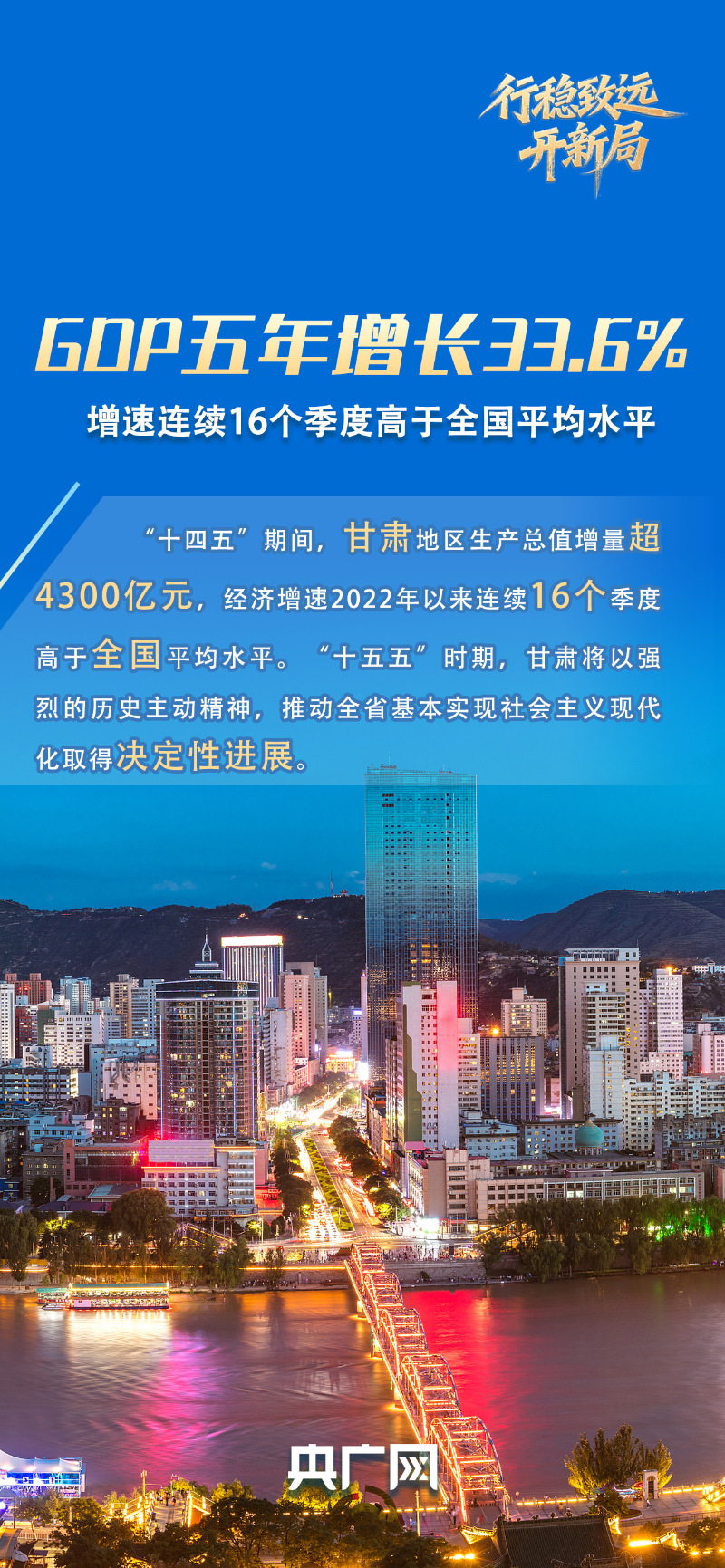
Group 1: Economic Growth and Development - Gansu's GDP reached 1.36975 trillion yuan, an increase of 437.44 billion yuan or 33.6% compared to the end of the 13th Five-Year Plan [4] - The economic growth rate has been above the national average for 16 consecutive quarters since 2022 [4] - Gansu aims to significantly enhance high-quality development, technological innovation, and social civilization during the 14th Five-Year Plan [4] Group 2: Tourism and Cultural Heritage - Gansu received 1.752 billion tourists during the 14th Five-Year Plan, with tourism spending reaching 1.27 trillion yuan, marking increases of 32.9% and 41.6% respectively [12] - The "Night Tour of the Yellow River" project attracted 1.5 million visitors over three years, showcasing Gansu's tourism potential [12] - The Dunhuang Academy has implemented non-contact detection technology for cultural relics, setting new international standards for ancient mural protection [9] Group 3: Agricultural and Rural Development - The area of cultivated sand onion in Minqin County reached 15,000 acres, with an annual output of 51,000 tons and a total output value exceeding 200 million yuan [16] - Gansu has established nine national-level advantageous characteristic industrial clusters and 12 modern agricultural industrial parks during the 14th Five-Year Plan [19] - The average income of farmers in Yuangu Village exceeded 21,500 yuan, with collective economic income surpassing 1.2 million yuan [18] Group 4: Social Welfare and Elderly Care - Gansu has built 8,620 elderly care institutions with 111,000 beds, increasing the proportion of nursing beds from 45% to 62.5% [26] - The province invested 15.5 billion yuan in the construction of 520 comprehensive elderly care service centers and 900 mutual happiness homes [22] - A new elderly care service information network platform has been established, enhancing service accessibility for over 12,900 registered elderly individuals [23] Group 5: Education and Youth Development - Gansu has implemented the "County Middle School Revitalization" project, improving educational resources and reducing the number of students leaving the county for schooling [26] - The province aims to support 10,000 unemployed college graduates to work in grassroots positions by 2026 [21] - The "Increase in Educational Capacity" project added 131,000 urban compulsory education places [26] Group 6: Future Goals and Strategic Vision - Gansu's 15th Five-Year Plan targets an average annual GDP growth of over 5% and aims to create four national advanced manufacturing clusters [27] - The province plans to enhance the quality of life and promote common prosperity for all residents [27] - Gansu is positioned to leverage national strategies and policies to accelerate its development and improve its economic standing [27]
敦煌文化绽放新光彩
Xin Lang Cai Jing· 2026-01-31 20:32
Group 1 - The Dunhuang cultural heritage is being shared globally through various online and offline initiatives, with visitors from 120 countries and regions [1] - The Gansu Provincial Cultural Heritage Bureau is focusing on four major projects to enhance cultural preservation, research, innovation, and safety [1] - The "Mogao Grottoes Art Exhibition" at the Fo Guang Shan Buddha Memorial Center in Taiwan has been popular since its launch in December 2025, showcasing over 100 artifacts [1] Group 2 - Gansu has hosted "Dunhuang Culture Week" events in countries like the UK and Mongolia, and the "Silk Road Dunhuang" exhibition was featured at the Chinese Embassy in the US [2] - The establishment of the Environmental Archaeology and Cultural Heritage Science Center at Lanzhou University marks a significant advancement in archaeological research [2] - Gansu plans to establish six new museums by 2025, with a total of 263 museums, leading the nation with one museum for every 93,200 people [2]
浙江民营企业在册总量超370万户,平均每千人拥有56.5户
Sou Hu Cai Jing· 2026-01-20 02:40
Core Insights - Zhejiang's private enterprises are showing steady and positive development, with a total of 3.7689 million registered private enterprises expected by the end of 2025, equating to 56.5 private enterprises per 1,000 people in the province [1][3]. Group 1: Overall Development - The private enterprises in Zhejiang have made breakthroughs in new productive forces, global value chain layout, and cultural innovation, transitioning from "Zhejiang manufacturing" to "Zhejiang creation" [3]. - Private enterprises are a core engine for high-quality development and play a significant supporting role in the national new development pattern [3]. Group 2: Regional Distribution - The cities of Hangzhou, Ningbo, Wenzhou, and Jinhua host 70% of the province's private enterprises, with Hangzhou leading at 1.0096 million enterprises, accounting for 26.8% of the total [3][4]. - Other cities like Jinhua, Ningbo, and Wenzhou have 623,800, 569,100, and 442,100 registered enterprises, respectively [3]. Group 3: Industry Distribution - By the end of 2025, the registered private enterprises in Zhejiang will be distributed across three industries: 42,800 in primary, 905,400 in secondary, and 2,820,600 in tertiary, with nearly 75% operating in the tertiary sector [3][4]. - The main industries include wholesale and retail (1.2629 million), manufacturing (686,400), and rental and business services (448,500), collectively accounting for 92% of the total enterprises [4]. Group 4: Sectoral Characteristics - The private enterprises in Zhejiang exhibit distinctive characteristics in industry distribution, creating significant industrial clustering effects and competitive advantages [4]. - Hangzhou, recognized as the "digital economy capital," has seen strong development in private tech enterprises in AI, big data, and cloud computing, forming a complete industrial chain in the AI sector [4].
深挖遗址价值 激活文化记忆(你所不知道的一级馆)
Ren Min Ri Bao Hai Wai Ban· 2025-12-09 01:12
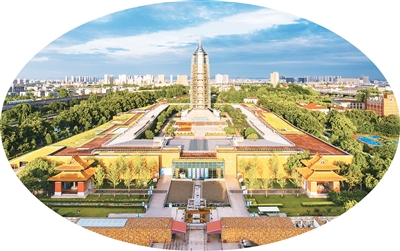
Core Insights - The "2025 World Mayors Dialogue - Nanjing" opening ceremony took place at the Nanjing Da Bao En Temple Ruins Museum, highlighting the significance of cultural heritage preservation in Nanjing [9] - The Da Bao En Temple site is recognized as the largest excavated temple site in China, selected as one of the "Top Ten Archaeological Discoveries" in 2010 and designated as a national key cultural relic protection unit in 2013 [9][12] - The museum has become a popular cultural landmark in Nanjing since its opening in 2015, emphasizing the innovative exploration of cultural heritage transmission [9][15] Archaeological Significance - The Da Bao En Temple was originally built in the Ming Dynasty, featuring the renowned glazed pagoda, which was destroyed in the 19th century but left a lasting cultural impact [10][12] - Archaeological excavations have uncovered over 12,000 artifacts, including the largest known Aśoka stupa in China, which is 1.17 meters tall and adorned with gold and precious stones [12][14] - The site reflects a rich history of temple construction and destruction over a millennium, with significant findings from both the Song and Ming dynasties [12][13] Architectural Innovations - The museum's design integrates modern architecture with the preservation of archaeological sites, employing various protection methods for different relics [13][14] - A new lightweight glass pagoda, 93 meters tall, has been constructed above the original pagoda's site, designed to minimize disturbance to the archaeological remains while providing a protective structure [14] Cultural Events and Exhibitions - The museum is celebrating its 10th anniversary with a special exhibition titled "Go See the Pagoda - From Urban Landmark to World Memory," showcasing the pagoda's historical significance and its influence abroad [15][16] - Interactive installations and multimedia elements have been introduced to enhance visitor engagement, including a digital art competition aimed at exploring new paths for cultural heritage protection [16][17]
广东省39所高校开展新文科实践创新大比拼
Zhong Guo Xin Wen Wang· 2025-10-13 07:48
Core Points - The Guangdong Province held the 2025 New Liberal Arts Practice Innovation Competition, featuring 219 projects from 39 universities [1][2] - The competition focused on key regional development issues such as national governance, language intelligence, digital education, and cultural innovation [2] - The event showcased a significant integration of disciplines, with 60% of projects involving deep cross-disciplinary collaboration [5] Group 1 - The final competition took place at South China Agricultural University, where the university won both the championship and third place [2] - Shenzhen University secured the second place with two projects, while other universities like Sun Yat-sen University and Shenzhen MSU-BIT University also received awards [2] - A total of 43 universities registered 3,700 teams for the competition, divided into four categories: literature, history, philosophy, and management [2] Group 2 - The champion project, "Liji Tong Agricultural Online Market," aimed to address the issue of increasing income for small farmers through innovative applications of artificial intelligence [5] - The competition emphasized the importance of practical outcomes, with many projects potentially transforming into tangible products [5] - The Guangdong Provincial Department of Education plans to continue promoting the New Liberal Arts initiative through policy implementation and platform development [5]
第八届敦煌文博会将举办 “敦煌净界”等新地标迎客
Zhong Guo Xin Wen Wang· 2025-09-04 13:12
Group 1 - The 8th Silk Road (Dunhuang) International Cultural Expo will be held from September 20 to 22 in Dunhuang, with the theme "Strengthening Cultural Exchange and Promoting Civilizational Mutual Learning" [1][3] - The event will feature 17 activities across 7 categories, including the "Dunhuang Forum," which will host international seminars on cultural heritage protection and Dunhuang studies [1][3] - Thailand will be the guest country, with representatives from 56 countries and 7 international organizations, including UNESCO and the UNWTO, expected to attend [1][3] Group 2 - Dunhuang city plans to enhance its cultural offerings by integrating elements from Dunhuang murals into urban design, including upgrades to night markets and scenic areas [3] - The expo will emphasize the innovative transmission of traditional Chinese culture, featuring digital immersive displays and various intangible cultural heritage exhibitions [3]
让文化流淌,让历史流芳(金台随笔)
Ren Min Ri Bao· 2025-06-11 22:11
Core Viewpoint - The concept of "seeking truth from facts" has deep historical roots in Chinese culture and continues to influence contemporary thought and practice, particularly within the Communist Party of China [1][2][3] Group 1: Cultural Heritage and Innovation - The phrase "seeking truth from facts" originated from the Han Dynasty and has been interpreted through various historical lenses, emphasizing the importance of factual understanding and practical application in scholarship [1] - The cultural transmission of "seeking truth from facts" reflects a broader trend of cultural flow, where traditional values are integrated into modern practices, enhancing the richness of Chinese civilization [2][3] Group 2: Integration of Traditional and Modern Thought - The combination of Marxist principles with traditional Chinese culture has revitalized cultural confidence and provided a foundation for modern Chinese development [3] - The dynamic nature of culture necessitates its integration with contemporary values and global trends to ensure its relevance and vitality [3]