
积极财政政策

Search documents
积极财政要综合考虑可持续性和健康发展
Jing Ji Guan Cha Bao· 2025-11-10 05:56
Group 1 - The core viewpoint emphasizes the cautious use of fiscal policy space while ensuring fiscal sustainability and health development, as highlighted by Yang Zhiyong, the director of the Chinese Academy of Fiscal Sciences [1][9] - The "Suggestions" document released on October 28 outlines the importance of active fiscal policy and fiscal sustainability as fundamental requirements for better governance during the 14th Five-Year Plan period [1][10] - Key directions for tax reform include improving local taxes, direct tax systems, and standardizing tax incentives while maintaining a reasonable macro tax burden level [1][2][4] Group 2 - Maintaining a reasonable macro tax burden requires finding increments from fair tax burdens, exploring new tax sources, standardizing tax incentives, and accelerating tax system construction [2][4] - The decline in traditional economic tax sources necessitates timely tax system reforms to effectively convert new economic sources into tax revenue [2][6] - The "Suggestions" also mention strengthening fiscal scientific management, deepening zero-based budgeting reforms, and enhancing local financial autonomy [2][11] Group 3 - The distinction between "maintaining a reasonable macro tax burden" and "stabilizing macro tax burden" lies in aligning tax burden levels with fiscal functions and governance needs [3][4] - From 2017 to 2024, the macro tax burden has been decreasing, with fiscal revenue as a percentage of GDP dropping from 20.36% to 16.29% [3][4] - The need for a balanced approach between expenditure demands and taxpayers' capacity is crucial for determining a reasonable macro tax burden [3][4] Group 4 - The necessity of optimizing expenditure structure while maintaining expenditure intensity is highlighted, with a significant portion of fiscal spending directed towards people's livelihoods [10][11] - The "Suggestions" propose a comprehensive government investment plan to enhance clarity and management of government investments, addressing issues of fragmented fiscal resources [14][15] - The focus on economic growth and market vitality is essential for addressing fiscal challenges and ensuring a conducive policy environment for economic development [16]
国办重磅发文,商务部最新调整……影响一周市场的十大消息
Zheng Quan Shi Bao· 2025-11-09 12:41
Group 1 - The State Council issued an implementation opinion focusing on the large-scale application of new scenarios, highlighting five key areas for development [3] - The implementation opinion includes 22 categories of key areas for scenario cultivation and opening [3] Group 2 - In October, the Consumer Price Index (CPI) rose by 0.2% year-on-year and month-on-month, while the core CPI increased by 1.2%, marking the sixth consecutive month of growth [5] - The Producer Price Index (PPI) decreased by 2.1% year-on-year, but the month-on-month change shifted from flat to a 0.1% increase, marking the first positive change this year [5] Group 3 - As of the end of October, China's foreign exchange reserves reached $3.343 trillion, an increase of $4.7 billion from the end of September, the highest level since December 2015 [6] - The People's Bank of China has increased its gold reserves for 12 consecutive months, with the current total at 74.09 million ounces, up by 30,000 ounces from the previous month [6] Group 4 - The China Securities Regulatory Commission and the Ministry of Finance jointly released a revised management method for the securities settlement risk fund, effective from December 8, 2025 [7] - The revised method includes a differentiated adjustment of the contribution ratio for risk funds, reducing the ratio for equity products from 0.0003 to 0.00009 of the transaction amount [7] Group 5 - The Ministry of Finance reported that since 2025, fiscal policy has become more proactive, focusing on stabilizing employment, businesses, and market expectations [9] - The report outlines six key areas for future fiscal policy, including enhancing consumer spending and providing financial subsidies for personal consumption loans [9] Group 6 - The China Securities Regulatory Commission approved the IPO registration of two companies, Inner Mongolia Shuangxin Environmental Protection Materials Co., Ltd. and Ningbo Jianxin Superconducting Technology Co., Ltd. [15] - Two new stocks are set to be issued this week: Nant Technology on November 11 and Hai'an Group on November 14 [15] Group 7 - A total of 33 companies will have their restricted shares unlocked this week, amounting to 1.407 billion shares with a total market value of approximately 24.715 billion yuan [17] - The companies with the highest unlock market value include Youyan Silicon (9.991 billion yuan), Xin Nuowei (4.948 billion yuan), and Juxing Technology (3.297 billion yuan) [17]


中国政府债务规模和结构将出现哪些变化|解读“十五五”
Di Yi Cai Jing· 2025-11-08 04:03
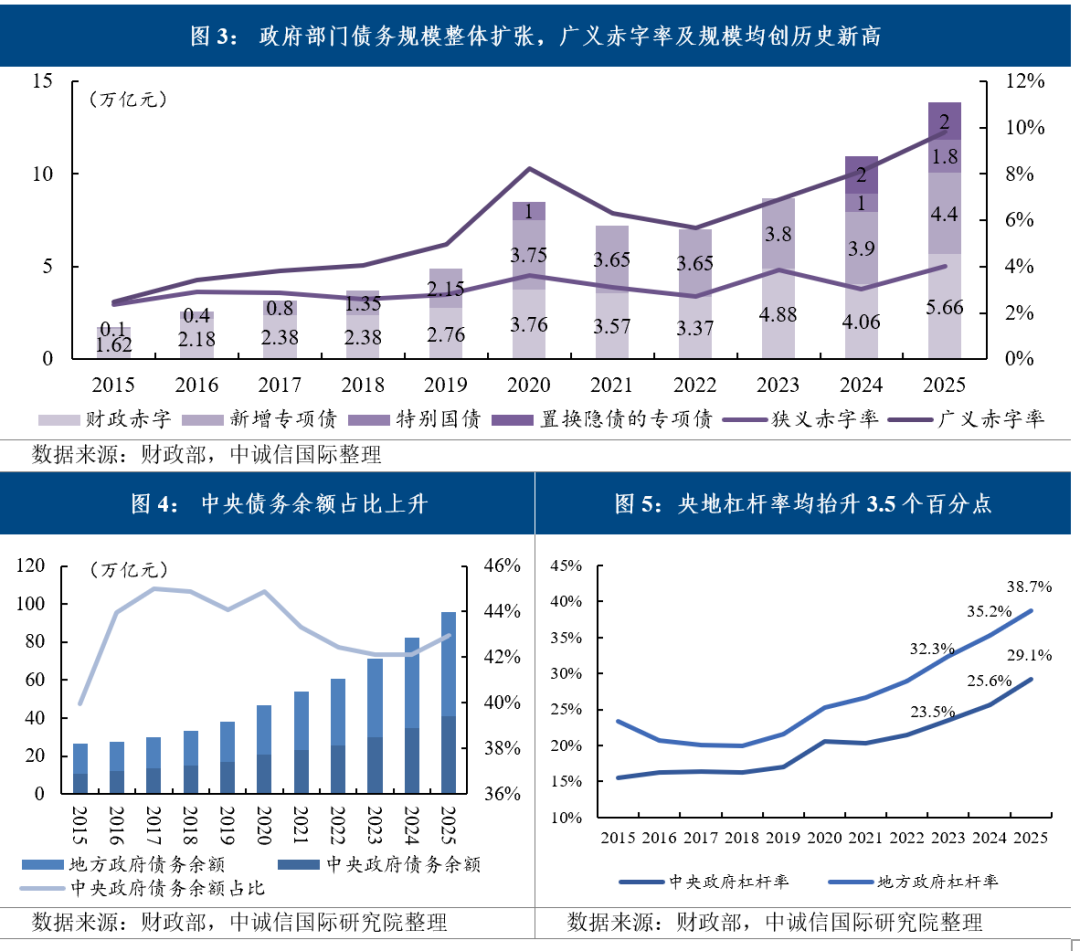
Core Viewpoint - The Chinese government is accelerating the establishment of a long-term mechanism for government debt management that aligns with high-quality development, emphasizing the importance of reasonable debt scale and structure to support modernization and economic stability [2][11]. Debt Scale and Structure - The "15th Five-Year Plan" highlights the need for an active fiscal policy, which includes appropriate debt increases to stabilize investment and expand domestic demand [3]. - Future trends indicate that the scale of government debt in China may continue to expand, with a focus on legal debt growth while reducing hidden debts [7][8]. - As of the end of 2023, China's total government debt is projected to reach 85 trillion yuan, with a debt-to-GDP ratio of 67.5%, which is considered manageable [8]. Debt Management Mechanism - The government aims to optimize the debt structure, particularly the relationship between central and local government debts, to enhance macroeconomic stability and reduce overall debt costs [12][16]. - The central government’s debt is significantly lower than that of local governments, suggesting room for increased leverage at the central level to boost effective demand [12][14]. Future Debt Strategy - The issuance of long-term special bonds is planned to support major national strategies and economic recovery, with significant amounts allocated for 2024 and 2025 [14]. - The government intends to clarify the nature and purpose of different types of bonds, ensuring that regular bonds are used for routine expenditures while special bonds address strategic needs [15]. Fiscal Reforms and Monitoring - The establishment of a comprehensive monitoring system for local government debt and a dynamic risk warning system is essential for sustainable debt management [16]. - Recommendations include enhancing the transparency of debt information and improving the assessment of local government debt sustainability [16].
财政部:用好用足更加积极的财政政策 全力支持稳就业稳外贸,继续实施好提振消费专项行动
Zheng Quan Shi Bao Wang· 2025-11-08 00:04
Core Viewpoint - The Ministry of Finance emphasizes the implementation of a more proactive fiscal policy to support employment stability, foreign trade, and consumption enhancement, as outlined in the "2025 Mid-Year Report on China's Fiscal Policy Execution" [1][2]. Group 1: Fiscal Policy Implementation - The fiscal policy has become more proactive since 2025, focusing on stabilizing employment, enterprises, markets, and expectations, while promoting economic recovery [1]. - The report highlights the collaboration between fiscal policy and investment expansion to invigorate domestic market vitality [1]. - The Ministry of Finance effectively utilized tariff adjustments to respond to external shocks, particularly in countering U.S. tariffs, thereby maintaining legitimate rights and interests [1]. Group 2: Scientific Management and Asset Management - Starting in 2025, the Ministry of Finance initiated pilot programs in 12 provinces to enhance fiscal resource management and budget coordination, aiming for breakthroughs in key fiscal management areas within two years [2]. - A national platform for the adjustment and sharing of state-owned assets was established, resulting in over 200 asset adjustments and saving more than 40 million yuan in budget funds [2]. Group 3: Future Fiscal Policy Directions - The report outlines six key areas for future fiscal policy, including the use of proactive fiscal measures, support for employment and foreign trade, and the cultivation of new growth drivers [2]. - Specific measures include continuing consumption stimulation actions, providing fiscal subsidies for personal consumption loans, and enhancing public service investments [3]. - The report emphasizes the importance of stabilizing employment through public services, vocational training, and support for vulnerable groups, including the elderly and children [3].
财政部:用好用足更加积极的财政政策 全力支持稳就业稳外贸 继续实施好提振消费专项行动
Zheng Quan Shi Bao· 2025-11-07 18:14
Core Insights - The Ministry of Finance released the "2025 Mid-Year Report on China's Fiscal Policy Implementation," highlighting a more proactive fiscal policy aimed at stabilizing employment, enterprises, and market expectations [1][2]. Group 1: Fiscal Policy Overview - The report emphasizes the need for a more active fiscal policy to boost consumption and investment, with a focus on stabilizing employment and foreign trade [1]. - Fiscal operations in the first half of 2025 were stable, with good budget execution [1]. Group 2: Specific Measures - The report outlines six key areas for future fiscal policy, including enhancing fiscal management, supporting employment and foreign trade, and improving people's livelihoods [2][3]. - Specific actions include implementing consumption-boosting initiatives, providing fiscal subsidies for personal consumption loans, and encouraging private investment [3]. Group 3: Asset Management and Efficiency - The Ministry established a national platform for the adjustment and sharing of state-owned assets, successfully completing over 200 asset adjustments and saving over 40 million yuan in budget funds [2]. - The report indicates that pilot programs for fiscal management are underway in 12 provinces, aiming for significant progress in two years [2].
财政部,最新部署!用好用足更加积极的财政政策!
券商中国· 2025-11-07 11:57
Core Viewpoint - The report emphasizes a more proactive fiscal policy since 2025, focusing on stabilizing employment, enterprises, markets, and expectations, while enhancing coordination with other policies to promote economic recovery [2][3]. Fiscal Policy Execution - The fiscal operation in the first half of 2025 was stable, with good budget execution and a gradual recovery in tax revenue [3]. - The central government allocated 300 billion yuan for long-term special bonds to support consumption, alongside 7.279 billion yuan for service industry development, aimed at stimulating rural consumption [4]. Investment and Consumption - The fiscal policy has synergized efforts to boost consumption and expand investment, with 42.7% of the annual issuance of special bonds completed in the first half, 17.7 percentage points faster than the previous year [4]. - The new special bond limit of 4.4 trillion yuan was fully allocated to local governments by April, with 49.1% of the annual limit completed in the first half, 11 percentage points faster than last year [4]. Foreign Trade and Investment - The Ministry of Finance effectively utilized tariff adjustments, implementing temporary tax rates lower than the most-favored-nation rates on 935 items since January 1, 2025, to enhance the interaction between domestic and international markets [5]. Fiscal Management Pilot - Starting in 2025, the Ministry of Finance initiated fiscal management pilots in 12 provinces, focusing on improving resource allocation and budget management, with 11 key tasks outlined for progress over two years [6][7]. Future Fiscal Policy Directions - The report outlines six key areas for future fiscal policy, including: 1. Utilizing more proactive fiscal policies to stimulate consumption and support key sectors [8]. 2. Supporting employment stability and foreign trade through enhanced public services and training [8]. 3. Accelerating the development of new growth drivers through innovation and industry upgrades [8]. 4. Improving social welfare services, particularly for the elderly and children [9]. 5. Preventing and mitigating risks in key areas, including managing hidden debts [9]. 6. Enhancing fiscal governance effectiveness through various reforms [9].
财政部最新报告:用好用足更加积极的财政政策
Zheng Quan Shi Bao· 2025-11-07 11:18
Core Viewpoint - The Ministry of Finance released the "2025 Mid-Year Report on China's Fiscal Policy Execution," highlighting a proactive fiscal policy aimed at stabilizing employment, businesses, markets, and expectations, while promoting economic recovery [1][3]. Fiscal Policy Execution - The fiscal operation in the first half of 2025 was stable, with good budget execution and a gradual recovery in tax revenue [3]. - The central government allocated 300 billion yuan for long-term special bonds to support consumption, alongside 7.279 billion yuan for service industry development, aimed at stimulating rural and county-level consumption [4]. Investment and Consumption - The fiscal policy coordinated efforts to boost consumption and expand investment, with 42.7% of the annual issuance of special bonds completed in the first half, which is 17.7 percentage points faster than the previous year [4]. - The Ministry of Finance has implemented measures to support effective investment, including the issuance of special bonds for infrastructure and housing projects [4]. Trade and Tariff Adjustments - The Ministry effectively utilized tariff adjustments, implementing temporary import tax rates lower than the most-favored-nation rates on 935 items since January 1, 2025, to enhance the synergy between domestic and international markets [5]. Fiscal Management Pilot Programs - The Ministry initiated fiscal management pilot programs in 12 provinces to improve fiscal resource allocation and budget management, with a focus on achieving breakthroughs in key areas over two years [7][6]. Future Fiscal Policy Directions - The report outlines six key areas for future fiscal policy, including: 1. Utilizing more proactive fiscal policies to stimulate consumption and support key sectors [10]. 2. Supporting employment stability and foreign trade through enhanced public services and training [11]. 3. Fostering new growth drivers by promoting innovation and upgrading manufacturing [11]. 4. Improving social welfare services, particularly for the elderly and children [11]. 5. Preventing and mitigating risks in key areas through debt management policies [11]. 6. Enhancing fiscal governance and reforming tax policies [11].
财政部最新报告:用好用足更加积极的财政政策!
Zheng Quan Shi Bao· 2025-11-07 11:13
Core Insights - The report highlights that since 2025, fiscal policy in China has become more proactive, focusing on stabilizing employment, businesses, markets, and expectations, while enhancing coordination with other policies to promote economic recovery [1][2] Fiscal Performance - In the first half of 2025, China's fiscal operations were stable, with good budget execution and a continuous recovery in fiscal revenue, particularly in tax income [2] - Expenditure intensity increased, effectively safeguarding key areas [2] Consumption and Investment - Fiscal policy has synergized efforts to boost consumption and expand investment, enhancing domestic market vitality [3] - The central government allocated 300 billion yuan in special bonds to support consumption upgrades and provided 7.279 billion yuan for service industry development [3] - Employment support measures included tax reductions, loan guarantees, and subsidies to enhance job services and vocational training [3] - Special bonds issuance was accelerated, with 42.7% of the annual target completed in the first half, 17.7 percentage points faster than the previous year [3] Trade and Foreign Investment - The Ministry of Finance effectively utilized tariff adjustments to stabilize foreign trade and investment, implementing lower temporary import tax rates on 935 items since January 1, 2025 [4] - The expansion of high-standard free trade zones and cooperation with trade partners on tariff reductions were emphasized [4] Fiscal Management Pilot - The Ministry of Finance initiated a pilot program for scientific fiscal management in 12 provinces, aiming for breakthroughs in key fiscal management areas over two years [5] - A national platform for the sharing of state-owned assets was established, resulting in over 200 asset transfers and savings of more than 40 million yuan in budget funds [5] Future Fiscal Policy Directions - The report outlines six key areas for future fiscal policy, including the effective use of proactive fiscal measures and support for consumption, employment, and foreign trade [7][8] - Emphasis on improving living standards through services for the elderly and children, as well as enhancing education and healthcare policies [8] - Continuous efforts to mitigate risks in key areas and improve fiscal governance efficiency through various reforms [8]
财政部:继续实施好提振消费专项行动,对重点领域的个人消费贷款和相关行业经营主体贷款给予财政贴息
Sou Hu Cai Jing· 2025-11-07 09:51
Core Viewpoint - The Ministry of Finance emphasizes the need for a more proactive fiscal policy to enhance the effectiveness of fund utilization and ensure fund security, aiming for rapid implementation of financial measures [1] Group 1: Fiscal Policy Implementation - The report highlights the importance of tightening the budget execution responsibility chain to improve fund usage efficiency and security [1] - It advocates for the continuation of special actions to boost consumption, particularly through fiscal subsidies for personal consumption loans and loans to key industry operators [1] - The report aims to stimulate service consumption potential in areas such as elderly care and childcare [1] Group 2: Financial Coordination and Investment - The Ministry plans to leverage local government special bonds and ultra-long-term special treasury bonds to enhance fiscal and financial coordination [1] - There is a focus on including more public services within the investment support scope to encourage private investment development [1]
财政部:对重点领域的个人消费贷款和相关行业经营主体贷款给予财政贴息
Feng Huang Wang· 2025-11-07 09:48
Core Insights - The Ministry of Finance released a report on the execution of China's fiscal policy for the first half of 2025, indicating a commitment to a more proactive fiscal policy [1] Fiscal Policy Execution - The Ministry plans to strengthen the budget execution responsibility chain to enhance the efficiency of fund usage while ensuring fund security [1] - There will be continued implementation of special actions to boost consumption, including fiscal subsidies for personal consumption loans in key sectors [1] Investment and Financing - The Ministry aims to leverage local government special bonds and ultra-long-term special treasury bonds to enhance coordination between fiscal and financial policies [1] - More public services will be included in the investment support scope, and there will be encouragement for private investment development [1]