政府债务管理长效机制

Search documents
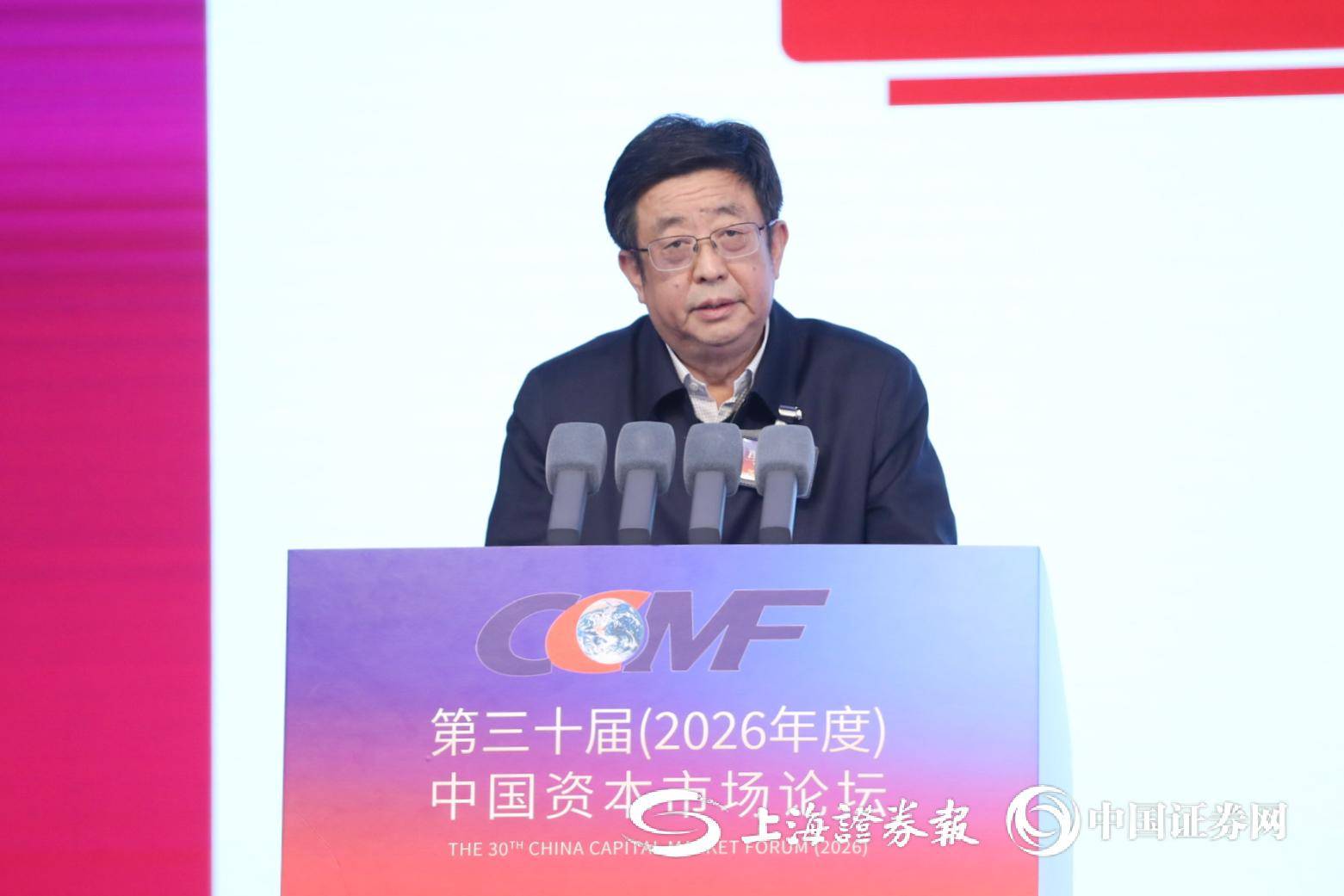
中央财经大学校长马海涛:坚持投资于物和投资于人紧密结合 推动投资止跌回稳
Sou Hu Cai Jing· 2026-01-10 07:43
Core Viewpoint - The central theme of the discussion emphasizes the need for a combination of investments in physical assets and human capital to stabilize and promote investment recovery, alongside the establishment of a long-term government debt management mechanism that aligns with high-quality development [1][3]. Group 1: Fiscal Policy Recommendations - The recommendation for a more proactive fiscal policy includes maintaining necessary overall strength while continuously optimizing structural direction [3]. - The approach advocates for a synergistic effort between "investment in physical assets" and "investment in human capital" to solidify the foundation for economic recovery [3]. Group 2: Government Debt Management - Debt management should not merely focus on reduction but rather on scientific management to align debt scale with the demands of promoting high-quality development and modern industrial system construction [3]. - Key strategies for effective debt management include: 1. Establishing a cross-cycle medium-term budget framework to break free from annual balance constraints [3]. 2. Strengthening the efficient coordination between fiscal and monetary policies to enhance the transmission mechanism of monetary policy [3]. 3. Optimizing the structure of central and local government debts [3]. 4. Improving the management of special bond usage to stimulate effective investment vitality through multiple measures [3].

理论学习丨党的二十届四中全会《建议》学习辅导百问(33-41)
Sou Hu Cai Jing· 2026-01-02 10:50
Group 1 - The core idea is to accelerate the establishment of a long-term mechanism for government debt management that aligns with high-quality development, emphasizing the need for effective debt management and risk prevention [2][3][4] - The Chinese government has strengthened local government debt management during the 14th Five-Year Plan period, optimizing special bond management and implementing a negative list for bond usage [3][4] - There is a need to improve the government debt management system, clarify the classification and functional positioning of government debt, and ensure sustainable debt limits [4][5] Group 2 - A long-term mechanism for preventing and resolving hidden debt risks is essential, requiring a comprehensive monitoring system and strict budget management for government expenditures [5][6] - Enhancing the management of local government special bonds is crucial, focusing on project approval processes and ensuring timely repayment to mitigate default risks [6] - The reform and transformation of local government financing platforms should be accelerated, ensuring they operate independently of government credit and adhere to market principles [6] Group 3 - The development of technology finance, green finance, inclusive finance, pension finance, and digital finance is a strategic deployment to better serve the real economy and meet the needs of high-quality economic development [7][8] - By June 2025, loans in the five key financial areas are expected to reach 105.7 trillion yuan, accounting for 38.8% of total loans, with a year-on-year growth of 14% [8][9] - The financial system should enhance its service capabilities and support for key sectors such as technology innovation and green development [9][10] Group 4 - The promotion of balanced development in imports and exports is essential for maintaining economic stability and responding to global trade challenges [24][25] - In 2024, China's goods trade is projected to reach 6.16 trillion USD, with a trade surplus of 992.2 billion USD, highlighting the need for balanced trade [24][25] - The focus on high-quality development necessitates increasing both export quality and import volume to meet domestic needs and enhance global cooperation [26][27] Group 5 - The push for digital trade innovation involves expanding market access in the digital sector and improving the regulatory framework for data flow [29][30] - Establishing high-level open platforms for digital trade is crucial, with initiatives like national digital trade demonstration zones to enhance competitiveness [30][31] - International cooperation in digital trade should be deepened, particularly with countries in ASEAN and BRICS, to foster a collaborative digital economy [31]

学习规划建议每日问答丨怎样理解加快构建同高质量发展相适应的政府债务管理长效机制
Xin Hua She· 2025-12-19 05:56
Core Viewpoint - The article emphasizes the need to accelerate the establishment of a long-term mechanism for government debt management that aligns with high-quality development, highlighting the importance of effective debt management and risk prevention measures [1][2]. Group 1: Government Debt Management - The central government has prioritized government debt management since the 18th National Congress, leading to the development of a legal debt "closed-loop" management system and improved allocation and usage of bond funds to promote economic and social development [2]. - During the 14th Five-Year Plan period, local government debt management has been strengthened, optimizing the special bond management mechanism and implementing a "negative list" for project funding, which has enhanced local development momentum and supported high-quality growth [2][3]. - Despite improvements, challenges remain in local government debt management, including projects exceeding fiscal capacity and the occurrence of hidden debts and false debt reporting [2]. Group 2: Long-term Mechanism for Debt Management - Establishing a long-term mechanism for government debt management is essential for preventing and resolving local government debt risks and is necessary for achieving the goals of the 15th Five-Year Plan [3]. - The government aims to refine the debt management system by clarifying debt classification and function, optimizing debt structure, and ensuring sustainable debt limits [3][4]. - A comprehensive monitoring and regulatory system for local debt will be developed, focusing on preventing the accumulation of new hidden debts and enhancing budget management for government expenditures [4]. Group 3: Special Bond Management - The management of local government special bonds will be improved by optimizing the debt limit allocation mechanism and enhancing project approval processes, ensuring effective use of funds [4][5]. - A repayment mechanism for special bonds will be established, focusing on the management of assets generated from projects funded by these bonds to ensure timely repayment and mitigate default risks [4][5]. Group 4: Financing Platform Reform - The reform and transformation of local government financing platforms will be advanced, with a focus on market-oriented operations and the separation of government credit from these platforms [5]. - Measures will be taken to prevent the emergence of new financing platforms and to manage existing debts and assets effectively, ensuring a clear distinction between government and enterprise responsibilities [5].
中经评论:构建政府债务管理长效机制
Sou Hu Cai Jing· 2025-12-14 23:16
Group 1 - The central government has allocated 500 billion yuan from local government debt limits to support local economic development, which is expected to inject new momentum into the economy and help achieve this year's socio-economic development goals [1] - The total scale of government bonds this year has reached 11.86 trillion yuan, an increase of 2.9 trillion yuan compared to last year, indicating a more proactive fiscal policy [1] - The issuance of 8 trillion yuan in ultra-long-term special bonds will support 1,459 "hard investment" projects across various sectors, including new urbanization and social welfare [1] Group 2 - The implementation of a more proactive fiscal policy is expected to continue next year, with a focus on maintaining necessary spending intensity through various fiscal tools, including government bonds [2] - The "14th Five-Year Plan" suggests establishing a long-term mechanism for government debt management that aligns with high-quality development, emphasizing the need for effective management of government debt [2] - Optimizing the structure of government debt is crucial for enhancing fiscal sustainability, requiring a comprehensive assessment of debt repayment capacity and risk [2] Group 3 - Strengthening the management of bond issuance and usage is essential to improve the effectiveness of government bonds, with a focus on preventing inefficient investments [3] - There is a need to enhance the repayment mechanism for special bonds to ensure timely repayment and mitigate repayment risks [3] - Ongoing efforts to address hidden debts and prevent systemic risks are critical, with a call for improved monitoring and regulation of local government debt [3] Group 4 - A scientific management mechanism for government bonds will be established to better support national strategies and improve public welfare, contributing to stable economic growth [4]
【财金视野】构建政府债务管理长效机制
Sou Hu Cai Jing· 2025-12-14 22:54
Group 1 - The central government has allocated 500 billion yuan from local government debt limits to support local economic development, which is expected to inject new momentum into the economy and help achieve this year's socio-economic development goals [2] - The total scale of government bonds this year has reached 11.86 trillion yuan, an increase of 2.9 trillion yuan compared to last year, indicating a more robust fiscal policy aimed at expanding investment and stabilizing growth [2] - The issuance of government bonds reflects a more proactive fiscal policy, with local governments accelerating the use of bond funds to enhance economic momentum and support ongoing economic recovery [2] Group 2 - The central economic work conference has called for the continuation of a more proactive fiscal policy next year, with expectations for a combination of budget, tax, government bonds, and transfer payments to support economic and social development [3] - The "14th Five-Year Plan" suggests the need for a long-term mechanism for government debt management that aligns with high-quality development, emphasizing the importance of managing government debt effectively while preventing risks [3] - There is a need to optimize the structure of government debt to enhance fiscal sustainability, requiring a comprehensive assessment of repayment capacity and debt risks to determine appropriate deficit rates and borrowing scales [3] Group 3 - The management of bond issuance and usage has been strengthened, with a focus on improving the efficiency of government bonds and preventing ineffective investments [4] - A complete lifecycle management mechanism for special bonds is needed to ensure timely repayment and mitigate repayment risks, while also ensuring that funds are used effectively [4] - The evaluation of policy implementation for ultra-long special bonds should be enhanced to ensure safe and efficient use of funds [4] Group 4 - Efforts to prevent and resolve hidden debt risks have been ongoing, with measures in place to manage existing hidden debt and curb new occurrences [5] - A comprehensive monitoring system for local government debt is necessary to establish a long-term regulatory framework and hold accountable those who engage in illegal borrowing [5] - Balancing current and long-term development with safety is crucial for establishing a scientific management mechanism that maximizes the role of government bonds in supporting national strategies and public welfare [5]

构建政府债务管理长效机制
Jing Ji Ri Bao· 2025-12-14 22:32
Core Viewpoint - The article emphasizes the importance of establishing a long-term mechanism for government debt management that aligns with high-quality development, focusing on effective debt management and risk prevention [1][2][3]. Group 1: Government Debt Management - The central government has allocated 500 billion yuan to local governments from the debt limit, which is expected to support economic development and help achieve this year's socio-economic goals [1]. - The total scale of government bonds issued this year is projected to reach 11.86 trillion yuan, an increase of 2.9 trillion yuan compared to last year, utilizing various bond types to enhance investment [1][2]. - The government aims to optimize the structure of government debt to enhance fiscal sustainability, requiring a comprehensive assessment of repayment capacity and debt risks [3]. Group 2: Fiscal Policy and Economic Growth - The issuance of government bonds reflects a more proactive fiscal policy, with 800 billion yuan in special long-term bonds supporting 1,459 "hard investment" projects across various sectors [2]. - The government plans to continue implementing a more active fiscal policy next year, utilizing a combination of budget, tax, and bond tools to maintain necessary spending levels [2]. - The "14th Five-Year Plan" suggests accelerating the establishment of a long-term mechanism for government debt management that balances development and safety [2][3]. Group 3: Risk Management - Efforts to mitigate hidden debt risks have been ongoing, with a focus on monitoring and regulating local government debt to prevent systemic risks [4]. - The article highlights the need for a unified long-term regulatory system for local government debt and accountability for illegal financing activities [4]. - Establishing a scientific management mechanism for government bonds is crucial for supporting national strategies and ensuring economic stability [4].
重点领域风险化解将更加积极稳妥
Zheng Quan Shi Bao· 2025-12-08 18:26
Group 1 - The central political bureau meeting on December 8 emphasized the need to firmly guard against risks and actively and steadily resolve key area risks, continuing the approach outlined in the 14th Five-Year Plan [1] - In the real estate sector, short-term policies include ensuring the delivery of homes and optimizing financial policies, while long-term policies focus on establishing a new development model to alleviate accumulated risks [1] - As of the end of September, loans for "white list" projects exceeded 7 trillion yuan, supporting nearly 20 million housing units, an increase from over 16 million units in early May [1] Group 2 - The "6+4+2" debt resolution strategy is progressing steadily, with the scale of debt resolution funds exceeding the initially set target of 2.8 trillion yuan, indicating that local government debt risks are gradually being controlled [2] - The focus of debt resolution efforts in the coming year will be on building a standardized mechanism, with stronger coordination among debt resolution tools [2] - Financial regulatory authorities are supporting local governments in resolving risks in small and medium-sized financial institutions through various methods, resulting in a significant reduction in the number of high-risk small banks since 2019 [2]
信用分析周报(2025/12/1-2025/12/5):信用债收益率延续低位调整-20251207
Hua Yuan Zheng Quan· 2025-12-07 14:20
1. Report Industry Investment Rating No relevant content provided. 2. Core Viewpoints of the Report - This week, the yield of credit bonds continued the adjustment trend of last week, with a slight upward adjustment from a low level. For example, the 3Y and 10Y yields of AA+ medium and short-term notes adjusted by 2BP and 5BP respectively within the week. From January to November 2025, there was a divergence in performance among different credit varieties and different terms. The short - end spread compression was generally greater than the long - end, and the spread compression of urban investment bonds and medium and short - term notes was generally better than that of secondary perpetual bonds. There is still strong logical support for going long on credit bonds around 3Y. The 3 - 5Y urban investment bond sinking strategy may still be the preferred strategy for credit bonds in the next stage [4][45]. - Overall, the credit spreads of the AA+ electronics and leisure services industries and the AAA electrical equipment industry compressed significantly compared with last week, while the credit spreads of other industries and ratings fluctuated within 5BP compared with last week. For urban investment bonds, the credit spreads of different terms fluctuated no more than 2BP compared with last week. For industrial bonds, most of the credit spreads widened slightly compared with last week, and a small number of terms and ratings of industrial bonds compressed slightly. For bank capital bonds, the credit spreads of bank secondary perpetual bonds of different terms and ratings widened to varying degrees compared with last week [4][44]. 3. Summary by Relevant Catalogs 3.1 This Week's Credit Hot Events - **Debt Risk Prevention and Control Ideas from the "15th Five - Year Plan" Proposals**: "Building a long - term government debt management mechanism" is the consensus among regions, and "activating stock resources and assets" is an important measure. Debt risk management may remain a key focus of local work in the future, and local asset activation may be the focus of the next stage [9]. - **Wu Qing's Speech**: On December 5th, Wu Qing, the chairman of the CSRC, proposed to improve the multi - level bond market system and vigorously develop science and technology innovation bonds and green bonds [11]. - **Optimization of Merger and Acquisition Notes**: On December 2nd, the National Association of Financial Market Institutional Investors issued a notice to optimize the relevant working mechanism of merger and acquisition notes, which is conducive to guiding funds to accurately support enterprise mergers and acquisitions and improving the quality and efficiency of the inter - bank bond market in serving the real economy [12]. 3.2 Primary Market - **Net Financing Scale**: This week, the net financing of credit bonds (excluding asset - backed securities) was 179.7 billion yuan, a decrease of 115.3 billion yuan compared with last week. The net financing of asset - backed securities was 22.6 billion yuan, an increase of 3.2 billion yuan compared with last week. By product type, the net financing of urban investment bonds, industrial bonds, and financial bonds decreased compared with last week [14]. - **Issuance Cost**: This week, the issuance interest rates of AA industrial bonds and financial bonds increased significantly compared with last week, while the issuance interest rates of other different ratings and bond types fluctuated no more than 20BP [16]. 3.3 Secondary Market - **Trading Volume and Turnover Rate**: This week, the trading volume of credit bonds (excluding asset - backed securities) decreased by 56.7 billion yuan compared with last week. The turnover rates of most credit bonds decreased compared with last week [22]. - **Yield**: This week, the yield of credit bonds continued the upward trend, with an upward adjustment of 0 - 5BP for credit bonds of different ratings and terms compared with last week [25]. - **Credit Spread**: Overall, the credit spreads of the AA+ electronics and leisure services industries and the AAA electrical equipment industry compressed significantly compared with last week, while the credit spreads of other industries and ratings fluctuated within 5BP compared with last week. For urban investment bonds, the credit spreads of different terms fluctuated no more than 2BP compared with last week. For industrial bonds, most of the credit spreads widened slightly compared with last week, and a small number of terms and ratings of industrial bonds compressed slightly. For bank capital bonds, the credit spreads of bank secondary perpetual bonds of different terms and ratings widened to varying degrees compared with last week [29][34][38][40]. 3.4 This Week's Bond Market Negative News This week, the implied rating of "21 Boxing 01" issued by Shandong Boxing Xinda Construction Investment and Development Co., Ltd. was downgraded [43]. 3.5 Investment Recommendations - The central bank achieved a net withdrawal of 848 billion yuan in the open market this week. As of Friday's close, DR001 closed at 1.31%. Overall, the credit spreads of the AA+ electronics and leisure services industries and the AAA electrical equipment industry compressed significantly compared with last week, while the credit spreads of other industries and ratings fluctuated within 5BP compared with last week. For urban investment bonds, the credit spreads of different terms fluctuated no more than 2BP compared with last week. For industrial bonds, most of the credit spreads widened slightly compared with last week, and a small number of terms and ratings of industrial bonds compressed slightly. For bank capital bonds, the credit spreads of bank secondary perpetual bonds of different terms and ratings widened to varying degrees compared with last week [44]. - There is still strong logical support for going long on credit bonds around 3Y, and the 3 - 5Y urban investment bond sinking strategy may still be the preferred strategy for credit bonds in the next stage [45].
中国政府债务规模和结构将出现哪些变化|解读“十五五”
Di Yi Cai Jing· 2025-11-08 04:03
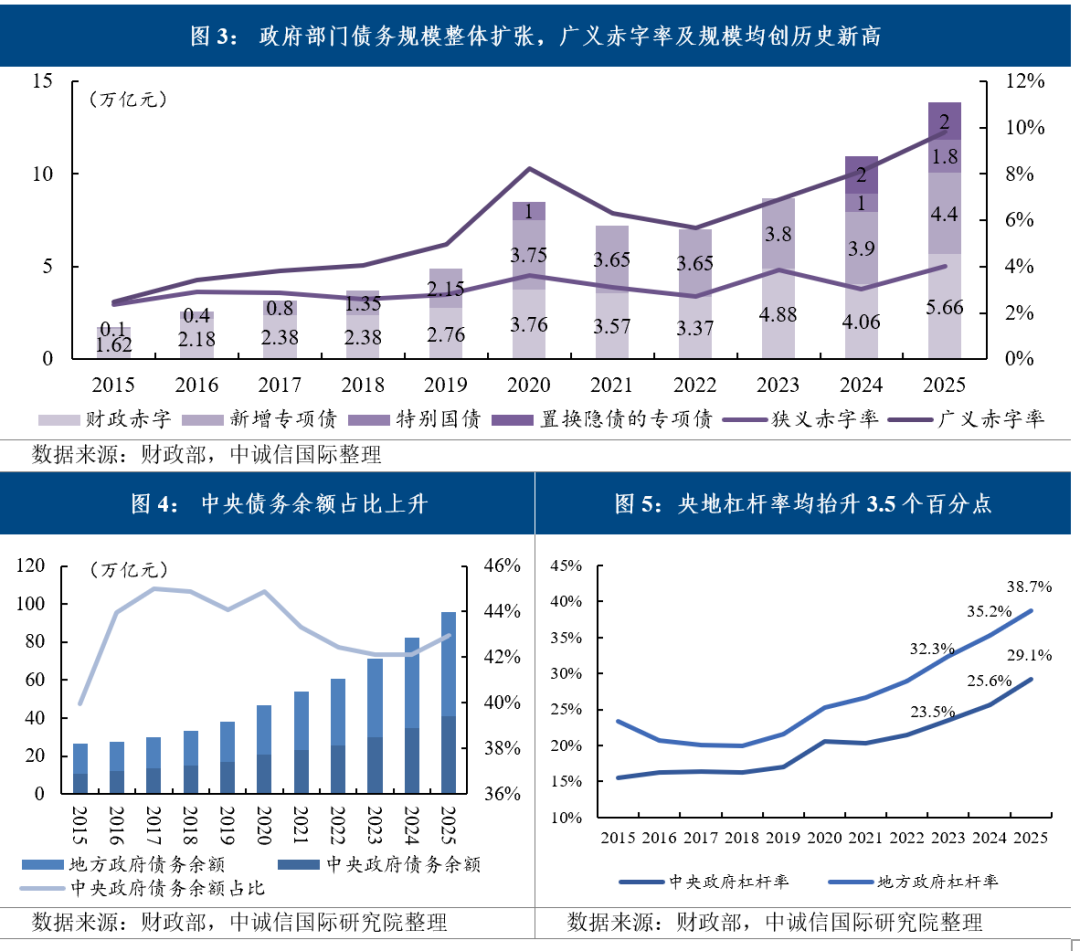
Core Viewpoint - The Chinese government is accelerating the establishment of a long-term mechanism for government debt management that aligns with high-quality development, emphasizing the importance of reasonable debt scale and structure to support modernization and economic stability [2][11]. Debt Scale and Structure - The "15th Five-Year Plan" highlights the need for an active fiscal policy, which includes appropriate debt increases to stabilize investment and expand domestic demand [3]. - Future trends indicate that the scale of government debt in China may continue to expand, with a focus on legal debt growth while reducing hidden debts [7][8]. - As of the end of 2023, China's total government debt is projected to reach 85 trillion yuan, with a debt-to-GDP ratio of 67.5%, which is considered manageable [8]. Debt Management Mechanism - The government aims to optimize the debt structure, particularly the relationship between central and local government debts, to enhance macroeconomic stability and reduce overall debt costs [12][16]. - The central government’s debt is significantly lower than that of local governments, suggesting room for increased leverage at the central level to boost effective demand [12][14]. Future Debt Strategy - The issuance of long-term special bonds is planned to support major national strategies and economic recovery, with significant amounts allocated for 2024 and 2025 [14]. - The government intends to clarify the nature and purpose of different types of bonds, ensuring that regular bonds are used for routine expenditures while special bonds address strategic needs [15]. Fiscal Reforms and Monitoring - The establishment of a comprehensive monitoring system for local government debt and a dynamic risk warning system is essential for sustainable debt management [16]. - Recommendations include enhancing the transparency of debt information and improving the assessment of local government debt sustainability [16].
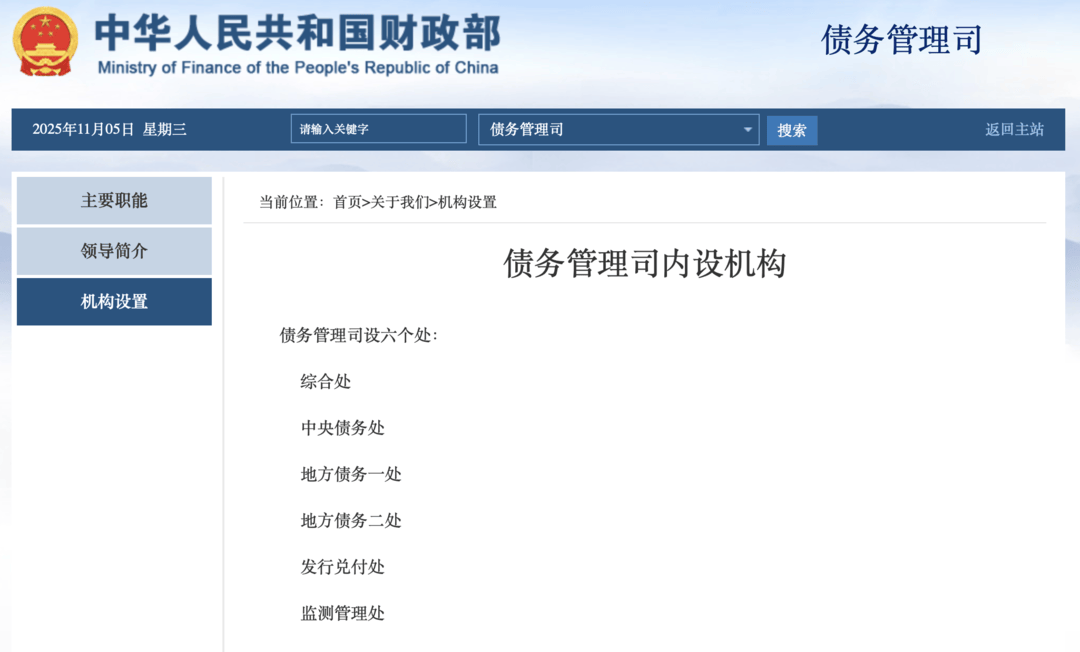
财政部新设债务管理司 北大教授许云霄:推动政府债务管理从分散走向统一
Sou Hu Cai Jing· 2025-11-05 08:13
Core Viewpoint - The establishment of the Debt Management Division by the Ministry of Finance is a key measure to implement a long-term government debt management mechanism that aligns with high-quality development during the 14th Five-Year Plan period [1][6]. Group 1: Establishment of the Debt Management Division - The Debt Management Division has been added to the Ministry of Finance's organizational structure, indicating a shift towards centralized management of government debt [1][2]. - Prior to the establishment of this division, government debt management functions were dispersed across various departments, leading to inefficiencies and high coordination costs [5][6]. - The new division will unify the management of central and local, explicit and implicit, domestic and foreign debts, enhancing management efficiency and professionalism [7][8]. Group 2: Responsibilities and Functions - The main responsibilities of the Debt Management Division include formulating and executing domestic debt management policies, managing government debt issuance and repayment, and monitoring hidden debt risks [6][7]. - The division is structured to cover all aspects of debt management, creating a closed-loop management system that includes regulation, issuance, usage, repayment, monitoring, and accountability [7][8]. Group 3: Future Expectations - The establishment of a unified management body is expected to facilitate a sustainable path towards "debt management in development" by creating a long-term mechanism and dynamic debt monitoring system [8][9]. - There is an emphasis on linking local government debt with land transfer income and state-owned asset operation revenues, exploring mechanisms that determine spending based on income and effectiveness [9][10]. - The division aims to strengthen collaboration between central and local debt management institutions, forming a vertical management chain [10].