
稳定币

Search documents
华安证券(600909.SH):未开展稳定币业务
Ge Long Hui· 2025-11-06 07:40
Group 1 - The company, Huazhong Securities (600909.SH), stated on its interactive platform that it has not engaged in stablecoin business [1] - The specific business development situation will be based on the company's disclosed periodic reports [1]

一头5000亿美元估值巨兽,正在浮出水面
虎嗅APP· 2025-11-06 00:07
Core Insights - The article discusses the increasing adoption of stablecoins, particularly USDT, in countries like Argentina, where citizens use it to hedge against local currency devaluation and inflation [2][3] - Tether, the issuer of USDT, has seen significant growth, with over 500 million users and a market cap exceeding $180 billion, making it the largest stablecoin provider globally [4][5] - Tether's valuation is projected to reach $500 billion, comparable to major tech companies, due to its dominant market position and profitability [6][9] Group 1: Market Dynamics - In Argentina, the inflation rate is projected to decrease from 211.4% in 2023 to 43.5% by mid-2025, yet remains high, driving demand for stablecoins [2] - Approximately two-thirds of the cryptocurrencies purchased in Argentina are stablecoins pegged to the US dollar, primarily USDT [3] - Tether's user base has grown from around 3 million in 2020 to over 500 million in 2023, indicating a significant increase in demand for stablecoins [13] Group 2: Competitive Landscape - Tether's market share is approximately 59% of the total stablecoin market, with USDC being its main competitor at 24% [21][24] - Tether's growth strategy has focused on emerging markets, where it has established extensive distribution networks and partnerships to facilitate the use of USDT [27][33] - The article contrasts Tether's approach with Circle's more compliance-focused strategy, suggesting that Tether's rapid growth stems from its ability to operate in regulatory gray areas [39][41] Group 3: Future Outlook - The stablecoin market is expected to grow significantly, with projections suggesting it could exceed $2 trillion by 2028, driven by improved regulatory frameworks [20] - Tether's competitive advantage lies in its liquidity, network effects, and established presence in emerging markets, although it faces increasing regulatory scrutiny [43][44] - The article suggests that while Tether may maintain its leading position in the short to medium term, its market share could decline as more compliant competitors emerge [43]


X @𝘁𝗮𝗿𝗲𝘀𝗸𝘆
𝘁𝗮𝗿𝗲𝘀𝗸𝘆· 2025-11-05 14:05
Role of Curator - Curator's decisions directly impact the security of the vault [1] - Curator's authority carries the potential for collusion with project teams for personal gain [1] - Curator is currently considered legally not liable [1] Market and Project Selection - Multiple stablecoin projects have privately approached the company for liquidity [1] - All market selections are actively chosen by the company, with no instances of conflicts of interest or providing funds to unreliable projects [1] - The company commits to avoiding providing funds to unreliable projects in the future [1] Risk Management and Investor Protection - If projects/markets invested in encounter issues, the company will attempt early detection and rapid response, including joining collective rights protection efforts if necessary, sharing losses in case of failure [1] - All actions will be traceable on-chain [1]
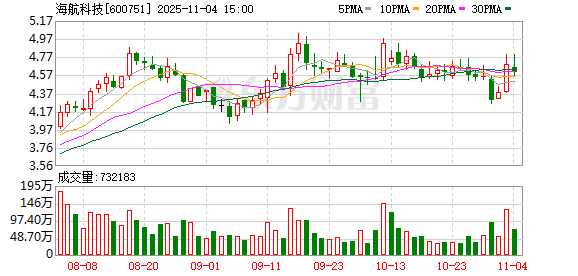
海航科技:海航科技主营业务为干散货船舶运输及商品贸易
Zheng Quan Ri Bao· 2025-11-04 12:41
Core Viewpoint - HNA Technology clarified that its main business involves dry bulk shipping and commodity trading, and it does not engage in blockchain or stablecoin activities [2] Company Summary - HNA Technology's primary operations focus on dry bulk shipping and commodity trading [2] - The company has no involvement in blockchain technology or stablecoin business [2]

Visa:11月4日宣布融入稳定币用于跨境支付
Sou Hu Cai Jing· 2025-11-04 08:19
Core Insights - Visa is integrating stablecoin functionality into its existing payment network, focusing on cross-border payment scenarios [1] - The initiative aims to enhance payment efficiency and inclusivity by allowing consumers to purchase stablecoins domestically and exploring their use in cross-border payments and e-commerce settlements [1] Group 1 - Visa's Asia-Pacific digital currency head announced the integration of stablecoin features at the Finternet2025 Asia Digital Finance Summit [1] - The company is promoting the purchase of stablecoins by consumers within their domestic markets [1] - Visa is exploring the application of stablecoins in various payment scenarios to improve overall payment processes [1]

Visa高管:推动将稳定币功能融入其现有支付网络
Sou Hu Cai Jing· 2025-11-04 07:56
Core Insights - Visa is integrating stablecoin functionality into its existing payment network, particularly for cross-border payment scenarios [1] - The company is promoting consumer purchases of stablecoins domestically and exploring their applications in cross-border payments and e-commerce settlements to enhance payment efficiency and inclusivity [1] Group 1 - Visa's focus on stablecoins aims to improve cross-border payment processes [1] - The initiative is part of Visa's broader strategy to enhance payment efficiency and inclusivity in digital finance [1] - The integration of stablecoins is expected to facilitate smoother transactions in various payment scenarios [1]
OWLS:被Visa盯上的稳定币清算公司
Tai Mei Ti A P P· 2025-11-04 05:35
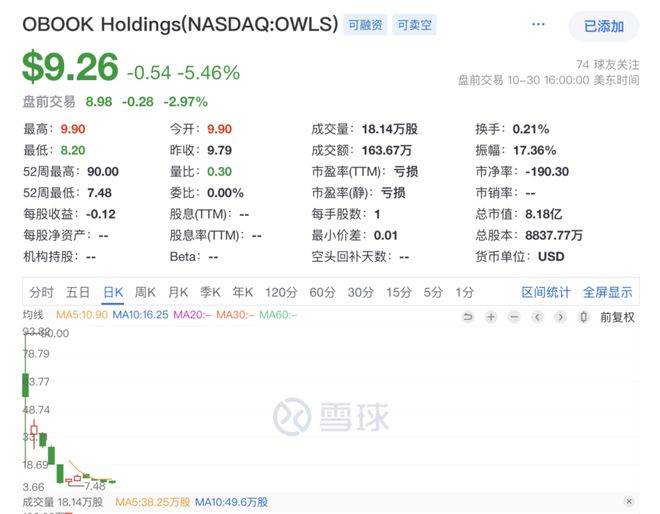
Core Insights - The market is witnessing significant activity in the stablecoin sector, highlighted by Coinbase's negotiations to acquire BVNK for approximately $2 billion, a valuation that has increased from $750 million in just one year [1][3] - OwlTing Group, which has transitioned from blockchain traceability to fintech, has recently gone public without raising new capital, achieving a market cap of around $4.9 billion at its peak, although it has since dropped to the $1 billion range [3][4] - The stablecoin industry is evolving into a critical component of global payment infrastructure, with regulatory frameworks being established in various jurisdictions, including the U.S. and the EU [10][11] Company Overview - OwlTing Group, founded in 2010, initially focused on blockchain traceability and e-commerce but pivoted to fintech post-pandemic, developing products like OwlPay and OwlPayHarbor [3][4] - The company has secured Money Transmitter Licenses (MTL) in 40 U.S. states and has registered in Japan, the EU, and Southeast Asia, positioning itself as a compliant cross-border settlement network operator [3][5] - OwlPay aims to provide a one-stop solution for businesses, facilitating T+0 settlement with a target fee rate of 0.5%, supporting multiple currencies including USDC, USD, EUR, and JPY [19][22] Market Dynamics - The global cross-border payment market is projected to grow significantly, with estimates suggesting it could exceed $1 trillion by 2029, driven by demand for faster and cheaper payment solutions [13] - Stablecoin payments are expected to see explosive growth, with projections indicating a payment volume of $28 billion by 2025, reflecting an increase of over 800 times from 2022 [11][13] - The competitive landscape for stablecoin clearing is evolving, with companies like OwlTing, BVNK, and Bridge representing different strategic approaches to capturing market share [23][24] Strategic Partnerships - OwlTing has partnered with Visa to integrate OwlPay into Visa's global network, allowing for stablecoin transactions across over 85 billion payment endpoints [5][25] - This partnership signifies a shift in traditional payment systems, as Visa incorporates stablecoin capabilities into its offerings, enhancing OwlTing's market position [5][25] Financial Performance - For the fiscal year 2024, OwlTing reported revenues of $7.57 million, an 18% year-over-year increase, but also incurred a net loss of $10.27 million [4][26] - The company's revenue model is primarily driven by B2B settlement services, which account for approximately 60% of total revenue, with a take rate between 1% and 3% [22][26] Future Outlook - The stablecoin sector is anticipated to play a pivotal role in the future of global payment networks, with projections indicating that stablecoins and tokenized cash will become core channels by 2030 [10] - OwlTing's positioning as a compliant cross-border clearing network could enable it to capture significant market share as the demand for efficient payment solutions continues to rise [27]
聊下OWLS,被Visa盯上的稳定币清算公司
Sou Hu Cai Jing· 2025-11-04 04:20
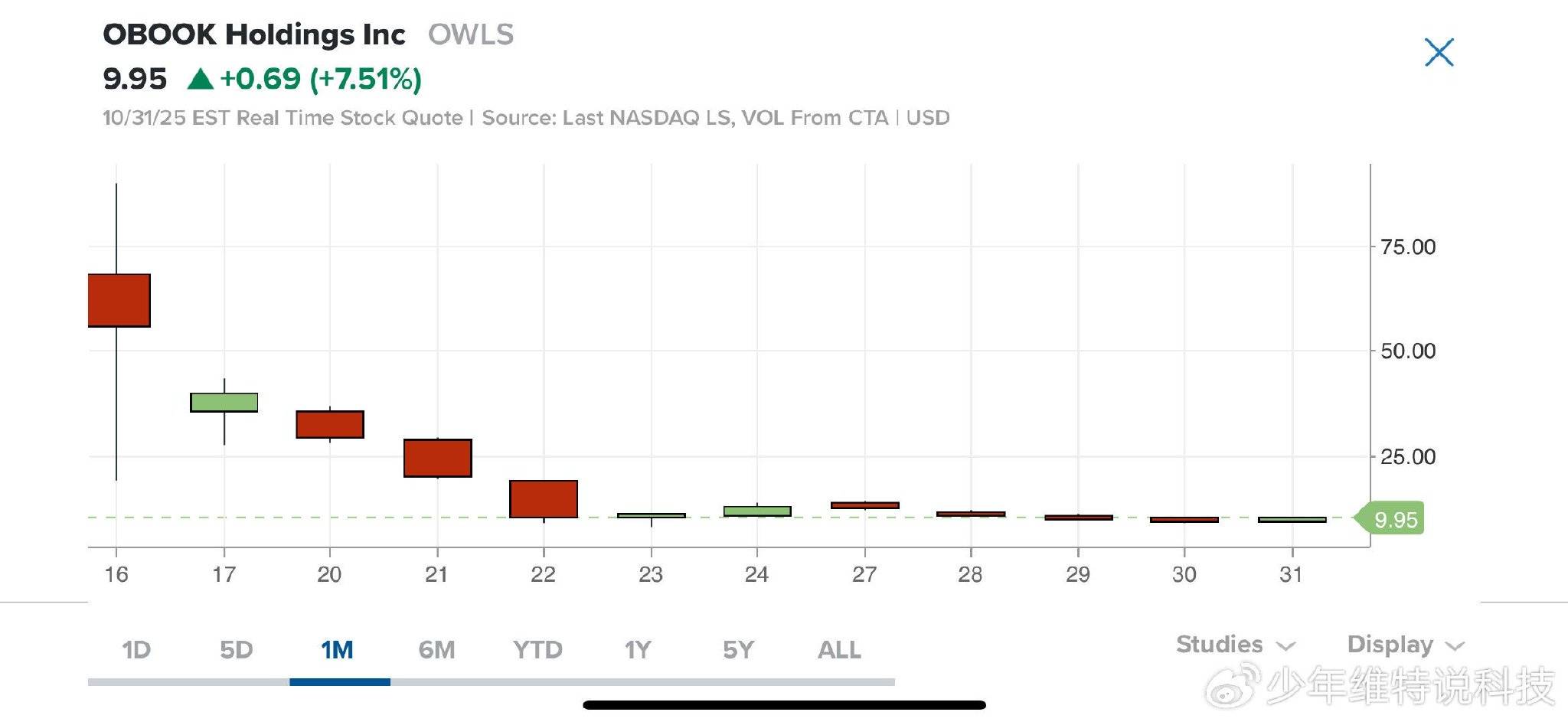
Core Viewpoint - The stablecoin sector is experiencing significant developments, with Coinbase negotiating a $2 billion acquisition of BVNK, which has seen its valuation increase from $750 million to $2 billion in just one year. Additionally, OwlTing Group has gone public, marking a notable entry into the financial technology space focused on stablecoin settlement [1][4][6]. Group 1: Company Developments - OwlTing Group, founded in 2010, transitioned from blockchain traceability and travel e-commerce to financial technology, launching OwlPay and OwlPayHarbor for stablecoin settlement [4]. - OwlTing's stock debuted at a reference price of $10, surged to $68, and closed at $55.55, giving it a market cap of approximately $4.9 billion, although it has since fallen to around $1 billion [4][5]. - The company has obtained Money Transmitter Licenses (MTL) in 40 U.S. states and has registered in Japan, the EU, and Southeast Asia, positioning itself as a compliant cross-border settlement network operator [4][5]. Group 2: Financial Performance - For the fiscal year 2024, OwlTing reported revenues of $7.57 million, an 18% year-over-year increase, but incurred a net loss of $10.27 million [5][22]. - The primary revenue source for OwlPay is B2B settlement services, accounting for about 60% of total revenue, with a take rate between 1% and 3% [22]. Group 3: Market Trends and Opportunities - The stablecoin market is projected to reach a total market value of approximately $261 billion by 2025, with stablecoin payment volumes expected to grow significantly [7][10]. - Visa has integrated OwlPay into its global network, allowing OwlTing to leverage over 8.5 billion payment endpoints, covering more than 190 regions and 160 currencies [5][23]. - The global cross-border third-party payment market is estimated to reach $1 trillion by 2029, with stablecoins providing a more efficient and cost-effective solution for businesses [11][14]. Group 4: Competitive Landscape - The stablecoin clearing sector is evolving, with different companies like BVNK, Bridge, and OwlTing representing various approaches to integrating stablecoins into traditional financial systems [23]. - OwlTing's model focuses on building a compliant cross-border clearing network, distinguishing itself from traditional financial institutions and other fintech players [23][25]. - The company aims to connect blockchain and global payment systems, similar to how PayPal connected the internet with the dollar system two decades ago [30].
【大算投】英伟达113天狂揽万亿市值,币圈却崩了?
Sou Hu Cai Jing· 2025-11-04 03:11
Core Insights - Nvidia's market capitalization reached $5 trillion, marking a historic milestone for publicly traded companies, achieved in just 113 days, showcasing the explosive growth of AI technology [2][4] - In stark contrast, the cryptocurrency market is experiencing a severe downturn, characterized by capital flight, innovation stagnation, and a collapse of confidence [2][10] Group 1: Nvidia's Market Performance - Nvidia's valuation surpasses that of most countries' annual GDP, with its market cap exceeding the total value of global cryptocurrencies by $1.2 trillion [5] - The company's market cap is over 60% of the combined valuations of Apple and Microsoft, establishing it as a new benchmark in the tech industry [6] - The S&P 500 index has shown strong performance, with a return rate that has outpaced Bitcoin this year, positioning it as a safe haven for capital [6][18] Group 2: Cryptocurrency Market Decline - The cryptocurrency market, once thriving, is now facing a significant decline, with Bitcoin's market cap at approximately $2.3 trillion, accounting for 62% of the total crypto market [7] - Altcoins have suffered greatly, with a combined market cap of about $1.5 trillion, down nearly 30% since the beginning of the year, leading to liquidity crises for many tokens [9] - The shift in capital from cryptocurrencies to stocks is evident, particularly in the South Korean market, where the KOSPI index has surged nearly 71% this year [10][11] Group 3: Internal Challenges in Cryptocurrency - The cryptocurrency market is facing internal issues, with a 30% decrease in the number of developers on GitHub, indicating a halt in innovation [16] - Many altcoins lack clear use cases and have flawed economic models, leading to a reliance on speculative trading rather than real value creation [15] - The absence of regulatory frameworks has exacerbated the uncertainty in the crypto market, highlighted by recent events that have shaken investor confidence [22][23] Group 4: Comparative Analysis with Traditional Assets - In the competition with traditional assets, cryptocurrencies have failed to maintain their "high risk, high reward" appeal, as evidenced by the S&P 500's superior returns supported by solid corporate earnings [18][20] - Gold has emerged as a preferred safe-haven asset, with prices surpassing $4,300 per ounce, while Bitcoin struggles to transition from a risk asset to a reliable hedge [21][22] - The current capital migration reflects a preference for assets with visible profitability and controlled risks, making it challenging for cryptocurrencies to attract investment [24]


【大算投】2769亿!相当于3个挪威外汇储备,稳定币正在掏空银行的“钱袋子”
Sou Hu Cai Jing· 2025-11-04 02:36
Core Insights - The rise of stablecoins like USDT and USDC has created a significant impact on the global financial system, with USDT reserves exceeding 150 billion and USDC holding 99.5% of its reserves in U.S. Treasury bonds, surpassing the foreign exchange reserves of over 70% of countries worldwide [2][4][21] - Stablecoins are seen as a modern iteration of the "narrow bank" concept, which aims to separate money creation from credit risk, but they operate outside traditional banking regulations, creating both opportunities and risks for the financial system [6][20] Group 1: Market Dynamics - The total market capitalization of stablecoins has reached 276.9 billion, with a significant portion locked in short-term U.S. Treasury bonds, leading to a liquidity crisis in traditional banking [4][7] - Stablecoins are effectively siphoning off deposits from commercial banks, with an estimated 1.2 trillion in deposits withdrawn, impacting banks' ability to lend and manage liquidity [23][25] Group 2: Regulatory Challenges - The U.S. is moving towards stricter regulations for stablecoins, such as the GENIUS Act, which mandates 100% cash or short-term Treasury bond reserves, potentially tying stablecoins more closely to U.S. debt markets [21][25] - Regulatory approaches vary globally, with Hong Kong allowing multi-currency stablecoin issuance, creating an arbitrage opportunity that could lead to increased risks in the global financial system [22] Group 3: Financial Stability Risks - The operational model of stablecoins, which requires backing every issued token with equivalent reserves, is leading to a "sterilization" of market liquidity, as these assets are often held in custodial accounts and not actively used in lending or repurchase agreements [10][12][13] - The concentration of stablecoin holdings in short-term Treasury bonds is distorting market structures, leading to historically low yield spreads between different maturities and creating potential liquidity crises in the bond market [18][20] Group 4: Future Outlook - The expansion of stablecoins is seen as both a reinforcement of U.S. dollar dominance and a catalyst for a more multipolar global currency system, with central bank digital currencies (CBDCs) emerging as alternatives that do not rely on U.S. Treasury bonds [25][29] - The rapid growth of stablecoins, projected to reach 3 trillion, contrasts with the slower adoption of CBDCs, highlighting a significant gap in the evolution of digital financial systems [26][28]