
区块链

Search documents
四方精创递表港交所 为银行业金融科技服务提供商
Zhi Tong Cai Jing· 2025-12-24 14:20
Company Overview - Sifang Jingchuang (300468.SZ) is a fintech service provider based in the Greater Bay Area, focusing on the banking sector, offering software development, consulting, and system integration services to banks, regulatory bodies, and other financial institutions in mainland China, Hong Kong, and Southeast Asia [3] - The company's services are divided into three main segments: fintech software development, consulting services, and system integration services, with a focus on banking technology services, financial infrastructure, and fintech innovation [3] Financial Performance - The company's revenue for the fiscal years 2022, 2023, 2024, and the nine months ending September 30, 2025, were approximately RMB 664 million, RMB 730 million, RMB 740 million, and RMB 454 million respectively [5] - The net profit for the same periods was approximately RMB 41.19 million, RMB 47.38 million, RMB 67.36 million, and RMB 66.58 million [7] - The gross profit margins for these years were 32.5%, 30.2%, 33.1%, and 40.3% respectively [8] Client Concentration - The company has a high client concentration, with revenue from its top five clients accounting for 87.8%, 90.1%, 93.7%, and 89.4% of total revenue for the years 2022, 2023, 2024, and the nine months ending September 30, 2025 [4] Industry Overview - The market for fintech software development services in mainland China and Hong Kong has grown rapidly, from RMB 100.3 billion in 2020 to an expected RMB 158.8 billion by 2024, with a compound annual growth rate (CAGR) of 12.2% [10] - The banking sector is projected to account for 69.6% of the fintech software development services market in 2024, increasing to 73.9% by 2029 [11] - The fintech software development services market in Hong Kong is expected to reach RMB 9 billion by 2024, with a CAGR of 7.8% from 2020 to 2024 [13] Competitive Landscape - The fintech software development services market is fragmented and competitive, with service providers and in-house development teams contributing to the market [18] - In 2024, the company's revenue is expected to represent 1.2% of the total market for fintech software development services in the banking sector in mainland China and Hong Kong, ranking it 15th among competitors [20]


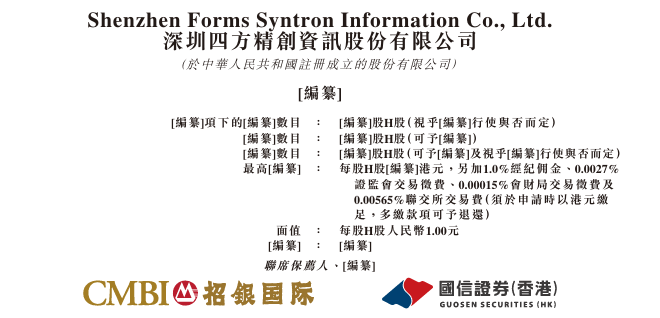
新股消息 | 四方精创递表港交所 为银行业金融科技服务提供商
Zhi Tong Cai Jing· 2025-12-24 14:00
Company Overview - Sifang Precision Technology Co., Ltd. (四方精创) has submitted its listing application to the Hong Kong Stock Exchange, with CMB International and Guosen Securities (Hong Kong) as joint sponsors [1] - The company is a fintech service provider focused on the Greater Bay Area, offering software development, consulting, and system integration services to banks and financial institutions in mainland China, Hong Kong, and Southeast Asia [2][3] Service Offerings - The company provides three main service categories: fintech software development, consulting services, and system integration services [3] - Fintech software development includes banking technology services, financial infrastructure, and fintech innovation services, such as integrated software systems for personal and corporate banking, digital banking solutions, and data services [3] - The company’s revenue primarily comes from fintech software development, utilizing two revenue models: cost-plus pricing and project-based pricing [3] Financial Performance - The company's revenue for the fiscal years 2022, 2023, 2024, and the nine months ending September 30, 2025, were approximately RMB 664 million, RMB 730 million, RMB 740 million, and RMB 454 million, respectively [4] - The net profit for the same periods was approximately RMB 41.19 million, RMB 47.38 million, RMB 67.36 million, and RMB 66.58 million [5] - The gross profit margins for these years were 32.5%, 30.2%, 33.1%, and 40.3% [6] Industry Overview - The fintech software development market in mainland China and Hong Kong has grown rapidly, from RMB 100.3 billion in 2020 to an estimated RMB 158.8 billion by 2024, with a compound annual growth rate (CAGR) of 12.2% [8] - The banking sector is a significant contributor, expected to account for 69.6% of the market share in 2024, increasing to 73.9% by 2029 [9] - The Hong Kong fintech software development market is projected to reach RMB 9 billion by 2024, with a CAGR of 7.8% from 2020 to 2024, and is expected to grow to RMB 36.3 billion by 2029 [12] Competitive Landscape - The fintech software development market is competitive and fragmented, with service providers and in-house development teams contributing to the market [17] - By 2024, fintech software development providers are expected to account for approximately 53% of the total revenue in the banking sector [17] - The company ranks 15th in terms of software development service revenue in the banking sector, with a market share of 1.2% [18]
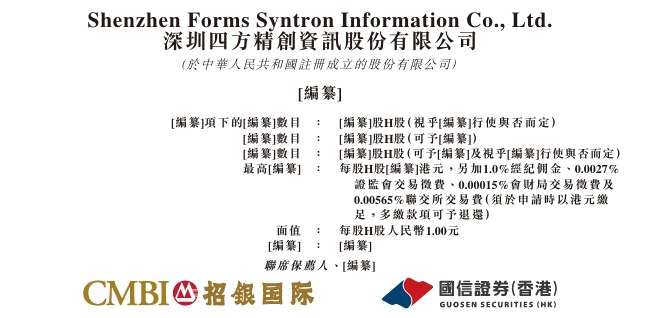
新股消息 | 四方精创(300468.SZ)递表港交所 为银行业金融科技服务提供商
智通财经网· 2025-12-24 13:55
Company Overview - Sifang Precision (Shenzhen) Co., Ltd. is a financial technology service provider focused on the Greater Bay Area, offering software development, consulting, and system integration services to banks and financial institutions in mainland China, Hong Kong, and Southeast Asia [3] - The company operates in three main segments: financial technology software development, consulting services, and system integration services, with a strong emphasis on digital transformation for financial institutions [3] Financial Performance - The company's revenue for the fiscal years 2022, 2023, 2024, and the nine months ending September 30, 2025, were approximately RMB 664 million, RMB 730 million, RMB 740 million, and RMB 454 million, respectively [5] - The net profit for the same periods was approximately RMB 41.19 million, RMB 47.38 million, RMB 67.36 million, and RMB 66.58 million [6] - The gross profit margins for these years were 32.5%, 30.2%, 33.1%, and 40.3% [7] Client Concentration - The company has a high client concentration, with revenue from its top five clients accounting for 87.8%, 90.1%, 93.7%, and 89.4% of total revenue for the years 2022, 2023, 2024, and the nine months ending September 30, 2025, respectively [4] Industry Overview - The market for financial technology software development services in mainland China and Hong Kong has grown rapidly, from RMB 100.3 billion in 2020 to an estimated RMB 158.8 billion by 2024, with a compound annual growth rate (CAGR) of 12.2% [9] - The banking sector is projected to account for 69.6% of the financial technology software development services market in 2024, increasing to 73.9% by 2029 [10] - The Hong Kong financial technology software development services market is expected to grow from RMB 9 billion in 2024 to RMB 36.3 billion by 2029, with a CAGR of 32.3% [12] Competitive Landscape - The financial technology software development services market is fragmented and competitive, with service providers and in-house development teams contributing to the market [17] - In 2024, the company's revenue is expected to represent 1.2% of the total market, ranking it 15th among competitors [19]
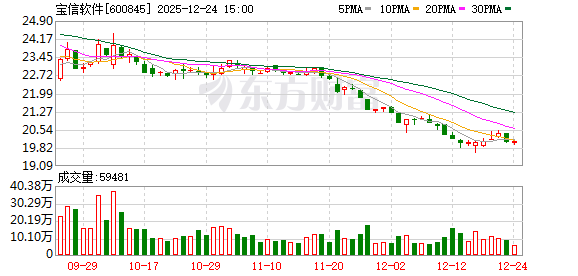
宝信软件:公司的金融科技储备紧扣主业数智化优势
Zheng Quan Ri Bao· 2025-12-24 12:42
(文章来源:证券日报) 证券日报网讯 12月24日,宝信软件在互动平台回答投资者提问时表示,公司的金融科技储备紧扣主业 数智化优势,在供应链金融业务领域运用区块链技术,开展贸易背景增信及供应链数据互通。基础设施 方面,宝之云提供金融级算力服务。 ...

【港交所IPO】白鸽在线港股IPO通过聆讯:以科技重构保险生态,领航AI保险行业新纪元
Sou Hu Cai Jing· 2025-12-24 10:33
Core Insights - Baige Online is set to become the first AI-driven insurance stock in China as it prepares to list on the Hong Kong Stock Exchange, marking a significant milestone in the insurance technology sector [1] Group 1: Technological Foundation - The core competitive advantage of Baige Online lies in its self-developed "Baige e-Bao" SaaS application system, which integrates big data, AI, blockchain, and cloud computing to provide a full lifecycle service matrix covering smart underwriting, policy management, claims service, data analysis, and financial management [1] - The system boasts a high concurrency processing capability of 100,000 policies per second, with a daily processing volume exceeding 5 million policies, and an online claim response time reduced to under 3 minutes, enabling real-time insurance services [1] - The system's capabilities have been validated through partnerships, such as with Hello Chuxing, where it automatically links user riding data with policy information, creating a seamless insurance experience and significantly reducing complaint rates [1] Group 2: Data Security - Baige Online has established a multi-layered security system, including a web application firewall and sensitive data masking technology, achieving a Level 3 security certification and being listed as a financial technology innovation enterprise by the People's Bank of China [2] - The "Baige e-Bao" system received recognition as one of the "Top 20 Digital Insurance Applications" in 2021 and won third place in the Xiamen Financial Technology Excellence Project evaluation, reflecting its strong technical capabilities [2] Group 3: Ecosystem Collaboration - Successful internet insurance intermediaries must provide end-to-end digital solutions, enhancing efficiency and customer experience while utilizing data analysis for decision optimization [3] - Building and maintaining trust with clients and collaborating with various stakeholders, including scenario providers, insurance companies, and government entities, is essential for developing scenario-based insurance products [3] Group 4: Market Positioning - Baige Online ranks first among third-party scenario internet insurance intermediaries in China with a market share of 3.4% as of 2024, attributed to its "scenario customization" strategy that tailors insurance products to the specific needs of diverse partners [4] - The company has accumulated over 381 million insured profiles, 76 scenario data points, 224,500 claims reports, and 8.9 billion policy records, creating a comprehensive risk data network across nine ecosystems [4] Group 5: Innovation and Growth - Research and development expenditures at Baige Online increased from 141 million to 324 million yuan between 2022 and 2024, representing a rise from 3.5% to 4.0% of revenue, leading to significant technological advancements [5] - The company is transitioning from a focus on "scenario deepening" to "ecosystem expansion," integrating risk data from various scenarios to create comprehensive risk profiles for more accurate pricing and broader consumer protection [5] - The Chinese insurance market is projected to grow from 4.5 trillion yuan in 2020 to 5.7 trillion yuan by 2024, with a compound annual growth rate of 5.8%, and is expected to exceed 8.4 trillion yuan by 2029, with internet insurance accounting for 12.6% of the total [5] Group 6: Future Vision - Baige Online aims to empower the insurance industry through technology, enhancing the safety, convenience, and intelligence of insurance experiences for consumers globally, thereby contributing to the digital transformation of the insurance sector [6]

高山企业(00616.HK)拟与富途附属公司等共同布局东盟稳定币业务
Jin Rong Jie· 2025-12-24 07:57
Core Viewpoint - Gao Shan Enterprises (00616.HK) has entered a non-binding memorandum of understanding to subscribe for shares in a joint venture company focused on developing and/or investing in stablecoins and other blockchain-related businesses in the ASEAN region [1] Group 1: Joint Venture Details - The joint venture is expected to have between 5 to 10 potential subscribers, with a total fundraising target of approximately $4.5 million [1] - Two potential subscribers have signed the memorandum, including Gao Shan Enterprises and Harvest Vast Limited, a subsidiary of Futu Holdings Limited (stock code: FUTU) [1] Group 2: Market Opportunity - Gao Shan Enterprises believes that the stablecoin industry presents significant business opportunities, and the establishment of the joint venture will facilitate the company's participation or investment in the stablecoin and/or blockchain-related sectors [1]

新晨科技连中两家全国性股份制银行亿级订单 AI算力&数据中心级网络信创建设获金融客户认可
Quan Jing Wang· 2025-12-24 07:56
2025年第四季度, 新晨科技 凭借深厚的技术积累及多年金融行业服务经验,突破激烈竞争,连续中标 两家全国性股份制商业银行的亿元级订单。此次中标项目涉及AI算力、数据中心网络信创建设、信息 技术支持服务等多个业务,进一步巩固了其作为金融领域数字化解决方案与服务提供商的领先地位。 01 某全国性股份制银行 AI算力基础设施 赋能金融智能化转型 02 某全国性股份制银行 数据中心信创网络建设 引领高效稳定的金融基础设施升级 在AI技术浪潮中,新晨科技中标某全国性股份制商业银行的鲲鹏CPU AI算力 服务器 及配件选型入围项 目。该项目聚焦于构建高性能计算平台,支持银行在智能风控、客户服务等场景的AI应用落地。凭借 与 华为鲲鹏 生态的深度适配能力,提供兼容性强、成熟度高的算力解决方案,助力银行加速数据分析 和模型训练,驱动业务智能化升级。此次合作不仅强化了新晨科技在AI基础设施领域的优势,也体现 了金融机构对技术创新投入的持续加码。 (运行维护方向) 新晨科技成功中标另一家全国性股份制商业银行的数据中心级路由交换(通用场景)网络设备入围采购 项目。该项目聚焦于构建高可靠性、低延迟的数据中心网络架构,旨在满足银行核 ...

在自贸港建设中书写青春答卷
Yang Shi Wang· 2025-12-24 07:12
Group 1 - The establishment of the Hainan Free Trade Port marks a new phase in national strategy, emphasizing the need for market regulators to adapt to profound changes in the market environment [1] - Initial work during the customs closure phase requires a forward-looking perspective, with a focus on understanding the impacts of cross-border models and accurately assessing operational logic under new policies [1][2] - Every regulatory check and professional consultation contributes to maintaining market order and instilling confidence in the business environment of the free trade port [1] Group 2 - Continuous learning is essential for market regulators to overcome skill gaps and proactively engage with emerging business models such as digital trade and cross-border finance [2] - Understanding the underlying logic and strategic intent of core regulations, such as the Hainan Free Trade Port Law, is crucial for effective policy implementation [2] - Embracing modern tools like big data and blockchain is necessary to build smarter risk warning and governance mechanisms [2] Group 3 - The construction of the free trade port requires historical patience and strategic determination, with a focus on maintaining enthusiasm and direction over the long term [3] - Each resolved dispute and compliance guidance contributes to creating a trustworthy consumption environment and optimizing the international business landscape [3] - Market regulators play a vital role in the broader national strategy, and their contributions are essential for the successful development of the Hainan Free Trade Port [3]
高山企业(00616.HK)订立谅解备忘录拟成立合营公司 将参与或投资稳定币及区块链相关行业
Jin Rong Jie· 2025-12-24 07:00
Group 1 - The company, Gao Shan Enterprises (00616.HK), announced a non-binding memorandum of understanding regarding the subscription of shares in a joint venture [1] - The joint venture aims to develop and/or invest in stablecoins and other blockchain-related businesses in the Association of Southeast Asian Nations (ASEAN) [1] - The expected number of subscribers for the joint venture is between five to ten, with a total fundraising target of approximately 4.5 million USD [1]
高山企业(00616)订立谅解备忘录拟成立合营公司 将参与或投资稳定币及区块链相关行业
Zhi Tong Cai Jing· 2025-12-24 07:00
Group 1 - The company has entered a non-binding memorandum of understanding to subscribe for shares in a joint venture focused on developing and/or investing in stablecoins and blockchain-related businesses in Southeast Asia [1] - The expected number of subscribers for the joint venture is between five to ten, with a total fundraising target of approximately $4.5 million [1] - The establishment of the joint venture is anticipated to enhance the company's participation in the stablecoin and blockchain sectors [1] Group 2 - The market capitalization of stablecoins is projected to reach between $500 billion and $750 billion in the coming years, with the U.S. Treasury predicting it could reach $2 trillion by 2028, significantly up from the current $260 billion [1] - Stablecoins are experiencing unprecedented growth, with transaction volumes surpassing traditional payment networks; in 2024, stablecoin transaction volume reached $276 trillion, exceeding the combined transaction volume of Visa and Mastercard [1][2] - The company observes that the adoption of tokenized cash via blockchain technology is enhancing the ability to complete payments globally in a fast, secure, and cost-effective manner, indicating a potential major transformation in the payment industry [2]