
五育并举

Search documents
以红色教育为核心、艺术体验为载体 “九色鹿”暑托服务护航童年梦想
Zhen Jiang Ri Bao· 2025-08-26 23:37
Core Viewpoint - The "Nine-Color Deer" public summer care class in the Jiuhua Mountain Villa community successfully concluded, addressing the childcare challenges faced by dual-income and new employment families, serving over 40 children in the district [1][2]. Group 1: Program Structure and Impact - The summer care class implemented an innovative "Nine-Color Curriculum" system, emphasizing comprehensive education through various activities, including red culture, AI classes, and traditional crafts, which significantly nurtured children's growth [2][4]. - Activities included practical skills like making earthquake alarms and an eco-friendly fashion show, promoting both safety awareness and environmental consciousness among children [3][4]. Group 2: Community Collaboration - The success of the program was attributed to a collaborative model involving community support, university student volunteers, and contributions from local businesses, fostering a strong partnership between families and educational institutions [3][4]. - The program's approach of "learning through play" was highlighted, with children engaging in hands-on activities that combined fun with educational value [3]. Group 3: Future Development and Goals - The Jiuhua Mountain Villa community aims to enhance the "Nine-Color Deer" brand, focusing on integrating various educational elements and expanding service reach, while striving to create a sustainable and replicable community service model [4]. - The community's commitment to instilling a sense of national pride and responsibility in children through red education and artistic experiences was emphasized as a key aspect of their mission [4].
让假期更有趣,孩子有所得(编辑手记)
Ren Min Ri Bao· 2025-08-12 22:29
Core Insights - The article emphasizes the importance of utilizing existing educational resources in universities and schools to enhance children's growth and development during the summer [1] - It highlights the need for public cultural service institutions to offer personalized and diverse cultural programs to engage children effectively [1] - The article calls for collaboration from social forces to create opportunities for children to learn and explore during their vacation [1] Group 1: Activation of Existing Resources - Universities possess valuable cultural assets such as museums and sports facilities that need to be further developed and utilized [1] - In Beijing, 22 universities have opened 43 on-campus museums, while 341 school sports venues in Changsha, Hunan Province, are offering free access [1] Group 2: Expansion of Cultural Offerings - Public cultural service institutions should not only focus on welcoming visitors but also provide targeted and personalized services [1] - Institutions are encouraged to adopt a "online ordering + offline delivery" model to offer various art courses, including painting, music, and dance, to cater to children's interests [1] - There is a push for the development of a systematic and diverse online course framework that allows children to learn from home [1] Group 3: Practical Growth Opportunities - The article expresses a desire for more social initiatives to bridge knowledge and fun for children during the holidays [1] - It anticipates that children will return to school with a passion for learning and enriched experiences [1]
铁岭:补短板强基础推进教育高质量发展
Liao Ning Ri Bao· 2025-08-05 01:06
Group 1 - The core viewpoint highlights the successful exploration of high-quality education development paths in Tieling City, significantly enhancing the educational experience for the community [1] - Tieling City has focused on addressing prominent issues in the education sector, improving public service quality and educational standards, and achieving substantial results in educational reform [1] - The establishment of high school alliances and the implementation of inter-district examination integration have led to noticeable improvements in educational quality through resource sharing and innovative measures [1] Group 2 - Continuous optimization of the teaching workforce has been implemented, enhancing the ability to educate, with significant training provided to school leaders and teachers [2] - Over the past five years, Tieling City has improved educational conditions for over 240 compulsory education schools and 15 high schools, significantly increasing the number of quality preschool places [2] - The city has pioneered digital education initiatives, establishing "digital campuses" and launching comprehensive services to streamline the enrollment process [2]
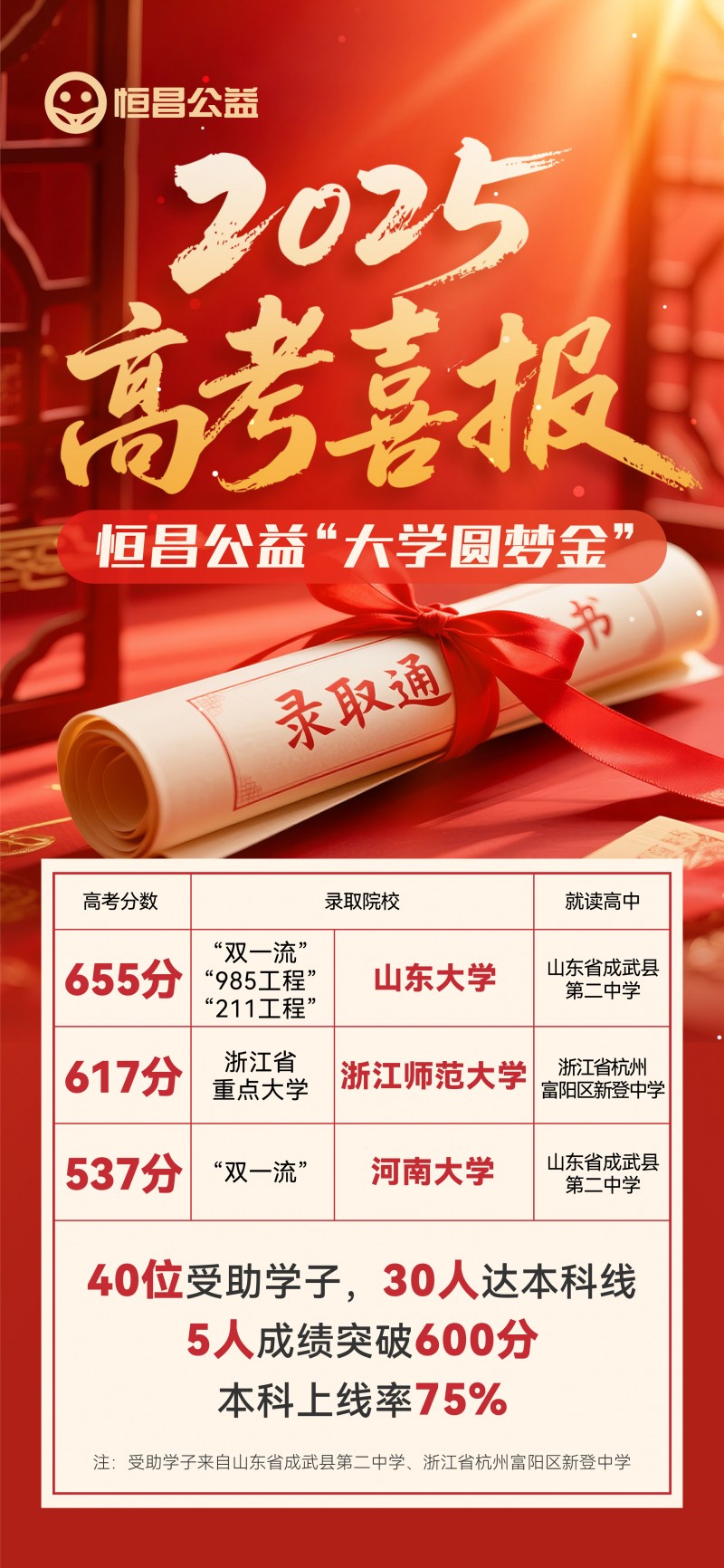
金榜题名时 恒昌公益“大学圆梦金”助力30位寒门学子扬帆起航
Cai Fu Zai Xian· 2025-07-30 09:39
Core Insights - The "University Dream Fund" project by Hengchang Public Welfare has achieved a remarkable 75% undergraduate admission rate for its beneficiaries in the 2025 college entrance examination, with 30 out of 40 supported students successfully entering universities [1][5][6] - The project aims to provide quality education through targeted support, moving beyond simple financial aid to empower students from disadvantaged backgrounds [1][5] Group 1: Project Overview - The "University Dream Fund" was launched in 2024 to assist students from underprivileged areas, with initial donations of 50,000 yuan to 50 students in Chengwu County and 60,000 yuan to 60 students in Hangzhou [4] - The project has been successful in improving educational outcomes, with a significant increase in admission rates compared to local averages [5][8] Group 2: Success Stories - Notable success includes a student named A Xuan, who scored 655 points and was admitted to Shandong University, representing the highest score since the project's inception [6][7] - Other beneficiaries also achieved impressive results, with 14 out of 20 students from Chengwu County and 16 out of 20 from Hangzhou reaching the undergraduate admission line [5][6] Group 3: Educational Philosophy - Hengchang Public Welfare promotes a comprehensive development philosophy, advocating for a balanced approach to education that includes moral, intellectual, physical, artistic, and labor education [8] - The organization has established multiple "Cloud Pine Campuses" across nine provinces, providing various educational resources and facilities to support over 7,000 students [8]

让学校“好玩”,让学生“好学”(暖闻热评)
Ren Min Ri Bao· 2025-07-22 21:51
Core Viewpoint - The article emphasizes the importance of a balanced educational approach that integrates play and learning, showcasing the success of Xinzou No. 2 Primary School under Principal Yang Changsheng's leadership in promoting both physical health and academic excellence [1][2]. Group 1: Educational Philosophy - Principal Yang Changsheng has focused on making school enjoyable for students, utilizing the limited space of the school to encourage play and physical activity during breaks [1][2]. - The school has achieved remarkable academic results, ranking first in educational quality assessments for nine consecutive years, demonstrating that play and learning can coexist effectively [2][3]. Group 2: Holistic Development - The article highlights the need for diverse educational methods to foster student development, citing examples from various regions in China where schools collaborate with local resources to enhance learning experiences [3][4]. - It stresses that achieving comprehensive education requires not only facilities and funding but also a shared understanding among parents and educators about respecting children's natural growth and creativity [3][4]. Group 3: Community and Cultural Integration - The integration of community resources and local culture into education is essential for promoting holistic student development, as seen in various initiatives across different regions [4]. - The article advocates for a shift in the perception of schools from mere exam preparation spaces to nurturing environments that encourage creativity and diverse growth opportunities for children [4].
家校协同发力 共推体育“2小时”政策落实
Xin Hua Ri Bao· 2025-07-17 20:20
Core Points - The "2-hour" requirement for daily physical activity for students reflects the central government's emphasis on student health and the commitment to fostering lifelong sports habits [1][2] - The evolution of physical education policies over the past two decades shows a trend from "1 hour" to "2 hours," indicating ongoing optimization of related policies [2] - Schools are identified as the primary venues for implementing the "2-hour" policy, necessitating a comprehensive approach that integrates both in-school and out-of-school activities [3][4] Policy Evolution - The initial requirement of "1 hour" was established in 2007, which evolved to "1 hour each for school and home" in 2020, and now to "not less than 2 hours" in 2025, showcasing a significant policy shift [2] - The new "2-hour" requirement aligns with practical implementation, enhancing the feasibility for various schools to meet the policy [2] Implementation in Schools - Schools are expected to adopt a comprehensive approach to physical education, incorporating various activities such as physical classes, breaks, extracurricular sports, and competitions [3] - The increase in break times and the frequency of physical classes in many schools post-policy implementation demonstrates a proactive response to the "2-hour" requirement [3] Educational Philosophy - The "comprehensive" approach emphasizes the need for schools to adopt a "teach, practice, and compete" philosophy, which enhances students' physical education experience [4] - The integration of physical education into the examination system further solidifies its importance in the overall educational framework [4] Role of Families - Families are recognized as crucial supporters in the implementation of the "2-hour" policy, with parents playing a significant role in encouraging physical activity [5][6] - Parents are encouraged to provide scientific guidance on exercise, which can significantly enhance children's engagement in physical activities [6] Strategic Importance - The "2-hour" policy is a strategic initiative aimed at promoting quality education and building a healthy China, aligning with the broader educational goals of holistic development [7] - Collaboration between schools and families is essential to effectively translate the "2-hour" policy into tangible educational outcomes [7]
五育并举护航孩子成长(社会杂谈)
Ren Min Ri Bao Hai Wai Ban· 2025-07-07 01:01
Core Viewpoint - The recent release of the "Negative List for Standardized Management of Basic Education (2025 Edition)" by the Ministry of Education emphasizes the prohibition of encroaching on moral education, physical education, aesthetic education, labor education, and comprehensive practical activities, marking a significant shift in educational priorities [1][2] Group 1: Educational Policy Changes - The new regulations elevate the importance of non-academic subjects from the ninth to the second item on the negative list, accelerating the correction of long-standing educational biases [1] - The goal of education is to cultivate well-rounded individuals, with moral, physical, aesthetic, and labor education being as crucial as intellectual education [1] Group 2: Challenges in Education - Non-academic subjects have been marginalized due to a prevailing focus on exam scores and academic performance, leading to a narrow evaluation of educational quality [1][2] - This marginalization has resulted in increased competition among students and anxiety among parents, further entrenching the undervaluation of these subjects [1] Group 3: Recommendations for Improvement - A shift in mindset is necessary to eliminate the "main vs. secondary" dichotomy in education, recognizing the unique contributions of each subject to student development [2] - Innovative teaching methods should be employed, such as integrating current social issues into moral education and utilizing local traditional games in physical education [2] - Establishing a scientific evaluation system that prioritizes overall student development and includes the quality of each subject in assessments is essential for fostering a balanced educational approach [2] Group 4: Collaborative Efforts - Addressing the discrimination against non-academic subjects requires a collective effort from educational authorities, schools, families, and society [3] - Ensuring that non-academic subjects return to their rightful place in education will enable children to develop holistically and thrive in diverse environments [3]
北京房山三所乡村小学建立共同体 给孩子提供“家门口好的教育”
Zhong Guo Qing Nian Bao· 2025-06-22 06:55
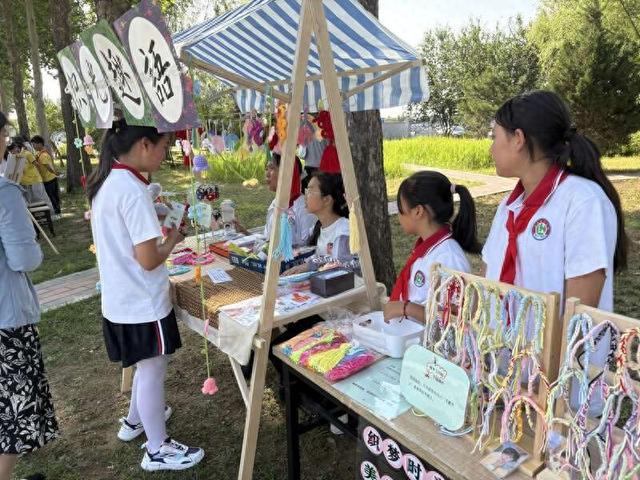
Core Viewpoint - The "Longhu Market" held at Qinglonghu Central Primary School in Beijing's Fangshan District serves as a practical educational initiative, allowing students to apply their knowledge in a real-world setting, promoting hands-on learning and community engagement [1][5][9] Group 1: Event Overview - The "Longhu Market" features handmade products and various experiential activities, where students use "campus currency" earned through rewards to make purchases, and a campus bank offers loans for those short on funds [1][3] - The event is part of a broader initiative called "Rooted in Locality, Integrated Coexistence," involving three rural primary schools collaborating on interdisciplinary practical courses [3][5] Group 2: Educational Impact - The market allows students to experience real-life business and social interactions, enhancing their learning through practical application of knowledge [5][9] - The initiative includes over 30 elective courses that simulate real-life scenarios, encouraging students to explore and discover knowledge actively [5][9] Group 3: Community Collaboration - The collaboration among the three schools aims to address the shortcomings of rural education while leveraging its strengths, inspired by successful models from other provinces [7][9] - The event is seen as a bridge for integrating urban and rural educational resources, providing a fresh perspective on rural education and children's needs [9]
以改革破局 以创新提质——常州以综合改革探索“教育强市”建设
Xin Hua Ri Bao· 2025-06-11 00:32
Group 1 - The core viewpoint of the articles emphasizes the commitment of Changzhou to enhance the quality and equity of education, achieving recognition as a national-level quality balanced development county in compulsory education [1][2] - Changzhou has established a comprehensive reform framework for basic education, focusing on five central tasks: promoting holistic education, reforming teaching methods, strengthening the teacher workforce, invigorating school operations, and deepening institutional reforms [2][3] - The city has made significant investments in educational infrastructure, with over 190 new or expanded schools built from 2021 to 2024, adding more than 121,500 new student places at a total investment exceeding 250 billion [3][5] Group 2 - Changzhou's educational initiatives include a high coverage rate of group-based schooling, with 98.4% in preschool education, 94.6% in compulsory education, and 48.8% in high school education, ensuring support for rural schools through partnerships with urban institutions [5][6] - The city has implemented a "double reduction" policy to alleviate student workload, achieving 100% coverage of after-school services in compulsory education, which has led to high social satisfaction ratings [5][6] - Labor education has been prioritized, with Changzhou recognized as a national experimental zone for labor education, and the introduction of local regulations to support labor education initiatives [7]
浙大版“荒野求生”:学生“硬核”课堂收获成长
Zhong Guo Qing Nian Bao· 2025-06-08 22:05
Core Viewpoint - The article highlights the innovative outdoor practice course at Zhejiang University, designed to enhance students' teamwork and psychological resilience through activities like rock climbing and stream trekking [1][6]. Group 1: Course Overview - The outdoor practice course, referred to as "Zhejiang University version of 'Survivor'", was launched in 2018 and is highly sought after, with only 24 spots available each semester despite hundreds of applicants [1]. - The course consists of four levels, progressively increasing in difficulty, and combines both theoretical knowledge and practical skills such as rock climbing and wilderness survival techniques [1][5]. Group 2: Student Experiences - A third-year agricultural engineering student, Xiong Feng, initially felt fear during his first rock climbing class but eventually developed a passion for the sport, leading him to enroll in the advanced level of the course [2][5]. - The outdoor practice includes both training sessions and real-life applications, with students participating in activities that test their physical abilities and teamwork [3][5]. Group 3: Safety Measures - Safety is emphasized throughout the course, with instructors providing necessary protective gear and insurance for students, as well as coordinating with local medical teams for emergencies [4][5]. - Students are taught to recognize the complexities of safety in outdoor environments, enhancing their understanding of risk management [4]. Group 4: Educational Philosophy - The course reflects a broader educational philosophy aimed at helping students break out of their comfort zones and seek real challenges, integrating physical education with personal growth [6]. - The instructor, Liu Ming, believes that the course embodies a holistic educational approach, fostering courage, wisdom, collaboration, and responsibility among students [6].