
素质教育

Search documents
AI席卷而来,素质教育为何更重要
Zhong Guo Qing Nian Bao· 2026-02-26 23:18
Core Viewpoint - The rise of AI technology emphasizes the importance of quality education, which is essential for cultivating talents that cannot be replaced by machines [1][2]. Group 1: Importance of Quality Education - Quality education has been a focus in China since 1995, with the establishment of cultural quality education bases across numerous universities [1]. - The "Education Strong Nation Construction Plan (2024-2035)" highlights the need for comprehensive quality education, including moral, intellectual, physical, aesthetic, and labor education [1]. - Experts argue that quality education should enhance students' humanistic qualities and critical thinking, preparing them to navigate an AI-driven world [1][2]. Group 2: Challenges and Changes in Education - A survey indicated that 8% of students use AI-generated content as their own, raising concerns about the role of AI in learning [2]. - The demand for talents with digital literacy and value judgment skills is increasing, necessitating a shift in educational approaches [2]. - The integration of AI in education presents challenges, such as the need for collaboration between professional and quality education [4][5]. Group 3: Evolution of Quality Education - Quality education is evolving to address the challenges posed by AI, focusing on personalized learning and the development of innovative capabilities [4][7]. - Institutions are experimenting with interdisciplinary approaches, integrating arts and technology to foster creativity and innovation [7][8]. - The establishment of new curricula and programs aims to enhance students' cultural and artistic literacy, reflecting the changing educational landscape [8][9]. Group 4: Future Directions - Experts call for comprehensive reforms in talent cultivation models, curriculum systems, and teaching methods to align with the demands of the AI era [6]. - The ongoing evolution of quality education requires sustained commitment and innovative strategies to ensure its effectiveness [9].
趋势研判!2026年中国研学旅行行业产业链、发展现状、竞争格局、发展趋势分析:行业规模持续回升,未来产品向深度、精品化转型[图]
Chan Ye Xin Xi Wang· 2026-02-26 01:10
Core Insights - The Chinese research travel industry is experiencing a significant growth trend, with the market size expected to reach 85.9 billion yuan by 2025, reflecting a year-on-year increase of 27.1% [1][11] - The growth is driven by national advocacy for quality education and interdisciplinary learning, as well as increased family income and changing educational values, leading to greater investment in children's comprehensive quality education [1][11] - Despite rapid development, the industry faces challenges such as low service quality, discrepancies between course content and promotion, and inadequate safety measures, which hinder the release of potential demand [1][11] Industry Overview - Research travel combines tourism with education, allowing students to learn outside the classroom through collective travel experiences [3] - Products in this sector are categorized into various types, including knowledge popularization, nature observation, experiential investigation, inspirational expansion, and cultural recreation [4] Policy Support - The government has implemented multiple policies to promote research travel, starting from the 2013 National Tourism Leisure Outline, which proposed the gradual implementation of research travel for primary and secondary school students [4][5] - Subsequent policies have emphasized integrating research travel into daily education, ensuring safety, and enhancing product quality and service levels [5] Market Dynamics - The industry is characterized by a diverse range of participants, including traditional travel agencies, educational institutions, and specialized research travel companies, leading to intense competition and price wars [12] - Major companies in the sector include Beijing Century Mingde Education Technology Co., Ltd., Changsha Mingzhu International Tourism Co., Ltd., and others, each offering various educational travel services [12][14] Future Trends - The focus on education will deepen, with a shift towards systematic course construction in research travel, emphasizing clear educational goals and structured content [15] - Technological advancements such as AI and big data will reshape the research travel experience, enhancing personalized learning and cognitive development for students [15] - The market will see a dual-track development, with both high-end customized products and standardized offerings catering to diverse consumer needs [16]


真心如炬,照见山河:中欧基金2025公益行跨越10省20城
Xin Lang Cai Jing· 2026-02-12 01:36
Core Insights - The core message of the articles revolves around the philanthropic efforts of the China Europe Fund, emphasizing long-term commitment to education and community support across various regions in China, particularly focusing on underprivileged areas and vulnerable populations [1][2][8]. Group 1: Educational Initiatives - The China Europe Fund has been actively involved in educational projects, notably the ETS conference, which has reached 37 schools across 10 provinces in 2025, encouraging over 2,400 students to present nearly 700 research topics [2][12]. - The "Pearl Class" initiative, launched in collaboration with the Xinhua Education Foundation, aims to support 140 students in rural areas by providing 7,500 yuan in living subsidies every three years, alongside waiving tuition and accommodation fees [3][14]. - The "Future Educator" program offers two years of systematic training and creative funds to 39 new teachers in rural schools, benefiting over 4,000 students [5][15]. Group 2: Community Support and Elderly Care - The "True Heart Neighborhood" community support plan has been implemented in Shanghai, covering 12 communities and serving over 1,000 elderly individuals by fostering a mutual aid network [6][16]. - In Qinghai, the fund collaborates with other organizations to provide meals for low-income elderly and disabled individuals in rural mutual aid happiness homes, aiming to serve around 120 local elderly [6][17]. Group 3: Disaster Relief Efforts - In response to disasters, the China Europe Fund donated 2 million yuan for emergency relief and reconstruction efforts in Hong Kong following severe fires in November 2025 [7][17]. - The fund also supported earthquake recovery efforts in Tibet, demonstrating its commitment to aiding communities in crisis [7][17]. Group 4: Recognition and Impact - The China Europe Fund was awarded a "3A Social Organization" rating in November 2025, reflecting its dedication to social welfare and community service over the past three years [8][18]. - The fund's initiatives have garnered recognition in the social welfare sector, highlighting its impactful contributions to education, elderly care, and disaster relief [8][9][18].
以青春视角为城市治理建言献策
Xin Lang Cai Jing· 2026-02-05 17:12
Core Viewpoint - The article highlights the initiative in Fengtai District to engage middle school students in social governance practices, transforming them from observers to contributors in urban management [1][2]. Group 1: Event Overview - Over 150 student representatives from 8 middle schools in Fengtai District participated in a visit to the Citizen Hotline Service Center, focusing on urban governance [1]. - The students were assigned specific research tasks, such as addressing the issue of non-motorized vehicle parking around schools, to encourage practical problem-solving [1]. Group 2: Educational Impact - The Fengtai District Education Committee emphasized the importance of this initiative in promoting quality education, aiming to enhance students' abilities to identify, analyze, and solve problems while fostering a sense of social responsibility [1]. - The students will conduct surveys, field visits, and interviews during their winter break, with the goal of producing comprehensive research results that include background, problem analysis, and improvement suggestions [1]. Group 3: Future Initiatives - The Fengtai District Education Committee plans to continue these social practice activities, allowing more students to participate in social governance and ensuring that their innovative ideas contribute to urban management [2].
泗洪:“期末综评”变成“趣味闯关”游戏
Xin Lang Cai Jing· 2026-01-31 04:03
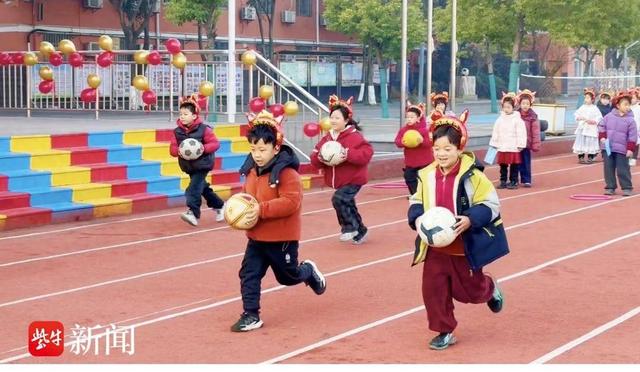
Group 1 - The core idea of the article is the implementation of a paperless evaluation activity for first and second-grade students at Xinxingcheng West School in Sihong County, aimed at promoting the "Double Reduction" policy and exploring diverse evaluation methods [1] Group 2 - The event featured six key stations: "Rope" Sports Arena, "Heart and Hand" Art Workshop, "Lingering Sound" Music World, "Dream Castle" Language Garden, "Magic Pen" Math Maze, and "Fun English" Dialogue Corner, allowing students to engage in a fun and educational environment [3] - The activity received positive feedback from both students and parents, highlighting the joy and comprehensive development experienced by the children [5] - The principal, Yang Fabin, emphasized the school's commitment to exploring new paths in quality education, ensuring that children enjoy learning and gain confidence and strength through growth [7]
小学期末考堪比公务员行测?看完题目,网友也不淡定了
Xin Lang Cai Jing· 2026-01-30 06:15
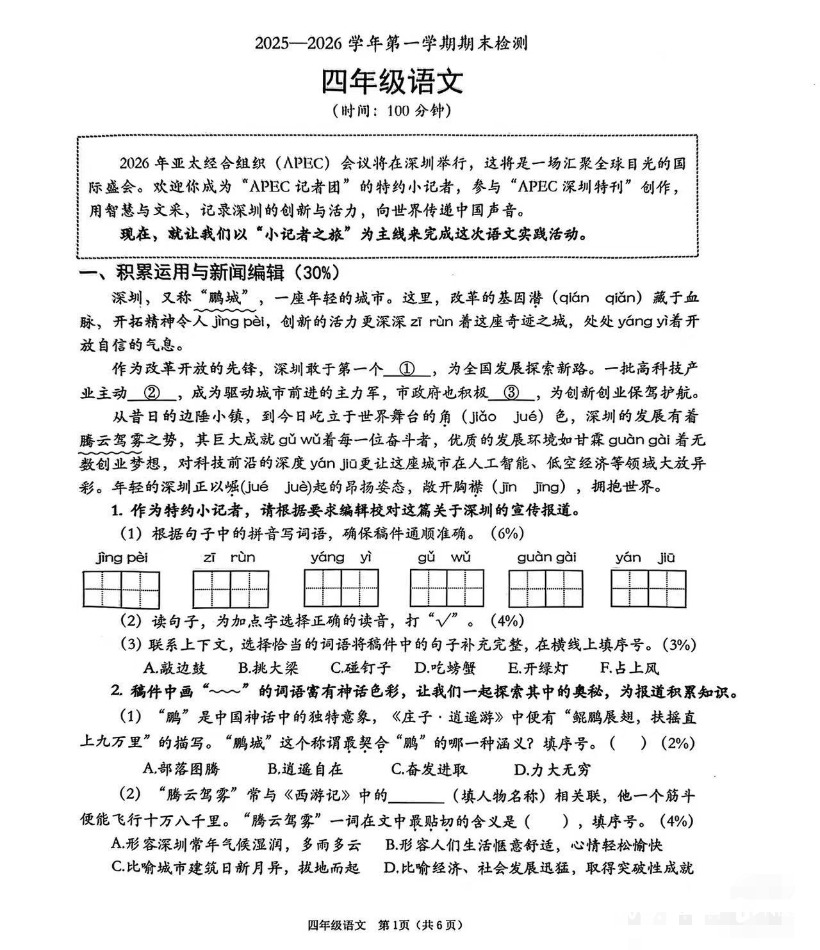
Core Viewpoint - The Shenzhen Education Bureau has decided not to organize unified final exams for non-graduating grades this semester, leading to anxiety among parents due to the lack of standardized evaluation criteria [1] Group 1: Exam Structure and Content - The fourth-grade Chinese final exam in Nanshan District is based on the theme of the 2026 APEC meeting, requiring students to create a "APEC Shenzhen Special Edition" [3] - The exam consists of 6 pages with a total duration of 100 minutes, raising concerns about the number of questions and difficulty level [6] - Similar discussions arose regarding the fourth-grade Chinese exam in Luohu District, which also features 16 questions over 6 pages, focusing on traditional cultural elements [8] Group 2: Parental Reactions and Perspectives - Some parents expressed concerns that their children might not finish the exam, while others believe the questions are relevant to real-life situations and assess core competencies [6][7] - A parent suggested that encouraging children to read freely rather than focusing solely on practice questions would better prepare them for such exams [9] - In the case of the Fuyuan District exam, a particular question about local flora sparked debate among parents, with some feeling unprepared due to a lack of familiarity with the subject matter [13][15] Group 3: Educational Philosophy and Future Directions - The Nanshan Education Bureau clarified that there is no district-wide unified exam, and schools have the autonomy to choose from provided test materials, aiming to assess students' ability to apply language knowledge in real-life contexts [19] - Commentary from China Youth Daily highlighted the need for careful optimization of exam content and structure to align with students' developmental stages and cognitive levels [19] - The shift towards innovative exam formats requires a gradual adaptation process for both students and parents, emphasizing the importance of integrating new assessment methods into daily teaching [20]
取消统考,深圳多区小学期末卷掀热议!有人称堪比公务员行测
Nan Fang Du Shi Bao· 2026-01-29 06:03
Core Viewpoint - Shenzhen's Education Bureau has decided not to organize unified final exams for non-graduating grades this semester, leading to concerns among parents regarding the lack of standardized evaluation metrics [1][15]. Group 1: Innovation in Exam Design - The innovative exam design in various districts of Shenzhen has sparked significant discussion among parents [2]. - The fourth-grade Chinese final exam in Nanshan District has drawn attention for its unique theme centered around the 2026 APEC meeting, requiring students to create a "APEC Shenzhen Special Edition" [3][15]. - The exam's format and difficulty have been criticized, with some parents expressing concerns about the dense text and the potential for students to run out of time [5][6]. Group 2: Diverse Opinions from Parents and Students - Feedback from parents and students is divided; some find the exam too challenging, while others appreciate its relevance to real-life situations and its focus on core competencies [7][8]. - Previous instances of high difficulty in Nanshan's exams have also been noted, indicating a trend in challenging assessments [9]. Group 3: Localized and Contextualized Assessment - The exam questions incorporate local cultural elements, aiming to enhance students' ability to apply language skills in real-world contexts [15][16]. - The emphasis on situational and practical knowledge reflects a shift towards a more integrated and holistic educational approach [16]. Group 4: Innovative Evaluation Methods - Many schools in Shenzhen are adopting innovative evaluation methods that prioritize reducing student burden while enhancing quality and focusing on competencies [18]. - For younger students, assessments are being transformed into engaging, game-like experiences, moving away from traditional paper-and-pencil tests [20]. - A comprehensive evaluation system is being developed, focusing on continuous assessment rather than a single end-of-term exam, allowing for a more rounded view of student development [22].
减考不减质 成长更从容
Xin Lang Cai Jing· 2026-01-27 04:21
Core Viewpoint - The article discusses the shift from frequent examinations to a more holistic and personalized approach to education at Chongqing Xiejiawan School, emphasizing the importance of balancing knowledge acquisition with students' emotional well-being and overall development [1][2][3]. Group 1: Examination Reform - The school decided to eliminate weekly and monthly exams in the junior high phase to reduce student anxiety and refocus on genuine learning rather than mere performance metrics [1]. - The new approach includes "daily clear, class clear, everyone clear" as a replacement for centralized exams, allowing for a more tailored educational experience [2]. Group 2: Personalized Learning - The school employs a dynamic class organization that combines administrative classes with subject-based flexible grouping, ensuring that teaching is aligned with students' individual learning needs [2]. - Over 60% of class time in subjects like physics, chemistry, and biology is dedicated to hands-on experiments and exploratory activities, enhancing students' engagement and understanding [2]. Group 3: Teacher Development - Enhancing teachers' abilities in process evaluation and learning design is crucial for moving away from reliance on tests and scores [3]. - The school promotes diverse assignment formats that encourage students to articulate their problem-solving processes, fostering critical thinking and collaboration [3]. Group 4: Student Outcomes - The school reports a positive transformation in students, with reduced anxiety and increased curiosity, leading to a more proactive approach to learning [3]. - The average scores and high-achieving student ratios for the 2025 junior high graduates remain competitive within the region, alongside notable improvements in physical health indicators [3]. Group 5: Commitment to Quality Education - The school is committed to continuing its exploration of quality education and evaluation reform, aiming for a comprehensive development of students [4].
吕梁山乡村小学“出圈”记
Xin Lang Cai Jing· 2026-01-18 09:08
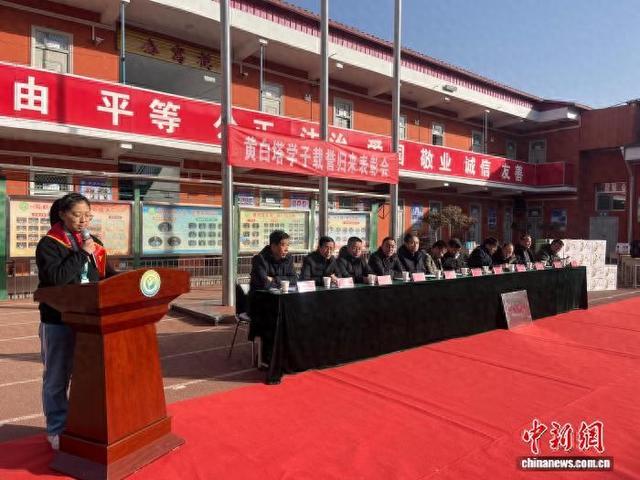
Core Viewpoint - The Huangbaitai Boarding Primary School in Shanxi Province has achieved remarkable success in the 2025 World Robot Contest, highlighting the importance of comprehensive education and the integration of science and arts in student development [1][2]. Group 1: Achievements and Recognition - Nine students from Huangbaitai Boarding Primary School represented Shanxi in the competition, with notable achievements including Gao Xinyu winning the runner-up in the ICode Space Exploration Challenge and three students ranking in the global top 100 [1]. - The school has received recognition from local government and educational bodies for its commitment to enhancing students' scientific literacy and overall development [8][11]. Group 2: Educational Approach and Curriculum - The school emphasizes a well-rounded education, integrating various subjects and encouraging participation in science and technology competitions to foster students' interests and skills [1][6]. - Currently, the school offers 12 courses related to programming, drones, model aircraft, artificial intelligence, and 3D printing, aiming to stimulate students' scientific curiosity [8][11]. Group 3: Student Experiences and Development - Student Gao Xinyu expressed that her journey in programming began in March 2025, and she has participated in multiple competitions, showcasing her growth and resilience [3][5]. - The school environment promotes exploration and confidence among students, with various extracurricular activities available, including sports and arts [6][8]. Group 4: Community and Government Support - The success of the school is attributed to the support from local government and organizations, including the China Association for Science and Technology, which has provided resources and training for teachers [11]. - The establishment of a local science museum aims to further enhance community engagement and interest in science through interactive experiences [11].
学习规划建议每日问答丨怎样理解实施新时代立德树人工程
Xin Hua Wang· 2026-01-18 07:06
Group 1 - The core issue of education is to determine what kind of people to cultivate, how to cultivate them, and for whom they are being cultivated, which is essential for building a strong educational nation [1] - The implementation of the "New Era Moral Education Project" is crucial for nurturing well-rounded socialist builders and successors, ensuring the continuity of the Party's cause and socialist modernization [1] Group 2 - Strengthening the Party's comprehensive leadership over education is fundamental for effective education, requiring a well-structured leadership system involving Party committees and educational institutions [1] - The establishment of a curriculum system centered on Xi Jinping's Thought on Socialism with Chinese Characteristics for a New Era is necessary to enhance ideological and political education [2] Group 3 - Expanding practical education and online education is vital, promoting a collaborative educational mechanism that integrates classroom learning with real-world experiences [3] - Enhancing students' health and overall development through quality education, emphasizing a comprehensive cultivation system that includes physical, artistic, and labor education [4] Group 4 - Improving the education evaluation system is essential for guiding educational development and ensuring the effective implementation of moral education, moving away from a score-centric approach [5] - The evaluation of schools should prioritize the effectiveness of moral education, while teacher evaluations should focus on moral standards and educational spirit [5]