
出海战略

Search documents
港股异动 一拖股份(00038)涨近3% 公司加速推进出海战略 海外业务增长动能充足
Jin Rong Jie· 2025-12-31 03:57
Core Viewpoint - YTO Group Corporation (一拖股份) is focusing on expanding its overseas business as a key strategic direction, aiming to build a world-class brand and accelerate its internationalization efforts [1] Group 1: Company Strategy - YTO Group is implementing differentiated sales policies and product combinations tailored to the market demands of different countries and regions [1] - The company is enhancing its international market service capabilities, having dispatched service teams to countries like Nigeria and Tajikistan since 2025 for maintenance and technical training [1] Group 2: Market Position and Growth Potential - Goldman Sachs believes YTO Group is well-positioned to capitalize on structural growth opportunities in the agricultural modernization transition in China, particularly in the large-scale and specification upgrades of tractors [1] - Huazhong Securities highlights the company's successful brand penetration through various channels, including overseas agricultural machinery exhibitions and field demonstrations, achieving significant results in countries like Ghana, Serbia, and Indonesia [1]

专访协鑫集团董事长朱共山:“内卷”本质是创新断层,跨海越洋有助破局
2 1 Shi Ji Jing Ji Bao Dao· 2025-12-31 00:29
Core Viewpoint - The current situation in the photovoltaic industry is characterized by a "magnified cycle illusion," where structural contradictions are mistaken for cyclical fluctuations [1][4]. Group 1: Supply-Side Structural Reform - The chairman of GCL Group, Zhu Gongshan, calls for a comprehensive supply-side structural reform to address the deep-seated issues in the photovoltaic industry [2][4]. - The establishment of the "silicon material storage platform" is seen as a key initiative to combat the "involution" and excessive competition in the industry [2][3]. - The Ministry of Industry and Information Technology has initiated discussions to address the chaotic low-price competition in the photovoltaic sector, aiming for sustainable development [3][4]. Group 2: Nature of Involution - Zhu Gongshan emphasizes that the essence of involution is an innovation gap, and the solution lies not in enduring the situation but in transformative change [2][6]. - The current round of involution is not merely a cyclical issue but reflects deeper structural contradictions that require coordinated efforts from both government and market forces [4][5]. Group 3: Global Expansion Strategy - GCL Group is actively pursuing international projects, such as the 30 MW wind power project in Vietnam and a liquefied natural gas plant in Ethiopia, as part of its overseas expansion strategy [7][8]. - The company views international expansion as essential for breaking through domestic competition and establishing a second growth engine [7][8]. - The strategy aligns with the Belt and Road Initiative, focusing on regional energy cooperation and promoting global carbon reduction efforts [8].

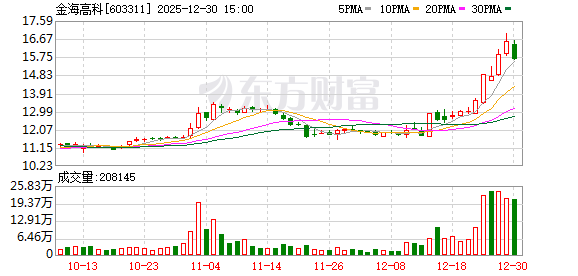
金海高科 空滤竞争新格局的“稳中求进”
Shang Hai Zheng Quan Bao· 2025-12-30 19:15
稳,是金海高科发展轨迹的关键词。深耕空滤领域三十年的金海高科上市十年来,业绩保持稳定增长。 随着国内家电市场从增量市场转向存量更新,如何在新的竞争态势中"稳中求进"?金海高科董事长丁伊 可给出的答案是:出海。当前,依托空气过滤材料赛道的技术底座,公司积极布局海外市场,"我们要 稳扎稳打,优先发展主营板块,在此基础上寻找投资和拓展的机会"。 场景迭代:从空调到C919 20世纪九十年代,绍兴诸暨的制造业还处于起步阶段,彼时的金海高科试着做起空调过滤网,在这个细 分领域,公司一做就是三十年。 身处家电普及的市场化浪潮,金海高科在多地布局产能。从空调、小家电、清洁电器,到汽车、航空、 轨道交通等领域,公司产品的应用场景逐步拓宽。 从行业看,随着空调行业步入成熟期,中国空调过滤行业的利润率持续下行,从2018年到2024年,金海 高科的产品毛利率从2018年的31.16%逐步下降到2024年的23.15%。新的增长空间在哪里?汽车成为一 个重要突破口。近年来,随着汽车产业快速发展,消费者对健康驾乘环境改善的需求激增,不少车企推 出了配备有车载空气净化系统的中高档汽车。金海高科长期为国际品牌代工,并向头部乘用车供应过滤 ...


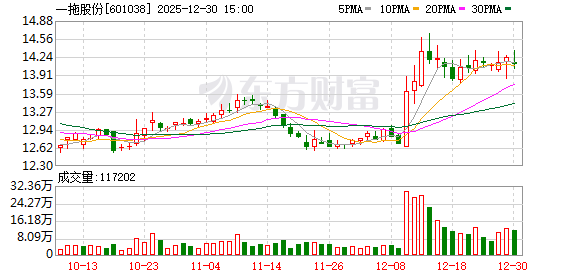
一拖股份:公司正以“打造世界级品牌”为目标,加速推进出海战略
Zheng Quan Ri Bao· 2025-12-30 12:05
证券日报网讯 12月30日,一拖股份在互动平台回答投资者提问时表示,海外业务是公司的重点布局方 向,公司正以"打造世界级品牌"为目标,加速推进出海战略,针对不同国家和地区的市场需求特点,实 施差异化销售政策和产品组合,强化渠道建设,完善服务保障,加强与国机集团所属企业的业务协同, 增强在国际市场的竞争力和影响力。但同时,也需客观看待发展过程中面临的挑战与不确定性,地缘政 治格局、贸易政策变动、市场竞争态势、汇率波动等,均可能对海外业务产生不确定性影响。券商研报 系机构研究的独立判断,并不代表公司的业绩预测,敬请投资者保持足够的风险认识,审慎决策。 (文章来源:证券日报) ...
协鑫集团董事长: 光伏内卷本质是创新断层
2 1 Shi Ji Jing Ji Bao Dao· 2025-12-30 07:39
Core Viewpoint - The current situation in the photovoltaic industry is characterized by a "magnified cycle illusion," necessitating a thorough supply-side structural reform to address structural contradictions rather than merely cyclical fluctuations [1][4][5]. Group 1: Industry Challenges and Responses - In 2025, the Chinese new energy industry, including photovoltaics, underwent a deep restructuring due to chaotic competition, prompting a反内卷 (anti-involution) movement [3][4]. - The Ministry of Industry and Information Technology held a meeting in July 2025 to address low-price disorderly competition in the photovoltaic sector, aiming to enhance product quality and facilitate the orderly exit of outdated capacities [3][4]. - The establishment of the "silicon material storage platform" is seen as a key measure to combat the vicious competition within the photovoltaic industry [1][3]. Group 2: Structural Issues and Reform - The essence of the current involution is identified as an innovation gap, with the need for a dual approach of "proactive government + effective market" to address deeper structural issues [5][6]. - Previous supply-side structural reforms in sectors like steel and coal provide a framework for addressing the current challenges in the new energy sector [5][6]. - The reform is not only about resolving industry difficulties but also about fundamentally transforming China's economic development model [5][6]. Group 3: Global Expansion Strategy - The company is actively pursuing overseas markets as a critical strategy for breaking through domestic competition, with projects in Vietnam and Ethiopia marking its international expansion [7][9]. - The necessity for Chinese new energy companies to expand internationally is underscored by the need to avoid geopolitical risks and reliance on single markets, while also contributing to regional cooperation and energy security [9]. - The company aims to leverage its technological advancements and align with the Belt and Road Initiative to promote energy independence in partner countries [9].
“生死战”持续!支付机构的“进退”两面
Bei Jing Shang Bao· 2025-12-29 02:48
Core Insights - The third-party payment industry in 2025 is witnessing a significant concentration of capital and licenses among leading players, while smaller institutions are exiting the market due to regulatory pressures and operational challenges [1][3][4] Regulatory Environment - The regulatory landscape has intensified, with over 75 fines totaling more than 200 million yuan issued in 2025, primarily for anti-money laundering, reserve fund management, and merchant oversight violations [5][6] - The implementation of the Non-Bank Payment Institutions Supervision and Management Regulations has raised the minimum registered capital requirement to 10 million yuan, leading to a substantial increase in compliance costs and a higher barrier to entry for new players [2][3] Industry Dynamics - The industry is experiencing a "dual differentiation" where capital and licenses are increasingly concentrated among top-tier institutions, while smaller players struggle to maintain their market presence [3][4] - Major players like Tencent's Tenpay have significantly increased their registered capital, from 1 billion yuan to 15.3 billion yuan, indicating a strategic move to solidify their market position [2] Compliance and Competition - Compliance has become a competitive advantage, with institutions focusing on proactive risk management and integrating compliance into their operational frameworks [7][8] - The shift from "reactive punishment" to "full-cycle control" emphasizes the need for institutions to adopt a more rigorous approach to compliance [6][7] International Expansion - Many payment institutions are exploring international markets, with companies like LianLian Digital and CoGoLinks making significant strides in overseas operations [8][9] - The focus on "payment+" solutions that cater to digital merchant needs is becoming a key strategy for growth in international markets [8][10] - Emerging markets such as Southeast Asia and Africa are identified as areas with substantial growth potential, necessitating localized strategies and partnerships with local financial entities [10][11]

协鑫集团董事长:光伏内卷本质是创新断层
2 1 Shi Ji Jing Ji Bao Dao· 2025-12-27 23:35
Core Viewpoint - The current situation in the renewable energy industry, particularly in the photovoltaic sector, is characterized by a "magnified cycle illusion," which is not merely a result of cyclical fluctuations but rather structural contradictions that require comprehensive supply-side structural reforms [2][8]. Group 1: Industry Challenges and Responses - The photovoltaic industry is undergoing a deep restructuring due to chaotic competition, prompting a反内卷 (anti-involution) movement [7]. - The Ministry of Industry and Information Technology held a meeting in July 2025 to address low-price disorderly competition in the photovoltaic sector, marking the official signal for this round of industry reform [7]. - The essence of the current involution is a lack of innovation, which is seen as a structural issue rather than a cyclical one, necessitating a dual approach of "proactive government + effective market" [8][10]. Group 2: Supply-Side Structural Reform - A call for a thorough supply-side structural reform is emphasized, drawing lessons from previous reforms in sectors like steel and coal, which achieved short-term supply-demand rebalancing [8]. - The photovoltaic sector's reform is not only about resolving industry challenges but also about fundamentally transforming China's economic development model [8]. Group 3: International Expansion Strategy - The company is actively pursuing international projects, such as a 30 MW wind power project in Vietnam and a liquefied natural gas plant in Ethiopia, as part of its strategy to explore overseas markets [12][14]. - The necessity for Chinese renewable energy companies to expand internationally is underscored by the increasing domestic market competition and the need to mitigate geopolitical risks [13][14]. - The company aims to leverage its technological advancements and local partnerships to build a global capacity collaboration network, emphasizing that going abroad is essential for future growth [13][14].
协鑫集团董事长:光伏内卷本质是创新断层
21世纪经济报道· 2025-12-27 23:31
Core Viewpoint - The current situation in the industry is perceived as an exaggerated "cyclical illusion," necessitating a thorough supply-side structural reform to address structural contradictions rather than merely cyclical fluctuations [1][4]. Group 1: Industry Challenges and Responses - In 2025, the Chinese renewable energy industry, including photovoltaics, underwent a significant restructuring due to chaotic competition, prompting a反内卷 (anti-involution) movement [4]. - The Ministry of Industry and Information Technology held a meeting in July 2025, emphasizing the need to combat low-price disorderly competition in the photovoltaic sector and promote the exit of backward production capacity for sustainable development [4]. - The essence of the current involution is identified as an innovation gap, with structural issues being more severe and destructive than cyclical problems, requiring a dual approach of "active government + effective market" [4][5]. Group 2: Supply-Side Structural Reform - The previous supply-side structural reform in sectors like steel and coal provides a blueprint for addressing the current chaotic competition in the renewable energy sector [5]. - The reform is not only about resolving industry challenges but also about fundamentally transforming China's economic development model, necessitating collaboration among government, enterprises, and industries [5]. Group 3: Technological Innovation and Market Expansion - The establishment of a silicon material storage platform is one of the outcomes of the efforts to combat industry involution, emphasizing that innovation is crucial to breaking the cycle of homogenization [6]. - The company has developed over ten advanced technologies, including UCC high-purity silane gas and electronic-grade polysilicon, positioning itself as a leader in the photovoltaic industry [5]. Group 4: International Expansion Strategy - The company is actively pursuing international projects, such as a 30 MW wind power project in Vietnam and a liquefied natural gas plant in Ethiopia, as part of its strategy to explore overseas markets [8][9]. - The necessity for Chinese renewable energy companies to expand internationally is driven by domestic market saturation and increasing trade barriers, with overseas markets offering higher profit margins and broader demand [9]. - The company's international strategy aligns with the Belt and Road Initiative, aiming to promote regional energy security and global carbon reduction through localized technology and green energy solutions [9].
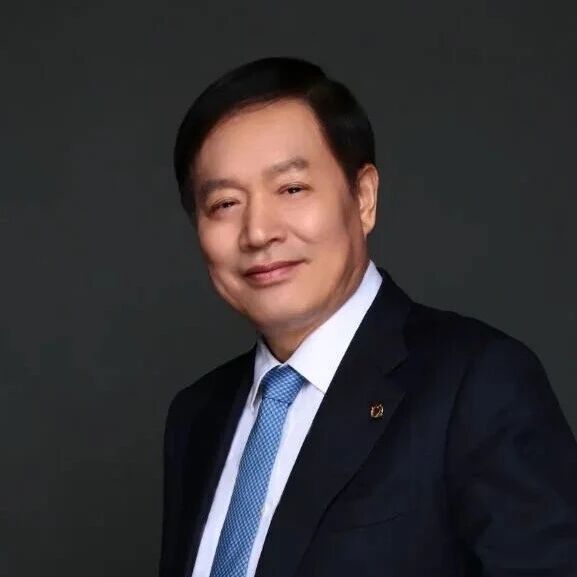
协鑫集团董事长朱共山:内卷本质是创新断层,跨海越洋有助破局
2 1 Shi Ji Jing Ji Bao Dao· 2025-12-26 12:59
Core Viewpoint - The current situation in the photovoltaic industry is characterized by a "cyclical illusion," where structural contradictions are mistaken for cyclical fluctuations, necessitating a thorough supply-side structural reform [2][5][6] Group 1: Industry Challenges and Responses - The photovoltaic industry in China is undergoing a deep restructuring due to chaotic competition, prompting a反内卷 (anti-involution) movement [4][5] - The Ministry of Industry and Information Technology held a meeting in July 2025 to address low-price disorderly competition in the photovoltaic sector, aiming to enhance product quality and facilitate the exit of outdated production capacity [4][5] - The establishment of the "silicon material storage platform" is seen as a key initiative to combat the "involution" in the photovoltaic industry [3][5] Group 2: Structural Issues and Reform - The essence of the current "involution" is identified as an innovation gap, with the need for a shift from merely enduring the situation to actively changing it [3][7] - The previous supply-side structural reforms in sectors like steel and coal provide a framework for addressing the current challenges in the renewable energy sector [6] - The call for a comprehensive reform involves collaboration among government, enterprises, and industries to build a long-term development mechanism and foster new productive forces [6][10] Group 3: Global Expansion Strategy - The company is actively pursuing international projects, such as the 30 MW wind power project in Vietnam and a liquefied natural gas plant in Ethiopia, as part of its strategy to explore overseas markets [8][9] - The necessity for Chinese renewable energy companies to expand internationally is underscored by the increasing domestic market competition and the need to mitigate geopolitical risks [9][10] - The company's approach to international expansion emphasizes local collaboration and technology localization, aligning with the Belt and Road Initiative to enhance regional energy security and promote global carbon reduction [10]
站在硬科技的十字路口 企业如何锚定长期价值
2 1 Shi Ji Jing Ji Bao Dao· 2025-12-25 17:50
2025年12月,安永企业家奖20周年特别访谈现场,云知声智能科技股份有限公司创始人兼首席执行官黄 伟博士下了这个定义。坐在他身旁的东芯半导体股份有限公司董事长蒋学明表示认可,他创业的时间比 20年长了一倍。 黄伟在2012年创立云知声,带着科学家背景闯入人工智能领域,他的公司率先将深度学习应用于产业化 实践。而蒋学明自上世纪80年代起就投身实业,从纺织、水泥再到半导体,他的轨迹几乎是中国产业变 迁的缩影。 两人代表着不同代际的中国硬科技企业家:黄伟是新一代科技创业者,在技术快速迭代中寻找颠覆式创 新的机会;蒋学明是传统产业转型代表,凭借对产业趋势的敏锐洞察不断跨界重生。 而他们也同时身处一个重要的时间节点。2025年,人工智能大模型已从实验室走向产业落地,全球半导 体产业链在地缘政治的撕扯中加速重构。技术热潮如潮水般涌来,也裹挟着泡沫、焦虑与不确定性。 在安永企业家奖20周年的特别访谈中,我们试图厘清几个关键问题:在技术爆炸与市场重构的今天,企 业如何判断趋势与泡沫?出海成为必选项的背景下,如何应对日益复杂的地缘风险?而穿越多个周期的 企业家,又如何理解"坚守"与"变革"之间的平衡? "20年对一个企业来讲 ...