
制造强国

Search documents
刘世锦:进一步发挥“三大优势” 推动制造强国、消费强国、金融强国建设
Zhong Guo Zheng Quan Bao· 2025-12-08 00:08
Group 1 - The core advantages of China include the potential for catching up with developed economies, a new technological revolution focused on digital and green technologies, and the advantages of a super-large market economy [1][2][3] - China has a stable demand side and relatively mature supply-side technologies, which provide a strong certainty in the current uncertain environment [1] - The country has made significant progress in narrowing the gap with global leaders in key areas of technological revolution, achieving parity or local leadership in industrial engineering and commercial application scenarios [1] Group 2 - China possesses all industrial categories listed in the United Nations classification, allowing for more competition among enterprises with strong core competitiveness [2] - The country has multiple innovation hubs and abundant resources, which facilitate economies of scale and cost reduction, transforming weaknesses into strengths [2] - To further leverage these advantages, China aims to enhance its manufacturing, consumption, and financial sectors, creating a better environment for technological innovation [2] Group 3 - In manufacturing, despite accounting for over 30% of global manufacturing, China still lags in productivity and value-added metrics compared to developed countries [2] - The focus will be on improving labor productivity, industry value-added rates, and total factor productivity, while integrating productive services such as R&D, design, logistics, and human resources [2] Group 4 - In terms of consumption, China's consumer spending as a percentage of GDP still falls short of the global average, necessitating an expansion of the consumer market [3] - Enhancing human capital through education, healthcare, and social security is crucial for driving innovation and establishing a consumption powerhouse [3] Group 5 - As China transitions to a developed economy, the uncertainty in economic growth increases, necessitating an improvement in the financial system's project selection capabilities [4] - The capital market must support the cultivation of world-class technology enterprises and provide for an aging society through pension systems and increased household income [4] - To address the mismatch between China's high GDP and manufacturing share versus its low currency share, increasing the offshore RMB scale and enhancing its liquidity in international markets is essential [4]
刘世锦:进一步发挥“三大优势”
Zhong Guo Zheng Quan Bao· 2025-12-07 20:21
Group 1 - China possesses three significant advantages for future development: the potential for catching up with developed economies, a new technological revolution focused on digital and green technologies, and the advantages of a super-large market economy [1][2][3] - The potential for catching up includes stable demand and mature supply-side technology, particularly in service industry development and the transformation of traditional manufacturing and agriculture [1] - The new technological revolution sees China narrowing the gap with global leaders, achieving parity or local leadership in key areas such as industrial engineering and commercial application scenarios [1] Group 2 - The super-large market economy allows for a diverse range of industrial categories and fosters competition among enterprises, enhancing core competitiveness [2] - China aims to leverage these advantages to build a manufacturing powerhouse, a consumption powerhouse, and a financial powerhouse, thereby creating a better environment for technological innovation [2][3] - In manufacturing, despite accounting for over 30% of global manufacturing, China still lags in productivity and value-added metrics compared to developed nations, necessitating improvements in labor productivity and the integration of productive services [2] Group 3 - For consumption, China's consumer spending as a percentage of GDP still falls short of the global average, indicating a need to expand the market and enhance service consumption, including investments in human capital [3] - The financial sector must adapt to increased economic uncertainty by improving project selection capabilities, with a focus on nurturing leading technology enterprises and addressing the needs of an aging society [4] - To enhance the international status of the RMB, China should increase offshore RMB circulation and ensure a balance between exports and imports, thereby supporting the development of manufacturing and consumption powerhouses [4]
刘世锦:金融强国是实现制造强国和消费强国目标的桥梁
Xin Lang Cai Jing· 2025-12-05 03:23
Core Insights - The "Southern Finance Forum 2025" held in Guangzhou focuses on the theme "The Power of Consensus - Innovation Surge, China's Asset Revaluation" [1][7] - Liu Shijun, a key speaker, highlighted three major advantages of China's economy: catch-up potential, new technology revolution, and super-large market economy [3][10] Economic Advantages - **Catch-up Potential**: This refers to opportunities in areas where developed economies have already advanced, such as service industry development driven by consumption structure upgrades and the transformation of traditional manufacturing and agriculture [3][9] - **New Technology Revolution**: Emphasis on digital and green technologies as focal points for economic advancement [3][9] - **Super-large Market Economy**: While China has 400 million middle-income groups, there are 900 million low-income individuals who could transition to middle-income status, potentially creating a consumption market of 800 to 900 million [3][10] Strategic Goals - **Manufacturing Power**: Aim to cultivate large innovative enterprises at the global forefront [10] - **Consumer Power**: Target to become the largest consumer market globally [10] - **Financial Power**: Financial strength is essential for achieving the first two goals, acting as a bridge for development [10] Financial Development - Liu emphasized the need for a robust capital market and strong currency to support high-quality development, focusing on selecting viable projects to enhance resource allocation efficiency [10][11] - The importance of a strong currency is highlighted, with historical examples of the British pound and the US dollar being tied to strong economic and financial systems [11] Currency Internationalization - Current GDP contribution of China's economy is 18% globally, with manufacturing at 30%, but the currency's functional role is below 10% [11] - Liu proposed increasing offshore RMB supply to achieve scale economy and enhance RMB's international use [11][12] - Suggested adjustments to foreign trade strategy to balance imports and exports while using RMB for transactions, potentially converting a trade surplus of nearly $1 trillion into offshore RMB [12] Recommendations for RMB - Advocated for RMB appreciation to allow consumers to access more international products at better prices, supporting the goal of becoming a consumer powerhouse [12] - Suggested expanding the ecosystem of offshore RMB financial products to improve liquidity and convenience, accelerating the process of RMB internationalization [12]

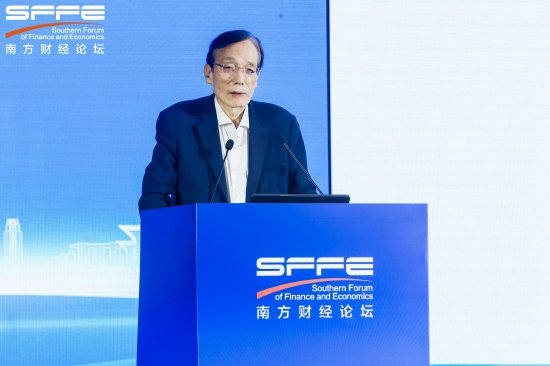
如何解决人民币“不匹配”问题?刘世锦:大幅增加离岸人民币数量,加快人民币国际化进程
Xin Lang Cai Jing· 2025-12-05 03:23
Core Insights - The "Southern Finance Forum 2025" held in Guangzhou focuses on the theme "The Power of Consensus - Innovation Surge, China's Asset Revaluation" [1][7] Economic Advantages - China has three major economic advantages: 1. Catch-up potential, which includes upgrading consumption structures and transforming traditional manufacturing and agriculture [3][9] 2. New technological revolution focused on digital and green technologies [3][9] 3. Super-large market economy, emphasizing the potential of 9 billion low-income individuals transitioning to the middle-income group, creating a larger consumer market [3][10] Strategic Goals - China aims to implement strategies to become a manufacturing powerhouse, a consumer powerhouse, and a financial powerhouse. The manufacturing goal is to cultivate leading large-scale innovative enterprises, while the consumer goal is to become the largest global consumer market. The financial goal is to support the other two objectives, as finance acts as a bridge [3][10] Financial Development - High-quality development requires a strong capital market and robust currency. Financial services should focus on selecting viable projects that enhance resource allocation efficiency [3][10] Currency and Internationalization - The importance of a strong currency is highlighted, with historical examples of the British pound and the US dollar being tied to strong economic and financial systems. Currently, China's GDP accounts for 18% of the global economy, with manufacturing at 30%, but its currency functions are below 10% [4][11] - To address the mismatch between economic strength and currency function, China aims to significantly increase the offshore RMB supply and promote its international use [4][11] Trade Strategy - China's trade strategy needs adjustment to balance imports and exports while using RMB for settlements. For instance, last year's trade surplus was nearly $1 trillion, which could be redirected towards imports paid in RMB, potentially generating over 7 trillion RMB in offshore currency [5][12] - The goal is to enhance the offshore RMB ecosystem, including bonds, stocks, and derivatives, to improve liquidity and facilitate the RMB's internationalization [5][12]
刘世锦:要更关注中低收入阶层,我国消费市场规模将实现倍增
Xin Lang Cai Jing· 2025-12-05 03:23
Core Insights - The "Southern Finance Forum 2025" held on December 5-6 in Guangzhou focuses on the theme "The Power of Consensus - Innovation Surge, China's Asset Revaluation" [1][7] - Liu Shijun, a key speaker, highlighted three major advantages of China's economy: catch-up potential, new technology revolution focusing on digital and green technologies, and the advantage of a super-large market economy [3][9][10] Economic Advantages - The first advantage is the catch-up potential, which refers to opportunities in service sector development driven by consumption structure upgrades, as well as the transformation of traditional manufacturing and agriculture [3][9] - The second advantage is the new technology revolution, emphasizing digital and green technologies [3][9] - The third advantage is the super-large market economy, with a focus on the 9 billion low-income individuals who could transition into the middle-income group, potentially creating a consumption market of 800-900 million [10] Strategic Goals - China needs to implement strategies to become a manufacturing powerhouse, a consumer powerhouse, and a financial powerhouse [10] - The goal for manufacturing is to cultivate large innovative enterprises that can lead globally, while the consumer powerhouse aims to become the largest consumption market worldwide [10] - The financial powerhouse is essential for achieving the first two goals, acting as a bridge to facilitate their realization [10] Financial Development - High-quality development requires a strong capital market and robust currency, with finance serving the real economy by selecting viable projects to enhance resource allocation efficiency [10] - Liu emphasized the importance of a strong currency, citing historical examples of strong currencies like the British pound and the US dollar, which were backed by substantial economic and financial systems [4][11] - Currently, China's GDP accounts for 18% of the global total, with manufacturing at 30%, but the currency's functional roles are below 10% [11] Currency Internationalization - Liu proposed increasing the offshore RMB supply to achieve economies of scale in its international use, addressing the mismatch between China's economic standing and its currency's global role [4][11] - He suggested a significant adjustment in China's foreign trade strategy to balance imports and exports while using RMB for settlements, potentially converting a trade surplus of nearly $1 trillion into over 7 trillion RMB for offshore use [5][12] - The expansion of offshore RMB financial products, including bonds, stocks, and derivatives, is crucial for enhancing liquidity and facilitating the RMB's internationalization [12]
第三方计量检测服务机构天溯计量(301449.SZ)拟于创业板IPO上市
智通财经网· 2025-12-03 13:27
Group 1 - The company, Tian Su Measurement, is planning to publicly issue 16,304,348 shares, which will account for 25% of the total share capital after the issuance [1] - The initial strategic placement will involve 2,445,651 shares, representing 15% of the total issuance, with participation from senior management and core employees [1] - The strategic placement by senior management and core employees is capped at 10% of the total issuance, amounting to no more than 1,630,434 shares and a maximum investment of 60 million yuan [1] Group 2 - The company is a national, comprehensive independent third-party measurement and testing service provider, focusing on calibration, testing, and certification services across various sectors including biomedicine, automotive, and new energy [2] - The net profit attributable to the parent company has shown a continuous upward trend, with figures of 84.39 million yuan, 101.25 million yuan, 111.06 million yuan, and 55.58 million yuan over the reporting period [2] - The revenue from the company's strategically developed battery testing business is projected to grow from 52.54 million yuan in 2022 to 113.14 million yuan in 2024, reflecting a compound annual growth rate of 46.75% [2] Group 3 - The funds raised from the public offering will be allocated to projects including the enhancement of measurement and testing capabilities at the Shenzhen headquarters, the establishment of regional testing laboratories, the construction of a digital center, and to supplement working capital, totaling 424 million yuan [2]

央企中信集团,组建新公司
中国能源报· 2025-12-03 11:43
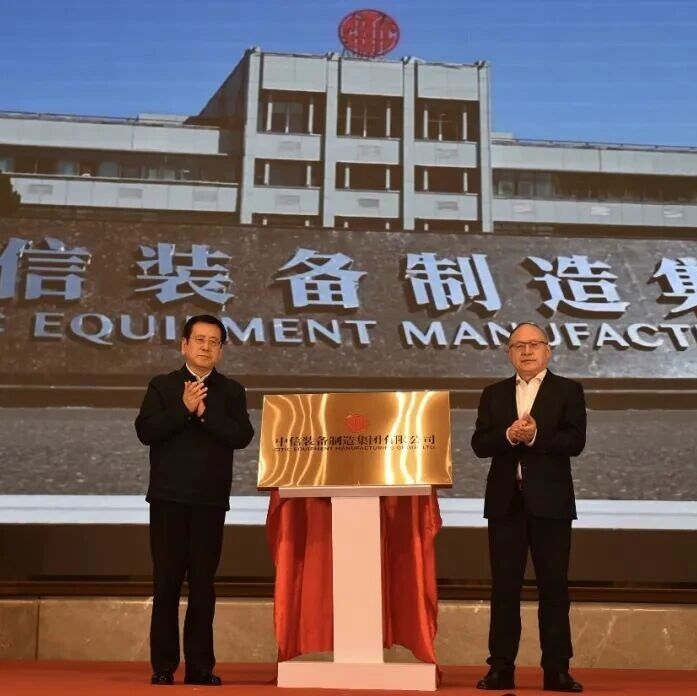
Core Viewpoint - The establishment of the CITIC Equipment Manufacturing Group and the National Key Laboratory for Intelligent Mining Heavy Equipment in Luoyang marks a significant step in enhancing cooperation between CITIC Group and the Henan government, aiming to strengthen strategic partnerships in various advanced manufacturing sectors [1][3]. Group 1: Key Developments - The unveiling ceremony of the CITIC Equipment Manufacturing Group and the National Key Laboratory took place on December 2, with notable attendees including the Governor of Henan Province and the Chairman of CITIC Group [1]. - The laboratory is seen as a fruitful outcome of the long-standing collaboration between Henan and CITIC Group, with aspirations to deepen cooperation in equipment manufacturing, new materials, new energy, and robotics [3]. Group 2: Strategic Goals - CITIC Equipment Manufacturing Group aims to lead in three core industrial directions: equipment manufacturing, new materials, and robotics, with a vision to become a globally competitive equipment group [4]. - The group is positioned as a key player in CITIC Group's large-scale equipment industry and aims to be a benchmark for advantageous industrial chains in Central China, contributing significantly to the nation's manufacturing strength [4]. Group 3: Company Background - CITIC Group, originally established in 1979, has undergone several transformations, becoming a state-authorized investment institution and later a wholly state-owned company [4]. - As of December 31, 2024, CITIC Group's total assets reached RMB 12.0754 trillion, with equity attributable to ordinary shareholders amounting to RMB 757.5 billion [4].


中信装备制造集团成立
券商中国· 2025-12-02 15:14
Core Viewpoint - The establishment of CITIC Equipment Manufacturing Group marks a significant step towards promoting intelligent, green, and integrated development in the manufacturing sector, aligning with national strategies for a strong manufacturing nation [1]. Group 1: Company Establishment and Mission - CITIC Equipment Manufacturing Group was officially launched on December 2 in Luoyang, Henan, with the mission of "Leading Intelligent Manufacturing, Strengthening Equipment Power" [1]. - The group is a key vehicle for CITIC Group to implement national strategies and support the development of the manufacturing sector [1]. Group 2: Strategic Focus and Goals - The group aims to integrate core assets from CITIC Group's manufacturing sector, enhancing R&D and manufacturing capabilities in advanced engineering machinery, robotics, CNC machine tools, energy-saving and environmental protection equipment, and advanced alloy materials [1]. - Future focus will be on three core industries: equipment manufacturing, new materials, and robotics, with a vision to become a leader in comprehensive competitiveness in the equipment sector [1].
中信装备制造集团成立
Xin Jing Bao· 2025-12-02 14:28
未来,中信装备制造集团将秉承"智造引领,装备强国"使命,聚焦装备制造、新材料、机器人三大核心 产业方向,心怀"打造具有国际一流综合竞争力的装备集团"为愿景,致力于成为中信集团大型成套装备 产业的排头兵、中部地区重点优势产业链的龙头标杆、装备制造领域核心技术创新的引领者,为制造强 国建设贡献更多中信智慧与力量。 据介绍,中国中信集团有限公司(原中国国际信托投资公司)于1979年组建。2002年中国国际信托投资 公司进行体制改革,更名为中国中信集团公司,成为国家授权投资机构。2011年中国中信集团公司整体 改制为国有独资公司,更名为中国中信集团有限公司(简称中信集团),并发起设立了中国中信股份有 限公司(简称中信股份)。2014年8月,中信集团将中信股份100%股权注入香港上市公司中信泰富,实 现了境外整体上市。 中信装备制造集团是中信集团践行国家战略、服务制造强国的关键载体,也是中信集团融入地方布局、 赋能区域发展的关键实践,更是中信集团深化实业"星链"工程与科技创新"磐石"行动的关键举措。通过 整合中信集团制造板块核心资产,强化在先进工程机械、机器人和数控机床、节能环保装备以及先进合 金材料等重点产业链的研发 ...
第21届中国钢铁产业链峰会暨兰格钢铁网成立30周年启动大会召开
Zheng Quan Ri Bao Wang· 2025-11-17 06:11
Core Insights - The 21st China Steel Industry Chain Summit and the 30th anniversary of Lange Steel Network will be held in Beijing from November 14 to November 16, focusing on new industrialization and manufacturing power strategies during the 14th Five-Year Plan period [1] - The theme of the summit is "Working Together to Break the Internal Competition and Seek Development," addressing key topics such as supply chain innovation, supply-demand coordination, green transformation, central enterprise procurement, and market and macroeconomic outlook for 2026 [1] - The event attracted over 4,000 participants from domestic and international sectors, marking the largest scale in its history [1] Industry Developments - Notable speakers at the summit include prominent economists and industry experts who will provide in-depth analyses on topics such as China's economic hotspots for 2026, the effectiveness of large central enterprise procurement, steel market trends and price forecasts, and macroeconomic policy directions [1] - The summit also featured a strategic partnership signing ceremony to celebrate the 30th anniversary of Lange Steel Network, bringing together several core enterprises in the industry for important strategic collaborations [1]