
外国直接投资

Search documents
加纳2025年外国投资增长382%
Shang Wu Bu Wang Zhan· 2025-10-18 15:55
Core Insights - Foreign direct investment (FDI) in Ghana has significantly rebounded, with inflows rising from $17.907 million in the first half of 2024 to $86.296 million by June 2025, marking a year-on-year increase of 382% [1] Investment Projects - In the first half of this year, a total of 76 new investment projects were registered across various sectors, including manufacturing, services, general trade, and agriculture [1] - The manufacturing sector accounted for the highest number of projects, with 32 registered, while general trade attracted the largest investment amount of $62.29 million, representing over 72% of total FDI during the same period [1] Source Countries - China remains the leading source of new projects in Ghana, contributing 22 projects, followed by India with 14 projects, Nigeria with 8, and the UAE and the UK with 4 each. The US registered 3 projects, with additional investors from Liberia, Mauritius, Singapore, and Turkey [1] Geographic Distribution - Most of the registered projects are concentrated in the Greater Accra Region and the Ashanti Region [1]
9月份泰工业信心有所回升
Shang Wu Bu Wang Zhan· 2025-10-16 15:54
Core Insights - Thailand's industrial sentiment index rose to 87.8 points in September, marking the first increase since June 2022, up from 86.4 points in August [1] - The new government, under Prime Minister Anutin, formed rapidly and implemented proactive economic policies to address economic challenges, boosting business confidence [1] - The increase in the industrial production index in September was driven by higher exports of agricultural and electronic products, particularly to Malaysia, Vietnam, and Taiwan [1] - Foreign direct investment (FDI) showed positive growth, with a 125% year-on-year increase from January to August, reaching 225.5 billion Thai Baht [1]
阿尔及利亚360°新闻网站编译版:阿尔及利亚外国直接投资流量回升
Shang Wu Bu Wang Zhan· 2025-10-01 15:07
Core Insights - Algeria's foreign direct investment (FDI) flow is expected to rebound in 2024, indicating a positive economic recovery trend [1] Investment Flow Summary - In 2020, Algeria's FDI flow was $1.125 billion, which decreased to $920 million in 2021 due to the pandemic [1] - The FDI flow further declined to $171 million in 2022, despite improvements in the current account surplus [1] - A significant recovery occurred in 2023, with FDI flow rising to $1.049 billion [1] - The projected FDI flow for 2024 is $1.181 billion, reflecting ongoing economic recovery [1] Government Policy Impact - The increase in FDI from 2023 to 2024 suggests that government efforts to improve the business environment, simplify administrative procedures, and encourage investment in non-oil and gas sectors are effective [1] - The Algerian government plans to accelerate structural reforms and continue implementing economic diversification policies in the future [1]
埃及FDI全球排名跃升至第9位,何以吸引461亿美元外国投资
Di Yi Cai Jing· 2025-09-30 02:20
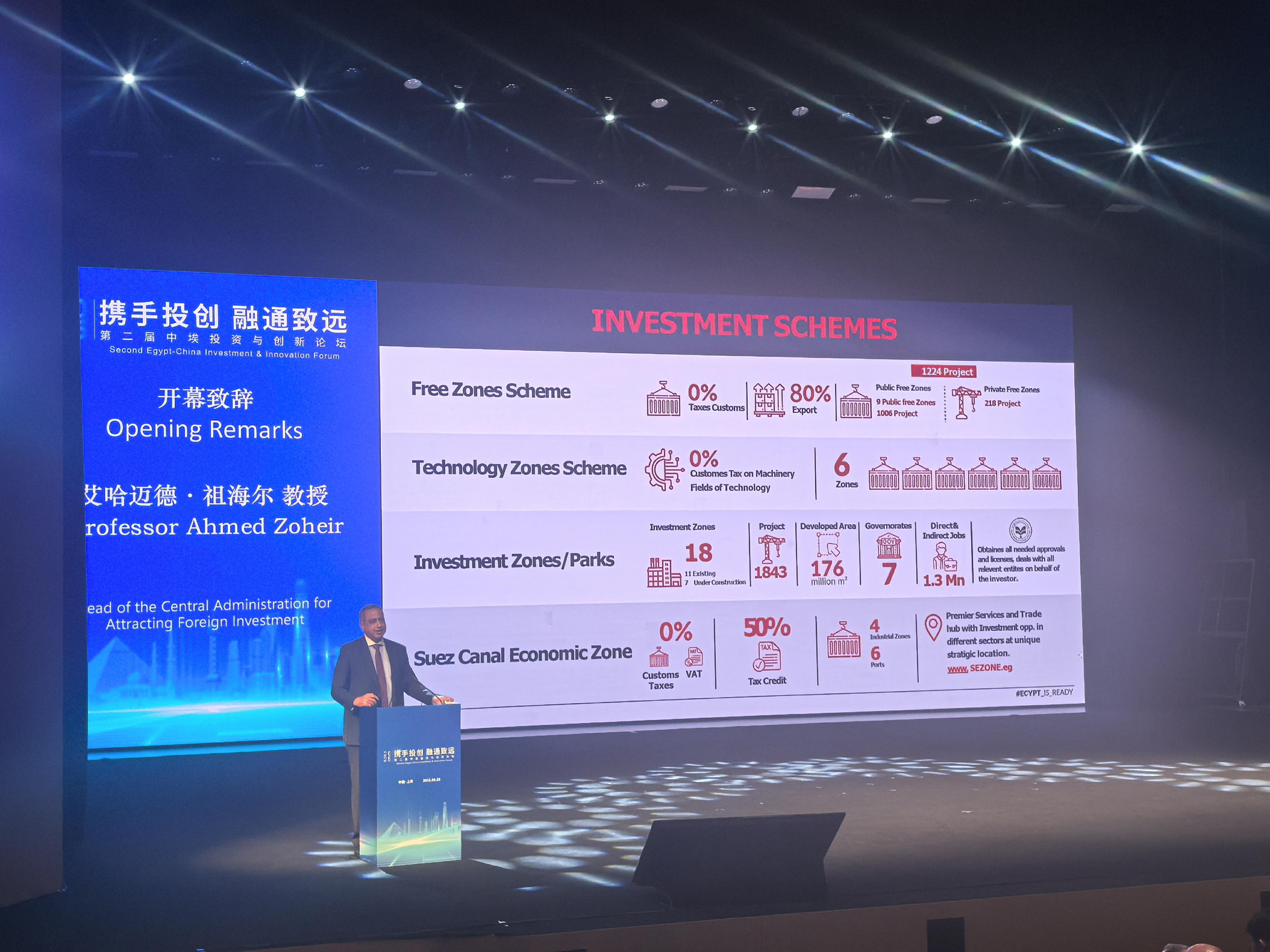
Core Insights - The article highlights Egypt's growing attractiveness for foreign direct investment (FDI), particularly from Chinese companies, driven by its strategic location, skilled labor force, and favorable economic conditions [1][2][3]. Investment Landscape - 67.27% of Chinese investments are still concentrated in the manufacturing sector, but there is optimism for growth in technology, automotive, and infrastructure sectors [9]. - Egypt's FDI inflow reached $46.1 billion, moving from 32nd to 9th globally in FDI rankings from 2023 to 2024, and it is the leading FDI destination in Africa for the third consecutive year [1]. Competitive Advantages - Egypt offers several competitive advantages for attracting foreign investment, including a strategic geographic location, a young and skilled workforce, world-class infrastructure, and a large consumer market of over 110 million people [2][3]. - The country has established trade agreements with over 70 countries, enhancing trade facilitation [3]. Incentives and Mechanisms - Egypt has implemented various investment incentives, such as a 10-year exemption from land use fees, tax deductions on investment costs, and exemptions from project income tax [7]. - The introduction of the "Golden License" allows companies to participate in national projects with a streamlined approval process, which has already benefited several Chinese firms [8]. Sectoral Focus - The Egyptian government is particularly focused on attracting investments in high-value sectors such as renewable energy, artificial intelligence, and data centers, with dedicated services for Chinese investors [9]. - Financial cooperation between Egypt and China is deepening, with agreements on currency settlement and bond issuance [9].

越南8月经济:“对等关税”后进出口放缓
Guotai Junan Securities· 2025-09-26 11:27
Economic Performance - Vietnam's industrial output in August grew by 8.9% year-on-year, surpassing July's revised growth of 7.4% and the average growth of 8.5% for the first eight months of the year[4] - Retail sales in August reached approximately 588.2 trillion VND, reflecting a growth of about 10.6% compared to 2024, driven by economic stimulus activities and local celebrations[10] - The Consumer Price Index (CPI) in August increased by 3.24% year-on-year, consistent with the average level of 3.25% for the year[22] Trade and Investment - Vietnam's exports in August amounted to $43.4 billion, with a growth rate of 14.8%, down from the average growth of 15.6% for the year[18] - The country recorded a trade surplus of $3.7 billion in August, the highest monthly surplus for 2025, although lower than the same period in 2024[18] - Foreign direct investment (FDI) in August reached $2.05 billion, bringing the total for the year to $26.14 billion, a 27.4% increase compared to 2024[16] Tourism and Consumer Behavior - International tourist arrivals in August totaled 1.68 million, a year-on-year increase of 16.5%, but significantly lower than July's growth of 35.7%[15] - The retail sector's growth was primarily driven by the goods sector, which grew by 10.2% in August, while accommodation and food services saw a slowdown[10]
今年上半年外国对格能源领域投资有所增加
Shang Wu Bu Wang Zhan· 2025-09-17 17:31
格鲁吉亚Georgiatoday网站9月10日消息报道,格国家统计局数据显示,今年上 半年外国对格能源领域直接投资1.26亿美元,同比增长34.7%。能源已成为格吸引 外国直接投资的第二大行业,仅次于金融和保险业,凸显了能源在格经济中日益增 强的作用。 报告期内,捷克是格能源领域最大投资国,规模达7570万美元,其次是荷兰— 920万美元和土耳其—310万美元。 (原标题:今年上半年外国对格能源领域投资有所增加) ...
今年第二季度,安哥拉非石油领域吸引外国直接投资大幅增加
Shang Wu Bu Wang Zhan· 2025-09-12 16:33
Core Viewpoint - In the second quarter of this year, Angola experienced a significant increase in foreign direct investment (FDI) in the non-oil sector, despite an overall decline in total FDI compared to the previous year [1] Group 1: Foreign Direct Investment Overview - Angola attracted a total of $1.517 billion in foreign direct investment in Q2, representing a 40% decrease year-on-year [1] - The oil sector attracted $1.418 billion in investment, which is a 42.9% decline compared to the same period last year [1] - The non-oil sector saw an investment of $98.6 million, marking a substantial increase of 120% year-on-year [1] Group 2: Year-to-Date Investment Summary - For the first half of the year, Angola's total foreign direct investment amounted to approximately $4.25 billion [1] - Of this total, 92% was concentrated in the oil sector, which is a decrease of 4 percentage points compared to the same period last year [1]
一季度哈吸引外国直接投资66亿美元
Shang Wu Bu Wang Zhan· 2025-09-11 15:46
Core Insights - The Astana Finance Days forum has become a leading platform for dialogue and cooperation in the region, attracting representatives from over 70 countries, including investors, businesses, and government agencies [1] - Kazakhstan's economic indicators reflect the significance of the forum, with a GDP growth of 6.3% from January to July 2025, driven by an 8.3% increase in the real economy and a 5.2% growth in the service sector [1] - Foreign direct investment inflows reached $6.6 billion in the first quarter, marking a year-on-year increase of 6.2%, while fixed asset investments totaled 9.9 trillion tenge (approximately $18.5 billion), up 16.1% year-on-year [1]
2024年波黑外国直接投资流入达17.6亿马克
Shang Wu Bu Wang Zhan· 2025-08-30 01:33
Core Insights - The Central Bank of Bosnia and Herzegovina released the 2024 Foreign Direct Investment (FDI) survey report, indicating a decrease in FDI inflow to 1.76 billion marks, down by 301 million marks compared to 2023 [1] Investment Sources - The largest FDI inflow in 2024 comes from Croatia at 391.1 million marks, followed by Germany at 255.3 million marks and Slovenia at 247.1 million marks [1] Investment Sectors - The financial services sector attracted the highest investment totaling 503.8 million marks, followed by retail trade at 219.8 million marks and wholesale trade at 205.1 million marks [1] Total FDI Stock - By the end of 2024, the total FDI stock in Bosnia and Herzegovina is projected to be 21.22 billion marks, which includes both the 2024 FDI and previous investments along with the operational results of foreign enterprises [1] FDI Stock by Source - The largest share of FDI stock comes from Croatia at 3.22 billion marks (15.2% of total stock), followed by Austria at 2.9 billion marks (13.7%) and Serbia at 2.8 billion marks (13.3%) [1] FDI Stock by Sector - The financial services sector also holds the largest FDI stock at 4.27 billion marks, followed by telecommunications at 2.02 billion marks and wholesale trade at 2.01 billion marks [1]
墨西哥2025年第二季度外资流入创新高 新投资大幅增长
Xin Hua Cai Jing· 2025-08-22 05:51
Core Insights - Mexico attracted $34.265 billion in foreign direct investment in Q2 2025, marking a 10.2% increase year-on-year and achieving a historical high for the fifth consecutive year [1] - New investments reached $3.149 billion, the highest level in nearly 12 quarters, with a significant year-on-year growth of 246% compared to Q2 2024 [1] - The structure of foreign investment shows that reinvested profits accounted for 84.4% of the total, while new investments made up 9.2% and inter-company accounts represented 6.4% [1] Investment Sources - The United States remains the largest source of investment in Mexico, accounting for 42.9% of total foreign investment, followed by Spain and Canada [1] - The top five investing countries collectively represent 73.3% of total foreign investment, with Spain's investment increasing significantly to $5.943 billion and U.S. investment rising by $986 million year-on-year [1] Regional Distribution - 79.2% of foreign investment is concentrated in five states, with Mexico City being the primary destination, attracting $19.312 billion, which is 56.4% of the total and a 36.2% increase year-on-year [2] - Nuevo León and Estado de México also saw increases in investment, reaching $3.032 billion and $2.249 billion, respectively, while Baja California experienced a decline of 12.8% [2] Sector Analysis - The manufacturing sector continues to be the main area for foreign investment, accounting for 36.0%, followed by financial services at 26.7%, and construction and mining at 7.6% and 7.2%, respectively [2]