形式主义

Search documents
“这么多年,对这名同事只闻其名、不见其人!”纪委监委深挖细查,相关人员被处理
Xin Lang Cai Jing· 2026-01-10 03:00
Group 1 - The article emphasizes that work style is both an image and a strength, highlighting the long-term effectiveness of the Central Eight Regulations as strict rules [2] - The Tianjin Ninghe District Commission for Discipline Inspection and Supervision has initiated a special rectification campaign targeting individuals who are "long-term absent from work," reflecting a governance logic that combines both targeted punishment and systemic treatment [2] - In 2025, a total of 128,000 cases of hedonism and extravagance were investigated nationwide, with 162,000 individuals receiving criticism, education, or punishment [2] Group 2 - The article discusses the ongoing efforts to combat formalism and bureaucratism, with a focus on the implementation of regulations aimed at reducing burdens on grassroots levels [3] - In 2025, 124,000 cases of formalism and bureaucratism were addressed, resulting in 165,000 individuals being criticized or punished [4] - The Central Commission for Discipline Inspection has developed opinions to promote simultaneous investigation and treatment of both improper conduct and corruption, indicating a dual approach to governance [4]


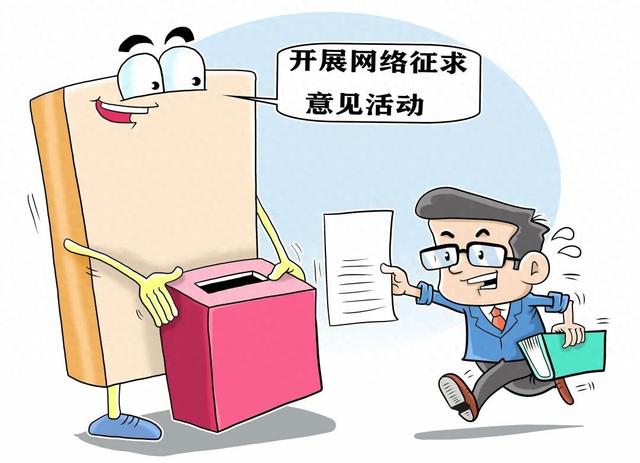
征求意见,只征不用?警惕意见征集中的官僚主义、形式主义
Xin Lang Cai Jing· 2026-01-10 00:55
Core Viewpoint - The article highlights the ineffectiveness of the public opinion solicitation process in various government departments, emphasizing that it often devolves into a mere formality rather than a genuine effort to gather valuable feedback from stakeholders [1][3][4]. Group 1: Issues in Public Opinion Solicitation - Many organizations report that their submitted opinions during legislative meetings remain unread, indicating a lack of genuine engagement from the authorities [2]. - The process often involves bureaucratic inefficiencies, such as sending out mass emails to unrelated departments, leading to unhelpful feedback [2]. - Some departments only seek opinions to fulfill procedural requirements, disregarding the actual suggestions provided by stakeholders [3]. Group 2: Consequences of Ineffective Solicitation - The superficial approach to soliciting opinions undermines the scientific nature of decision-making and erodes public trust in government [4][6]. - Ignoring valuable public input stifles social innovation and progress, as it prevents the dissemination of new ideas and methods [6]. Group 3: Recommendations for Improvement - To enhance the effectiveness of opinion solicitation, departments should broaden the channels for feedback, including social media and official websites, and ensure timely responses to public submissions [7][8]. - Valuable suggestions should be actively considered and integrated into policy discussions, with feedback provided to the public on how their input is being utilized [8]. - Establishing a robust oversight mechanism to hold departments accountable for bureaucratic practices can help transform the procedural value of opinion solicitation into a positive driving force for improvement [9].
风腐同查同治扎实推进
Xin Lang Cai Jing· 2026-01-09 20:47
Group 1 - The central theme emphasizes the ongoing efforts to rectify the "Four Winds" issues, with a strong commitment to strict enforcement and accountability in governance [1][2][3] - In the first eleven months of 2025, over 250,000 cases of "Four Winds" issues were investigated, with more than 320,000 individuals receiving criticism or punishment, indicating a robust atmosphere of discipline [1][4] - The central authorities are focusing on persistent issues of formalism and bureaucratism, aiming to enhance the level of governance and reduce burdens on grassroots levels [3][4] Group 2 - A significant number of cases related to formalism and bureaucratism were reported, with 124,000 cases investigated and 165,000 individuals criticized or punished in 2025 [4] - The central government is actively addressing issues that harm public interests, such as corruption in school meal programs and mismanagement of rural collective assets, with a total of 840,000 cases of corruption and misconduct reported [6][7] - The strategy includes a dual approach of addressing both misconduct and corruption simultaneously, with specific measures implemented by various provincial commissions to tackle these intertwined issues [9][10]
去年前11个月查处“四风”问题超25万起
Xin Lang Cai Jing· 2026-01-09 18:43
Group 1 - The central government has intensified efforts to combat "Four Winds" issues, with over 250,000 cases investigated and more than 320,000 individuals criticized or dealt with in the first 11 months of 2025 [1] - The focus on addressing formalism and bureaucratism has led to 124,000 cases of such issues being investigated, with 165,000 individuals criticized or dealt with [2] - A mechanism has been established to reduce burdens on grassroots levels, with 11 typical cases of formalism reported to ensure accountability and prevent recurrence [3] Group 2 - The central government is actively addressing corruption and misconduct affecting the public, with significant actions taken against issues like misappropriation of school meal funds and rural collective asset management [4] - A total of 840,000 cases of misconduct and corruption were reported from January to November 2025, resulting in 536,000 individuals being punished and 20,000 cases referred to prosecution [5] - The government is implementing a dual approach to tackle intertwined issues of misconduct and corruption, with various provinces developing specific strategies to address these problems [6] Group 3 - Continuous efforts are being made to maintain a strong atmosphere of discipline and integrity within the party, emphasizing the importance of consistent enforcement of the central eight regulations [7]
查处“四风”问题超25万起!风腐同查同治扎实推进
Xin Hua She· 2026-01-09 11:35
Group 1 - The central theme emphasizes the strict enforcement against "Four Winds" issues, with over 250,000 cases investigated and more than 320,000 individuals criticized or dealt with in 2025 [1][2] - The focus is on integrating the implementation of the Central Eight Regulations with the rectification of "Four Winds" issues, maintaining a strict approach and enhancing long-term effectiveness [2][4] - The central authorities have publicly reported typical violations of the Central Eight Regulations, creating a strong deterrent effect and fostering a serious atmosphere of accountability [3][4] Group 2 - In 2025, there were 124,000 cases of formalism and bureaucratism investigated, with 165,000 individuals criticized or dealt with, highlighting the ongoing commitment to address these issues [4][5] - The central government is actively addressing corruption and misconduct that directly affect the public, with significant efforts in areas such as school meal programs and rural collective asset management [5][6] - A total of 840,000 cases of misconduct and corruption affecting the public were investigated, resulting in 536,000 individuals being punished, demonstrating a strong resolve to protect the interests of the people [6][7] Group 3 - The integration of addressing misconduct and corruption is crucial, with the central authorities promoting a dual approach to tackle both issues simultaneously [7][8] - Continuous efforts are being made to ensure that the party's image and public trust are maintained through persistent and rigorous enforcement of regulations [8]
离谱!某国产 OS 公司年会要求穿西装,员工多问一句,董事长当场“秒开除”
程序员的那些事· 2026-01-08 23:38
Group 1 - The article highlights a recent incident involving a domestic operating system company that mandated formal attire for its annual meeting, giving employees only three days to prepare [4] - The chairman's response to an employee questioning the need to buy a suit was dismissive, stating that the company does not need employees who do not comply with the dress code [5] - The incident led to the dismissal of a key engineer responsible for the Linux kernel, who is considered a valuable talent in the industry, raising concerns about the company's priorities [7] Group 2 - The situation reflects a broader issue in the company culture, where formal dress is prioritized over technical skills, leading to criticism that such formalism is more detrimental than system bugs [8]

新华时评·一线评论|“过账”“注水”,这样的农村集体经济要警惕!
Xin Hua She· 2026-01-06 03:09
Core Viewpoint - The article emphasizes the need for vigilance against inflated rural collective economic income, highlighting that many reported revenues are not genuinely available for village expenditures and are often just "paper income" or "over-accounting" [1][2]. Group 1: Current State of Rural Collective Economy - Many regions are experiencing a peak in rural collective economic income and expenditure settlements, but only a small portion of the income is genuinely usable for village-level expenditures [1]. - Some areas include funds from higher-level government infrastructure investments as part of collective economic income, which do not contribute to actual revenue generation [1]. - Instances of fictitious land rental contracts have been reported, where rental income is recorded but immediately returned, leading to inflated income figures that do not reflect true financial health [1]. Group 2: Challenges and Issues - The phenomenon of "watered-down" income is attributed to bureaucratic and formalistic practices, with some regions applying a one-size-fits-all approach to assess collective economic income, disregarding local resource endowments and development foundations [2]. - Insufficient transparency and oversight in village affairs allow for the perpetuation of inflated income reporting, as there is a lack of verification regarding the authenticity of reported revenues [2]. Group 3: Recommendations for Improvement - To eliminate the issue of inflated rural collective economic income, it is recommended that local authorities provide more practical policy support and guidance for industry development, rather than relying on arbitrary directives [2]. - Enhancing and implementing mechanisms for public oversight of village affairs is crucial, focusing on discovering local resources and cultivating distinctive industries to generate real income [2]. - Genuine income growth is essential for supporting comprehensive rural revitalization, necessitating a shift from superficial reporting to tangible economic development outcomes [2].
笃信务实担当自律带好头作示范
Xin Lang Cai Jing· 2025-12-27 07:23
Core Points - The meeting emphasized the importance of adhering to Marxism and maintaining strong ideals and beliefs as fundamental to the Communist Party [2][5] - It highlighted the necessity for leaders to be pragmatic, focusing on practical results and avoiding formalism [6] - The meeting underscored the need for leaders to take responsibility and actively engage in their roles [6] Summary by Sections Meeting Overview - The Central Political Bureau held a democratic life meeting to study and implement Xi Jinping's thoughts on socialism with Chinese characteristics for a new era [2][3] - Reports were presented on the implementation of the Central Eight Regulations and efforts to reduce burdens on grassroots levels [3] Key Focus Areas - The discussions centered on five main points: enhancing political loyalty, strengthening party character, respecting the people and laws, taking initiative in work, and upholding party governance responsibilities [3] - The meeting acknowledged the significant achievements made under the leadership of Xi Jinping, attributing these successes to the guidance of his thoughts [4] Future Goals - The year 2025 is deemed crucial, with a commitment to achieving economic and social development goals while navigating challenges [4] - The meeting called for a comprehensive implementation of new development concepts and a focus on high-quality growth [4] Leadership Responsibilities - Xi Jinping emphasized the need for leaders to be self-disciplined, maintain their integrity, and adhere to democratic centralism [6] - Leaders are encouraged to engage with grassroots realities and foster a culture of practical effectiveness [6]
基层减负不能明减暗增
Xin Lang Cai Jing· 2025-12-23 22:11
Group 1 - The core issue of grassroots burden reduction is the emergence of "hidden increases" despite apparent decreases, leading to increased workloads for grassroots officials [1] - Examples of this phenomenon include the replacement of "red-headed documents" with "white-headed documents," increased informal assessments, and the requirement for detailed reporting on burden reduction efforts [1] - The fundamental problem lies in the improper mindset and work style, where the goal of freeing officials from unnecessary tasks is not being achieved [1] Group 2 - Continuous grassroots burden reduction requires eliminating unnecessary forms and strengthening ideological and work styles, focusing on practical results [2] - A combination of strategies centered around "practicality" is essential to address issues of formalism and bureaucratism, ensuring that meetings, documents, and inspections serve their intended purpose [2] - Transforming existing "pain points" into targeted areas for reform and addressing the root causes of formalism is crucial for effective and sustained grassroots burden reduction [2]
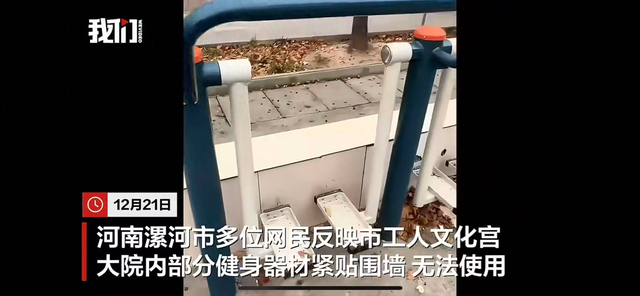
健身器材紧贴围墙,本质是“目中无人”的形式主义
Xin Lang Cai Jing· 2025-12-23 15:58
Core Viewpoint - The issue of public fitness equipment becoming unused or abandoned is highlighted, with specific examples from various locations indicating poor planning and management practices [3][4][6] Group 1: Current Issues with Public Fitness Equipment - In Linyi, Henan, residents reported that fitness equipment was installed too close to walls, rendering it unusable [1] - Similar cases have been observed where fitness equipment is placed in remote areas or is damaged, leading to public dissatisfaction and questioning of resource allocation [3] - The lack of proper management and maintenance has resulted in equipment being left idle, failing to meet community fitness needs [3][4] Group 2: Management and Planning Failures - Decision-makers often neglect user experience, leading to poor site selection and installation of fitness equipment [4] - The focus on meeting performance metrics rather than actual community needs has resulted in ineffective public fitness facilities [4][5] - The unclear management responsibilities contribute to the neglect of maintenance and accountability for fitness equipment [4][5] Group 3: Recommendations for Improvement - There is a need to clarify local management responsibilities to reduce inter-departmental blame-shifting [5] - Enhancing the evaluation system to prioritize user satisfaction could drive better service and planning decisions [5][6] - Establishing feedback channels for residents to report issues and needs can improve the effectiveness of public fitness facilities [6]