
新能源汽车盈利

Search documents
新势力车企财报丨 Q1业绩分化加剧 蔚来、小鹏仍亏损预计今年Q4盈利
Cai Jing Wang· 2025-06-04 10:24
Core Insights - The new energy vehicle (NEV) industry in China is entering a new phase where companies are focusing on profitability rather than just revenue growth [4][6][12] Financial Performance - NIO reported a revenue of 12 billion RMB for Q1, marking a year-on-year growth of 21.5% [1] - Li Auto achieved the highest revenue among new forces at 25.9 billion RMB [1] - Xpeng's gross margin improved to 15.6%, a 2.7 percentage point increase year-on-year [6] - The overall revenue for the NEV sector is expected to grow, with NIO projecting Q2 revenue between 19.51 billion and 20.07 billion RMB, a year-on-year increase of approximately 11.8% to 15% [6] Sales and Deliveries - In May, several companies reported strong delivery numbers, with Li Auto delivering 40,856 vehicles, a 16.7% increase year-on-year [11] - Zeekr, Li Auto, and others exceeded 40,000 deliveries in May, indicating robust market demand [3][9] - NIO's May deliveries reached 23,231 units, a 13.1% increase year-on-year, with expectations of 72,000 to 75,000 deliveries in Q2 [12] Profitability Goals - Companies are setting clear profitability targets, with NIO aiming for profitability in Q4 of this year, expecting to achieve a monthly sales volume of 50,000 units with a gross margin exceeding 20% [4][6] - Xpeng's chairman expressed confidence in achieving profitability in Q4, alongside a doubling of sales volume [6] Market Trends - The NEV market is experiencing intense competition, with a shift towards sustainable profitability models as companies move away from loss-making strategies [3][4] - Analysts predict that the price war in the NEV sector will continue but may be less aggressive than in previous years, with traditional fuel vehicles facing greater market challenges [12]

刚刚,新能源车数据出炉!谁在掉队?
凤凰网财经· 2025-06-01 14:27
Core Viewpoint - The competition among domestic new energy vehicle manufacturers is intensifying, with significant changes expected in June and July as companies launch new products and enhance their delivery capabilities [2][9][19]. Group 1: Sales Performance - BYD reported May sales of 382,500 units, a year-on-year increase of 15.27%, with cumulative sales from January to May reaching 1.7634 million units, up 38.70% [1]. - Leap Motor achieved a record delivery of 45,067 units in May, marking a year-on-year growth of 148.10% and a month-on-month increase of 9.82% [3][4]. - Ideal Auto delivered 40,856 units in May, reflecting a year-on-year increase of 16.70% and a month-on-month increase of 20.38% [3][5]. - Xiaopeng Motors delivered over 28,000 units in May, failing to surpass the 30,000-unit mark for the third consecutive month [2][9]. - NIO's May delivery was 22,231 units, showing a year-on-year growth of 13.08% [13]. Group 2: Competitive Landscape - The new energy vehicle market is expected to see heightened competition, with several companies launching new products in May and June [2][9]. - Leap Motor's delivery volume has consistently ranked first among new car manufacturers for three consecutive months [4]. - Xiaopeng Motors has maintained a monthly delivery of over 30,000 units for seven consecutive months, with a May delivery of 33,525 units, up 230.43% year-on-year [19]. Group 3: Strategic Developments - Leap Motor emphasizes self-research in core technologies to maintain cost and quality advantages, launching the 2026 C10 model at a starting price of 122,800 yuan [5]. - Ideal Auto is focusing on expanding its charging network and preparing for the launch of its first pure electric SUV, the Ideal i8, in July [12]. - NIO is undergoing significant changes, with its second brand, Lido, achieving a delivery of 6,281 units in May, a month-on-month increase of 42.8% [18].

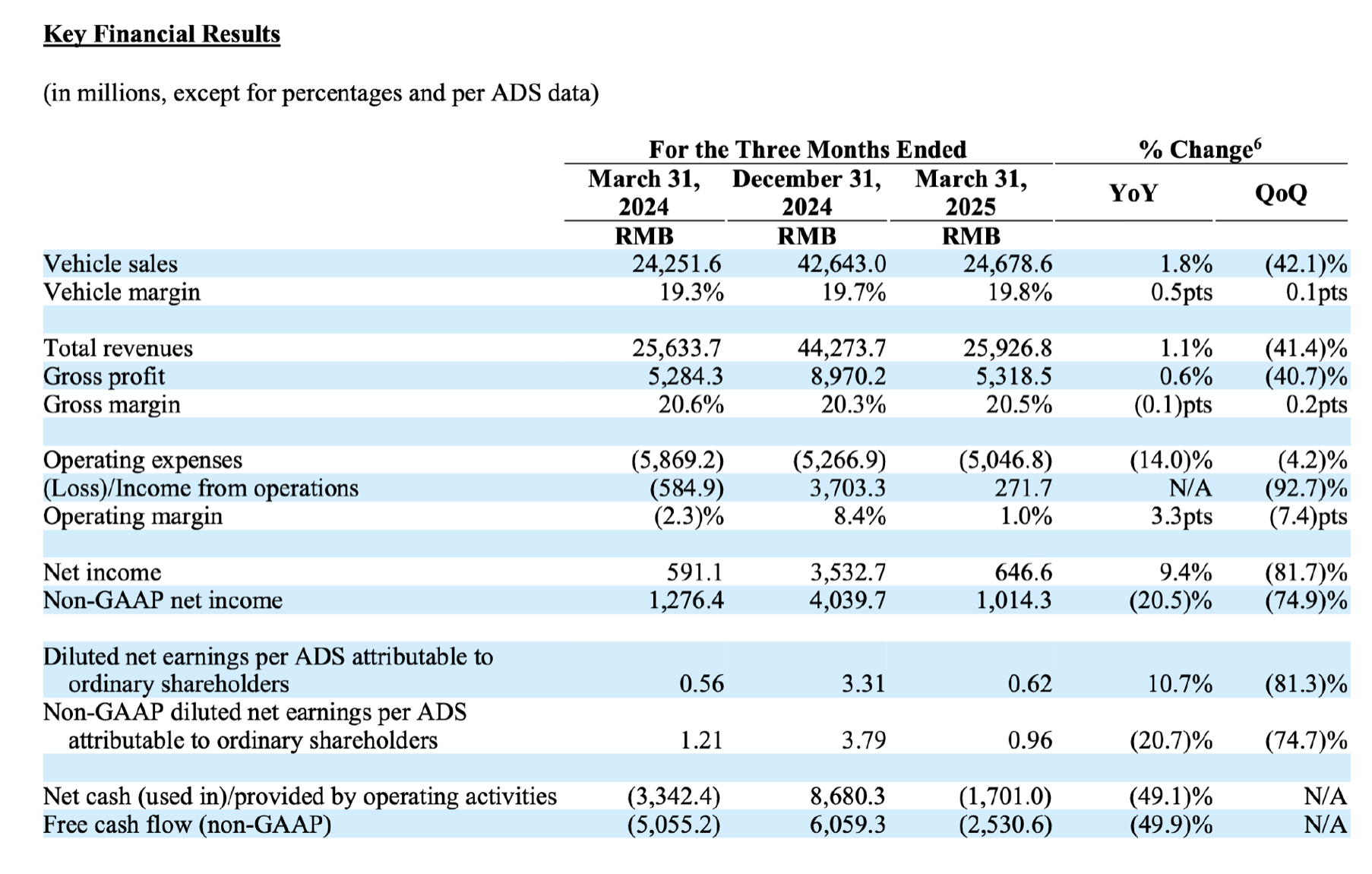
新势力4月成绩: 零跑交付超4万辆夺冠 小鹏理想均超3万辆
Cai Jing Wang· 2025-05-19 03:28
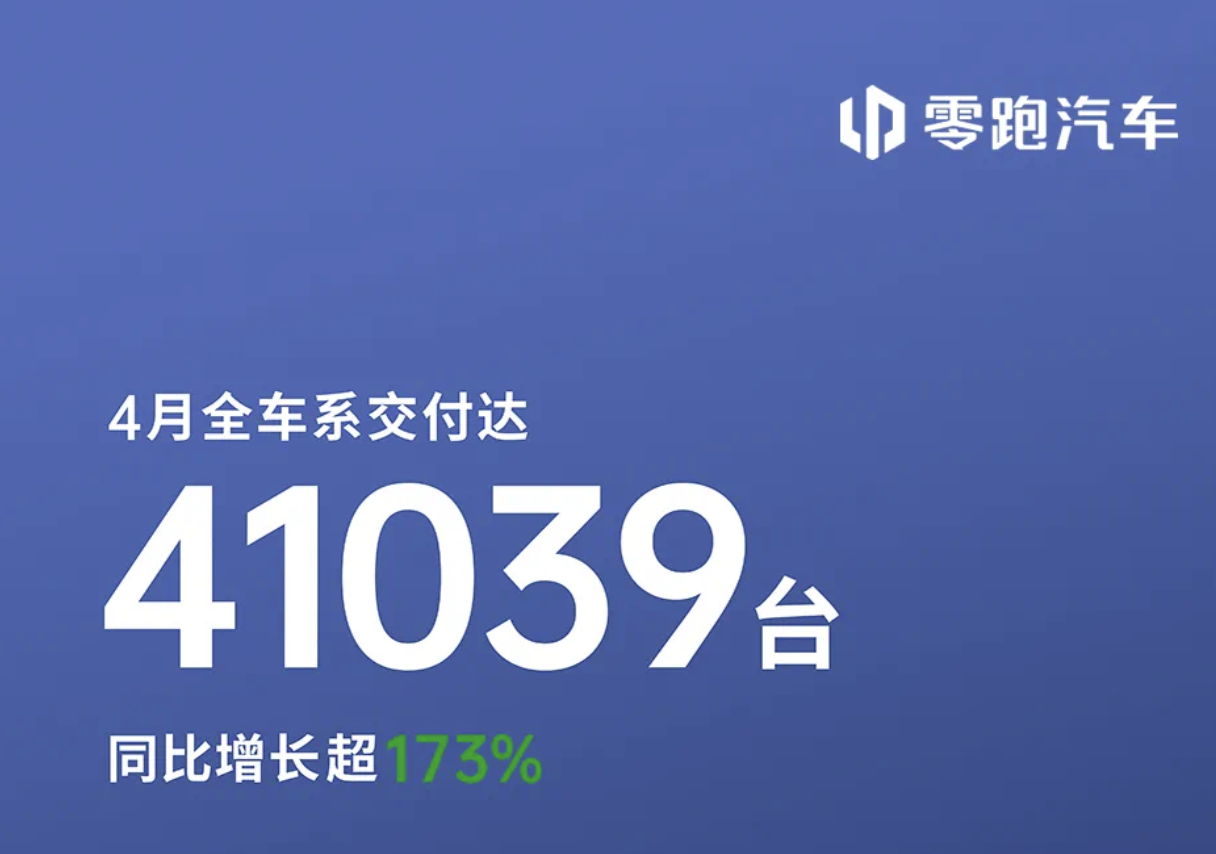
Core Viewpoint - The new energy vehicle market is experiencing significant growth, with "Zero, Xiaopeng, and Ideal" leading the sales rankings in April, indicating a competitive landscape among new energy vehicle manufacturers [1][4]. Group 1: Sales Performance - Leap Motor achieved the highest monthly sales in April with 41,039 units delivered, representing a year-on-year increase of 173% and a month-on-month increase of 10.6% [4]. - Xiaopeng's sales reached 35,045 units in April, showing a remarkable year-on-year growth of 273% and a month-on-month increase of 5.5% [4]. - Ideal maintained its position in the top tier with 33,939 units delivered, reflecting a year-on-year growth of 31.6% [4]. - NIO, Avita, and Lantu also reported significant growth, with Avita and Lantu achieving over 100% year-on-year growth [7]. Group 2: Market Trends - The overall automotive market maintained high activity levels in early April, supported by the Shanghai Auto Show and the launch of new models, which are expected to drive growth in the new energy vehicle sector [3]. - The "Zero, Xiaopeng, and Ideal" trio has consistently ranked in the top tier since the first quarter of this year, indicating a stable competitive landscape [4]. Group 3: Financial Performance - Zeekr reported a total revenue of 22.019 billion yuan in Q1, a slight year-on-year increase of 1.1%, but a significant quarter-on-quarter decline of 37.8%. The gross margin improved to 19.1%, while the net loss decreased by 60.2% year-on-year [8]. - Xiaopeng's Q1 deliveries exceeded guidance, with 94,008 units delivered, a year-on-year increase of 331%. The company expects to achieve profitability by Q4 of this year [11]. - NIO aims to achieve profitability in Q4 of this year, with a target of doubling sales this year and achieving quarterly profitability to pave the way for full-year profitability next year [11]. - Leap Motor plans to maintain a gross margin of 10% to 11% by 2025 and aims for a net profit margin to turn positive [12]. Group 4: Industry Insights - The performance differentiation among automotive companies reflects the resource endowment and strategic determination during the industry transition period. Long-term profitability depends on the ability to create differentiated value and maintain supply chain efficiency [13].


11年亏损800亿,蔚来今年真的能盈利吗?
Jin Rong Jie· 2025-05-06 10:31
Core Viewpoint - Profitability has become a critical indicator for new car manufacturers to survive the current elimination phase, with several companies like Li Auto, Leap Motor, and Seres already achieving profitability, while NIO's timeline for profitability remains a concern for investors [1][3]. Group 1: Company Performance - NIO delivered 23,900 new cars in April, a year-on-year increase of 53% and a month-on-month increase of 58.9%, but still lagged behind competitors like Xiaomi Auto, which achieved over 28,000 sales with just two models [3]. - Leap Motor achieved 41,039 deliveries in April, a year-on-year increase of 172%, while Li Auto and XPeng delivered 33,939 and 35,045 vehicles respectively, indicating they are already in a position to be profitable [3]. - NIO has accumulated losses of 80 billion yuan over 11 years, with customer service and battery swap station construction being significant financial burdens [3]. Group 2: Profitability Strategy - NIO's strategy to achieve profitability in Q4 includes three measures: mass production of technology, boosting sales to increase gross margins, and management efforts to reduce costs and improve efficiency [5]. - The performance of NIO's second brand, Ladao, has been underwhelming, with only 35,542 units delivered over seven months, averaging 5,077 units per month, which is insufficient in today's competitive market [5]. - NIO's focus on high-end models like the ET9 and niche products may hinder its ability to capture the mainstream market, which is essential for survival [7]. Group 3: Competitive Landscape - The competition is intensifying as foreign brands like Toyota, Nissan, Volkswagen, and Audi are ramping up their efforts in the electric vehicle market, potentially complicating NIO's position [9]. - NIO's commitment to achieving profitability in Q4 is seen as a necessity rather than a certainty; failure to meet this target could significantly undermine confidence among investors and consumers [9].

新造车4月再洗牌:零跑超小鹏理想,小米问界各有烦恼
创业邦· 2025-05-02 09:44
Core Viewpoint - The electric vehicle market is experiencing significant shifts, with new players like Leap Motor and Xiaopeng leading in delivery volumes, while traditional high-end brands like Li Auto and NIO are relying on subsidies to maintain sales. The competition is intensifying, focusing on price, technology, and profitability as key factors for success in 2025 [3][13][45]. Group 1: Delivery Performance - Leap Motor achieved a delivery of 41,039 units in April, marking a 173% year-on-year increase, surpassing Xiaopeng (35,045 units) and Li Auto (33,939 units) [6][7]. - Xiaopeng's delivery volume increased by 2.7 times year-on-year, but it still lagged behind Leap Motor by 6,000 units [7][22]. - Li Auto's delivery of 33,939 units reflects a 32% year-on-year increase but a decline of 8% month-on-month, indicating challenges in maintaining its market position [29][30]. - NIO delivered 23,900 units, with a notable increase from its main brand, while its sub-brand, Ladao, struggled with lower sales [32][33]. Group 2: Market Dynamics - The market is divided into three segments: low-cost leaders (Leap Motor, Xiaopeng), high-end brands facing pressure (Li Auto, NIO), and cross-industry players (Xiaomi, Huawei) encountering challenges [13][14]. - Leap Motor's strategy focuses on high value for money, targeting younger consumers, while Xiaopeng emphasizes technology and features to compete in the mid-range market [15][25]. - Li Auto and NIO are using cash subsidies and financing policies to boost sales, but this approach raises concerns about their long-term viability in the high-end market [29][30][33]. Group 3: Future Outlook - Leap Motor aims for annual sales of 500,000 to 600,000 units by 2025, necessitating a monthly delivery of 41,000 to 50,000 units [20]. - Xiaopeng's profitability is projected for Q4 2025, but it faces challenges in optimizing its business model and ensuring technology reliability [25]. - NIO's strategy includes launching new models and enhancing its battery swap services, but it must achieve significant sales growth to meet its annual target of 440,000 units [35][36]. Group 4: Stock Market Reactions - Leap Motor's stock rose by 10.73% in April, reflecting investor confidence in its delivery performance [46]. - Xiaopeng and Li Auto saw declines in their stock prices, indicating market concerns about their growth and profitability strategies [46]. - NIO's stock increased by 8.64% due to strategic investments and potential growth in its battery swap business [46]. Group 5: Competitive Strategies - The competition is expected to intensify in three key areas: delivering popular models, ensuring profitability, and advancing technological capabilities [47][49]. - New models from various companies, including Xiaomi's YU7 and Li Auto's i8, are anticipated to play crucial roles in shaping market dynamics [47]. - The focus on safety and technology will be critical as companies navigate the rapidly evolving electric vehicle landscape [49].
蔚来第三品牌萤火虫上市价格下调近3万元,李斌称仍有毛利
Di Yi Cai Jing· 2025-04-20 14:05
Core Viewpoint - The company is optimistic about achieving profitability in the fourth quarter of this year, driven by the launch of its new model, Firefly, and the overall growth in sales across its three brands [1][2]. Group 1: Financial Performance - In the 2024 financial report, the company reported a revenue and gross profit increase year-on-year, with a gross margin of 9.9%, up by 4.4 percentage points [1]. - However, the net loss attributable to shareholders widened to 22.658 billion yuan, an increase of over 7% year-on-year [1]. Group 2: Product Launch and Market Strategy - The Firefly model was officially launched on April 19, with a starting price of 119,800 yuan, which is 29,000 yuan lower than the previously announced pre-sale price of 148,800 yuan [1]. - The company aims for the Firefly to account for approximately 10% of its total sales in the long term, although it is the newest brand and will require time to establish its market presence [1]. - The pricing strategy for the Firefly considers both product profitability and current market sentiment, reflecting adjustments in consumer expectations and competitive dynamics in the electric vehicle market [1]. Group 3: International Market Considerations - The pricing for the Firefly in overseas markets, particularly Europe, has not yet been disclosed, with indications that it will be higher than in China [3]. - The company is adopting a "one country, one policy" pricing strategy for international markets, suggesting significant price variations based on local market conditions [3].