有效市场和有为政府相结合

Search documents
人民日报评论员:深刻把握“十五五”时期我国发展必须遵循的重要原则——论学习贯彻党的二十届四中全会精神
Xin Hua Wang· 2025-10-25 12:41
Core Viewpoint - The article emphasizes the importance of understanding and implementing the "six persistences" as outlined in the 20th Central Committee's fourth plenary session, which serves as a guiding principle for China's economic and social development during the "14th Five-Year Plan" period [1][2]. Group 1: Key Principles - The "six persistences" include: adherence to the Party's overall leadership, prioritizing the people, promoting high-quality development, comprehensive deepening of reforms, combining effective markets with proactive government, and balancing development with security [2][3]. - These principles are a scientific summary of the experiences gained since the reform and opening-up, reflecting a deepened understanding of the laws governing economic and social development [2][3]. Group 2: Economic Development Strategy - The article highlights the significance of the Party's leadership in navigating challenges and achieving major accomplishments, particularly during the unprecedented circumstances of the pandemic and external pressures [3][4]. - It stresses the need to effectively manage the relationship between the market and government, ensuring that the market plays a decisive role in resource allocation while the government provides necessary support [4][5]. Group 3: Market and Government Interaction - The combination of the "invisible hand" of the market and the "visible hand" of the government is crucial for sustaining economic advantages, with recent policies aimed at boosting domestic demand and supporting enterprises [4][5]. - The establishment of a unified national market and the promotion of fair competition are essential for enhancing resilience and unlocking potential in China's economic development [4][5]. Group 4: Future Outlook - The article concludes with a call to action for the implementation of the principles from the 20th Central Committee's fourth plenary session, emphasizing the need for perseverance and commitment to achieving the second centenary goal [6].
四中全会公报发布:十五五经济社会发展原则
Yang Shi Xin Wen· 2025-10-23 15:40
Core Viewpoint - The Fourth Plenary Session emphasizes the principles that must be adhered to during the "14th Five-Year Plan" period for economic and social development, highlighting the importance of comprehensive party leadership and high-quality development [1] Group 1 - The session underscores the necessity of adhering to the principle of the Party's comprehensive leadership [1] - It stresses the importance of prioritizing the people in economic and social development [1] - The focus is on maintaining high-quality development as a key objective [1] Group 2 - The session calls for comprehensive deepening of reforms as a fundamental approach [1] - It highlights the need for a combination of effective markets and proactive government [1] - The importance of coordinating development and security is also emphasized [1]
中信建投黄文涛:“新质生产力”首次纳入二十届四中全会的规划框架
Zheng Quan Shi Bao Wang· 2025-10-23 15:31
Group 1 - The core viewpoint of the article emphasizes the evolution of the "14th Five-Year Plan" reflecting timely updates in policy concepts, with a gradual softening of growth targets and a stronger focus on innovation, ecology, and security [1] - The document highlights the importance of "building a modern industrial system and consolidating the foundation of the real economy," placing it in a more prominent position in the narrative [1] - The term "new quality productivity" is introduced for the first time within the planning framework of the plenary session, indicating a shift in focus towards qualitative improvements in economic development [1] Group 2 - Economic development is increasingly prioritizing "qualitative effective enhancement and reasonable quantitative growth," integrating the principle of "combining effective markets with proactive government" into the overall strategy [1]

解码华强北创新创业生态:打造有效市场中的有为政府的样本
Nan Fang Du Shi Bao· 2025-10-22 07:33
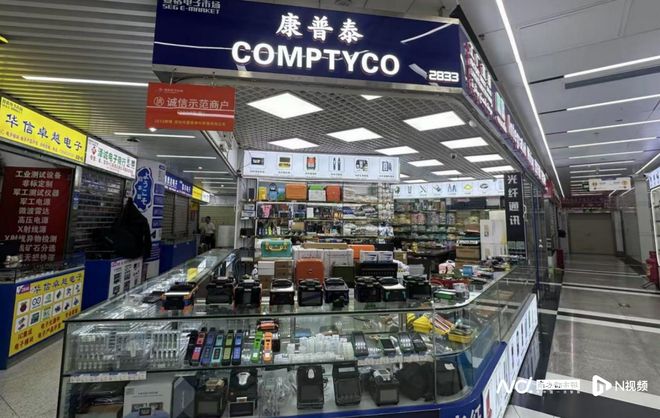
Core Viewpoint - The collaboration between "effective markets" and "proactive government" is essential for fostering new productive forces in China's economy, emphasizing the need for a well-ordered, trustworthy, and creative entrepreneurial ecosystem without interfering with market vitality [1][9]. Group 1: Internationalization - The government in Huaqiangbei is facilitating internationalization by creating pathways for businesses to expand globally rather than directly taking over their roles [4]. - Huaqiangbei has transformed into a hub for international entrepreneurs and cross-border trade, enhancing its service levels and creating a friendly environment for foreign consumers [4]. - The area has achieved full multilingual signage coverage and a 95% coverage rate of foreign card POS machines, supporting seamless global transactions [4]. Group 2: Marketization - Huaqiangbei's governance focuses on reducing transaction costs and stimulating market vitality, adhering to the principle of "no disturbance unless necessary" [5]. - Digital reforms have significantly lowered institutional transaction costs, allowing businesses to focus more on research and innovation rather than bureaucratic processes [5]. - The government acts as a caretaker of the ecosystem rather than a market controller, promoting a data-driven governance model for more precise regulation and intelligent services [5]. Group 3: Legalization - The rule of law is fundamental to Huaqiangbei's market environment, ensuring strict enforcement while nurturing innovation and instilling confidence in market participants [6][7]. - The establishment of a clean business environment monitoring point and rigorous enforcement against counterfeit and illegal activities have strengthened market integrity [6]. - A comprehensive legal service platform is set to launch in 2025, providing a full range of legal support for foreign enterprises and enhancing the safety of the business environment [7]. Group 4: Governance Philosophy - The proactive government approach is characterized by supporting business growth rather than making decisions for them, fostering a symbiotic relationship between the market and government [8]. - This governance model has led to a self-regulating and evolving innovation system, where the market flows freely while the government provides stable support [8]. - The combination of effective markets and proactive government is exemplified in Huaqiangbei, showcasing that market vitality and government order can coexist and thrive together [9].


深刻认识五年规划彰显的制度优势(深入学习贯彻习近平新时代中国特色社会主义思想)
Ren Min Wang· 2025-10-20 22:08
Core Viewpoint - The article emphasizes the significance of China's five-year plans in guiding economic and social development, highlighting their role in achieving national goals and maintaining stability in the face of changing circumstances [1][5][14]. Group 1: Institutional Advantages of Centralized Leadership - The centralized leadership of the Communist Party ensures that the five-year plans reflect strategic intentions and effectively mobilize resources for national development [2][6]. - Since the first five-year plan in 1953, China has implemented 14 plans, which have been crucial in transforming the country from an agricultural society to a major industrial power [3][4]. Group 2: Role of Five-Year Plans in Economic Development - The five-year plans have evolved from directive plans in a command economy to strategic, guiding frameworks that emphasize quality and comprehensive development [10][11]. - The plans facilitate the integration of market mechanisms with government initiatives, ensuring effective resource allocation and promoting high-quality development [11][12]. Group 3: Long-term Strategic Vision - The continuity of five-year plans demonstrates a long-term strategic commitment to national goals, allowing for sustained progress towards modernization and national rejuvenation [14][15]. - Each five-year plan serves as a milestone in China's modernization journey, marking significant achievements in economic and social development [15]. Group 4: National Coordination and Regional Development - The concept of "one chessboard" promotes coordinated regional development, allowing different areas to leverage their comparative advantages while contributing to national objectives [16][17]. - The implementation of regional strategies has enhanced the overall coherence of economic development across diverse regions, fostering a unified national market [18][19].
“十五五”规划研究系列之四:“四中”前瞻:新“五年”的新期待
Shenwan Hongyuan Securities· 2025-10-20 10:41
Group 1: Key Signals from the September Politburo Meeting - The meeting emphasized "people" and "fairness," indicating a focus on equitable development and high-level openness[1] - Core directives include "effective market and proactive government" and "strengthening bottom-line thinking" to ensure economic stability[1] - The meeting highlighted the importance of "tailored development" to address local conditions and avoid redundant construction[1] Group 2: Main Lines of the 15th Five-Year Plan - High-quality development, institutional reform, and industrial upgrading are identified as the three main lines of the new plan[3] - The 15th Five-Year Plan serves as a critical midpoint for assessing progress towards the 2035 modernization goals[3] - To achieve the 2035 goals, an average annual economic growth rate of approximately 4.4% is required during the 15th and 16th Five-Year Plan periods[3][25] Group 3: Focus Areas for Industrial Development - The plan will likely continue to support "emerging pillar industries" and "new quality productivity" as key areas for growth[5][39] - Specific industries mentioned include artificial intelligence, marine economy, and low-altitude economy, which are expected to receive significant attention[6][5] - The emphasis on service consumption and technology consumption indicates a shift towards more sustainable economic drivers[5][42]
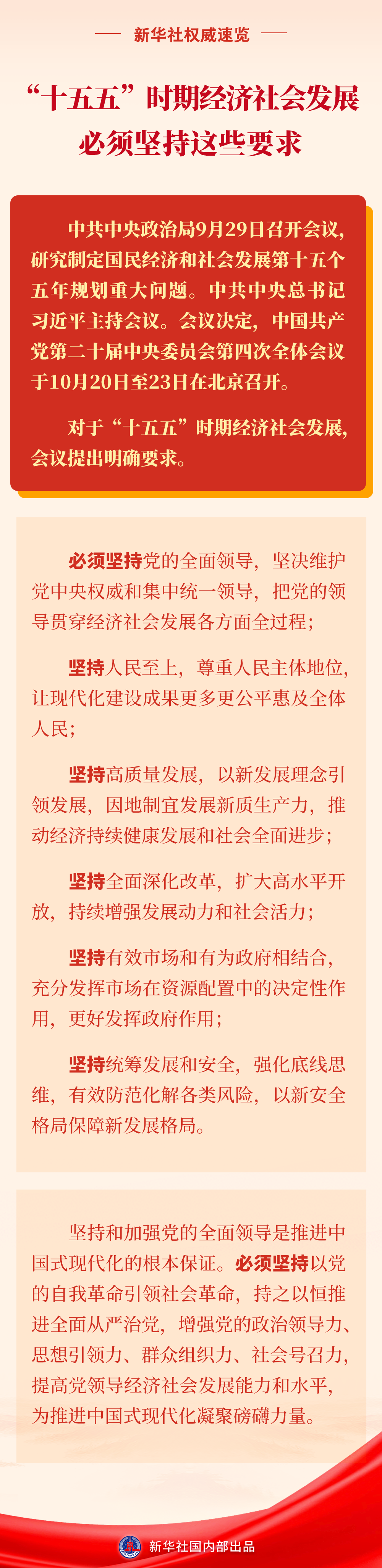
“十五五”时期经济社会发展必须坚持这些要求
Xin Hua She· 2025-09-30 00:13
Group 1 - The meeting of the Central Political Bureau on September 29 focused on the formulation of the 15th Five-Year Plan for national economic and social development, chaired by General Secretary Xi Jinping [2] - The upcoming Fourth Plenary Session of the 20th Central Committee of the Communist Party of China is scheduled to be held in Beijing from October 20 to 23 [2] Group 2 - The meeting emphasized the necessity of upholding the Party's comprehensive leadership and ensuring the authority and centralized leadership of the Party throughout the economic and social development process [3] - It highlighted the principle of putting people first, ensuring that the benefits of modernization are distributed more equitably among all people [3] - The focus on high-quality development was reiterated, advocating for a new development philosophy to guide development and promote sustainable economic growth and comprehensive social progress [3] - The meeting called for comprehensive deepening of reforms and expanding high-level opening-up to continuously enhance development momentum and social vitality [3] - It stressed the importance of a combination of an effective market and a proactive government, aiming to leverage the market's decisive role in resource allocation while enhancing government functions [3] - The need for coordinated development and security was underscored, with an emphasis on strengthening bottom-line thinking and effectively preventing and mitigating various risks [3]