
六个坚持

Search documents
财政部:实施好积极的财政政策 持续防范化解地方政府债务风险
智通财经网· 2025-12-31 12:52
Group 1 - The meeting emphasized the importance of high-quality development and the implementation of proactive fiscal policies to enhance the effectiveness and precision of macroeconomic regulation, support domestic demand expansion, and promote new productive forces [1][3] - The meeting highlighted the need for comprehensive deepening of reforms and strengthening fiscal management to boost development and vitality [3] - The meeting called for a balance between effective markets and proactive government, focusing fiscal resources on public sectors while allowing the market to play a decisive role in resource allocation [3] Group 2 - The meeting recognized the significant position of the "14th Five-Year Plan" period and the need to align thoughts and actions with the Party Central Committee's basic judgments and strategic deployments [2][3] - The meeting outlined the necessity of adhering to six important principles to better leverage fiscal policy as a foundational and crucial support in national governance [3] - The meeting stressed the importance of risk awareness and bottom-line thinking to prevent and mitigate local government debt risks while ensuring fiscal support for key industries and major technologies [3] Group 3 - The meeting required a comprehensive approach to learning, promoting, and implementing the spirit of the plenary session, ensuring that all members engage deeply with the content [4] - The meeting called for active participation in the preparation of the national "14th Five-Year Plan" outline and the scientific planning of fiscal and accounting strategies for the same period [4] - The meeting emphasized the integration of the central economic work conference's spirit with the planning of fiscal work for 2026 to promote sustainable and healthy economic and social development [4]
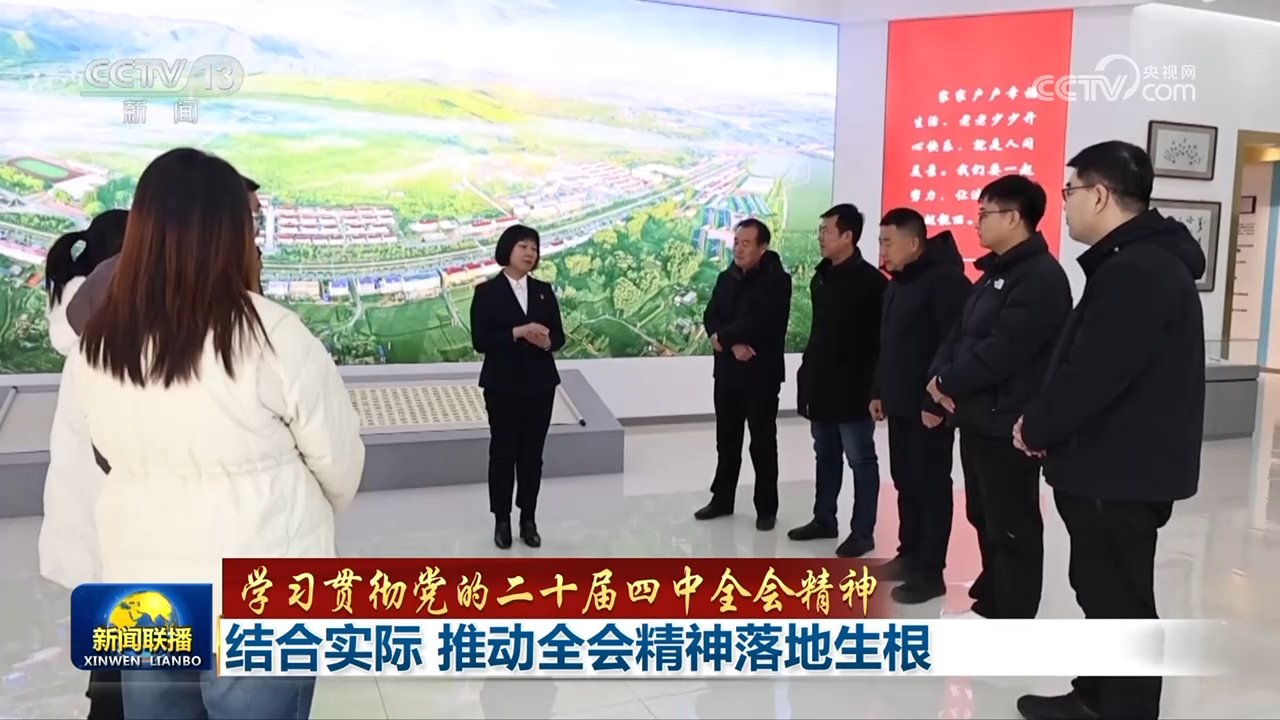
【学习贯彻党的二十届四中全会精神】结合实际推动全会精神落地生根
Xin Lang Cai Jing· 2025-12-27 11:32
Group 1 - The core viewpoint of the article emphasizes the efforts made by various regions and institutions in China to implement the spirit of the 20th Central Committee's Fourth Plenary Session at the grassroots level [1] Group 2 - Liaoning has selected capable individuals to form a lecture team, engaging various sectors to promote the spirit of the plenary session using familiar language and real-life examples, facilitating interaction with grassroots officials and the public [3] - Hunan has established provincial and municipal lecture teams, utilizing cultural stations and practice centers to conduct targeted and interactive lectures, reaching communities, rural areas, schools, and enterprises [5] - Qinghai has set up theoretical lecture studios, employing interview and interaction formats to engage with local officials and the public on topics such as rural revitalization and ecological protection, making the core ideas of the plenary session accessible [7] - Renmin University of China has organized public lectures through the "Shan Gong University Hall" series, leveraging the youth theoretical lecture team to promote the spirit of the plenary session in grassroots communities and educational institutions [9]

时代专论 | 以进一步全面深化改革为动力开创中国式现代化新局面
Zhong Yang Ji Wei Guo Jia Jian Wei Wang Zhan· 2025-11-12 23:57
Group 1 - The core viewpoint emphasizes the importance of further deepening reforms as a key driver for China's modernization and development, highlighting the need for innovative approaches to address challenges and enhance productivity [3][5][6] - The establishment of the China (Shandong) Free Trade Zone is noted for its role in facilitating international logistics and trade efficiency, significantly reducing transit times compared to other major ports [2] Group 2 - The reforms are characterized by their broad scope, deep impact on interests, and significant challenges, requiring a systematic and coordinated approach to achieve high-quality development [5][11] - The focus on economic system reform is highlighted as crucial for driving other reforms, with an emphasis on creating a unified national market and improving the macroeconomic governance system [11][16] Group 3 - The principle of "six persistences" is introduced as a guiding framework for reforms, emphasizing the need for comprehensive leadership, people-centered approaches, and a balance between innovation and tradition [10][12] - The relationship between reform and the rule of law is underscored, advocating for legal frameworks to support and enhance reform efforts [13][14] Group 4 - The necessity of aligning reform initiatives with the overarching goal of advancing Chinese-style modernization is stressed, with over 300 important reform measures identified to address systemic issues [9][10] - The importance of effective implementation and coordination of reform measures is emphasized, ensuring that reforms are not only well-planned but also effectively executed [17]

民航华北地区管理局召开党委理论中心组(扩大)会议 专题学习党的二十届四中全会精神
Zhong Guo Min Hang Wang· 2025-10-30 07:12
Group 1 - The meeting emphasized the importance of studying and implementing the spirit of the 20th Central Committee's Fourth Plenary Session as a major political task for the current and future period [2][3] - The meeting highlighted the significant achievements during the "14th Five-Year Plan" period and the need to maintain strategic determination and confidence in achieving the goals [2] - The meeting discussed the "six important principles" that must be followed during the "15th Five-Year Plan" period, focusing on political direction and high-quality completion of the planning work [2] Group 2 - The meeting called for various methods such as special discussions and training to deeply study and integrate the spirit of the plenary session into practice [3] - The meeting aimed to combine safety regulation with industry development to guide the industry towards safe, healthy, and orderly growth [3] - The planning department reported on the completion of the "14th Five-Year Plan" and the progress of the "15th Five-Year Plan," with discussions on the implementation of the plenary session's spirit [3]

二十届四中全会公报解读:“十五五”的20个关键词
Yong Xing Zheng Quan· 2025-10-27 06:53
Overall Insights - The 20th Central Committee's Fourth Plenary Session approved the "Suggestions" for the 15th Five-Year Plan, highlighting the need for strategic investment opportunities during this period[1] - Key focus areas include maintaining economic stability, enhancing domestic demand, and promoting high-quality development[3] Key Themes - The "Four Advantages" emphasize China's strong economic foundation, large market, complete industrial system, and rich talent resources, which are crucial for technological and industrial advancements[11] - The "Seven Major Goals" for the 15th Five-Year Plan include significant improvements in high-quality development, technological self-reliance, and social welfare[16] - By 2035, the goal is to achieve a per capita GDP of $22,443 or $21,295, depending on annual growth rates of 5.0% or 4.5% respectively, reflecting a 26.7% increase from 2019[17] Investment and Risk Considerations - Investment strategies should focus on the implications of the 20 keywords from the plan, which are expected to create strategic investment opportunities[42] - Risks include potential technological disruptions, challenges in industrial upgrades, geopolitical conflicts, and intensified international strategic competition[43][44]
深刻把握“十五五”时期我国发展必须遵循的重要原则
Ren Min Ri Bao· 2025-10-25 22:12
Core Viewpoint - The article emphasizes the importance of the "Six Persistences" principles and the guiding ideology established during the 20th National Congress of the Communist Party of China, which aims to provide a clear direction for achieving socialist modernization during the "14th Five-Year Plan" period [1][2]. Group 1: Guiding Ideology and Main Goals - The guiding ideology for the "14th Five-Year Plan" period is based on a comprehensive understanding of both domestic and international situations, historical positioning, and the complex changes in the development environment [1][2]. - Seven main goals for economic and social development have been proposed to inspire the entire party and the nation to strive for the basic realization of socialist modernization [1]. Group 2: Six Persistences Principles - The "Six Persistences" principles include: 1. Upholding the Party's overall leadership 2. Prioritizing the people 3. Committing to high-quality development 4. Deepening comprehensive reforms 5. Combining effective markets with a proactive government 6. Coordinating development and security [2][3]. - These principles are a scientific summary of the experiences gained since the reform and opening-up, reflecting a deepened understanding of the laws governing economic and social development [2]. Group 3: Importance of Party Leadership - The article highlights that the key to managing China's affairs lies in the Party's leadership, especially in navigating challenges such as the pandemic and external pressures [3]. - Maintaining the authority of the Party and its centralized leadership is essential for ensuring a bright future for Chinese-style modernization [3]. Group 4: Market and Government Relationship - The development of a socialist market economy is crucial, emphasizing the need to balance the roles of the market and government in resource allocation [4]. - The combination of market mechanisms and government support has been a significant factor in China's economic success, with recent policies aimed at boosting domestic demand and benefiting enterprises and citizens [4]. Group 5: Future Development Strategies - The article stresses the need to seize development opportunities, consolidate advantages, and improve the socialist economic system during the "14th Five-Year Plan" period [5]. - A unified, open, and competitive market system is essential for creating a first-class business environment that is market-oriented, law-based, and internationalized [5].
人民日报评论员:深刻把握“十五五”时期我国发展必须遵循的重要原则——论学习贯彻党的二十届四中全会精神
Xin Hua Wang· 2025-10-25 12:41
Core Viewpoint - The article emphasizes the importance of understanding and implementing the "six persistences" as outlined in the 20th Central Committee's fourth plenary session, which serves as a guiding principle for China's economic and social development during the "14th Five-Year Plan" period [1][2]. Group 1: Key Principles - The "six persistences" include: adherence to the Party's overall leadership, prioritizing the people, promoting high-quality development, comprehensive deepening of reforms, combining effective markets with proactive government, and balancing development with security [2][3]. - These principles are a scientific summary of the experiences gained since the reform and opening-up, reflecting a deepened understanding of the laws governing economic and social development [2][3]. Group 2: Economic Development Strategy - The article highlights the significance of the Party's leadership in navigating challenges and achieving major accomplishments, particularly during the unprecedented circumstances of the pandemic and external pressures [3][4]. - It stresses the need to effectively manage the relationship between the market and government, ensuring that the market plays a decisive role in resource allocation while the government provides necessary support [4][5]. Group 3: Market and Government Interaction - The combination of the "invisible hand" of the market and the "visible hand" of the government is crucial for sustaining economic advantages, with recent policies aimed at boosting domestic demand and supporting enterprises [4][5]. - The establishment of a unified national market and the promotion of fair competition are essential for enhancing resilience and unlocking potential in China's economic development [4][5]. Group 4: Future Outlook - The article concludes with a call to action for the implementation of the principles from the 20th Central Committee's fourth plenary session, emphasizing the need for perseverance and commitment to achieving the second centenary goal [6].