站城融合

Search documents
周红波在浦口区调研时强调
Nan Jing Ri Bao· 2025-07-02 01:48
Group 1 - The core viewpoint emphasizes the importance of accelerating integrated development with Jiangbei New Area and enhancing the industrial strength of Pukou District to become a strong support for high-quality urban development [1][3] - Pukou District is focusing on four major actions: serving enterprises, project construction, research-production integration, and investment attraction to build a strong industrial area [1] - The integrated circuit industry in Pukou District is highlighted for its high concentration and strong radiation capability, with a call to optimize industrial layout and enhance service levels [1] Group 2 - The construction of Nanjing North Station is progressing rapidly, with significant implications for the integration of transportation in the Yangtze River Delta and the city's industrial layout [2] - The project aims to create a modern, intelligent, and low-carbon environment while enhancing passenger travel experience through meticulous design and new technology applications [2] - Pukou District is rich in ecological, cultural, and tourism resources, with ongoing efforts to promote the integration of culture, tourism, and commerce [2] Group 3 - The preliminary planning results for the integrated development of Pukou District and Jiangbei New Area were presented, affirming the approach of promoting overall spatial integration and ecological space integration [3] - There is a strong emphasis on collaboratively building a modern, international, and vibrant Jiangbei New City [3]
地产经纬丨引入社会资本“活水”,上海15宗涉住宅地块瞄准TOD及“城中村”改造
Xin Hua Cai Jing· 2025-06-16 07:41
Core Insights - Shanghai's Development and Reform Commission has released a new list of 41 key projects aimed at attracting social capital, focusing on urban construction, technology industries, and social welfare, with 15 residential development projects highlighted as a key focus [1][5] Group 1: TOD Model and Urban Development - The TOD (Transit-Oriented Development) model is emphasized in the new project list, particularly in the context of the Oriental Hub, which integrates Pudong International Airport and Shanghai East Railway Station, aiming to be a benchmark for super TOD projects [2][4] - The Oriental Hub area includes five land parcels with a total building area exceeding 190,000 square meters, featuring a high plot ratio of 2.8, indicating a focus on land-intensive utilization [2] - The integration of transportation hubs with business and cultural facilities aims to alleviate pressure on core business districts and create new growth areas in eastern Shanghai [2][4] Group 2: Residential and Commercial Integration - The new projects include a residential development at the Pudong Hangtou parking lot, planning for 215,000 square meters of residential space and 85,000 square meters of rental housing, with a total investment of 9.5 billion yuan [3] - The Yuan Center project in Pudong aims to balance residential and commercial needs through vertical urban development, with a total investment exceeding 18.3 billion yuan for two phases [3][4] Group 3: Urban Village Renovation - The renovation of "urban villages" is a key initiative for Shanghai, with plans to complete overall renovation projects by the end of 2026 and basic completion by 2027, including 11 projects in the new list [5][6] - Major projects in Qingpu and Jiading districts involve significant residential and commercial developments, with total investments of 18 billion yuan, 18.65 billion yuan, and 13.32 billion yuan for three major projects [6] - The collaboration model of "rural collective economic organizations + social capital" is designed to activate long-term value of collective land resources, providing benefits to villagers through compensation and profit-sharing [6][7] Group 4: Exit Strategies for Social Capital - Experts highlight various exit strategies for social capital, including asset securitization through public REITs, CMBS, and other financial instruments, which are crucial for revitalizing stagnant funds and promoting urban renewal [7]
实干:大吴淞加速规划落地
Sou Hu Cai Jing· 2025-05-15 07:39
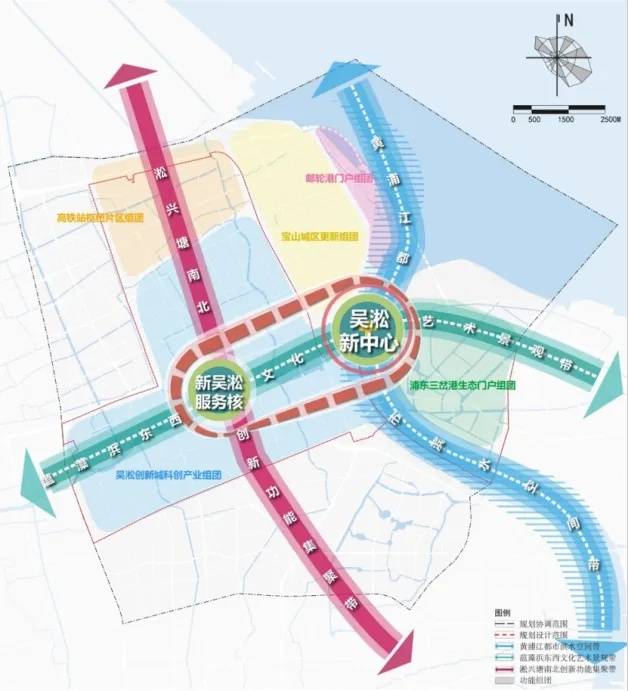
Group 1 - The core viewpoint of the news is that the implementation of the "Dawusong District Special Plan" is accelerating development in northern Shanghai, particularly in the Baoshan area, with significant projects being launched [1][2][4] - The special plan covers an area of approximately 110 square kilometers across Baoshan, Pudong, Jing'an, and Yangpu districts, aiming to transform the region into a model for industrial transformation and green development [2][4] - The plan emphasizes a spatial layout of "one core, three belts, and five groups," with over one-third of the area dedicated to blue-green spaces, promoting ecological and urban integration [2][4] Group 2 - The first phase of the Baoshan High-speed Railway Station's surrounding supporting projects has been initiated, focusing on a mixed-use development that includes commercial, office, and residential spaces, covering a total area of 343,900 square meters [6][11] - The project aims to enhance connectivity between the high-speed railway and urban transit systems, facilitating economic exchanges and regional integration [6][14] - The surrounding TOD (Transit-Oriented Development) areas near the 18th line stations have also seen rapid development, with significant land parcels being auctioned at premium rates, indicating strong market interest [15][19] Group 3 - The high-end commercial brand "He Sheng Hui" has signed a management agreement for the commercial operations at the Baoshan High-speed Railway Station, marking a significant step in establishing a new urban landmark that combines transportation and commercial experiences [19][20] - The market response to residential products in the area has been overwhelmingly positive, with high visitor numbers indicating strong demand and confidence in the future of the Dawusong development [19][20] - Future projects, including the Jiangyang South Road dual-track project and the TOD Steel Park Phase I, are being planned to further enhance the region's functionality and attractiveness [21][22]

东方枢纽上海东站假期施工忙
Xin Hua Wang· 2025-05-04 21:52
Core Insights - The Shanghai East Station project is a major transportation hub integrating various transport functions, with a total construction area of over 1.3 million square meters and a planned passenger flow of 60 million by 2035 [1][2] Group 1: Project Overview - The Shanghai East Station is located in Pudong New District, approximately 5 kilometers from Shanghai Pudong International Airport [1] - The project aims to be operational by July 2027, focusing on urban integration and multi-level transportation systems [1] Group 2: Construction Progress - As of now, 95% of the pile foundation and protective works have been completed, with significant progress made in the excavation of the basement [2] - The project has mobilized over 200 types of machinery and 800 personnel to ensure timely completion while maintaining safety and quality standards [2]
打造“花园站区”,北京三大火车站年内将完成18项优化提升
Xin Jing Bao· 2025-04-28 06:29
Group 1 - The core focus of the "Beijing Key Station Area 2025 Optimization and Enhancement Work Plan" is to improve the travel environment around major train stations in Beijing, particularly targeting the "one south, one north, one center" stations: Beijing South Station, Beijing North Station, and Beijing West Station [1] - The plan includes 18 enhancement projects to be completed within the year, addressing issues such as system optimization, public space beautification, and the creation of a barrier-free garden station area [1][7] Group 2 - Beijing South Station handles an average of 300,000 passengers daily, accounting for 33.5% of the total passenger flow across all train stations in the city, making it the busiest [2] - Traffic congestion around Beijing South Station is being alleviated through the renovation of the east drop-off platform and the restoration of the closed section of Yangqiao South Riverside Road, improving vehicle passage efficiency [2] - Beijing West Station has implemented a traffic flow improvement by connecting the southern square's bus station with surrounding roads, increasing vehicle passage capacity by over 40% [2] Group 3 - The North Station area has completed the relocation of the 375 bus station to create a drop-off area, which now accommodates an average of 2,600 drop-offs daily, significantly reducing illegal parking incidents from over 4,000 to around 40 per month [3] - The proportion of public transport usage has significantly decreased, with bus ridership at Beijing South Station dropping from 30% to less than 5%, while the share of personalized transport options has increased from 20% to over 40% [4] Group 4 - The North Hub taxi dispatch station has been relocated to improve taxi availability, increasing daily passenger service to 18,000, a 20% improvement [4] - Future plans include expanding the North Hub taxi dispatch station and optimizing the South Square parking lot for better utilization [5] Group 5 - The West Station area is also addressing taxi availability and improving waiting conditions by repurposing bus lanes for social vehicles and ride-hailing services [6] - The plan includes the transformation of underutilized spaces into parking and ride-hailing zones, adding 300 parking spots [6] Group 6 - The initiative aims to create a "garden station area" by removing unnecessary barriers and enhancing the aesthetic and functional aspects of the station environments [7] - The South Station area has opened up over 4,000 square meters of space and removed 1,354 meters of non-essential barriers to improve traffic flow and visual appeal [7] Group 7 - Future developments will focus on integrating urban public activities and transportation connections, enhancing the overall functionality of the station areas [8] - The West Station will undergo a "subtract and add" approach, removing redundant structures while enhancing the environment and green spaces [8] Group 8 - The North Station is adjusting its drop-off area to improve traffic flow and beautify the environment, including the installation of decorative elements that serve as barriers [9]
环球影城北综合交通枢纽即将竣工,实现酒店、交通一体化设计
Xin Jing Bao· 2025-03-26 12:24
环球影城北综合交通枢纽即将竣工,实现酒店、交 通一体化设计 在北京地铁7号线群芳站旁,环球影城北综合交通枢纽即将建成,它距离环球度假区只有几分钟的 车程,乘坐地铁也只有3站。这座枢纽设计理念新颖,除了融合地铁、公交、停车等交通功能外,枢纽 上盖还建设了五星级酒店,并建有商业配套及花园景观,将成为环球度假区和周边居住区重要的交通集 散中心,同时也可有效补充周边的商业业态。根据施工进度,环球影城北综合交通枢纽工程预计2025年 上半年完工。 环球影城北综合交通枢纽位于文化旅游区北侧,北邻万盛南街,紧邻地铁7号线群芳站,距离环球 度假区只有几分钟的车程,乘坐地铁也只有3站,枢纽的用地面积约2.2公顷,总建筑面积约84660平方 米。这座交通枢纽采用了综合开发的方式,除了交通功能外,枢纽上盖还建设了五星级酒店、商业配套 以及花园景观,将成为环球度假区和周边居住区重要的交通集散中心,同时也可有效补充周边的商业业 态。 首发集团公联公司环球影城北综合交通枢纽工程负责人时凯表示,环球影城北综合交通枢纽项目是 站城融合的城市公共交通枢纽综合体,承担着集地铁、公交、出租车、小汽车、自行车等多种交通方式 于一体的换乘功能,为环球 ...
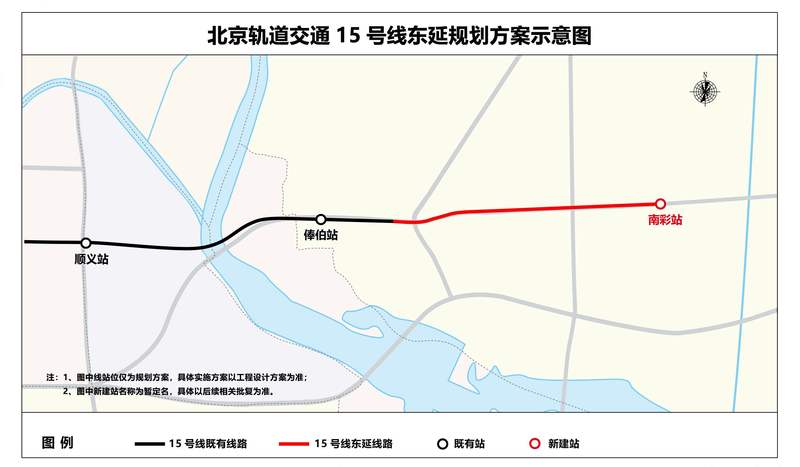
北京地铁15号线东延段启动环评,全长约2.9公里、新建一站
Xin Jing Bao· 2025-03-26 03:08
此次发布的环评信息显示,北京轨道交通15号线东延工程线路西起既有15号线终点俸伯站(不含),向东沿 顺平辅线敷设,至南彩镇东侧设置南彩站,线路全长约2.9公里,采用全地下敷设方式,设置1座地下车站。本线 利用既有15号线车辆基地,不另行增设。 今年1月底,《北京轨道交通15号线东延线路一体化规划方案》对外公示。方案显示,15号线东延沿顺平辅线 敷设,线路全长约2.9公里,全部为地下线,新建车站1座。线路设计最高运行速度100公里/小时,采用B型车6辆 编组。 记者注意到,此次发布的环评中,15号线东延的线路、设站等信息与此前发布的一体化方案信息一致。由于 第一次环评中发布的信息较少,关于这条线路的更多内容还需要等待第二次环评时才能看到。 北京轨道交通15号线东延是国家发展改革委批复的北京市轨道交通第三期建设规划项目之一,是轨道交通线 网中的地铁普线,覆盖顺义区南彩组团。项目的建设可进一步加强顺义河东地区与中心城区的便捷联系,支撑顺 义创新创业发展轴向河东地区拓展。 北京地铁15号线东延段启动环评,全长约2.9公里、新建 一站 新京报讯(记者裴剑飞)作为北京东北部地区的一条轨道交通干线,地铁15号线又有新消息。 ...