跨界经营

Search documents
面包5.8元起,海底捞要当“烘焙界小米”?
Xin Lang Cai Jing· 2025-05-09 03:20
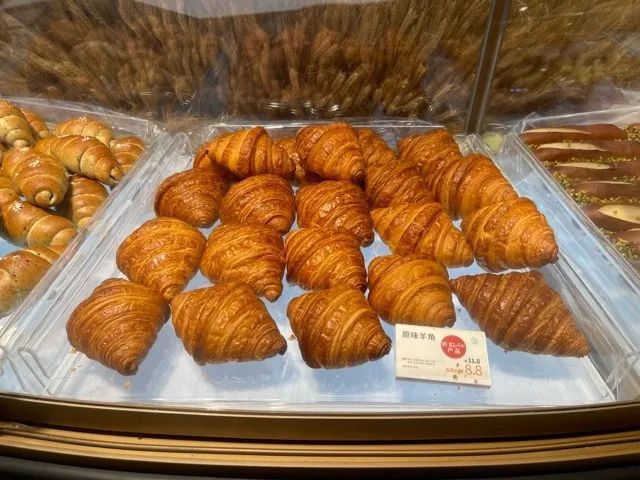
Group 1 - Haidilao's bakery brand "拾 耍·SCHWASUA" has officially opened in Hangzhou, attracting high customer traffic since its launch during the May Day holiday, with some popular products selling out by 11 AM [1][3] - The bakery offers a variety of products with prices starting at 5.8 yuan, positioning itself as a cost-effective option, with many items priced under 10 yuan, leading to positive consumer feedback on its affordability [1][4] - The store features over 50 types of baked goods, including popular items like coffee bread, which sells over 200 units daily, often running out of stock [3][4] Group 2 - The store's design adopts a minimalist black and gold theme, with a unique circular glass display for products and interactive elements like a lottery machine to engage customers [4][6] - The bakery market is highly competitive, with a rapid turnover of brands; recent examples include the rise and fall of brands like 熊猫不走 and 虎头局·渣打饼行, highlighting the volatility in the sector [8][9] - Haidilao's entry into the bakery market combines elements of both affordable and premium offerings, aiming to explore a new business model that emphasizes quality while maintaining low prices [11][13]


朗姿股份:跨界医美,未能挽救业绩颓势
虎嗅APP· 2025-05-02 14:06
Core Viewpoint - The medical beauty industry is facing significant challenges, with "difficult operations" becoming a consensus within the sector [1]. Company Performance - Langzi Medical Beauty Group, despite being a listed large chain, is struggling with performance growth. In 2024, the company reported revenue of 5.691 billion yuan, a slight decline from the previous year, and in Q1 2025, revenue further decreased to 1.399 billion yuan, down 7.77% year-on-year. The net profit after deducting non-recurring items was 73.2755 million yuan, a decrease of 6.89% [2]. - The company initially focused on mid-to-high-end women's clothing but faced challenges due to the rise of e-commerce and foreign luxury brands. Despite attempts to diversify into children's clothing, revenue and profit continued to decline [4][5]. - From 2013 to 2015, revenue fell from 1.379 billion yuan to 1.144 billion yuan, and net profit dropped from 204 million yuan to 33 million yuan [5]. Strategic Expansion - Langzi entered the medical beauty market in 2016 through strategic investments and acquisitions, including the purchase of the Korean medical beauty service group DMG and several brands [6][12]. - The company adopted an aggressive acquisition strategy, acquiring multiple medical beauty institutions from 2017 to 2024, aiming to become a leading player in the domestic medical beauty sector [6][8]. Revenue Contribution - By 2024, the medical beauty segment contributed 49% of Langzi's revenue and 45% of its gross profit, surpassing the original women's clothing and children's business contributions [8]. - Despite the successful transition to medical beauty, the expected high growth has not materialized, with the medical beauty segment's revenue growth only at 3.47% year-on-year in 2024 [9]. Profitability Concerns - The gross profit margin for the medical beauty business was 54.42%, lower than the women's clothing (63.45%) and children's business (61.76%) [9]. - The company’s net profit in 2024 was only slightly higher than in 2013, indicating that the transition has not significantly improved profitability [9][10]. Financial Risks - Langzi's goodwill reached 1.781 billion yuan in 2024, accounting for 64% of its net assets, raising concerns about potential impairment risks [13]. - The company faces short-term debt pressures, with 1.323 billion yuan in short-term debt and only 555 million yuan in cash, resulting in a cash-to-short-term-debt ratio of 0.42 [15]. Market Outlook - The medical beauty industry is experiencing intensified competition and slowing growth, compounded by economic challenges and underwhelming consumer recovery [17].

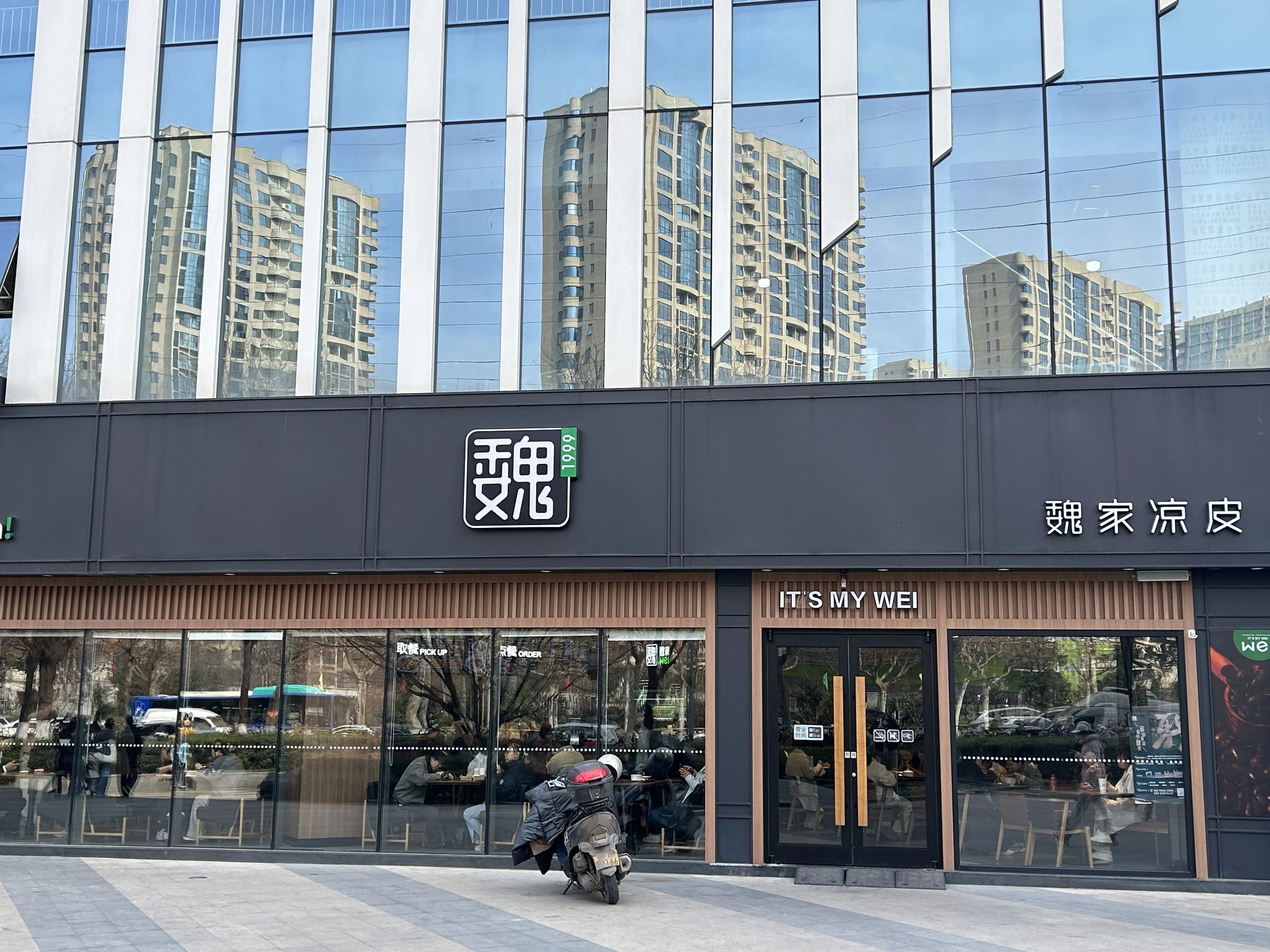
“魏家宇宙”狂飙:靠供应链造快餐帝国?
Mei Ri Jing Ji Xin Wen· 2025-03-25 12:00
Core Viewpoint - The article discusses the rapid expansion of "Wei Family Universe," a restaurant empire built on a strong supply chain and cross-industry ventures, originating from a small cold noodle stall in Xi'an [1][2]. Group 1: Company Overview - Wei Family, officially known as Xi'an Huarong Wei Family Catering Management Co., Ltd., was founded by Wei Wenjun, who started with a street-side cold noodle stall over 20 years ago [1][3]. - The company has developed a diverse portfolio, including cold noodles, hamburgers, Hunan cuisine, Japanese cuisine, and convenience stores, with nearly 400 outlets nationwide [1][16]. Group 2: Supply Chain and Expansion Strategy - Wei Family established a centralized kitchen in 2016 to ensure standardized ingredient supply across its outlets, significantly enhancing production capacity [6][21]. - The company has ventured into convenience stores, combining retail and dining, with 46 convenience store locations in Xi'an [8][12]. - Wei Family has successfully entered the Western fast food market with its first hamburger store, "Wei Si Li," which has expanded to 28 locations across several provinces [12][15]. Group 3: Brand and Market Position - The "Wei Family Universe" is characterized by its affordable pricing and generous portions, making it a popular choice among consumers, often referred to as the local "Sally's" [1][17]. - The brand has gained significant traction on social media, with discussions and user-generated content driving awareness and interest, resulting in nearly 80 million views on related posts [23][25]. Group 4: Business Model and Ecosystem - Wei Family operates a vertically integrated business model, encompassing food production, logistics, and even construction, with over 30 affiliated companies across various sectors [28][33]. - The company has established a "base + farmer" model for sourcing raw materials, ensuring quality and cost-effectiveness [23][21]. Group 5: Challenges and Future Outlook - Despite its success, the company faces challenges related to its rapid diversification into non-core areas like health and wellness, which may strain service quality and brand coherence [33]. - The reliance on a single founder for decision-making may pose risks as the company seeks to scale nationally, potentially exposing it to operational vulnerabilities [33].