高性价比

Search documents
大年初一吃寿司,黄牛叫价150元,这个春节寿司郎又火了
3 6 Ke· 2026-02-26 03:03
Core Insights - Sushi Ramen's first store in Jinan has generated significant consumer interest, with long queues extending outside the mall, indicating strong demand and brand popularity [1][3][11] Group 1: Consumer Behavior and Trends - The opening of Sushi Ramen's Jinan store saw over 700 tables queued before 9 AM, with wait times extending to nearly 10 hours, reflecting a robust consumer appetite for dining experiences [1][3] - The trend of dining out during the Spring Festival is shifting, with younger consumers opting for restaurants over traditional family gatherings, contributing to increased foot traffic in dining establishments [11][12] Group 2: Competitive Landscape - The success of Sushi Ramen parallels that of other brands like Kuaijiang, indicating a competitive environment where new entrants are driving consumer interest and altering market dynamics [4][13] - The entry of brands like Sushi Ramen is stimulating competition, leading to a faster evolution within the restaurant industry, as established players adapt to maintain relevance [13][14] Group 3: Value Proposition - Sushi Ramen offers a high-value proposition with a menu featuring around 220 items priced between 8-15 yuan per dish, appealing to consumers seeking quality at an affordable price [5][12] - The brand employs innovative operational strategies, such as automated sushi production and efficient supply chain management, to maintain quality and control costs [5][9] Group 4: Experience Enhancement - The introduction of interactive elements, such as large ordering screens and gamified dining experiences, enhances customer engagement and satisfaction, catering to the desire for unique dining experiences [9][12] - Limited-time offers and promotional activities create excitement and anticipation among consumers, further enriching the dining experience [7][9]


上海小南国近20家门店集体闭店,年夜饭订金与储值卡余额无人处理
Sou Hu Cai Jing· 2026-02-10 05:16
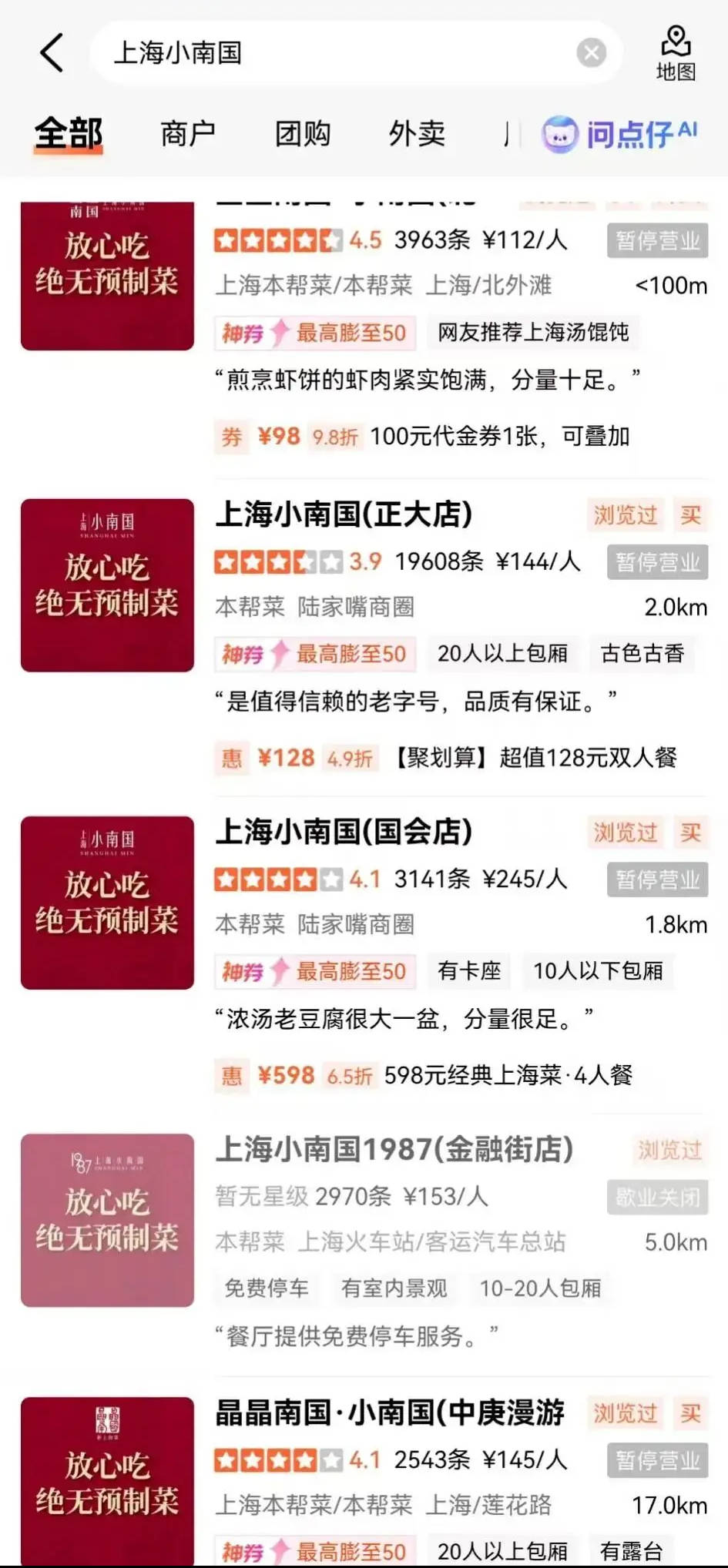
Group 1 - Shanghai Xiaonan Guo has closed nearly 20 stores in Shanghai without formal notification to customers or employees, leading to unresolved issues regarding deposits and stored value cards [1][4] - All Shanghai Xiaonan Guo locations are listed as "closed" or "temporarily closed" on the Dazhong Dianping platform, with reports of unpaid employee wages and a chef strike at one location [1][4] - The company's financial data shows a continuous decline in revenue from 2023 to mid-2025, with cumulative losses exceeding 150 million yuan, and a revenue of only 102 million yuan in mid-2025, resulting in a loss of 18.25 million yuan [4] Group 2 - On January 8, Shanghai Xiaonan Guo attempted to sell its core business segment, Xiaonan Guo (Hong Kong) Catering Group, for 100,000 USD, but the deal did not improve the situation, and the related stores remain closed [6] - The closure of Shanghai Xiaonan Guo has not affected its franchise locations in other cities, such as Wuxi and Zhuhai, which continue to operate normally [6] - As of February 9, the stock price of Shanghai Xiaonan Guo was reported at 0.035 HKD per share, a decline of approximately 98% from its historical peak [6]
家具零售商Bob’s Discount Furniture纽交所上市:市值22亿美元
Sou Hu Cai Jing· 2026-02-06 05:53
Core Viewpoint - Bob's Discount Furniture has successfully gone public, raising $330 million with an initial share price of $17, indicating strong market interest despite economic challenges in the retail sector [2][11]. Group 1: Company Overview - Bob's Discount Furniture was founded in 1991 and currently operates 206 showrooms across 26 states, with plans to expand to over 500 locations by 2035 [13]. - The company is known for offering high-quality, cost-effective home products, leveraging a combination of low prices, efficient supply chains, and omnichannel services to differentiate itself in the furniture retail market [18]. Group 2: Financial Performance - For the nine-month period ending September 28, 2025, Bob's Discount Furniture reported revenues of $1.719 billion and a net income of $80.7 million [25]. - The company's projected revenues for 2022, 2023, and 2024 are $2.1 billion, $2 billion, and $2.028 billion respectively, with net incomes of $27.65 million, $78.1 million, and $87.93 million [24]. Group 3: Customer Demographics - Approximately 50% of Bob's customers have household incomes exceeding $100,000, with a notable increase in high-income households, particularly those earning over $150,000, which grew by 3% over the past two years [8][11]. - The average order value at Bob's is around $1,400, and the company estimates its prices are approximately 10% lower than its competitors' promotional prices [23]. Group 4: Market Strategy - Bob's Discount Furniture focuses on a curated product strategy and long-term stable supplier relationships to maintain low prices, with a product range that is about one-third less than that of its value-focused competitors [23]. - The company aims to distinguish itself through faster delivery times, with most orders delivered within three days, contrasting with the longer wait times typical in the industry [23].

七鲜超市北京荟聚新店开业
Zheng Quan Ri Bao Wang· 2026-02-03 13:13
Core Insights - JD Fresh Supermarket's new store in Daxing, Beijing, opened with overwhelming customer turnout, receiving over 35,000 visitors on its first day, marking a significant event in the retail market ahead of the Spring Festival [1][2] Group 1: Store Launch and Customer Engagement - The new store spans over 4,000 square meters and features a wide range of fresh products, catering to the local demand for quality and festive goods [1] - The store's highlight is the "24-hour fresh products" initiative, which includes vegetables that are harvested and delivered within 24 hours, appealing to consumers' desire for freshness [1][2] - The store experienced a rapid cycle of sold-out items and restocking, demonstrating its popularity and the effectiveness of its fresh product offerings [1] Group 2: Supply Chain and Consumer Insights - The success of the new store is attributed to JD Fresh's robust supply chain, which allows for direct sourcing and delivery of fresh produce, minimizing intermediaries and reducing costs for consumers [2] - The store's product offerings are tailored to local consumer preferences, focusing on fresh, high-quality items and seasonal products, thus meeting diverse shopping needs [2] - The supermarket provides a comprehensive shopping experience with over 30 tasting stations and immediate product availability, enhancing customer satisfaction and engagement [2] Group 3: Strategic Importance - The opening of the new store represents a strategic expansion for JD Fresh in Beijing's core commercial areas, continuing the development of its service network in the city [2] - This launch is positioned as a "fresh gift" for consumers as the Spring Festival approaches, aligning with seasonal shopping trends [2]

燕荚年货节:解锁 “健康无负担” 零食自由,让年味与身材两全
Sou Hu Wang· 2026-01-30 01:44
Core Insights - The article highlights the emergence of YanJia as a brand that successfully merges traditional festive snacks with modern health-conscious demands, offering consumers a guilt-free snacking experience during the New Year [1][13] Group 1: Health-Focused Product Offerings - YanJia emphasizes a "0 additives" policy, ensuring that its products, such as the skin-on sweet potato, contain no added sugars, preservatives, colorings, or flavorings, appealing to health-conscious consumers [3] - The brand's high-protein chicken breast strips are designed for fitness enthusiasts, featuring a dual cooking process that retains flavor while providing a high-protein, low-fat nutritional profile [5] - YanJia's pure nut offerings boast a high content of omega-3 fatty acids, promoting cardiovascular health and brain development, thus aligning with consumer preferences for nutritious snacks [8] Group 2: Value Proposition and Consumer Experience - YanJia is offering significant discounts during the New Year festival, challenging the notion that healthy snacks must be expensive, thereby making quality health products accessible to families [10][11] - The brand has streamlined the purchasing process through a user-friendly mini-program, allowing consumers to easily browse and select from a variety of products, enhancing the overall shopping experience [11] - YanJia aims to redefine the festive snacking experience by providing healthier options that foster emotional connections and shared moments among families and friends during the New Year celebrations [13]

连续两天,南京新开6家超市,家家“爆满” 新晋超市为何人气爆棚?
Nan Jing Ri Bao· 2026-01-28 01:43
Core Insights - The recent opening of six new supermarkets in Nanjing has generated significant consumer interest, attributed to high cost-performance, the novelty of the brands, and strategic location choices [1][4]. Group 1: High Cost-Performance - The supermarkets, particularly Aldi, are offering attractive pricing, with many items priced in single digits, which has sparked consumer excitement [1][2]. - Shoppers have reported being able to fill their baskets for low prices, indicating a strong demand for affordable quality products [1][2]. Group 2: Brand Novelty and Seasonal Timing - The simultaneous opening of Aldi's four stores in Nanjing has created a buzz on social media, enhancing its visibility and appeal among younger consumers [2][3]. - The timing of the openings coincides with the New Year shopping season, aligning with consumer needs for festive goods, which has further fueled the shopping frenzy [3][4]. Group 3: Strategic Location Choices - Aldi and Yuehuoli have strategically selected locations that cater to both core urban areas and emerging residential districts, ensuring accessibility for a diverse consumer base [4][5]. - The locations chosen for the new stores are designed to avoid competition and connect seamlessly with daily consumer habits, contributing to sustained high foot traffic [4][5].
2026烤肉品类发展报告
Sou Hu Cai Jing· 2026-01-20 05:10
Core Insights - The Chinese barbecue market is undergoing significant transformation, with a projected increase in the number of barbecue outlets to 205,000 by the end of 2025, representing a year-on-year growth of 34.4% and a stable market size of approximately 106 billion yuan [1][21][18] - Consumer preferences are shifting towards fresh ingredients and diverse menu options, with emotional value and cost-effectiveness becoming key factors for brands to differentiate themselves in a competitive landscape [1][3][5] Market Overview - As of December 2025, the total number of barbecue outlets in China is expected to reach 205,000, with a market size of around 106 billion yuan, reflecting a 1.6% year-on-year growth from 105 billion yuan in 2024 [5][21][18] - The barbecue sector is characterized by a strong emphasis on high cost-performance self-service models and the rising popularity of "beautiful meals" that focus on aesthetic presentation and immersive dining experiences [5][3] Consumer Trends - The report highlights a shift in consumer behavior from merely seeking flavor to prioritizing overall emotional value in dining experiences, particularly among younger consumers [3][20] - Brands are increasingly adopting innovative strategies, such as themed store designs and interactive performances, to create memorable experiences and emotional connections with customers [3][5] Competitive Landscape - The barbecue market is becoming increasingly competitive, with the number of related enterprises growing from 86,000 in 2020 to 112,000 by the end of 2025, marking a 30.2% increase [20][21] - Notable brands are emerging in niche segments, such as regional specialties and international flavors, which are gaining traction on social media platforms [2][5] Regional Insights - The East China region has the highest concentration of barbecue outlets, accounting for 27.5% of the total, followed by Northeast and North China regions [22][24] - Major cities like Beijing, Chengdu, and Shenyang are leading in barbecue outlet numbers, reflecting strong local dining cultures [25][24]

黑龙江夫妇开比萨连锁,9个月进账14亿
2 1 Shi Ji Jing Ji Bao Dao· 2026-01-20 03:26
Core Viewpoint - Big Pizza, a restaurant chain founded by a couple from Northeast China, is aiming for an IPO to become the first publicly listed pizza buffet in China, leveraging its leading position in the domestic market [2][3]. Company Overview - Big Pizza ranks first among local pizza restaurants in China and also leads in the buffet and Western casual dining categories, making it a "triple champion" [2]. - The restaurant chain was established in 2001 by Zhao Zhiqiang and his wife Ma Jifang, who initially operated a hamburger business in their hometown before recognizing the potential in the pizza market in Beijing [2][3]. Business Model and Growth - Big Pizza is known for its affordable buffet model, with a per capita consumption of approximately 60-70 RMB, significantly lower than competitors like Pizza Hut [2][3]. - As of January this year, Big Pizza operates 387 stores across 127 cities, with over 265 being self-operated, primarily concentrated in Northern China [3]. - The company has adopted a strategy of localizing popular menu items and maintaining high cost-performance, with an average customer spending capped at 79.99 RMB for over 100 dishes [3][4]. Financial Performance - In the first nine months of 2025, Big Pizza's revenue reached 1.389 billion RMB, surpassing the total revenue for 2024, although net profit remains limited at 51.65 million RMB [7]. - The average transaction value has decreased by over 8 RMB over the past three years, reflecting competitive pressures in the industry [7]. - The company has a high debt-to-asset ratio exceeding 90%, and the funds raised from the IPO are intended to improve its financial structure and support expansion plans [7]. Market Outlook - The Western casual dining sector is projected to grow at a compound annual growth rate of 10.8% over the next five years, reaching approximately 321.8 billion RMB, which presents a favorable environment for Big Pizza's growth [8]. - However, the company faces significant competition from other budget-friendly dining options, and it remains to be seen if Zhao's competitive advantages can be sustained [8].
年营收超25亿,中国最大饺子云吞企业赴港IPO
Zhong Guo Ji Jin Bao· 2026-01-13 11:33
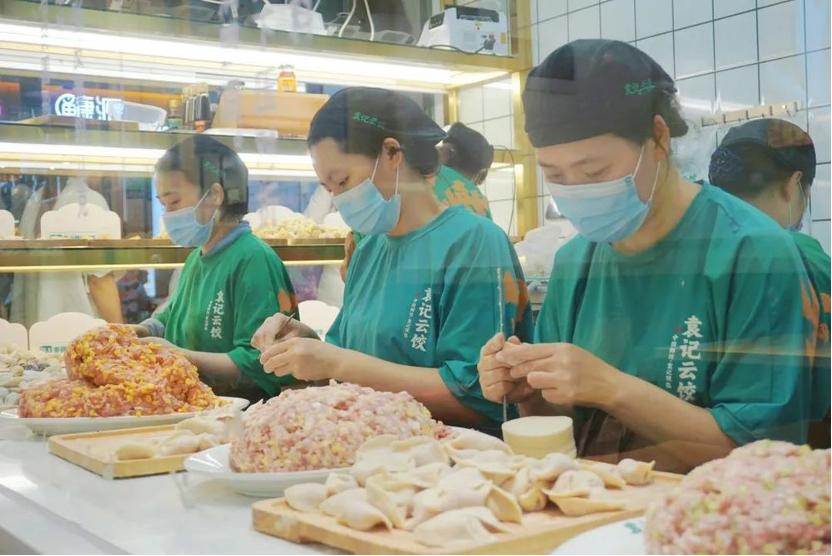
Core Viewpoint - Yuanji Food Group has submitted its listing application, aiming to leverage its rapid expansion and unique market positioning in the Chinese fast-food sector [1]. Company Overview - Yuanji Food operates two main brands: "Yuanji Cloud Dumplings" and "Yuanji Flavor Enjoy," with "Yuanji Cloud Dumplings" being the more recognized brand, primarily selling dumplings and wontons in community stores [3]. - As of September 30, 2025, Yuanji Food has 4,266 stores across 32 provinces, autonomous regions, municipalities, and Southeast Asian countries like Singapore and Thailand, making it the largest Chinese fast-food company by store count [3]. Business Model and Competitive Advantage - The company emphasizes "handmade fresh packaging" as its core selling point, creating a competitive moat through a transparent cooking process visible to consumers [4]. - Nearly 50% of surveyed consumers cite "handmade fresh packaging" as their primary reason for choosing Yuanji Food, alongside affordability and taste [4]. - Yuanji Food has established an integrated supply chain with five factories and 24 warehouses, ensuring efficient cold chain logistics and maintaining product freshness [4]. Financial Performance - Yuanji Food's revenue has shown significant growth, with reported revenues of 2.026 billion yuan in 2023, 2.561 billion yuan in 2024, and 1.982 billion yuan in the first nine months of 2025, reflecting an 11% year-on-year increase [5]. - The company has a gross margin of approximately 25%, which is lower than many competitors, as it prioritizes customer loyalty and market penetration over short-term profits [8]. Store Expansion and Franchise Model - The franchise model accounts for over 99% of Yuanji Food's stores, with a notable trend of existing franchisees opening new locations, indicating a healthy and sustainable franchise ecosystem [6][7]. - As of September 30, 2025, the company has 4,247 franchise stores, with an average of 2.06 stores per franchisee, which is significantly higher than the industry average [7]. Management and Investment - The founding team is composed of young entrepreneurs, with the founder being only 36 years old, and they have successfully scaled the business from a small dumpling shop to a national leader [10]. - The company has completed three rounds of financing, attracting investments from notable firms, including Black Ant Capital and Xiamen Jianfa [11]. Market Challenges - Despite its extensive store network, Yuanji Food faces structural market challenges, particularly in lower-tier cities, where only 26.6% of its stores are located [12]. - The reliance on the franchise model increases management complexity and potential risks related to food safety and brand trust [13]. Future Plans - The funds raised from the IPO will be directed towards digitalization, supply chain upgrades, and expansion into overseas markets [13].
袁记云饺冲击港股IPO:超95%门店是加盟店,去年前9个月已干到近20亿
3 6 Ke· 2026-01-13 00:56
Core Viewpoint - Yuanji Cloud Dumplings, known for its "handmade fresh packaging and cooking," is set to go public on the Hong Kong Stock Exchange, with a significant expansion in store numbers and revenue growth [1][3]. Group 1: Company Overview - Yuanji Food Group has submitted its listing application to the Hong Kong Stock Exchange, with over 4,266 stores as of the third quarter of last year, more than 95% of which are franchise stores [1][5]. - The company reported nearly 2 billion RMB in revenue and an adjusted net profit of 192 million RMB for the nine months ending September 30 [1][5]. Group 2: Market Position and Growth - According to Zhi Shi Consulting, Yuanji Food is projected to be the largest Chinese fast-food enterprise by store count by September 30, 2025, and ranks first in the retail and dining sectors for dumplings and wontons [3][5]. - The company has experienced rapid growth, doubling its store count from 1,990 at the beginning of 2023 to 4,266 by September 30, 2023, covering 32 provinces and municipalities in China and entering overseas markets like Singapore and Thailand [5][6]. Group 3: Revenue and Profitability - Revenue is expected to rise to 2.026 billion RMB in 2023 and 2.561 billion RMB in 2024, with adjusted net profits of 179 million RMB and 180 million RMB for the same years, respectively [6][5]. - The gross merchandise value (GMV) for stores is projected to reach 6.248 billion RMB in 2024, with an average annual GMV of approximately 1.88 million RMB per store [6][16]. Group 4: Management Team - The management team includes founder and CEO Yuan Lianghong, who has over 12 years of experience in the food industry, and other executives with diverse backgrounds in operations, supply chain, and finance [9][10][13]. - Notably, Huang Jinshuan, a former executive at KFC China, serves as an independent non-executive director, bringing significant industry experience [12]. Group 5: Business Model and Challenges - The company's core philosophy of "handmade fresh packaging and cooking" is supported by a robust supply chain and logistics system, ensuring product quality and freshness [15][16]. - Challenges include competition from other leading companies, reliance on third-party suppliers, and the need for successful expansion into new markets [16][17]. Group 6: IPO Fund Utilization - The IPO proceeds will be allocated to digital and intelligent construction, overseas market expansion, brand building, product development, and supply chain upgrades [17].