
高标准农田建设

Search documents
视频丨AI当“侦探”!守好惠民“钱袋子” 江苏这样做
Yang Shi Xin Wen Ke Hu Duan· 2025-12-19 00:49
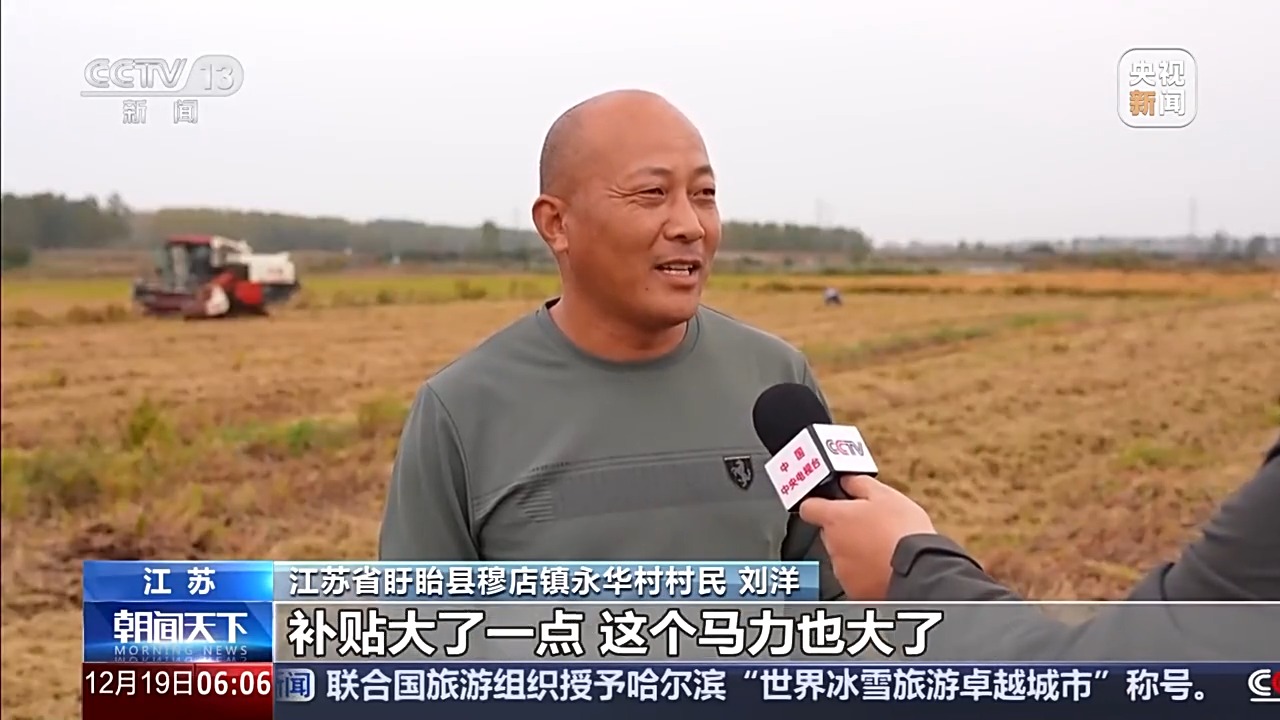
Group 1 - The year marks the final year of the five-year transition period for consolidating and expanding poverty alleviation achievements and effectively connecting with rural revitalization, with a focus on strengthening supervision and discipline in the rural revitalization sector [1] - Jiangsu province is actively addressing prominent issues in the supervision of rural revitalization fund usage to ensure that decision-making and deployment are effectively implemented [3] - Liu Yang, a villager from Yonghua Village in Jiangsu's Liyang County, purchased a new agricultural harvester for 153,000 yuan, receiving a subsidy of 40,300 yuan, which was processed in less than three months this year, compared to a six-month wait for his previous purchase [4][6] Group 2 - Investigations revealed that delays in subsidy payments were due to slow review processes by local agricultural, rural, and financial departments, prompting the local disciplinary inspection and supervision agency to take corrective actions [6] - By May 22, 2025, all outstanding agricultural machinery purchase and application subsidy funds amounting to 20.508 million yuan were disbursed, benefiting 1,017 households and effectively safeguarding farmers' rights [8] - High-standard farmland construction is also a key focus, with local authorities conducting thorough reviews of completed projects to identify potential issues such as collusion and quality concerns [10][12] Group 3 - The local disciplinary inspection agency has urged relevant departments to rectify identified issues within a specified timeframe and to implement comprehensive monitoring throughout the entire process of high-standard farmland projects [12] - Since the initiation of the rectification efforts, Jiangsu province has identified and addressed issues related to high-standard farmland construction and agricultural machinery subsidies, ensuring timely disbursement of 544 million yuan in subsidy funds, benefiting over 11 million people [12] - The establishment of an AI-driven "Rural Revitalization Fund Intelligence System" aims to enhance the supervision of high-standard farmland projects and improve the identification of problem areas [14]

山东肥城:高标准农田建设涌热潮
Zhong Guo Jing Ji Wang· 2025-12-15 10:02
在安驾庄镇洼里村,连片的高标准农田里几乎看不到积水痕迹。"以前'巴掌田'被土埂分割,下雨后水 流不出去,只能眼睁睁看着庄稼被泡。"村党支部书记刘太钢指着纵横交错的排水系统介绍。 该村通过高标准农田整治,将190公顷碎片化耕地重新规划为11个标准化农田单元,形成了"主渠+支渠 +毛渠"的三级排水网络,辅以3处大型泵站。 天寒地冻,当大多数农田进入冬闲,在山东泰安肥城市王庄镇五里屯村的高标准农田建设现场却是一片 热火朝天的景象。 只见数台大型挖掘机在广袤的田野间轰鸣作业,施工人员冒着严寒,抢抓冬闲黄金期,有条不紊地开展 暗管埋设、机耕道路硬化拓宽工作。空气中弥漫的混凝土气息,与冬日清冷的田野形成鲜明对比,勾勒 出一幅"冬闲不闲建良田"的实干图景。 "冬天小麦长势稳健,田间作业干扰少,正是补齐农田设施短板的好时候。"现场施工负责人张坤龙一边 查看图纸一边介绍,要赶在明年春播前,把这一片的排水系统全部升级改造到位。 "就算降雨量再大,也能实现'雨停田干',今年玉米亩产不仅没减,还比去年增产了120斤。"刘太钢 说。土地碎片化率从83%降至12%,耕种收综合机械化率提升至91%,这些实打实的改造为农业抗灾打 下了坚实基 ...
“十四五”期间我国新建改造提升高标准农田4.6亿亩
Yang Shi Wang· 2025-12-14 11:55
Core Viewpoint - During the "14th Five-Year Plan" period, China is advancing high-quality construction of high-standard farmland, with over 700 billion yuan allocated in central funding to support the establishment and upgrading of 4.6 million hectares of high-standard farmland [1]. Group 1 - The construction efforts are prioritized in regions such as Northeast black soil areas, plains, areas with irrigation conditions, and regions with high grain production and potential for increased yield [3]. - There is an ongoing initiative to conduct quality reviews and special rectification actions for high-standard farmland construction, along with regular quality inspections to ensure construction quality [3]. Group 2 - The completed high-standard farmland has effectively enhanced agricultural comprehensive production capacity and disaster resistance capabilities [5].
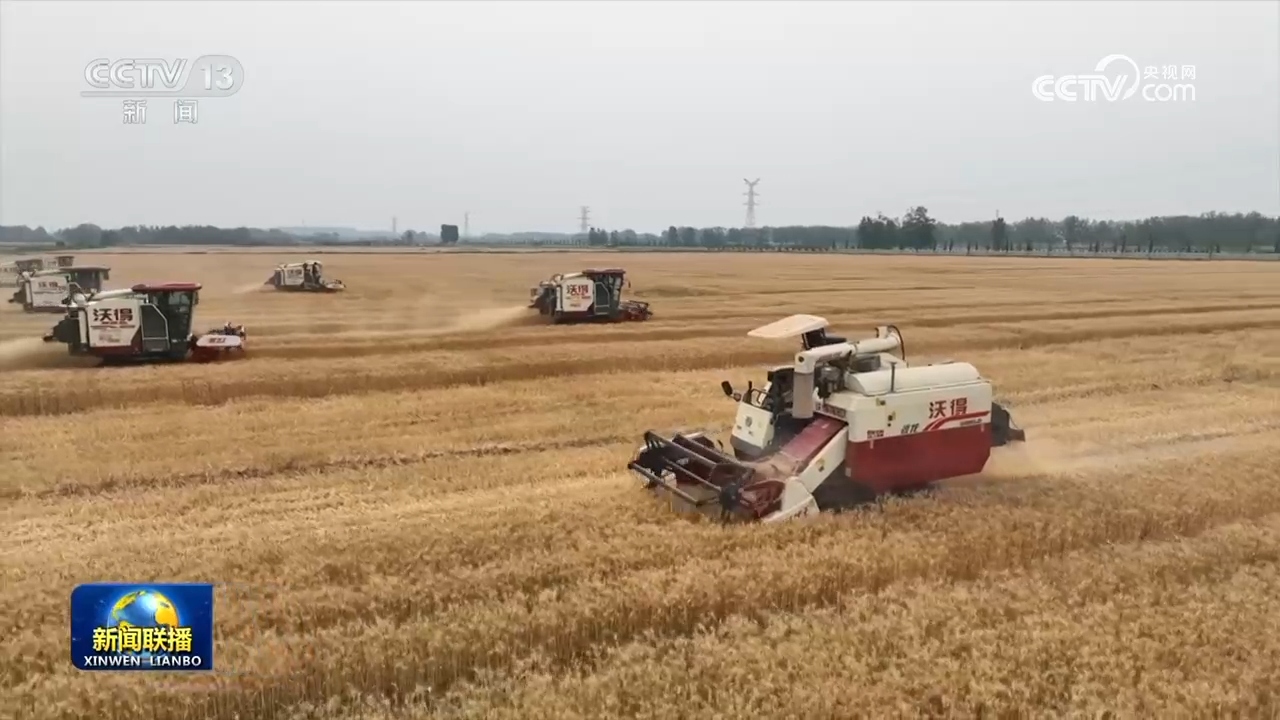
“冬闲”不闲、农机驰骋绘“丰”景 高标准农田建设筑牢粮食安全“根基”
Yang Shi Wang· 2025-12-12 08:22
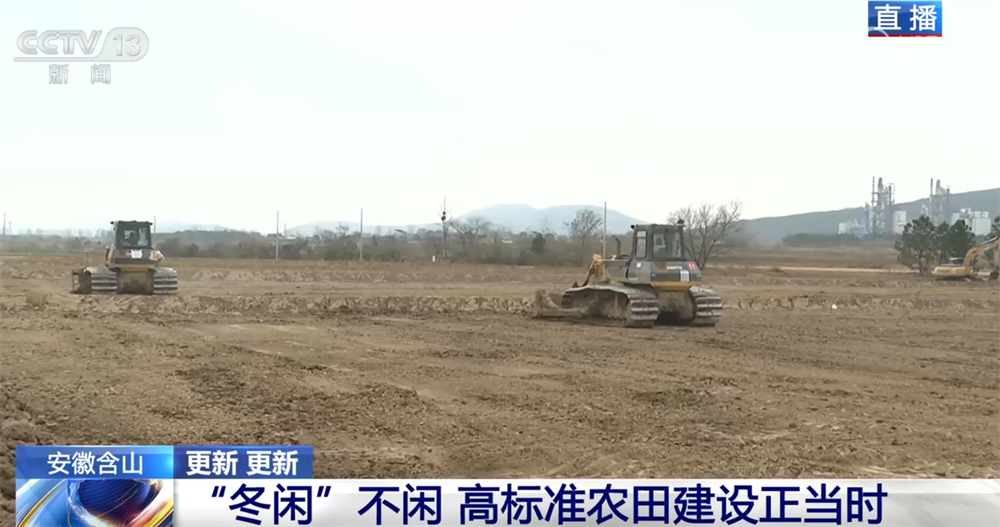
Core Viewpoint - The "updating" of agricultural practices and infrastructure is a significant change in China's economy, enhancing productivity and living standards for citizens. Group 1: Agricultural Transformation - High-standard farmland construction is actively progressing in Ma'anshan, Anhui, focusing on consolidating fragmented small plots into larger, more efficient farming areas [3][10] - The use of agricultural machinery is emphasized, with mechanized harvesting significantly increasing efficiency compared to manual labor [3] Group 2: Infrastructure Improvement - The project includes the construction of 116 new channels totaling 28.332 kilometers, 9 new agricultural bridges, and 49 new roads spanning 18.891 kilometers to enhance agricultural production conditions [5] - Drainage capabilities are being improved through the construction of ditches, which are required to be at least 0.8 meters deep to manage water effectively during rainy conditions [6] Group 3: Regional Agricultural Impact - Anhui province is a major grain-producing area, maintaining a grain output of over 800 billion jin for eight consecutive years, with 76.21 million acres of high-standard farmland established, accounting for 78.4% of the arable land [10]
从“会种地”到“慧种地” 看十亿亩农田“版本升级”
Yang Shi Xin Wen· 2025-12-12 07:25
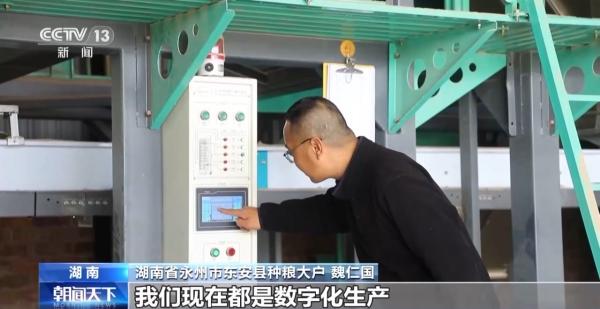
Core Viewpoint - The article discusses the modernization and upgrading of agricultural practices in China, highlighting advancements in technology and infrastructure that enhance productivity and resilience against climate challenges. Group 1: Equipment and Technology Upgrades - Farmers are adopting advanced equipment such as precision seeders, harvesters, and drones to improve efficiency and yield [2][8] - Digital production methods are being implemented, leading to higher crop yields through scientific management [4] - Data platforms allow for real-time monitoring of agricultural activities, significantly improving oversight and productivity [6][12] Group 2: Infrastructure Improvements - China plans to build and renovate 80 million acres of high-standard farmland, enhancing irrigation and drainage systems to ensure stable yields [17] - The construction of drainage channels, known as "毛渠," is crucial for effective water management, helping to mitigate drought and flooding risks [21][23] - Modernization of irrigation systems and water infrastructure is a key focus, with significant investments aimed at securing food supply [25][39] Group 3: Agricultural Data and AI Integration - Remote sensing satellites and AI models are being utilized to monitor crop growth and optimize agricultural practices [29][31] - The contribution of agricultural technology to productivity is significant, with a reported 63.2% contribution rate from technological advancements [35] - The integration of big data models is replacing traditional farming methods, leading to more scientific decision-making in agriculture [35] Group 4: High-Standard Farmland Development - Over 100 million acres of high-standard farmland have been established, ensuring effective water management and pest control [41] - The government provides over 2,000 yuan per acre in subsidies for high-standard farmland, promoting tailored agricultural practices based on regional needs [39][36] - By 2030, the goal is to expand high-standard farmland to 135 million acres, further securing food production for the future [41]
沃土、丰粮、兴业,一套金融组合拳如何激活齐鲁乡土?建行山东省分行破解乡村产业融资堵点
Qi Lu Wan Bao· 2025-12-11 06:47
Core Insights - The article highlights the innovative financial solutions provided by China Construction Bank (CCB) to support agricultural development in Shandong Province, particularly in improving saline-alkali land and enhancing agricultural productivity through loans and financial services [1][2][3][4] Group 1: Saline-Alkali Land Improvement - CCB Shandong Branch has approved five saline-alkali land improvement projects with a total credit amount of 552 million yuan, aiming to transform over 128,000 acres of land [1] - A 15-year loan of 152 million yuan was specifically allocated for the improvement of over 60,000 acres of saline-alkali land, addressing the challenges of high investment and long return periods [1] Group 2: High-Standard Farmland Enhancement - A loan of 74 million yuan has been utilized for a project enhancing 40,000 acres of high-standard farmland in Jining Yutai, with expected improvements in soil fertility by 30% and an average yield increase of 100 kilograms per acre [2] - The project includes comprehensive infrastructure improvements such as irrigation systems, drainage, and agricultural machinery acquisition [2] Group 3: Livestock Industry Support - CCB has introduced the "Yunong Quick Loan Industry Chain Version," which connects core enterprises with upstream and downstream farmers, significantly reducing information asymmetry and facilitating credit access for 25 quality livestock farmers [3] - The bank has also provided a suite of financial services, including acceptance bills and investment products, enhancing the overall profitability of core enterprises by 10% [3] Group 4: Overall Agricultural Financial Support - As of November 2025, CCB's agricultural loan balance exceeded 235.9 billion yuan, with an increase of 32.4 billion yuan in the current year, indicating rapid growth in inclusive agricultural loans [4]
全面做好治水节水兴水大文章 高质量推进高标准农田建设
Zheng Zhou Ri Bao· 2025-12-08 00:44
Core Viewpoint - The meeting emphasized the importance of strengthening water conservancy and high-standard farmland construction as a major mission assigned to the province by the central government, aiming to modernize agriculture and rural areas [1][2]. Group 1: Water Management Strategies - The province will implement a water management strategy focused on "water conservation first, spatial balance, systematic governance, and dual efforts" to enhance water resource management [2]. - There will be improvements in the flood and drought disaster prevention system, including unified management of drought water sources and the construction of a resilient modern water network [2]. - The goal is to ensure safe drinking water for rural residents through standardized construction and management of water supply systems [2]. Group 2: High-Standard Farmland Construction - The province aims to achieve high-quality high-standard farmland construction by balancing renovation and new construction, and integrating various agricultural elements [2][3]. - There will be a focus on improving soil quality and disaster resistance through specific actions to enhance organic matter in farmland [2]. - Continuous quality inspections and rectification actions will be implemented to address existing issues in farmland construction [2]. Group 3: Winter-Spring Wheat Management - The province will enhance the management of winter-spring wheat through precise strategies tailored to different regions, focusing on fertilization and moisture retention [3]. - Early planning for spring field management will be encouraged to help farmers adapt to winter droughts and spring cold spells [3]. - The aim is to ensure the safe overwintering of wheat and lay a solid foundation for a bountiful harvest next year [3].
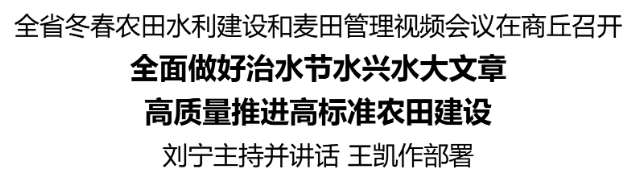
全省冬春农田水利建设和麦田管理视频会议在商丘召开 刘宁主持并讲话 王凯作部署
He Nan Ri Bao· 2025-12-06 11:43
各省辖市、济源示范区、航空港区设分会场。 12月6日,全省冬春农田水利建设和麦田管理视频会议在商丘召开,省委书记刘宁主持并讲话,强调要 深入贯彻党的二十届四中全会精神,学习领会习近平总书记关于治水、关于"三农"工作的重要论述和在 河南考察时重要讲话精神,按照全国冬春农田水利暨高标准农田建设视频会议部署和省委十一届十次全 会要求,攻坚克难、真抓实干,开创水利建设和"三农"工作新局面。省长王凯作工作部署。 会上,省水利厅、省农业农村厅发言。有关省领导出席。(记者 刘婵 归欣 张笑闻) 责任编辑: 郭栩汝 刘宁强调,要紧盯目标要求,统筹提质扩量,高质量推进高标准农田建设。要坚持改造提升和新建提质 并重,统筹推进田、土、水、路、林、电、技、管综合治理,不断提高整体建设质量。要坚持加强建设 和有效管护并重,保质保量按时完成建设任务,做到管护有人员、有资金、有监督。要坚持提高地力和 抗灾减灾并重,实施耕地有机质提升行动,加快农田水利设施"干、支、斗、农、毛"建设,织密织牢沟 渠网络体系,确保旱能浇、涝能排、洪能防。要坚持整治旧疾和防范新病并重,持续开展高标准农田建 设工程质量专项整治行动,动真碰硬清单化、闭环化整改突出问 ...
深度关注丨以有力政治监督为高质量发展清障护航
Zhong Yang Ji Wei Guo Jia Jian Wei Wang Zhan· 2025-11-25 08:57
Core Points - The article emphasizes the importance of political supervision in supporting high-quality development and ensuring the implementation of the 20th National Congress of the Communist Party of China [3][18] - Various regions, including Hainan, Shanxi, Heilongjiang, and Shandong, are focusing on specific areas of supervision to align with national strategies and local development goals [19] Group 1: Hainan Province - Hainan's focus is on the supervision of the Free Trade Port's operation, aiming for a high-level opening-up and cooperation [13][14] - The province has set a target for the Free Trade Port to be operational by the end of 2025, with concentrated supervision on preparation work [14] - A digital supervision platform has been established to track and resolve issues affecting the construction of the Free Trade Port [16] Group 2: Shanxi Province - Shanxi is concentrating on political supervision to ensure a smooth transition towards a green economy and high-quality development [5][6] - The province's supervisory efforts are aligned with the directives from the 20th National Congress, focusing on energy transition and industrial upgrades [5][6] - Shanxi's supervisory bodies are enhancing collaboration with various departments to address systemic issues in the transition process [6] Group 3: Heilongjiang Province - Heilongjiang is prioritizing the construction of high-standard farmland to enhance agricultural productivity and ensure food security [7][8] - The province's supervisory agencies are intensifying efforts to combat corruption in farmland construction projects, focusing on key stages such as project approval and funding allocation [8][9] - A systematic approach is being adopted to rectify issues identified in farmland construction, ensuring accountability and long-term solutions [9] Group 4: Shandong Province - Shandong is implementing supervision related to the Yellow River's ecological protection and high-quality development as part of a national strategy [10][11] - The province's supervisory framework includes annual work plans and a structured approach to monitor major policies and projects [11][12] - Shandong is enhancing inter-departmental collaboration to ensure effective supervision and accountability in implementing the Yellow River strategy [12]

群众工作札记 | 稻浪千重丰景好
Zhong Yang Ji Wei Guo Jia Jian Wei Wang Zhan· 2025-11-18 01:44
Core Insights - Jiangsu Province's Yixing City has successfully completed its first harvest season following the large-scale management of rice cultivation, with significant improvements in agricultural practices and productivity [1][2][3] Group 1: Agricultural Development - The establishment of high-standard farmland in Yixing has been a focus area, with the local government addressing issues such as abandoned farmland and poor management by holding responsible parties accountable [1] - The transformation of fragmented land into unified, high-yield farmland has resulted in over a 5% increase in land productivity and an 85% rate of land transfer in Heqiao Town, laying a solid foundation for modern agricultural practices [1][2] Group 2: Economic Impact - A tripartite agreement between the local government, a local rice factory, and a grain company has been signed to enhance the rice industry through a collaborative approach from planting to processing and sales [2] - The aging population in villages has led to increased land transfer, providing villagers with rental income and boosting collective income for the community [2] Group 3: Governance and Oversight - The local disciplinary inspection and supervision authority has integrated the rectification of corruption and misconduct with the support of the development of specialty industries, leading to the establishment of a working group to oversee high-standard farmland projects [2][3] - A comprehensive evaluation of all projects since 2019 has been conducted, resulting in the identification of 40 issues and the implementation of corrective measures, enhancing the governance of agricultural projects [3] Group 4: Productivity and Food Security - Yixing has built over 430,000 acres of high-standard farmland, with average rice yields increasing from 570 kg to over 600 kg per acre, contributing significantly to food security and rural revitalization efforts [3]