
智能体

Search documents
智能体致富课,割了谁的韭菜?
3 6 Ke· 2025-08-21 02:20
Core Insights - The article discusses the resurgence of AI course selling, highlighting how new marketing strategies have emerged after previous scandals involving inflated claims and false advertising [1][4][9] - It emphasizes the shift from fear-based marketing to enticing narratives of easy wealth, targeting a broader audience including entrepreneurs and the elderly [6][12] Group 1: Marketing Strategies - The AI course selling industry has evolved from emphasizing job replacement anxiety to promoting narratives of effortless wealth accumulation [4][9] - Current marketing tactics include using fabricated success stories and misleading income claims to attract potential customers [4][6] - The target demographic has expanded to include not just students and professionals, but also stay-at-home parents and older individuals seeking financial independence [6][12] Group 2: Business Practices - Companies have developed complex business models that obscure accountability, such as separating payment entities and using vague language in contracts [7][8] - Refund policies are often misleading, with companies using various excuses to deny refunds, thus complicating customer recourse [8][13] - The courses often consist of recycled content from free online resources, repackaged as exclusive knowledge, leading to a lack of genuine educational value [12][15] Group 3: Consumer Impact - Many consumers report dissatisfaction with the quality of the courses, often finding them inferior to free alternatives available online [9][17] - The article highlights the emotional manipulation of consumers, particularly those under financial stress, making them susceptible to these marketing tactics [17][19] - The ongoing cycle of hype and disappointment in the AI education market underscores the need for consumers to maintain critical judgment when evaluating such offerings [19]


英伟达新研究:小模型才是智能体的未来?
自动驾驶之心· 2025-08-20 23:33
Core Viewpoint - The article emphasizes that small language models are the future of Agentic AI, as they are more efficient and cost-effective compared to large models, which often waste resources on simple tasks [3][4][40]. Summary by Sections Performance Comparison - Small models can outperform large models in specific tasks, as evidenced by a 6.7 billion parameter Toolformer surpassing the performance of the 175 billion parameter GPT-3 [6]. - A 7 billion parameter DeepSeek-R1-Distill model has also shown better performance than Claude3.5 and GPT-4o [7]. Resource Optimization - Small models optimize hardware resources and task design, allowing for more efficient execution of Agent tasks [9]. - They can efficiently share GPU resources, maintain performance isolation, and reduce memory usage, enhancing concurrent capabilities [11][12]. - Flexible GPU resource allocation allows for better overall throughput and cost control by prioritizing low-latency requests from small models [14]. Task-Specific Deployment - Traditional Agent tasks often do not require a single large model; instead, specialized small models can be used for specific sub-tasks, reducing resource waste and inference costs [20][23]. - Running a 7 billion parameter small model is 10-30 times cheaper than using a 700-1750 billion parameter large model [24]. Challenges and Counterarguments - Some researchers argue that large models have superior general understanding capabilities, even in specialized tasks [26]. - However, NVIDIA counters that small models can achieve the required reliability through easy fine-tuning and that advanced systems can break down complex problems into simpler sub-tasks, diminishing the importance of large models' generalization [27][28]. Economic Considerations - While small models have lower per-inference costs, large models may benefit from economies of scale in large deployments [30]. - NVIDIA acknowledges this but points out that advancements in inference scheduling and modular systems are improving the flexibility and reducing infrastructure costs for small models [31]. Transitioning from Large to Small Models - NVIDIA outlines a method for transitioning from large to small models, including adapting infrastructure, increasing market awareness, and establishing evaluation standards [33]. - The process involves data collection, workload clustering, model selection, fine-tuning, and creating a feedback loop for continuous improvement [36][39]. Community Discussion - The article highlights community discussions around the practicality of small models versus large models, with some users finding small models more cost-effective for simple tasks [41]. - However, concerns about the robustness of small models in unpredictable scenarios are also raised, suggesting a need for careful consideration of the trade-offs between functionality and complexity [43][46].

单任务成本约0.2美元 智谱要用云端Agent抢市场
Di Yi Cai Jing· 2025-08-20 14:45
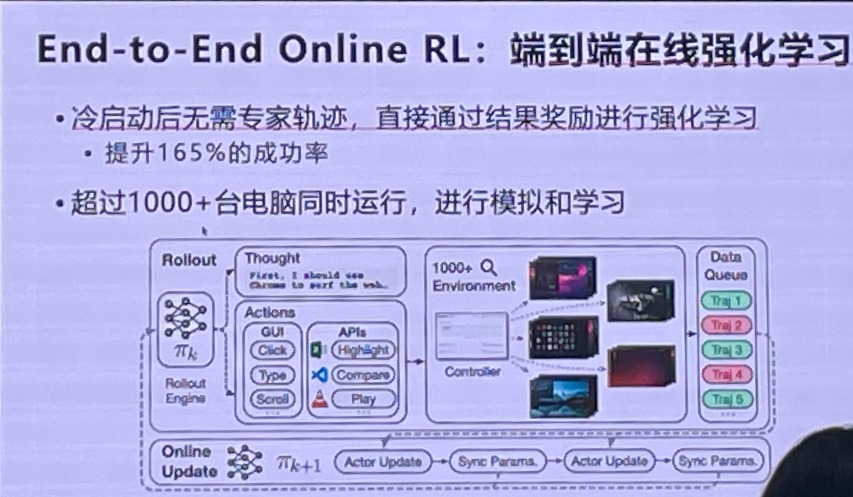
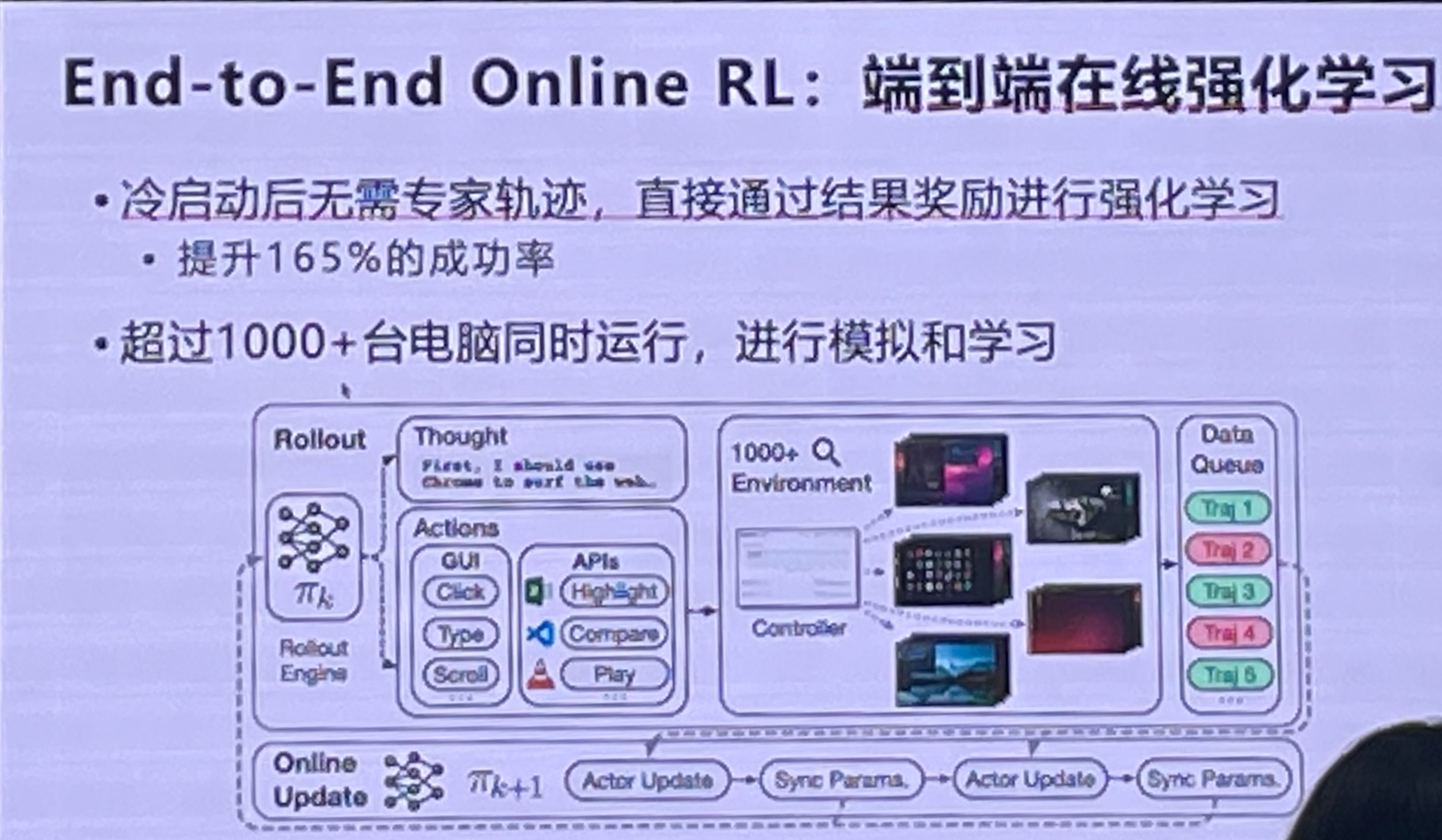
Group 1 - The core viewpoint of the article is that the startup company Zhipu has upgraded its Agent product AutoGLM to version 2.0, enabling cloud-based execution of tasks without occupying local device resources [2] - Zhipu's Agent iterations have evolved since last October, with the initial version capable of performing tasks like WeChat likes and Taobao shopping, and the latest version expanding its capabilities to include applications like Meituan, JD.com, Xiaohongshu, and Douyin [2][3] - The technical approach of Zhipu emphasizes "model as Agent," where a significant portion of the Agent's capabilities is absorbed through end-to-end reinforcement learning, contrasting with previous reliance on human expert trajectories [3] Group 2 - The cost of executing a single task with Zhipu's AutoGLM is approximately $0.2, with expectations for further cost reduction as scale and commercialization progress [5] - In the consumer market, the pricing for single tasks in China ranges from 0.008 to 0.04 RMB, while overseas pricing typically falls between $0.5 and $2 [5] - The B-end market for overseas Agents is at a structural inflection point, with simultaneous ecological layout and technological evolution opening up vast market opportunities [5]
北京市数字经济标准化技术委员会工作组成立
Bei Jing Ri Bao Ke Hu Duan· 2025-08-20 14:17
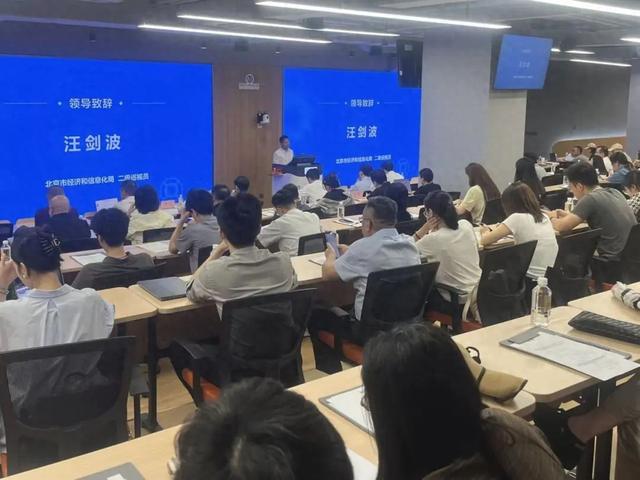
Group 1 - The establishment of the Beijing Digital Economy Standardization Technical Committee aims to accelerate the construction of a standardized system for the digital economy in Beijing [1][3] - The committee emphasizes the importance of developing leading standards in key areas such as autonomous driving, embodied intelligence, digital consumption, industrial internet, and intelligent agents [3][4] - The initiative seeks to enhance industry integration by leveraging digital technologies to empower various industries and create a platform for standard development and application [3][5] Group 2 - The meeting highlighted the need for collaboration among government, research institutions, enterprises, and industry associations to transform advanced local standards into industry and national standards [4][5] - The committee plans to focus on industry needs and practical application scenarios to create a dynamic and adaptable standard system [5] - Two significant outcomes were announced: a research report on intelligent driving data platforms and a compliance management platform for personal information protection in digital consumption [7]
单任务成本约0.2美元,智谱要用云端Agent抢市场
Di Yi Cai Jing· 2025-08-20 13:12
Core Insights - The core focus of the news is the upgrade of the AutoGLM product by the startup Zhipu, which has transitioned to version 2.0, enabling cloud-based execution of tasks through partnerships with Alibaba Cloud and Tencent Cloud [2][5]. Group 1: Product Development - Zhipu's Agent product has evolved since its initial version launched in October last year, with functionalities including WeChat likes, Taobao shopping, and Ctrip ticket booking [2]. - The latest version 2.0 expands operational applications to include popular platforms such as Meituan, JD.com, Xiaohongshu, and Douyin, significantly increasing its usability [2]. - The previous version, AutoGLM "Sinking," was primarily localized and operated through a graphical user interface, lacking virtual machine capabilities [2][3]. Group 2: Technical Approach - Zhipu's technical lead, Liu Xiao, emphasized a unique approach where the model itself acts as the agent, integrating capabilities through end-to-end reinforcement learning [3]. - The previous reliance on human expert trajectories limited the agent's ability to handle unfamiliar tasks, prompting a shift towards a hybrid model combining deep research and browser-use agents [3]. Group 3: Cost and Market Dynamics - The cost of executing a single task with AutoGLM is approximately $0.2, with expectations for further reductions as scale and commercialization progress [5]. - In the consumer market, pricing for single tasks in China ranges from 0.008 to 0.04 RMB, while international pricing typically falls between $0.5 and $2 [5]. - The B2B market for agents is at a structural inflection point, with technological advancements and ecosystem development opening up significant market opportunities [5].
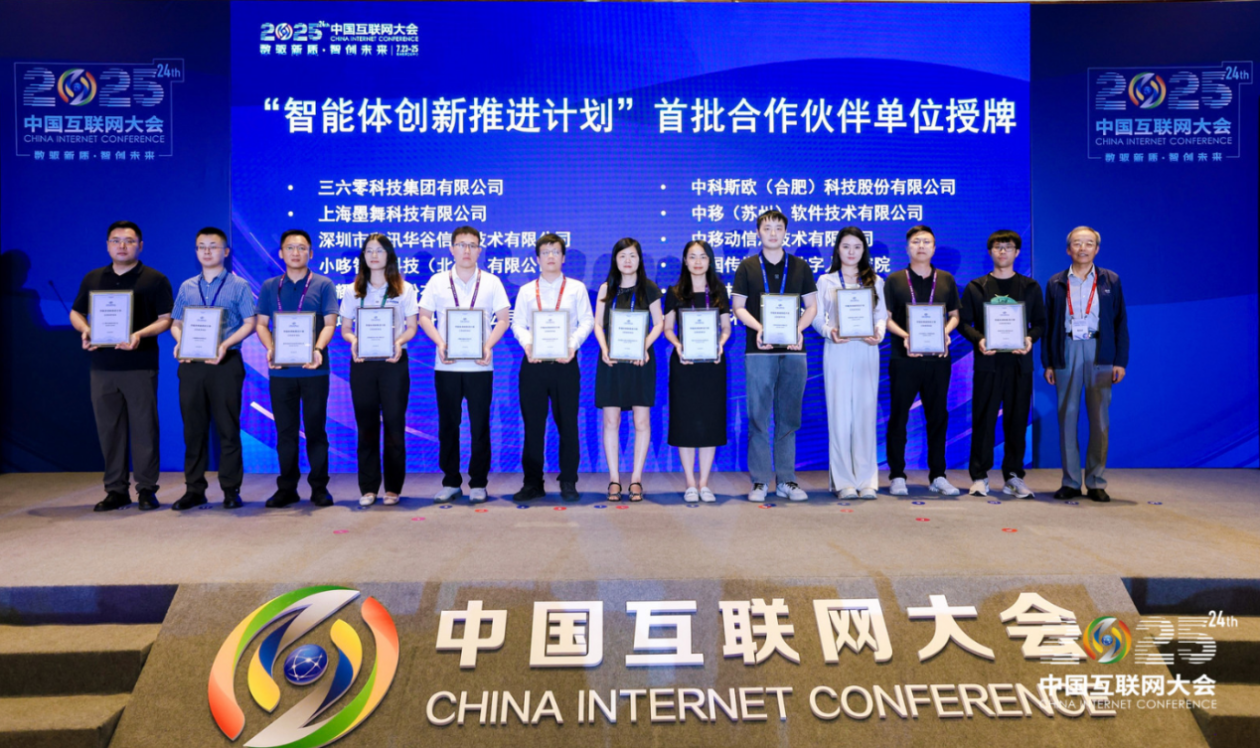
2025中国互联网大会:360入选智能体创新计划首批核心伙伴 聚焦All in Agent战略
Huan Qiu Wang· 2025-08-20 11:14
Core Insights - The "Intelligent Agent Innovation Promotion Plan" has been officially launched, aiming to build a collaborative intelligent agent ecosystem and promote the innovation and application of artificial intelligence technology [1][4] - 360 has become one of the first 24 core partners in this initiative, leveraging its expertise in AI and security to contribute to the development of the intelligent agent industry ecosystem [1][4] Company Strategy - 360's founder, Zhou Hongyi, has announced a strategic focus on the "All in Agent" strategy, positioning AI as the core support for the company's development [3] - The company has developed the leading AI search and intelligent agent application in China, known as Nano AI multi-agent swarm, which categorizes intelligent agent capabilities into five levels (L1 to L5) [3] Technological Advancements - The Nano AI has achieved L3 level reasoning capabilities, executing 100 consecutive tasks with zero errors, handling up to 1 million tokens, and utilizing over 100 tools with a success rate of 98.2% [3] - The L4 multi-agent swarm can complete 1000 consecutive tasks, with token consumption ranging from 5 million to 30 million, and a success rate of 95.4%, capable of generating a 30-minute complete video from a single user command [3] Collaborative Efforts - 360 will actively participate in ten key areas of the "Promotion Plan," including establishing mechanisms, observing trends, building platforms, promoting applications, advocating for open-source, setting standards, facilitating integration, promoting win-win scenarios, nurturing talent, and ensuring security [4] - The company aims to collaborate closely with various sectors, including government, industry, academia, and research, to drive technological innovation, enrich application scenarios, and enhance market demand alignment [5]

智谱继续重押智能体
Zheng Quan Ri Bao Wang· 2025-08-20 08:45
Core Insights - The release of AutoGLM2.0 marks a significant milestone towards AGI (Artificial General Intelligence), being the world's first mobile universal intelligent agent powered by a fully domestic foundational model [1][4] - The CEO of the company emphasizes that future personal competitiveness will depend on the ability to communicate and collaborate with AI agents, enhancing task completion quality beyond individual capabilities [1][4] Group 1: Product Features - AutoGLM2.0 allows a smartphone to become a "new species" through a single app, enabling AI to operate autonomously in the cloud without using local device resources [2][3] - The system can execute complex tasks such as ordering food or managing travel arrangements through multiple apps, showcasing a shift from a "conversational assistant" to a "task-oriented assistant" [2][3] - The foundational model GLM-4.5 and GLM-4.5V supports various tasks, aiming to unify diverse capabilities into a single model, addressing the limitations of existing models [4][5] Group 2: AGI Development - The company believes that achieving AGI requires adherence to the 3A principles: Around-the-clock operation, Autonomy without interference, and Affinity for connecting various devices and services [4][5] - AutoGLM2.0 exemplifies these principles by functioning continuously and independently in the cloud while integrating seamlessly with user devices [5]
AI市场格局日渐明朗:投资人详解6大“终局”领域与下一波机会
3 6 Ke· 2025-08-20 07:09
Core Insights - The artificial intelligence market has matured significantly over the past four years, with clear leaders emerging in various segments, particularly in generative AI and large language models (LLMs) [2][36] - The next wave of AI markets is expected to form, with potential opportunities in sectors like accounting, compliance, financial tools, sales, and security [24][36] Market Landscape - The foundational model market, particularly LLMs, is driven by scale and requires substantial capital, with revenues reportedly growing from zero to billions in just three years [4][5] - Key players in the LLM space include Anthropic, Google, Meta, Microsoft, Mistral, OpenAI, and X.AI, with a few companies dominating benchmark tests and driving industry spending [5][11] - Chinese companies are also emerging with open-source projects that perform well in benchmarks, indicating a competitive landscape [10] Application Areas - Coding is one of the earliest and most significant applications of generative AI, with companies like GitHub Copilot demonstrating rapid revenue growth [13] - In the legal sector, companies like Harvey and CaseText are leading, with opportunities for automation in core legal workflows [15][16] - The healthcare documentation market is becoming clearer, with players like Abridge and Nuance (Microsoft) establishing their presence [17][18] - Customer experience is consolidating around a few core startups, with traditional companies enhancing their offerings with generative AI capabilities [19][20] Future Market Potential - Emerging markets for generative AI include accounting, compliance, financial tools, sales, and security, with many exciting companies poised to compete [24][25] - The transition from traditional AI tools to agent-based workflows is underway, with significant implications for how AI is integrated into business processes [31][32] Mergers and Acquisitions - The trend of AI-driven roll-ups is gaining traction, as acquiring companies can facilitate faster adoption and economic benefits beyond mere software sales [33] - Strategic moves such as mergers and partnerships are expected to increase as the market consolidates, with a focus on winning market leadership [34]


一句话就能点外卖、订机票!智谱发布全球首个手机智能体
Zheng Quan Shi Bao Wang· 2025-08-20 06:28
Core Insights - The emergence of AI agent Manus in early March attracted significant attention, but it withdrew from the Chinese market just three months later, allowing domestic companies like Zhiyu to catch up and release numerous AI agent products [1] - Zhiyu officially launched AutoGLM 2.0 on August 20, powered by the domestic models GLM-4.5 and GLM-4.5V, which features reasoning, coding, and multimodal processing capabilities, now available to general users [1][2] - Unlike typical mobile AI assistants, AutoGLM 2.0 is designed to perform specific tasks on devices, marking a significant advancement from merely answering questions to executing diverse tasks autonomously in the cloud [1][2] Product Features - AutoGLM 2.0 allows users to operate over 40 high-frequency applications, such as Douyin and Meituan, with a single command, enabling tasks like ordering food and booking flights [2] - In office scenarios, AutoGLM can execute full workflows across applications, from information retrieval to content creation, including generating short videos and presentations [2] - The product is equipped with dedicated cloud phones and cloud computers, allowing the agent to work independently in the cloud without occupying local devices, thus enabling asynchronous task execution [2] Technical Innovations - AutoGLM 2.0 incorporates three key technologies: end-to-end reinforcement learning for autonomous problem-solving, a low-cost efficient model with task costs around $0.2, and full-device compatibility through cloud technology [3] - The flagship model GLM-4.5, released on July 28, integrates reasoning, coding, and agent capabilities within a single model to meet complex application demands [3] - The open-source visual reasoning model GLM-4.5V, launched on August 11, features 106 billion parameters and can perform tasks from image recognition to GUI operations, completing the understanding-to-execution loop [3]
机器人ETF易方达(159530)最新规模突破50亿元,宇树将发布新款人形机器人
Mei Ri Jing Ji Xin Wen· 2025-08-20 04:51
Group 1 - The robotics sector opened lower today but related ETFs showed resilience, with the E Fund Robotics ETF (159530) achieving a trading volume exceeding 1 billion yuan and a net subscription of 5 million units as of 10:20 AM [1] - Since August, the E Fund Robotics ETF has seen strong inflows, accumulating a net inflow of 1.4 billion yuan, with its latest scale surpassing 5 billion yuan, marking a historical high [1] - Yushutech announced a new humanoid robot, standing 1.8 meters tall and featuring 31 degrees of freedom, following the release of its previous models G1, H1, and R1, with R1 priced starting at 39,900 yuan and weighing approximately 25 kg [1] Group 2 - Huatai Securities predicts that the development of intelligent agents will follow a trajectory of "first B2B, then B2C, and finally terminal," expressing optimism about China's significant comparative advantage in terminal robotics [1] - The National Securities Robotics Industry Index focuses on robotic bodies and core components, with humanoid robot-related stocks accounting for nearly 80% of the index, making it the leading index for humanoid robots [1] - The E Fund Robotics ETF (159530) is the largest product tracking this index, providing investors with convenient access to future development opportunities in humanoid robotics [1]
