十四五规划

Search documents
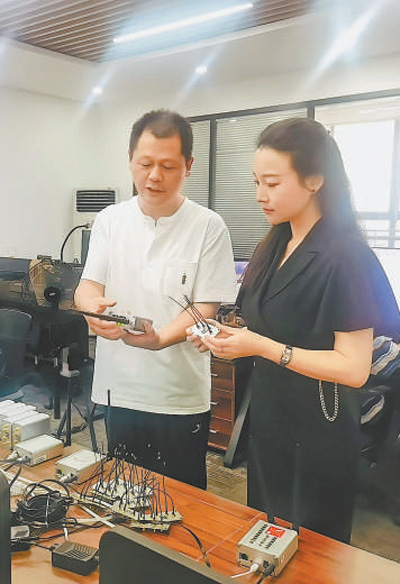
技术经理人,牵好专利转化这根“红线”(身边的“十四五”)
Ren Min Ri Bao· 2025-08-24 22:21
Group 1 - The "14th Five-Year Plan" is nearing completion, with a focus on achieving economic and social development goals set for the year [2] - Key indicators such as economic growth, labor productivity, and R&D investment are progressing as expected, while urbanization rate and life expectancy have exceeded expectations [2] - A series of reports titled "The '14th Five-Year Plan' Around Us" will explore the impact of these achievements on daily life and the foundation for the "15th Five-Year Plan" [2] Group 2 - As of June this year, China has achieved a high-value invention patent ownership of 15.3 per 10,000 people, surpassing the target of 12 set in the "14th Five-Year Plan" [3] - The process of patent commercialization is crucial, often facilitated by technology managers who connect enterprises with existing technologies [3][5] - A technology manager in Wuhan has successfully facilitated the conversion of over 100 patent technologies, generating approximately 400 million yuan in conversion value and attracting around 1 billion yuan in investment [3][5] Group 3 - The technology manager identified the need for enterprises to find ready-made technology solutions due to long R&D cycles and funding challenges [5] - The manager's company, Hubei Kehuitong Technology Co., aims to bridge the gap between enterprises and valuable patents, enhancing the success rate of technology matching [5][6] - Challenges in converting cutting-edge patents include the need for enterprises to explore application demands and the focus of researchers on academic work [8] Group 4 - A specific case involved a new lithium extraction membrane developed by a professor, which faced initial challenges in commercialization due to concerns about feasibility, knowledge, and funding [9] - The technology manager's team provided comprehensive assessments and developed a business plan to address these challenges, leading to the establishment of a company for the technology [9] - The Wuhan Technology Transfer Research Institute aims to cultivate a professional team of technology managers, targeting a scale of 10,000 professionals in 3 to 5 years [9]

促成果落地、解转化难题 技术经理人,牵好专利转化这根“红线”(身边的“十四五”)
Ren Min Ri Bao· 2025-08-24 22:00
Group 1 - The "14th Five-Year Plan" is nearing completion, with key economic and social development targets being met or exceeded, indicating a positive trajectory for the country's growth [1] - As of June this year, the number of high-value invention patents per 10,000 people reached 15.3, surpassing the target of 12 set in the "14th Five-Year Plan" [1] - The article introduces the role of technology managers, exemplified by Chen Wei, who facilitates the commercialization of patents, having helped convert over 100 patent technologies into approximately 4 billion yuan in revenue [1][2] Group 2 - Chen Wei, a technology manager, identified the need for technology transfer in enterprises, leading her to establish Hubei Kehuitong Technology Co., Ltd. to bridge the gap between companies and available patents [2] - The challenges faced in patent commercialization include accurately identifying valuable patents from a vast database and addressing companies' hesitations regarding technology transfer [2][3] - The article highlights a specific case where Chen Wei assisted a professor in overcoming barriers to patent commercialization, leading to the establishment of a company and successful funding rounds [5][6] Group 3 - The Wuhan Technology Transfer Research Institute was established to train a larger pool of technology managers, aiming to cultivate a workforce of 10,000 professionals in the next 3 to 5 years [6]
经济随笔丨五句话打开“五年规划”
Sou Hu Cai Jing· 2025-08-24 16:25
Group 1 - The significance of the Five-Year Plan lies in its structured approach to national development, which has evolved over decades under centralized leadership, involving multiple levels of government and various types of planning [1][2][3] - The Five-Year Plan is a continuous process, with each iteration building upon the last, aimed at achieving the long-term goal of modernizing the country [3][5] - The planning process emphasizes the importance of balancing comprehensive planning with focused priorities, ensuring that key issues are addressed effectively [6][10] Group 2 - The Five-Year Plan integrates various policy tools, aligning fiscal, monetary, and industrial policies with national development goals, while also allowing local governments to adapt to their unique circumstances [2][7] - The approach to planning has shifted over time, with a focus on both quantitative targets and qualitative improvements, ensuring that the plans remain relevant and effective [6][9] - The planning process is characterized by a commitment to public welfare, with a significant portion of the current plan dedicated to improving living standards and addressing public service gaps [9][10]
“十四五”以来 我国营商和消费环境持续优化
Yang Guang Wang· 2025-08-23 00:34
Group 1 - The core viewpoint is that the national consumption environment has continuously improved during the "14th Five-Year Plan" period, with overall food safety remaining stable [1][3] - The National Market Supervision Administration reported that during the "14th Five-Year Plan," there was a net increase of 19.999 million enterprises and 33.946 million individual businesses [1] - A total of 4.832 million cases of violations in areas such as measurement, contracts, consumer rights protection, pricing, and advertising were investigated and handled [1] Group 2 - The National Market Supervision Administration processed 89.028 million complaints and reports, recovering economic losses of 21.71 billion yuan for consumers [2] - Consumer rights have been effectively protected, leading to a steady increase in consumer satisfaction [2] - During the "14th Five-Year Plan," 2.2604 million food safety cases were investigated, indicating a generally stable food safety situation [3]
营商环境持续优化,有效激发企业活力——“十四五”以来我国企业净增近2000万户
Ren Min Ri Bao Hai Wai Ban· 2025-08-23 00:18
Core Insights - The State Administration for Market Regulation has highlighted significant achievements in high-quality market regulation during the "14th Five-Year Plan" period, emphasizing the dual role of regulation and development to foster a vibrant and fair market environment for economic growth [1][2][3] Group 1: Business Environment Optimization - The number of new enterprises increased by 19.99 million, and individual businesses rose by 33.946 million during the "14th Five-Year Plan" [1] - The time required to establish a restaurant has been reduced from 37 days to 15 days, and the number of documents needed for business information changes has been streamlined from 23 to 6 [1] Group 2: Market Regulation and Compliance - A total of 4.832 million cases related to measurement, contracts, consumer rights protection, pricing, and unfair competition were investigated [2] - The national enterprise credit index improved from 128.6 in 2020 to 161.61 in the first half of 2025, reflecting enhanced compliance capabilities among businesses [2] Group 3: Market Circulation and Competition - The introduction of the "Fair Competition Review Regulations" aims to address issues like malicious competition and restrictions on enterprise migration [3] - A total of 4,218 policies that hindered resource flow were identified and eliminated, along with 239 cases of administrative monopoly [3] Group 4: Quality Improvement - The implementation of the "Quality Power Construction Outline" and "National Standardization Development Outline" has strengthened the macro quality policy framework [3] - The manufacturing quality competitiveness index reached 85.86, while satisfaction levels for service quality improved to 81.33 and 81.62 for public services [3] Group 5: Safety Regulation - Over 2.2604 million food safety cases were investigated, and the drug inspection pass rate remained above 99.4% [4] - Six high-risk products are now under production license management, and 15 products require mandatory certification [4]
“十四五”以来我国企业净增近2000万户
Ren Min Ri Bao· 2025-08-22 20:17
Group 1 - The core viewpoint of the article emphasizes the achievements in high-quality market regulation during the "14th Five-Year Plan" period, highlighting the balance between regulation and development to foster a vibrant and fair market environment [1] - The number of new enterprises increased by 19.99 million, and individual businesses rose by 33.946 million during the "14th Five-Year Plan" period, indicating a significant improvement in the business environment [1] - The efficiency of business operations has improved, with the time to set up a restaurant reduced from 37 days to 15 days, and the number of required documents for business information changes reduced from 23 to 6 [1] Group 2 - The market operation has become more standardized, with 4.832 million cases of violations in areas such as consumer rights protection and anti-competitive practices being addressed [2] - The enterprise credit index increased from 128.6 in 2020 to 161.61 in the first half of 2025, reflecting enhanced compliance capabilities among business entities [2] - The introduction of the "Fair Competition Review Regulations" aims to eliminate harmful competition and promote a unified national market [3] Group 3 - Quality levels have significantly improved, with the manufacturing quality competitiveness index reaching 85.86, and public service quality satisfaction at 81.62 [3] - A total of 4,271 key projects were implemented to address quality issues, and 23,72 one-stop service stations for quality infrastructure were established [3] - Food safety supervision has been strengthened, with 2.2604 million food safety cases investigated, and a drug inspection pass rate maintained above 99.4% [4] Group 4 - The overall safety situation has stabilized, with 220,000 batches of non-compliant products identified and dealt with, and a focus on high-risk product management [4] - The market system has been continuously improved, with a commitment to enhancing market order and supporting high-quality economic and social development in the future [4]
金溢科技: 深圳市金溢科技股份有限公司2025年度向特定对象发行股票募集资金使用的可行性分析报告
Zheng Quan Zhi Xing· 2025-08-22 12:20
Group 1 - The total amount of funds to be raised in the issuance is not more than 1 billion RMB, and the net amount after deducting issuance costs will be used entirely to supplement working capital [1] - The issuance of funds is necessary to enhance the company's financial strength and seize industry development opportunities, driven by national policies promoting digital transformation in the transportation sector [2][3] - The actual controller and controlled enterprises will fully subscribe to the issuance, reinforcing control and boosting market confidence [3] Group 2 - The use of raised funds complies with relevant laws and regulations, enhancing the company's capital strength and optimizing its capital structure [4] - The company has established a sound corporate governance structure and internal control system, ensuring proper management of the raised funds [4] - The issuance will improve the company's operational management by effectively supplementing working capital and enhancing competitive and profitability capabilities [5] Group 3 - The financial impact of the issuance includes an increase in total assets and net assets, a decrease in the asset-liability ratio, and enhanced financial strength [5] - Although the total share capital will increase, there may be a short-term dilution of earnings per share and a potential decrease in return on net assets [5] - The overall conclusion is that the fundraising plan aligns with the company's strategic development and will enhance its sustainable development capabilities [5]
数说“十四五”成就丨五年间经营主体发展量增质提
Xin Hua Wang· 2025-08-22 09:40
Core Insights - The "14th Five-Year Plan" has led to significant achievements in various sectors, including business growth, consumer protection, and regulatory enforcement. Business Development - A total of 19.99 million new enterprises have been established since the beginning of the "14th Five-Year Plan" [3] - The number of individual businesses has increased by 3.33946 million [4] Regulatory Enforcement - 4.832 million cases of illegal activities have been investigated [5] - The consumer rights protection efforts have resulted in handling 89.028 million complaints, recovering economic losses of 21.71 billion [5] - The national consumer association received 5.749 million complaints, recovering 5.78 billion [5] Market Order Maintenance - Nearly 571 various cases have been investigated over the past five years, including 4,296 cases of online unfair competition [6] - A nationwide action against counterfeit and substandard goods has been conducted, covering over 30 categories and 200 types, with a total value of 2.79 billion [7] - 4.541 million illegal product listings were removed from platforms, and 58,000 online stores were ordered to cease operations [8] Food and Drug Safety - Strict penalties have been imposed for adulteration, illegal additives, false advertising, and consumer fraud, with 3,072 licenses revoked and 238,000 individuals restricted from employment [9] - The national drug inspection pass rate remains above 99.4%, with over 200,000 batches of drugs and 20,000 batches of medical devices tested annually [9] - 226.04 million food safety cases have been investigated [10] Standardization and Quality Assurance - 13,000 national standards have been newly published, bringing the total to over 47,000 [11] - 1,079 international standards have been developed, with over 6,900 international standards adopted [11] - 1.33 million enterprises and 2.85 million batches of products have undergone supervision and sampling inspections [14]

鸿远电子(603267.SH):上半年净利润1.84亿元,同比增长52.96%
Ge Long Hui A P P· 2025-08-22 09:30
Core Insights - The company reported a revenue of 1.018 billion RMB for the first half of 2025, representing a year-on-year increase of 22.27% [1][2] - The net profit attributable to shareholders reached 184 million RMB, marking a year-on-year growth of 52.96% [1][2] - The basic earnings per share increased to 0.80 RMB, reflecting a growth of 53.85% compared to the previous year [1][2] Financial Performance - The company achieved a net profit of 178 million RMB after deducting non-recurring gains and losses, which is a 52.06% increase year-on-year [1][2] - The net cash flow from operating activities increased by 28.33% compared to the same period last year, due to effective management of inventory and supplier payment cycles [2] - A cash dividend of 0.10 RMB per share (including tax) is proposed for all shareholders [1] Industry Context - The company benefited from the "14th Five-Year Plan" as the demand for high-reliability electronic components showed a strong recovery [2] - Despite facing pricing pressures from downstream customers, the sales revenue of high-reliability ceramic capacitors grew rapidly, contributing to the overall revenue increase [2] - Improvements in production efficiency and cost control measures led to a significant enhancement in the company's profitability [2]

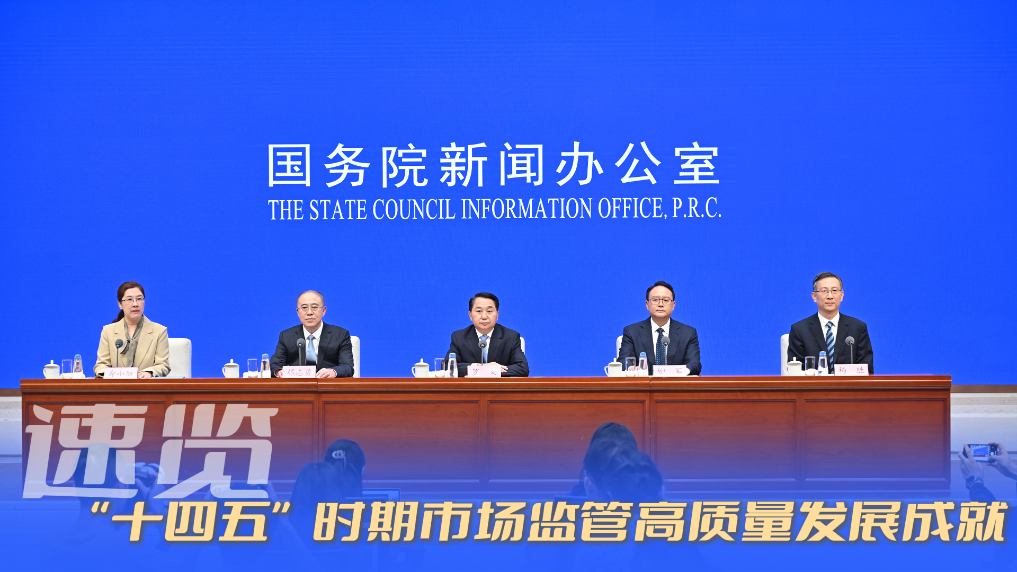
速览!“十四五”时期市场监管高质量发展成就
Xin Hua Wang· 2025-08-22 08:40
Group 1 - Since the beginning of the 14th Five-Year Plan, the number of new enterprises in China has increased by 19.999 million, with individual businesses increasing by 33.946 million [2] - During the 14th Five-Year Plan, national market regulatory authorities handled 89.028 million complaints and reports, recovering economic losses of 21.71 billion yuan for consumers [4] - The total number of national standards in China has reached over 47,000, with more than 13,000 new national standards released during the 14th Five-Year Plan [6] Group 2 - China's pharmaceutical industry ranks second globally, with approximately 30% of innovative drugs under research worldwide [8] - A total of 387 children's medicines and 147 rare disease medicines have been approved for market since the beginning of the 14th Five-Year Plan, effectively meeting the medication needs of key populations [8]