
知识产权保护

Search documents
别再“卷”价格了,中餐出海真正的护城河是合规
Hu Xiu· 2025-09-27 12:16
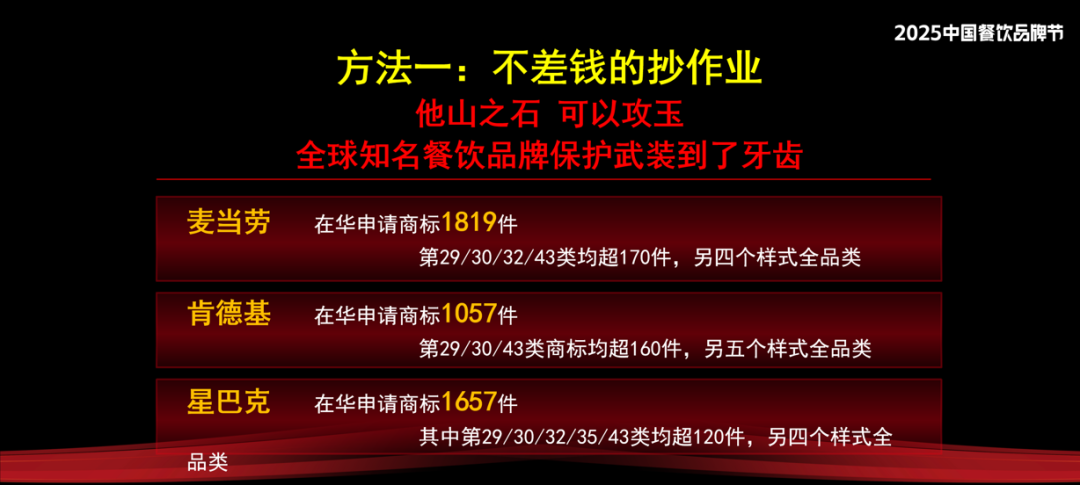
Core Viewpoint - The article discusses the current state and future potential of Chinese cuisine brands going global, emphasizing the importance of legal compliance and strategic planning in the process of international expansion [1][2]. Group 1: Legal Compliance - Legal compliance has become a critical factor for Chinese restaurants expanding overseas, with various legal challenges identified, including intellectual property, overseas investment, taxation, supply chain, labor, store qualifications, data security, and marketing [3][4]. - The first step for Chinese restaurants going abroad is to secure their intellectual property rights, as many brands face issues due to lack of prior planning and registration [5][6]. - Each country has its own trademark registration process, which can take from a few months to several years, necessitating early planning for trademark protection [6][7]. Group 2: Franchise Model - Currently, 80% of Chinese restaurant brands expanding internationally are using the franchise model, which is recommended due to its low cost, high efficiency, and minimal political risk [16][17]. - The franchise model serves as a cultural export vehicle, allowing for the dissemination of Chinese culinary culture without the complexities associated with technology or national security [18][19]. - Legal barriers for franchising are relatively low, as many countries have harmonized their commercial laws, making it easier for brands to operate internationally [20][21]. Group 3: Compliance Risks - Common compliance risks for Chinese brands in international franchising include non-compliance with franchise qualifications and contracts, often due to inadequate legal preparation [27][28]. - Non-compliance can lead to severe consequences, including civil liabilities, administrative penalties, and potential criminal charges in some jurisdictions [34][35]. - Countries like Malaysia and the U.S. have specific legal requirements for franchising that must be adhered to, including trademark registration and disclosure obligations [36][37]. Group 4: Strategic Recommendations - Companies are advised to conduct thorough legal risk assessments and compliance research before entering foreign markets, focusing on intellectual property, franchising, and overseas investment [47]. - The article emphasizes the need for a proactive approach to compliance, suggesting that brands should not rely on last-minute preparations [48][52]. - It is crucial for brands to maintain a cooperative spirit in international markets, avoiding competitive sabotage that could harm the overall image of Chinese cuisine abroad [54][56].





“拉布布”假货180万个,中国体会打击盗版辛苦
日经中文网· 2025-09-27 00:33
上海市 泡泡玛特门店 "要拉布布吗?"在浙江省某批发市场行走时,一名路过的男子低声问道,并提出交易:"买10个以上一 个2.5元"。中国曾因大量生产外国品牌的仿冒品而饱受国际社会批评。如今,中国也体验到了作为执法 方的辛苦…… 中国海关当局在今年1月至8月中旬,查获了183万个在全球人气攀升的中国原创角色"拉布布"的假货。 长期以来,中国因大量生产外国品牌的仿冒品而饱受国际社会批评。如今,中国也体验到了作为执法方 的辛苦。 "要拉布布吗?"在浙江省某批发市场行走时,一名路过的男子低声问道,并提出交易:"买10个以上一 个2.5元"。与售价约100元的正品相比,价格极其便宜。男子小声说:"这是假的,被抓到就要坐牢"。 全球热销,销售额增长7倍 拉布布是香港插画家龙家升(Kasing Lung)绘本中的角色。玩具巨头泡泡玛特(Pop Mart)自2019年 起,以"THE MONSTERS"系列名义销售毛绒玩具和手办等产品。 2024年,韩国女子组合BLACKPINK成员在照片分享应用Instagram上发布了拉布布周边的照片,掀起了 年轻人在全球范围内将拉布布挂饰挂在包包上的潮流。 全球 各路名人也纷纷介绍这一 ...


世界知识产权组织总干事访问越南
Shang Wu Bu Wang Zhan· 2025-09-26 16:20
Core Points - The Director General of WIPO, Daren Tang, visited Vietnam on September 25-26 to meet with the Minister of Science and Technology, Nguyen Manh Hung, and signed a memorandum of understanding with the National Office of Intellectual Property of Vietnam [1] - WIPO praised Vietnam's recent laws and policies on technological innovation and digital transformation, particularly the Communist Party's Resolution No. 57 aimed at advancing these areas [1] - The memorandum aims to facilitate cooperation in priority areas, including the development of intellectual property policies, public awareness, human resource training, and enhancing the capabilities of national intellectual property institutions [1][2] Cooperation Areas - The priority areas for cooperation include supporting the verification, formulation, and implementation of national intellectual property laws, strategies, and action plans [2] - Efforts will be made to ensure the efficient operation of various international intellectual property registration systems in Vietnam [2] - The collaboration will also focus on enhancing the intellectual property management, protection, and commercialization capabilities of intermediaries, SMEs, and startups [2] Future Goals - WIPO's visit marks a new chapter in Vietnam-WIPO cooperation, emphasizing Vietnam's commitment to strengthening intellectual property protection and commercialization [2] - Vietnam aims to rank among the top 30 in the global innovation index within the next 5 to 10 years, with WIPO's assistance [1]
8年600场官司硬刚山寨,拉夫劳伦终审胜诉
21世纪经济报道· 2025-09-26 15:46
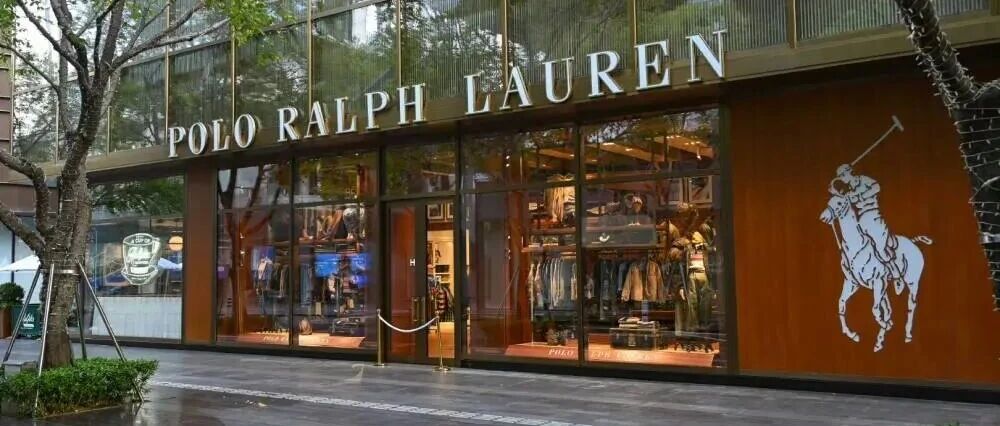
Group 1 - Ralph Lauren achieved a significant victory in the field of intellectual property rights in China, with the Beijing High Court confirming the "POLO" trademark as a well-known trademark in the category of clothing goods [2][3] - The case, which lasted for eight years and involved over 600 lawsuits, concluded with Ralph Lauren's final victory, reinforcing the recognition and protection of its trademark [2][3] - The Beijing High Court upheld the previous ruling by the Guangzhou Intellectual Property Court, reiterating that the existence and use of the contested trademark could mislead the public and harm Ralph Lauren's interests [3][4] Group 2 - The core controversy surrounding the "POLO" trademark involved its common usage in the clothing category, with discussions on whether it could be considered a generic term [3][4] - Legal experts emphasized that while "POLO" is a common English word, its application in marketing and sales could constitute trademark infringement if it leads consumers to associate it with Ralph Lauren [4]

开辟知识产权保护协作新路径!江门分享“益企维”协作经验
Nan Fang Du Shi Bao· 2025-09-26 15:37
会上,江门市市场监管局介绍了通过"益企维"平台在跨区域协作、执法能力提升等方面取得的成效,特 别是"新会陈皮"地理标志产品通过"益企维"知识产权保护联盟机制获得的保护成效。依托这一全国性协 作机制,不仅拓展了知识产权保护的覆盖面,还提升了案件办理效率和执法水平。 为深化知识产权跨区域跨部门协同保护,系统总结"益企维"创新实践经验,探索保护协作新模式新路 径,进一步优化营商环境,在第十四届中国知识产权年会期间,由福建省漳州市市场监督管理局主办 的"益企维"知识产权协同保护机制创新推进会在北京成功召开。江门市市场监督管理局作为协作单位代 表在会上作交流发言。 下一步,江门市市场监管局将继续依托"益企维"知识产权联盟协作机制,深化与各成员单位的沟通协 作,共同推动知识产权协同保护工作创新发展,为优化营商环境提供有力支撑。 据悉,"益企维"机制目前已覆盖全国19个省区的56个地市63个成员单位,成为知识产权保护领域重要的 协作平台。各成员单位通过该机制积极开展地理标志等知识产权保护协作,累计办理案件225件,为企 业节约维权成本2300多万元。 ...
三态股份涨0.12%,成交额9591.79万元,近5日主力净流入-1534.90万
Xin Lang Cai Jing· 2025-09-26 08:21
Core Viewpoint - Shenzhen SanTai E-commerce Co., Ltd. is benefiting from the depreciation of the RMB and is actively developing AI-driven tools for risk detection in cross-border e-commerce [2][3]. Company Overview - Shenzhen SanTai E-commerce Co., Ltd. was established on January 7, 2008, and is located in Nanshan District, Shenzhen, Guangdong Province. The company primarily engages in cross-border e-commerce retail and logistics [7]. - The company's revenue composition includes 76.14% from cross-border e-commerce product sales, 23.80% from logistics sales, and minimal contributions from technology services and other businesses [7]. Business Developments - The company launched its AI-based intellectual property risk detection tool "RuiGuan·ERiC" for trial use on September 28, 2023, aimed at providing flexible and cost-effective risk monitoring solutions [2][3]. - The company is also developing an AIGC project that utilizes Stable Diffusion for generating high-quality images, enhancing operational efficiency and reducing production costs [2]. Financial Performance - For the first half of 2025, the company reported a revenue of 827 million yuan, representing a year-on-year growth of 3.27%, while the net profit attributable to shareholders decreased by 48.75% to 23.26 million yuan [8]. - As of September 19, 2023, the number of shareholders increased to 30,500, with an average of 7,192 circulating shares per person [8]. Market Position - The company operates in the cross-border e-commerce sector, which is part of the broader internet retail industry. It is positioned within several concept sectors, including intellectual property, express delivery, and small-cap stocks [8]. - The company's overseas revenue accounted for 99.98% of its total revenue, benefiting from the depreciation of the RMB [3].
厦门金达威及子公司获“辅酶Q10油剂”发明专利证书
Xin Lang Cai Jing· 2025-09-26 07:50
近日,厦门金达威集团股份有限公司及子公司厦门金达威生物科技有限公司收到国家知识产权局颁发的 发明专利证书。发明名称为"一种辅酶Q10油剂及其制备方法和应用",专利号ZL202310111297.8,申请 日为2023年,专利权期限二十年,授权公告日为2025年。该发明涉及辅酶Q10技术领域,其辅酶Q10油 剂中辅酶Q10高含量下能稳定以分子形态存在、生物利用度高。此专利取得虽不对公司生产经营产生重 大影响,但利于技术创新、完善知识产权保护体系及增强核心竞争力。 ...

出海神器智南针的超级AI助手 “海外版杭知AI”亮相数贸会
Mei Ri Shang Bao· 2025-09-25 23:27
Core Insights - The article emphasizes the importance of intellectual property (IP) protection as a core element of international competitiveness for businesses in the context of global digital trade [1][2] - The launch of the "Overseas Version of Hangzhi AI" by the Hangzhou Intellectual Property Protection Center represents a significant innovation in integrating AI technology with IP protection services [1][4] Group 1: Digital Trade and IP Protection - The fourth Global Digital Trade Expo will take place from September 25 to 29, 2025, showcasing the integration of AI and IP protection [1] - The Hangzhou Intellectual Property Protection Center aims to create a comprehensive smart IP service system that operates "all-time, all-domain, and all-chain" [1][2] Group 2: AI Integration and Services - The "Overseas Version of Hangzhi AI" is designed to enhance the existing "Zhinanzhen" service by providing tailored solutions for companies facing overseas IP challenges [2][3] - This AI tool addresses common pain points for businesses venturing abroad, such as unfamiliarity with overseas regulations and difficulties in resource selection [3] Group 3: Achievements and Innovations - Hangzhou has established itself as a national leader in digital economy IP protection, with over 80% of specialized enterprises in the digital economy sector registered [4][5] - The city has implemented a rapid patent pre-examination service, significantly reducing the authorization cycle for invention patents to under 80 days [4][5] Group 4: Future Outlook - The Hangzhou Intellectual Property Protection Center is committed to enhancing overseas IP risk warning mechanisms and dispute response strategies, with the AI tool being a key part of this initiative [5] - The center aims to leverage its digital economy advantages to create a more intelligent and efficient IP service system for businesses expanding globally [5]
Moleculin Announces Notice of Allowance for Canadian Patent Covering Annamycin
Globenewswire· 2025-09-25 12:35
Core Viewpoint - Moleculin Biotech, Inc. has received a notice of allowance for a Canadian patent related to its drug candidate Annamycin, which is being developed for the treatment of hard-to-treat cancers, particularly acute myeloid leukemia and soft tissue sarcoma lung metastases [1][2][3] Group 1: Patent and Intellectual Property - The Canadian patent application covers methods for producing a preliposomal Annamycin lyophilizate with improved stability and high purity, with a base patent term extending until June 2040 [2] - The company is actively building its global intellectual property portfolio for Annamycin, which includes patents in the U.S., Europe, and other major jurisdictions [3] Group 2: Drug Development and Clinical Trials - Annamycin is positioned to be the first non-cardiotoxic anthracycline approved for use, with Fast Track Status and Orphan Drug Designation from the FDA for relapsed or refractory AML and STS lung metastases [3][4] - The company has initiated the MIRACLE Trial (MB-108), a pivotal Phase 3 trial evaluating Annamycin in combination with cytarabine for relapsed or refractory AML, following a successful Phase 1B/2 study [5] Group 3: Additional Pipeline and Research - In addition to Annamycin, the company is developing WP1066, an immune/transcription modulator targeting various cancers, and WP1122 for potential treatment of pathogenic viruses and certain cancer indications [6]


苏豪弘业跌1.65%,成交额4453.15万元,后市是否有机会?
Xin Lang Cai Jing· 2025-09-25 07:25
Core Viewpoint - The company Suhao Hongye experienced a decline in stock price and trading volume, indicating potential market challenges and investor sentiment issues [1] Company Overview - Suhao Hongye Co., Ltd. is located in Nanjing, Jiangsu Province, and was established on June 30, 1994, with its stock listed on September 1, 1997 [6] - The company's main business includes trade (import and export, domestic trade) and cultural services (cultural engineering, art management, cultural venue operations, and cultural creative product development and sales) [6] - The revenue composition is as follows: 98.45% from product sales, 1.05% from engineering projects and consulting services, and 0.51% from other sources [6] Financial Performance - For the first half of 2025, Suhao Hongye achieved a revenue of 3.919 billion yuan, representing a year-on-year growth of 10.73% [6] - The net profit attributable to the parent company was 26.2955 million yuan, showing a year-on-year increase of 34.72% [6] - The company has distributed a total of 503 million yuan in dividends since its A-share listing, with 74.0302 million yuan distributed in the last three years [7] Investment and Shareholding - The company holds a 16.31% stake in Hongye Futures, which is the second-largest shareholder, and Hongye Futures is listed on the Hong Kong Stock Exchange [2] - Suhao Hongye's subsidiary, Jiangsu Aitao Cultural Industry Co., Ltd., holds a 28% stake in Jiangsu Cultural Property Exchange Co., Ltd. [2] - The company invested 12 million yuan for a 24% stake in Jiangsu Hongrui Technology Investment Co., Ltd., the first venture capital firm in Jiangsu Province focused on the biopharmaceutical sector [2] Market Activity - On September 25, the stock price of Suhao Hongye fell by 1.65%, with a trading volume of 44.5315 million yuan and a turnover rate of 1.76%, resulting in a total market capitalization of 2.507 billion yuan [1] - The main capital flow showed a net outflow of 4.8943 million yuan, indicating a lack of strong buying interest from major investors [3][4] Technical Analysis - The average trading cost of the stock is 10.88 yuan, with recent reductions in shareholding but at a slowing rate [5] - The current stock price is near a resistance level of 10.42 yuan, suggesting potential for a pullback unless this level is breached, which could lead to an upward trend [5]
