能源安全

Search documents
我国又一大型页岩气田诞生 1650亿立方米
Xin Lang Cai Jing· 2025-08-21 07:33
Core Insights - China Petrochemical Corporation (Sinopec) announced the successful verification of 1650.25 billion cubic meters of shale gas reserves at the Hongxing shale gas field in the Jianghan Oilfield, marking the establishment of another large shale gas field in China, which is significant for national energy security [1] Group 1 - The newly discovered shale gas field has a proven reserve of 1650.25 billion cubic meters [1] - The verification was approved by the Ministry of Natural Resources, indicating regulatory endorsement [1] - The establishment of this shale gas field is expected to have a positive impact on ensuring energy security in China [1]

就市论市|油气板块集体走强 行情能否持续?
Di Yi Cai Jing· 2025-08-21 06:51
酷望基金刘刚认为,油气开采板块技术性反弹、持续性欠佳; 中国银河证券财富星首席投资顾问高乐认为,能源安全为纲,滞涨补涨题材; 金元证券首席投资顾问徐传豹认为,油气板块估值较低,短线有望补涨。 ...
已探明超1650亿立方米!我国又一大型页岩气田诞生
Bei Jing Ri Bao Ke Hu Duan· 2025-08-21 06:03
来源:中国石化江汉油田 转自:北京日报客户端 中国石化江汉油田红星页岩气田1650.25亿立方米页岩气探明储量顺利通过自然资源部审定,标志我国 又一大型页岩气田正式诞生,进一步证明红星地区具有良好的资源潜力,成功开拓了页岩气战略增储新 阵地,对保障国家能源安全具有积极意义。 ...


中国对普京在商言商,趁着莫迪不敢买,折扣价格拿下千万桶俄油?
Sou Hu Cai Jing· 2025-08-21 03:15
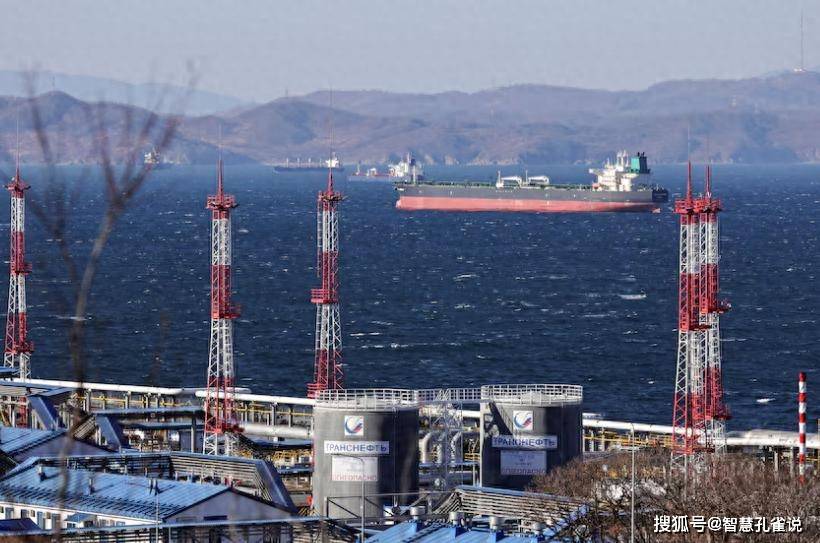
Core Insights - India has reduced its purchases of Russian oil due to pressure from the Trump administration, which has threatened to impose a 25% secondary tariff on Russian oil imports starting from late August [3] - In response to India's withdrawal, Chinese refineries have seized the opportunity to purchase over 10 million barrels of Russian oil at discounted prices, with 15 batches already bought this month [1][5] - The strategic implications of this move include strengthening energy cooperation with Russia and demonstrating to Moscow that China is a reliable partner compared to India's fluctuating stance [8][9] Group 1 - India's reluctance to buy Russian oil stems from the potential 25% tariff imposed by the U.S., which has led Indian state-owned refineries to halt purchases since late July [3] - The discounts previously enjoyed by India on Russian oil have decreased, prompting Indian refineries to reassess their purchasing strategies [3] - Chinese companies have negotiated a $1 discount per barrel on Urals crude oil, which is significant given the current price of around $65 per barrel [5] Group 2 - The increase in Chinese purchases of Urals crude is primarily a commercial decision driven by price competitiveness, as Chinese refineries typically use higher-quality ESPO crude [6] - The short-term impact of increased Russian oil purchases by China has led to a reduction in demand for Saudi oil, with some refineries cutting back on September deliveries [8] - Despite the current increase in Russian oil imports, China aims to maintain a diversified energy import strategy to avoid over-reliance on a single source, learning from Europe's energy dependency issues [8][9]
委内瑞拉原油重返美国市场 贸易流重启
Sou Hu Cai Jing· 2025-08-21 01:11
Core Insights - Chevron has resumed its first shipments of Venezuelan crude oil following the U.S. government's restoration of its operating license in the sanctioned country, marking a preliminary restart of trade that had been abruptly halted earlier this year [1][3] - The resumption of exports highlights a potential shift in U.S. energy security concerns, which may outweigh strict sanctions, especially as domestic refiners face raw material imbalances [3] Group 1: Chevron's Operations - Chevron's vessels, Mediterranean Voyager and Canopus Voyager, recently departed from Venezuelan waters carrying heavy crude oil to the U.S. West Coast and Port Arthur, Texas [1] - The initial trade volume is still relatively small, but even a limited amount of Venezuelan oil could alter the trading dynamics in the Gulf Coast heavy crude market [3] Group 2: Venezuelan Oil Industry - The return of Chevron provides much-needed operational stability and export certainty to Venezuela's oil industry, which has been suffering from years of underinvestment and sanctions [3] - Current export levels remain around 700,000 barrels per day, significantly lower than pre-crisis levels, with structural limitations in PDVSA's infrastructure acting as a ceiling [3] Group 3: Market Dynamics - U.S. Gulf Coast refiners continue to favor Venezuelan heavy crude due to its compatibility with coking units designed for processing similar crude from Mexico and Canada [3] - The reduction of heavy oil exports from Mexico and pipeline transportation constraints in Canada have heightened the raw material anxiety among refiners like Valero Energy, which is reportedly negotiating supply agreements with Chevron [3]


张玉卓到石油石化企业调研强调:强化提质增效加速转型升级 筑牢国家能源安全基石
Xin Hua Cai Jing· 2025-08-21 01:02
Group 1 - The core viewpoint emphasizes the need for state-owned enterprises in the energy sector to enhance energy supply capabilities and focus on their main responsibilities [1] - The government encourages increased domestic oil and gas exploration and development, as well as participation in the national strategic reserve system [1] - There is a strong push for transformation and development, aiming to increase the production of efficient oil products and high-value-added chemical products [1] Group 2 - The focus is on building core capabilities for independent innovation and breaking through key technologies in deep water exploration and high-end new materials development [1] - The government aims to achieve high-quality stable growth by understanding macroeconomic conditions and market trends, while also emphasizing cost reduction and effective investment [1] - There is a call for deeper reforms in state-owned enterprises, enhancing corporate governance, and improving market-oriented operational mechanisms [1]


国资委主任张玉卓:强化提质增效加速转型升级 筑牢国家能源安全基石
Xin Lang Cai Jing· 2025-08-21 00:52
Core Insights - The State-owned Assets Supervision and Administration Commission (SASAC) emphasizes the need to enhance energy supply capabilities and focus on core responsibilities in the oil and gas sector [1] - There is a call for increased domestic oil and gas exploration and development efforts, as well as active participation in the national strategic reserve system [1] - The importance of optimizing overseas oil and gas resource allocation and expanding energy supply channels is highlighted [1] Industry Focus - The need for transformation in the energy sector is stressed, with a focus on increasing the production of efficient oil products and high-value-added chemical products [1] - The development of independent innovation capabilities is crucial, particularly in breakthrough technologies related to deepwater exploration, new areas, and high-end new materials [1] - Accelerating the transition to green energy and building a high-end chemical products and new materials industry chain is a priority [1]
中方获“唯一特赦”,把印度拿不下的“打折货”,一股脑都买了
Sou Hu Cai Jing· 2025-08-20 12:21
Core Insights - The global oil market is undergoing significant changes, with China emerging as the only major buyer exempt from secondary tariffs on Russian oil, leading to a surge in low-priced Russian oil flowing to China [1][5][25] - The geopolitical landscape is shifting, with the U.S., India, and Russia's interests intertwining, indicating a new international trade order [1][5] Group 1: Oil Trade Dynamics - In Q1 2025, Russian oil exports to China via pipelines surged by 43% year-on-year, reaching an average of 750,000 barrels per day [3][19] - Following the U.S. implementation of secondary tariffs on Russian oil, India faced a significant increase in tariffs, leading to a drastic reduction in its Russian oil imports from 1.18 million barrels per day to less than 400,000 barrels per day [5][7] - China's daily imports of Urals crude oil from Russia approached 75,000 barrels in August, nearly double the amount earlier in the year, with several coastal refineries placing new orders [7][19] Group 2: Market Reactions and Implications - The price differential between Urals crude and Brent crude has widened, with the cost of Urals crude imported by China being over 15% lower than Brent prices [9][19] - Chinese refineries are rapidly expanding their profit margins and capturing market share in South Asia, the Middle East, and Europe due to the low prices of Russian oil [9][21] - The U.S. is cautious about imposing tariffs on China due to the deep economic interdependence between the two nations, which complicates the potential impact of sanctions [11][17] Group 3: Geopolitical Considerations - The U.S. secondary tariffs on India are seen as a warning against India's strategic autonomy in the global energy landscape, while the U.S. maintains a more restrained approach towards China [11][15] - The European Union has expressed concerns over potential reductions in Chinese refined oil exports, fearing a rise in energy prices [15][25] - The ongoing geopolitical tensions and energy market dynamics are reshaping global supply chains and trade patterns, with China gaining significant influence [21][25] Group 4: Future Outlook - China's oil imports are projected to reach a historical high of over 600 million tons in 2025, while India is diversifying its energy sources to reduce reliance on Russian oil [19][25] - The global energy market is entering a new phase of multi-dimensional competition, with any actions taken by major players likely to trigger chain reactions [15][25] - The evolving energy landscape reflects a balance of power shift, with China leveraging its position to reshape global energy pricing and supply chains [21][25]
俄石油管道被炸,匈牙利石油断供,警告乌克兰:再炸就断你电!
Sou Hu Cai Jing· 2025-08-20 05:22
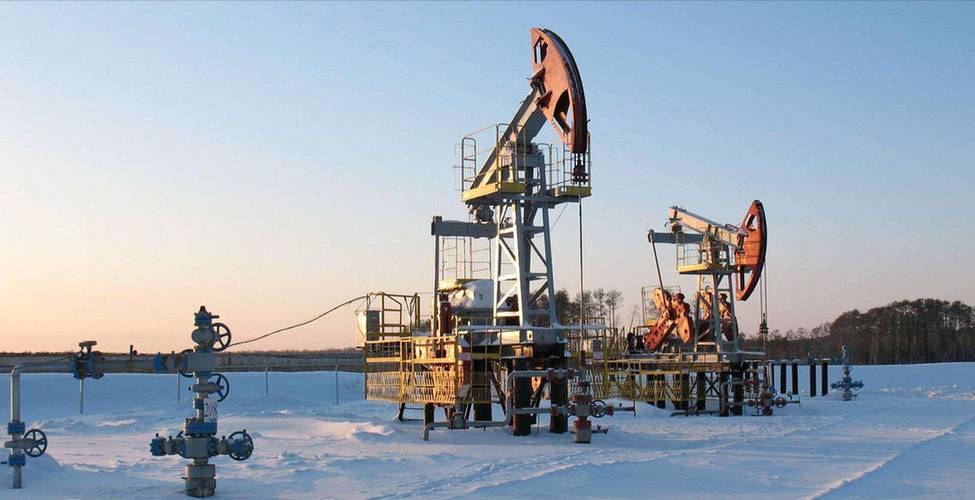
值得注意的是,2023年初以来,俄罗斯对波兰的原油运输已经停止,而其余国家则依赖于该输油管南段的供应来获取石油。鸟瞰这场复杂的地缘政治博弈, 能源问题逐渐成为区域国家间纷争的重要根源。在这一背景下,任何关于能源供应的中断都可能引发更大范围的经济与政治后果。各国政府必须更加谨慎地 处理这些问题,以避免局势进一步升级,影响到各国的能源安全和经济稳定。 西雅尔多还向乌克兰的政府发出警告,他提到,乌克兰所需的大部分进口电力是通过匈牙利进行输送的。为了回应这一攻击,他甚至威胁若政权继续采取敌 对行动,将有可能切断向乌克兰的电力出口,显示出两国间紧张关系的升级。 "友谊"输油管起点位于阿尔梅季耶夫斯克,经过布良斯克后被划分为两段:北段通过白俄罗斯延伸至波兰,而南段则经过乌克兰,连接至匈牙利、斯洛伐克 以及捷克。这样的布局不仅关系到能源的流动,还影响到区域内的能源安全与互联互通。 据俄罗斯卫星通讯社的报道,匈牙利外交与对外经济部部长彼得·西雅尔多近期在Facebook社交平台上发布消息,指出由于乌克兰对"友谊"输油管发动了新 的袭击,导致向匈牙利输送的石油供应暂时中断。他的言辞中充满愤怒,明确表示:"乌克兰再一次袭击了通往 ...
美怕什么来什么!王毅抵达印度,下飞机的第一句话不简单,莫迪这一次对美态度坚决
Sou Hu Cai Jing· 2025-08-20 03:34
Core Viewpoint - The visit of Chinese Foreign Minister Wang Yi to India is significant in the context of rising trade tensions between India and the United States, particularly regarding tariffs imposed by the U.S. on Indian goods, which could severely impact India's economy and manufacturing initiatives [1][3]. Group 1: Trade Relations and Economic Impact - The U.S. has announced a 25% tariff on Indian goods, raising the total tariff rate to 50%, which could lead to a 60% drop in India's exports to the U.S. and a nearly 1% reduction in India's GDP [3]. - Modi's government is seeking to strengthen ties with Brazil to mitigate the impact of U.S. tariffs, aiming to increase bilateral trade to $20 billion and expand trade agreements [5]. - India's semiconductor industry has already seen a 10% drop in exports in the month the tariffs took effect, with market share being taken by Vietnam and Mexico [5]. Group 2: Diplomatic Engagements - Wang Yi's visit is not merely ceremonial; it marks the first visit in three years and includes discussions on the critical border issues between China and India, indicating a push for deeper cooperation [3][6]. - The meeting between Wang Yi and Indian officials is seen as a strategic move to pave the way for Modi's upcoming visit to China for the Shanghai Cooperation Organization summit [3][8]. - The resumption of dialogue mechanisms and the restoration of tourist visas for Chinese citizens signal India's intent to improve relations with China amidst external pressures [5][6]. Group 3: Strategic Cooperation - Energy security is a key factor driving cooperation between China and India, as both countries are major customers of Russian energy, and U.S. tariffs threaten their supply chains [6]. - The 24th meeting on the China-India border issue aims to build on previous agreements and further stabilize relations, which is crucial for both nations [6]. - The current geopolitical landscape, influenced by U.S. tariffs, inadvertently encourages China and India to collaborate more closely, balancing their positions between the U.S. and each other [8].