多边主义

Search documents
共同谱写构建中拉命运共同体新篇章
Ren Min Ri Bao· 2025-12-16 22:30
联合国拉丁美洲和加勒比经济委员会执行秘书何塞·曼努埃尔·萨拉查—西里纳赫斯表示,政策文件从战 略高度和长远角度明确了拉中合作的方向与重点,体现了中国对双方合作的高度重视。"中国始终将拉 美和加勒比视为重要合作伙伴,这种稳定、可预期的政策取向,对促进地区可持续发展意义重大。" "中国与拉美和加勒比地区的紧密联系已成为全球南方国家友好往来的重要组成部分。"阿根廷阿中研究 中心主任帕特里西奥·朱斯托表示,拉中紧密合作、共同发展,将为世界和平稳定、全球发展繁荣注入 更多确定性。 中国政府日前发布第三份《中国对拉丁美洲和加勒比政策文件》,这是继2008年、2016年之后,中方再 次全面阐述对拉美和加勒比政策。政策文件说,中方愿同拉方携手推进团结、发展、文明、和平、民 心"五大工程",共谋发展振兴,共同谱写构建中拉命运共同体新篇章。接受本报记者采访的拉美和加勒 比各界人士认为,政策文件充分彰显了中国深化中拉合作的坚定决心与战略眼光,高度契合拉方追求自 主发展和多元合作的诉求,必将引领拉中关系在新时代迎来更加广阔的发展前景。 "充分展现中国深化对拉合作的坚定承诺" 今年5月,习近平主席出席中拉论坛第四届部长级会议开幕式并发 ...
沪纽双城对话 解码如何打造国际组织强磁场
Di Yi Cai Jing· 2025-12-16 11:54
Core Viewpoint - The dialogue between Shanghai and New York focuses on the interaction and cooperation between international metropolises and international organizations, emphasizing the need for enhanced global governance and multilateralism in the context of the 80th anniversary of the United Nations [1] Group 1: International Cooperation and Urban Development - Cities are becoming key nodes for global development, driving international cooperation and addressing common challenges [2] - The interaction between international metropolises and organizations is crucial for enhancing urban international influence and achieving high-quality development [2] - Shanghai aims to explore policy innovations and enhance its openness to strengthen its competitiveness and support the construction of its "five centers" [2] Group 2: Shanghai's International Organization Strategy - Shanghai's Pudong district has attracted 49 international organizations, leading the city in this regard, including the BRICS New Development Bank and 48 non-governmental organizations [3] - Pudong is implementing the "International Economic Organization Gathering Plan" to integrate international organizations with key industries like integrated circuits, biomedicine, and artificial intelligence [3] - The Hongqiao International Central Business District has attracted 50 international investment and trade promotion agencies, linking over 150 countries and regions [3][4] Group 3: ESG and Sustainable Development - The introduction of international organizations in Shanghai is not just about physical presence but also about aligning management standards and governance concepts [5] - The UN Global Compact is helping Shanghai establish an ESG ecosystem that aligns with international standards, positioning the city as a leader in ESG practices in China [5] Group 4: Financial Infrastructure and International Organizations - Shanghai and New York play irreplaceable roles in supporting international organizations through their robust financial systems, facilitating financing, budget management, and cross-border capital flow [7] - The financial strength and clear legal frameworks in these cities enable international organizations to manage risks confidently and translate projects into employment and investment opportunities [7] Group 5: Talent Attraction and Local Development - The presence of international organizations in Shanghai and New York enhances local development in technology, agriculture, and modern services, thereby increasing China's influence in international affairs [8] - Shanghai serves as a crucial gateway for U.S. companies entering the Chinese market, emphasizing the importance of a transparent and fair business environment [8]
“全球南方的崛起—从万隆会议到构建人类命运共同体”国际研讨会在马来西亚举行
Xin Hua She· 2025-12-16 02:11
Core Viewpoint - The rise of the Global South is significantly altering the world order, with China positioning itself as a key supporter of this movement and advocating for a community with a shared future for humanity [1][2]. Group 1: Global South's Rise - The Global South's collective rise is becoming a crucial engine for world economic growth and a driving force for changes in the global governance system [1] - The 70th anniversary of the Bandung Conference marks the beginning of the Global South's independent presence on the world political stage [1] - The Global South is increasingly gaining support from various countries, leading to a more just, balanced, and inclusive world [2] Group 2: Importance of Cooperation - Strengthening unity and cooperation among Global South countries is essential to maintain positive development momentum [2] - The spirit of the Bandung Conference emphasizes the importance of multilateralism and peace, which is vital for regional stability [2] - The development of BRICS countries exemplifies the collective rise of the Global South, providing a platform for developing countries to safeguard common interests and enhance international discourse [2]
中国代表呼吁维护战后国际秩序
Xin Hua She· 2025-12-16 01:01
第一,坚持公平正义,筑牢实现持久和平的基础。军国主义和法西斯主义势力曾给人类造成空前浩 劫,任何试图为侵略历史翻案的错误言行都将冲击人类良知底线、破坏来之不易的和平。要遵守《联合 国宪章》宗旨和原则,践行大小国家一律平等,反对单边主义、霸权主义和强权政治。要推进国际关系 民主化,不断提高发展中国家在国际事务中的代表性和话语权。 第二,坚持政治解决,打造通往和平的有效途径。任何冲突的终点都是谈判桌。面对矛盾争端,要 坚持劝和促谈。要尊重各国主权和领土完整,兼顾各方合理诉求。大国尤其应展现担当,发挥建设性作 用,不能搞双重标准、强加于人,更不能拱火浇油、谋取私利。 第三,坚持发展优先,消除引发战争冲突的根源。要坚持发展促和平理念,帮助冲突当事国提升自 主发展能力,走出一条符合本国国情的发展道路,从根源上铲除暴力滋生的土壤。 第四,坚持多边主义,增强捍卫和平的国际合力。以联合国为核心的国际体系支撑了世界和平与发 展。未来越是充满不确定性,就越要践行真正的多边主义,越要维护联合国作用和权威,确保安理会履 行维护国际和平与安全的首要责任。在中方倡议下,"全球治理之友小组"近日正式成立,旨在坚持多边 主义,合作应对全球性 ...
第七届联合国环境大会审议通过《2026—2029年中期战略》 加强合作 推动构建韧性地球(国际视点)
Ren Min Ri Bao· 2025-12-15 22:16
Core Viewpoint - The seventh United Nations Environment Assembly concluded in Nairobi, focusing on sustainable solutions for building a resilient planet, with nearly 6,000 representatives discussing global environmental governance and sustainable actions [1] Group 1: Key Outcomes of the Assembly - A ministerial declaration was adopted, along with the review of the "2026-2029 Midterm Strategy," addressing critical areas such as climate action, biodiversity conservation, land and desertification management, and pollution and waste management [1] - The latest "Global Environment Outlook" report highlighted that land degradation affects over 3 billion people globally, with annual loss of productive land equivalent to the area of Colombia or Ethiopia [1] - By 2050, global per capita food supply is projected to decrease by 3.4%, with air pollution and plastic waste causing economic losses amounting to trillions of dollars annually [1] Group 2: Financial and Collaborative Efforts - Discussions were held regarding the funding implementation of the "30x30" target under the "Kunming-Montreal Global Biodiversity Framework," revealing that developing countries face a funding gap of billions of dollars annually [2] - International funding for marine ecosystems is significantly lacking, with developing island nations receiving only $48 million per year [2] - The assembly called for concrete actions to fill existing funding gaps and increase overall investment in global marine protection [2] Group 3: National Commitments and Initiatives - Kenya expressed its commitment to the 2030 Sustainable Development Agenda, promoting circular economy solutions and strong governance [3] - Brazil emphasized the importance of cooperation among global south countries to address pollution and ecological degradation, urging developed nations to fulfill their commitments [3] - A side event hosted by China's Ministry of Ecology and Environment highlighted China's approach to climate change and environmental governance, promoting inclusive and win-win multilateral cooperation [3][4] Group 4: China's Environmental Actions - China's Vice Minister of Ecology and Environment stated that the three major environmental crises—climate change, biodiversity loss, and pollution—are deepening, and collaborative action is essential [4] - The UN Environment Programme's Asia-Pacific Director acknowledged China's significant achievements in improving air quality and transitioning energy systems [4] - The assembly's vice-chair from Hungary noted the importance of sustainable solutions for long-term environmental governance, aligning with China's historical perspective on environmental stewardship [4]
王毅会见海合会秘书长布达维
Xin Lang Cai Jing· 2025-12-15 00:43
当地时间2025年12月14日,中共中央政治局委员、外交部长王毅在利雅得会见海湾阿拉伯国家合作委员 会秘书长布达维。 王毅说,海合会是中东重要的次区域组织,多年来有力促进海湾国家团结合作、共 谋发展,国际影响力日益提升。早在海合会成立初期,中国就同海合会建立联系,中海关系发展历程和 中国改革开放进程基本同步,我们成为发展振兴的同路人、合作共赢的好伙伴。2022年底,习近平主席 同海合会各国领导人齐聚利雅得召开首届中海峰会,推动中海关系迈上新台阶,为中海关系发展开辟了 新前景、擘画了新蓝图。中方愿同海合会加强战略沟通,维护共同利益,合力应对变乱交织的国际局 势,为全球南方联合自强作出新的贡献。 王毅表示,中方支持海合会加强战略自主、增进团结协作、 践行多边主义,推进海合会一体化进程。希望双方在涉及彼此核心利益问题上继续相互坚定支持。中国 愿同海合会国家携手推进共建"一带一路",深化经贸、投资等领域互利合作,密切民间交往和人文交 流,夯实中海友好的民意基础。中方也愿同海合会国家加强多边协作,落实好习近平主席提出的四大全 球倡议,推动全球南方共同发展,携手构建人类命运共同体。作为负责任大国和联合国安理会常任理事 国 ...
“全球治理之友小组”在纽约联合国总部正式成立—— 维护国际公平正义 改革完善全球治理
Ren Min Ri Bao· 2025-12-13 22:22
肯尼亚外交部政治与外交事务总司长乔斯法特·麦卡拉表示,肯尼亚热烈欢迎习近平主席提出的全球治 理倡议,该倡议的五大核心理念与联合国宪章宗旨和原则一脉相承。肯尼亚期待与中国等之友小组成员 紧密合作,守护更光明的未来——一个基于规则的合作、和平、安全、繁荣与进步的未来。 全球治理倡议贡献中国智慧和中国方案 当前,冷战思维、霸权主义、保护主义阴霾不散,世界进入新的动荡变革期,多边主义和联合国作用遭 受严重冲击,全球治理走到新的十字路口。在此背景下,习近平主席在今年9月举行的"上海合作组织 +"会议上郑重提出全球治理倡议,强调奉行主权平等、遵守国际法治、践行多边主义、倡导以人为 本、注重行动导向五大核心理念。全球治理倡议是继全球发展倡议、全球安全倡议、全球文明倡议之 后,中国向世界提供的又一重要公共产品,为改革和完善全球治理贡献了中国智慧和中国方案。 "全球治理之友小组"启动会议日前在纽约联合国总部举行,之友小组正式成立。当天,小组43个创始成 员发表共同声明指出,成立之友小组是落实全球治理倡议的重要一步,为改革和完善全球治理体系打造 了汇聚集体智慧、动员共同努力的包容性平台。 与会各国代表高度认同并支持全球治理倡议, ...
务实推动全球治理体系变革
Jing Ji Ri Bao· 2025-12-12 23:05
Group 1 - The establishment of the "Global Governance Friends Group" in New York under China's initiative marks a significant step in implementing the global governance initiative, highlighting China's role as a responsible major power in reforming and building a global governance system [1] - The global governance initiative, proposed by President Xi Jinping, calls for unity in a time of global division and advocates for governance rules that promote sharing rather than monopolization, addressing global challenges and defending multilateralism [1] - The initiative has received clear support from over 140 countries and international organizations, aligning with the needs of the world and providing stability and certainty in a turbulent global environment [1] Group 2 - The establishment of the Global Governance Friends Group reflects the action-oriented core principle of the global governance initiative, aiming to enhance communication and cooperation on major global governance issues [2] - The founding members of the Global Governance Friends Group predominantly consist of Global South countries, which aligns with the trend of increasing influence from these nations in global governance reform [3] - The initiative emphasizes the need for reform and improvement of the existing global governance system, providing opportunities for greater participation from developing countries and enhancing their voice and influence in international affairs [3]
“2025·中德人权发展论坛”在京举行
Ren Min Ri Bao· 2025-12-12 22:00
据新华社北京12月12日电 由中国人权发展基金会、德国艾伯特基金会共同主办的"2025·中德人权发展论 坛"11日在京举行。来自中德两国约30名专家学者围绕"国际发展合作与人道主义援助相协同"主题,通 过线上线下相结合的方式展开研讨交流。 来自中国红十字会总会、中国乡村发展基金会和商务部国际贸易经济合作研究院等中国社会组织、智库 和高校的专家,在论坛介绍了中国开展国际发展合作和人道主义援助的理念与实践,以及为改善相关国 家民生状况、促进人权发展进步作出的贡献。 德国前司法部长格梅林表示,人道主义援助救人于危难,发展合作则是给人以发展前景,使其发展更具 韧性。希望德中两国在促进人道主义援助与国际发展合作方面寻找共同点,加强合作,为一个和平稳定 的世界共同努力。 德国海德堡大学教授鲁迪亚克认为,中德两国通过深化民间领域的互动,双方的合作将更加立体、更具 韧性,为应对挑战注入更为多元的力量。 《 人民日报 》( 2025年12月13日 03 版) 中国人权发展基金会副理事长兼秘书长李宏葵表示,加强国际发展合作,开展人道主义援助,必须践行 真正的多边主义,坚持标本兼治、授人以渔、多方参与,在发展中减少和解决危机,致力 ...
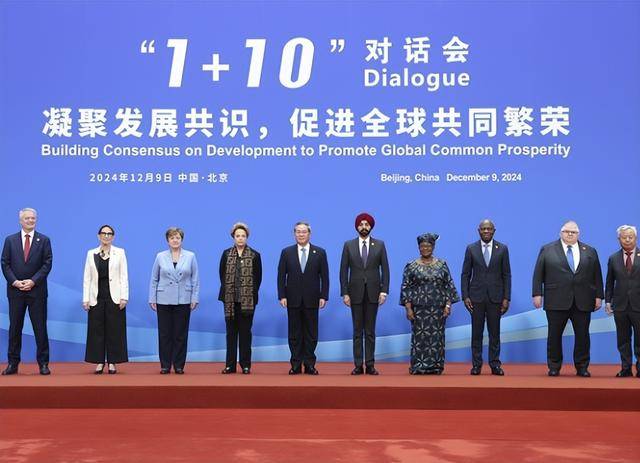
中国“1+10”亮剑全球经济
Sou Hu Cai Jing· 2025-12-12 13:26
文︱陆弃 昨天上午,北京的空气里似乎都弥漫着一种不同寻常的气息。国务院总理李强与全球主要国际经济组织 负责人,再次齐聚北京,举行年度"1+10"对话会。这不仅仅是一次例行的经济交流,更像是一场全球经 济治理的集中展示,是中国向世界宣告:即便世界经济波动起伏,我们依然稳如磐石。十位国际经济组 织负责人集体亮相,恰如全球对中国经济表现的高度认可,也折射出国际社会对中国政策定力的期待。 世界经济增长乏力,全球发展赤字不断扩大,保护主义余波未消,不稳定不确定因素纷至沓来。在这样 的逆风环境下,中国经济"风景这边独好"。从2016年的"1+6"圆桌对话会,到如今扩容升级的"1+10", 中国已经将全球视野和本国实践紧密结合。新增的新开发银行、亚洲基础设施投资银行、国际清算银 行、联合国贸易和发展会议,赋予对话会更丰富的全球南方声音,让老牌机构与新兴力量在同一舞台交 汇。 更令人关注的是,新质生产力的生成。人工智能、绿色发展、可持续发展、数字经济,这些都在推动中 国经济从"量"的增长走向"质"的提升。新能源汽车和光伏设备出口呈现爆发式增长,智能算力、数字经 济核心产业快速扩张,显示中国经济不仅能稳住,更能创新、领先和重塑 ...