
粮食安全

Search documents
精准调控 推动粮食价格保持在合理水平
Qi Huo Ri Bao Wang· 2025-10-14 18:11
Core Viewpoint - The National Food and Strategic Reserves Administration emphasizes the importance of market-oriented grain procurement and policy-based storage to ensure food security and protect farmers' interests, with a stable grain production of over 1.3 trillion jin in the past five years and a target of 1.4 trillion jin for 2024 [1][3]. Group 1: Grain Production and Procurement - Grain production in China has remained stable at over 1.3 trillion jin annually, with a projected increase to 1.4 trillion jin in 2024, marking a significant milestone [1]. - The per capita grain availability has increased by 25 kg compared to the end of the 13th Five-Year Plan, reaching 500 kg, which exceeds the international food security line of 400 kg [1]. - Market-oriented procurement has become the dominant method, accounting for over 90% of total grain purchases, effectively enhancing market circulation and vitality [1]. Group 2: Autumn Grain Harvest and Procurement Strategy - As of October 10, over 50% of the autumn grain harvest has been completed, with significant progress in various crops: nearly 60% of mid-season rice, over 50% of corn, and 55% of soybeans harvested [2]. - The administration plans to focus on four key areas for autumn grain procurement: promoting market-oriented procurement, organizing policy-based storage, optimizing services for farmers, and maintaining a good procurement order [3]. Group 3: Legal and Quality Assurance in Grain Management - The legal framework for grain safety has been progressively improved over the past five years, providing a strong legal guarantee for grain management and storage [4]. - The administration is committed to enhancing the quality safety of grain, which involves comprehensive management across all stages of the supply chain, and aims to strengthen monitoring capabilities [4].
我国粮食产量迈上1.4万亿斤新台阶 人均占有量达500公斤 | “十四五”成绩单
Zhong Guo Jing Ying Bao· 2025-10-14 17:23
Core Insights - China's grain inventory is abundant and the market is stable, ensuring food security for its population [1] - The national grain production has remained stable at over 1.3 trillion jin annually for the past five years, with a projected increase to 1.4 trillion jin in 2024 [1] - The per capita grain availability has increased by 25 kg compared to the end of the 13th Five-Year Plan, reaching 500 kg, surpassing the international safety line of 400 kg [1] Group 1: Supply and Storage - The construction of grain storage and logistics facilities has been advanced, with the national grain standard storage capacity exceeding 730 million tons, an increase of 58 million tons compared to the end of the 13th Five-Year Plan [2] - High-standard grain storage capacity has also increased, with low-temperature storage capacity reaching 220 million tons, up by 70 million tons [2] - The implementation of the "High-Quality Grain Project" has enhanced the supply chain and improved quality, with the total industrial output value of grain enterprises expected to exceed 4 trillion yuan in 2024 [2] Group 2: Autumn Harvest and Market Mechanisms - The autumn grain procurement is underway, accounting for nearly three-quarters of the annual grain production, with market-based procurement becoming the main channel, representing over 90% of the total procurement [3] - Policy-based storage measures, including minimum purchase price policies for wheat and rice, play a crucial role in stabilizing expectations and providing a safety net [3] - The combination of market-based procurement and policy-based storage is deemed suitable for China's conditions and should be continuously improved [3] Group 3: Loss Reduction and Efficiency - Recent surveys indicate that annual losses in grain storage, processing, and transportation account for about 2% of the annual production [4] - The loss rate for farmers' stored grain is approximately 3%, a reduction of 5 percentage points compared to a decade ago [4] - The comprehensive loss rate in grain storage facilities is controlled within 1% over a storage cycle of 3 to 5 years, primarily due to natural losses such as moisture and impurities [4]
高质量完成“十四五”规划 | 粮食市场供应充足 节粮减损成效显著——国新办发布会聚焦“十四五”时期粮食流通改革发展成效
Xin Hua Wang· 2025-10-14 14:17
Core Viewpoint - The press conference highlighted the achievements in grain circulation reform and development during the "14th Five-Year Plan" period, emphasizing the effective guarantee of national food security and support for high-quality economic and social development [1][3][8]. Grain Supply and Circulation - The grain market supply is abundant, with a significant improvement in grain circulation guarantee capabilities [3][4]. - Per capita grain availability has increased by 25 kg compared to the end of the "13th Five-Year Plan," reaching 500 kg, which exceeds the internationally recognized food security line of 400 kg [3][4]. Infrastructure and Industry Development - The construction of grain storage and logistics projects has advanced, with the national grain standard storage capacity exceeding 730 million tons, an increase of 5.8 million tons from the end of the "13th Five-Year Plan" [5]. - The total industrial output value of national grain enterprises is expected to exceed 4 trillion yuan in 2024, reflecting strong industry development [6]. Grain Purchase and Market Stability - The average annual grain purchase volume exceeds 400 million tons, with a focus on optimizing channels for farmers to sell grain [6]. - The government is implementing market-oriented purchasing strategies and policy-based storage to stabilize grain prices [6]. Reduction of Grain Losses - Significant achievements have been made in reducing losses in grain circulation, with effective storage management practices being implemented [8][9]. - The establishment of grain post-harvest service centers in major grain-producing counties has improved storage and processing efficiency [8]. Emergency Supply Capabilities - The grain emergency supply capacity has steadily improved, with a comprehensive emergency response system established at national and local levels [11][12]. - The government is enhancing the collaboration and resource allocation among key grain enterprises to ensure rapid and effective emergency responses [12].

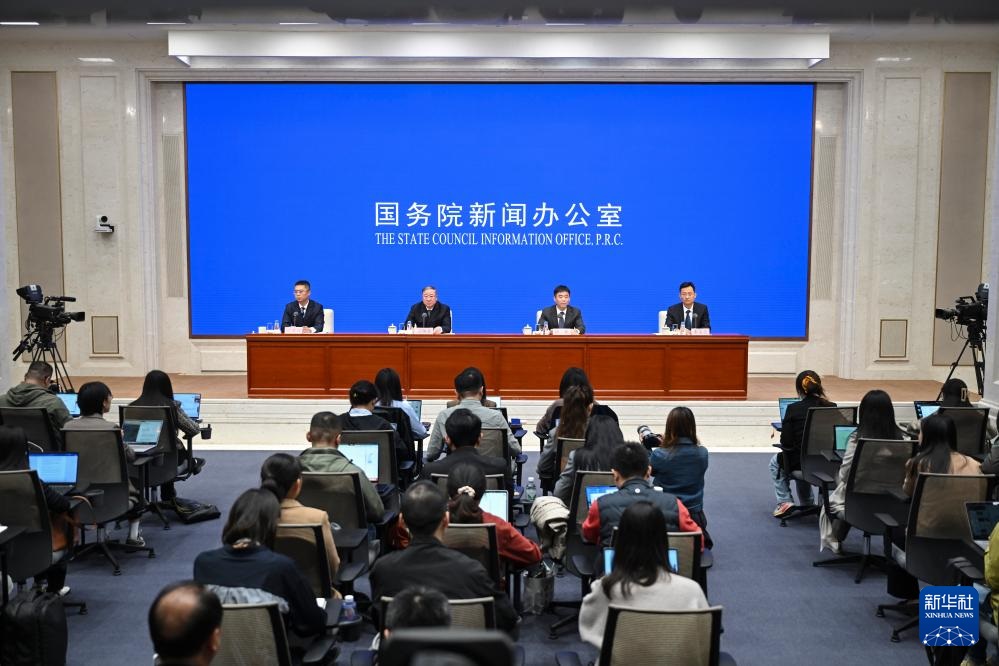
去年我国人均粮食占有量达500公斤
Mei Ri Jing Ji Xin Wen· 2025-10-14 13:37
Core Insights - The Chinese government has effectively ensured food security during the "14th Five-Year Plan" period, providing strong support for high-quality economic and social development [1] Group 1: Grain Production and Supply - National grain production has remained stable at over 1.3 trillion jin annually for the past five years, with a projected increase to 1.4 trillion jin in 2024, marking a significant milestone [3] - Per capita grain availability has increased by 25 kg compared to the end of the "13th Five-Year Plan," reaching 500 kg, which exceeds the internationally recognized safety line of 400 kg [3] - The capacity for grain storage has significantly improved, with the total capacity of standard grain warehouses exceeding 730 million tons, an increase of 58 million tons from the end of the "13th Five-Year Plan" [3] Group 2: Market and Government Collaboration - Market-oriented grain procurement has become predominant, accounting for over 90% of total grain purchases, enhancing market fluidity and vitality [4] - The government has implemented minimum purchase price policies for key grains like wheat and rice, effectively stabilizing expectations and safeguarding farmers' interests [4] - The autumn grain procurement process is underway, focusing on ensuring adequate resources, funding, and transportation to facilitate market participation [4][5] Group 3: Quality Assurance and Regulatory Measures - The safety of grain quality is crucial for public health, and the government has revised over 100 national standards and 50 industry standards to enhance food safety [6][7] - A comprehensive grain quality inspection and monitoring system has been established, improving the capacity for grain quality assurance and safety monitoring [7] - The government emphasizes the need for a collaborative regulatory mechanism to strengthen oversight across the entire food supply chain [7]
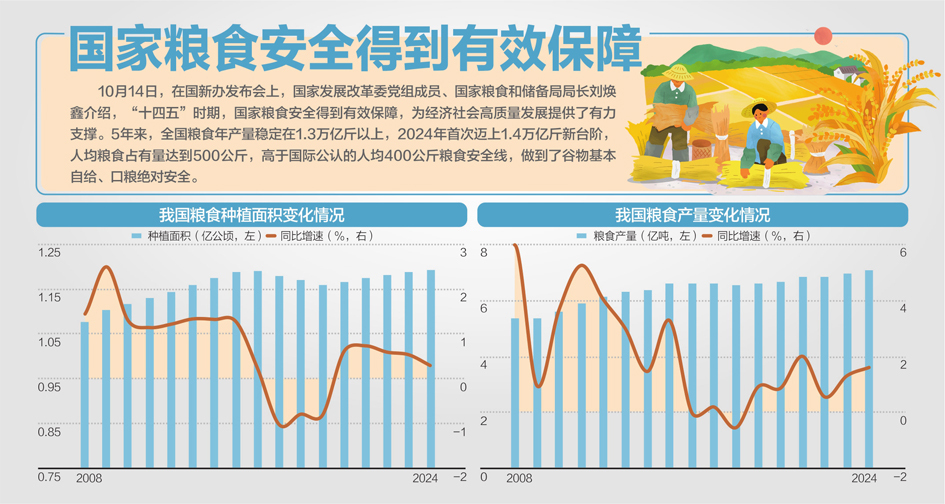
粮食市场供应充足 节粮减损成效显著——国新办发布会聚焦“十四五”时期粮食流通改革发展成效
Xin Hua She· 2025-10-14 13:33
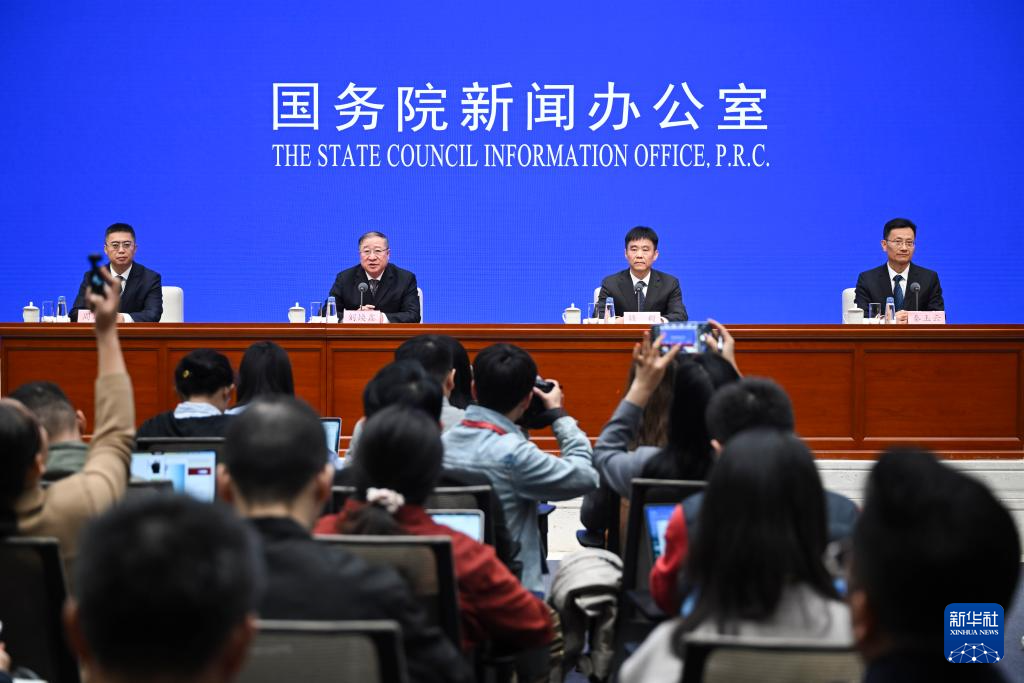
Core Insights - The "14th Five-Year Plan" period has seen significant advancements in grain circulation reform and development, ensuring national food security and supporting high-quality economic development [1] Group 1: Grain Supply and Circulation - The grain market supply is abundant, with a notable increase in grain circulation capacity [2] - Per capita grain availability has risen by 25 kg compared to the end of the "13th Five-Year Plan," reaching 500 kg, surpassing the international safety line of 400 kg [2] - The construction of grain storage and logistics projects has led to a national grain standard storage capacity exceeding 730 million tons, an increase of 5.8 million tons from the end of the "13th Five-Year Plan" [3] Group 2: Grain Purchase and Farmer Support - The average annual grain purchase volume exceeds 400 million tons, with a focus on optimizing channels for farmers to sell grain [3] - The current autumn grain purchase work emphasizes market-oriented acquisition and the implementation of minimum purchase price policies for eligible regions [3] Group 3: Reduction of Grain Losses - Significant achievements have been made in reducing losses in the grain circulation sector, with improved storage techniques and facilities [4] - The establishment of grain post-harvest service centers in major grain-producing counties enhances grain drying, cleaning, and storage services [4] - The promotion of green storage and quality preservation techniques marks a shift towards high-quality grain storage management [4] Group 4: Emergency Supply Capabilities - The grain emergency supply capacity has steadily improved, with a comprehensive emergency response system established at national and local levels [5][6] - The construction of regional grain emergency supply centers has strengthened the emergency response framework [6] - A selection of key grain processing and logistics companies has been designated as national emergency supply enterprises, enhancing resource coordination and response efficiency [6]
新华社权威速览·非凡“十四五”丨保障“舌尖上的安全”,粮食储备部门做了这些工作
Xin Hua She· 2025-10-14 13:01
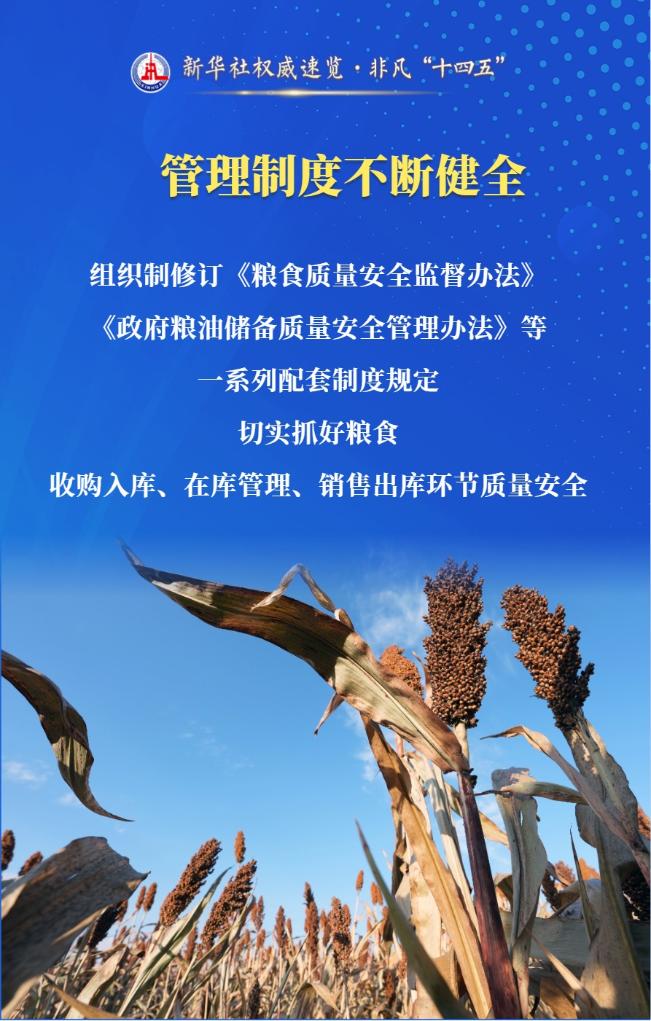
让群众吃得更安全、更放心、更健康,是保障国家粮食安全的重要内容,涉及粮食收购和储存的全 链条、各环节。"十四五"时期以来,为保障人民群众"舌尖上的安全",粮食储备部门做了这些工作。跟 随这组海报,一起了解下。 新华社权威速览 · 非凡"十四 管理制度不断健全 组织制修订《粮食质量安全监督办法》 《政府粮油储备质量安全管理办法》等 系列配套制度规定 切实抓好粮食 收购入库、在库管理、销售出库环节质量安全 新华社权威速览 · 非凡"十 标准体系持续完善 推动制修订粮食领域国家标准100多项 行业标准50多项 制修订《小麦粉》《菜籽油》等国家标准 以及全谷物相关标准 引导粮油适度加工 促进粮油科学健康消费 策划:令伟家 统筹:曹建礼 何险峰 制作:陶叶 ...
一组数据看牢牢端稳的“中国饭碗”
Xin Hua She· 2025-10-14 12:48
新华社权威速览 组数据看年年端稳的 "中国饭碗" 国新办10月14日举行"高质量完成'十四五' 规划"系列主题新闻发布会。国家粮食和物资储备 局有关负责人介绍"十四五"时期粮食流通改革发 展成效。 粮食市场供应充足、运行总体平稳 5年来,全国粮食年产量稳定在1.3万亿斤以上 2024年首次迈上1.4万亿斤新台阶 人均粮食占有量比"十三五"期末 增加25公斤,达到500公斤 做到了谷物基本自给、口粮绝对安全 年均粮食收购量在4亿吨以上 粮食流通保障能力大幅提升 · 全国粮食标准仓房完好 仓容超7.3亿吨 比"十三五"期末增加5800万吨 · 2024年全国粮食企业工业 总产值超过4万亿元 我国储粮技术总体处于世界较先进水平 已建成粮食储运等5个国家级 科技创新平台基地 26个部级粮食技术创新中心和重点实验室 以及百余个地方研发创新平台 启动实施绿色储粮技术集成应用示范 已建立30个技术应用示范点 将逐步增加到100个,覆盖7个储粮生态区 粮食行业高技能人才占技能劳动 者比例达到36.7% 我国粮食应急保障能力不断提升 ↑ 各级粮食应急加工企业由5448家增加到 6872家,增长26% ↑ 粮油应急日加工能力由1 ...

高质量完成“十四五”规划|粮食市场供应充足 节粮减损成效显著——国新办发布会聚焦“十四五”时期粮食流通改革发展成效
Xin Hua Wang· 2025-10-14 12:23
Core Insights - The press conference highlighted the achievements in grain circulation reform during the "14th Five-Year Plan" period, emphasizing the effective guarantee of national food security and support for high-quality economic and social development [2][4]. Grain Supply and Circulation - The per capita grain availability in China has increased by 25 kg compared to the end of the "13th Five-Year Plan," reaching 500 kg, which exceeds the internationally recognized food security line of 400 kg [4]. - The grain circulation guarantee capacity has significantly improved during the "14th Five-Year Plan" period [4]. Infrastructure Development - The construction of grain storage and logistics projects has been advanced, with the total capacity of standard grain warehouses exceeding 730 million tons, an increase of 5.8 million tons compared to the end of the "13th Five-Year Plan" [5]. Industry Growth - The implementation of quality grain projects has led to a strong industry, with the total industrial output value of grain enterprises expected to exceed 4 trillion yuan in 2024 [6]. - The average annual grain purchase volume in China is over 400 million tons, ensuring ample grain stocks and market stability [6]. Food Waste Reduction - Significant achievements have been made in reducing food waste in the grain circulation sector, with effective grain storage management and the establishment of grain post-harvest service centers in major grain-producing counties [8][9]. - The application of advanced storage technologies has improved grain preservation, transitioning towards high-quality storage practices [8]. Emergency Supply Capacity - The grain emergency supply capacity has steadily improved, with a comprehensive emergency response system established at national and local levels [11][12]. - The construction of regional grain emergency guarantee centers has been organized, enhancing the overall emergency response mechanism [12].
新华社权威速览丨一组数据看牢牢端稳的“中国饭碗”
Xin Hua She· 2025-10-14 11:44
新华社权威速览 粮食市场供应充足、运行总体平稳 5年来,全国粮食年产量稳定在1.3万亿斤以上 2024年首次迈上1.4万亿斤新台阶 人均粮食占有量比"十三五"期末 增加25公斤,达到500公斤 做到了谷物基本自给、口粮绝对安全 年均粮食收购量在4亿吨以上 粮食流通保障能力大幅提升 · 全国粮食标准仓房完好 仓容超7.3亿吨 比"十三五"期末增加5800万吨 · 具备低温准低温储藏能力 仓容达到2.2亿吨 比"十三五"期末增加7000万吨 · 2024年全国粮食企业工业 总产值超过4万亿元 我国储粮技术总体处于世界较先进水平 组数据看年年端稳的 "中国饭碗" 国新办10月14日举行"高质量完成'十四五' 规划"系列主题新闻发布会。国家粮食和物资储备 局有关负责人介绍"十四五"时期粮食流通改革发 展成效。 26个部级粮食技术创新中心和重点实验室 以及百余个地方研发创新平台 启动实施绿色储粮技术集成应用示范 已建立30个技术应用示范点 将逐步增加到100个,覆盖7个储粮生态区 粮食行业高技能人才占技能劳动 者比例达到36.7% 我国粮食应急保障能力不断提升 ↑ 各级粮食应急加工企业由5448家增加到 6872家,增 ...
高质量完成“十四五”规划|粮食市场供应充足 节粮减损成效显著——国新办发布会聚焦“十四五”时期粮食流通改革发展成效
Xin Hua Wang· 2025-10-14 11:13
Core Insights - The "14th Five-Year Plan" period has seen significant advancements in grain circulation reform and development, ensuring national food security and supporting high-quality economic development [1][2]. Group 1: Grain Supply and Circulation - The grain market supply is abundant, with a notable increase in grain circulation capacity [2]. - Per capita grain availability has risen by 25 kg compared to the end of the "13th Five-Year Plan," reaching 500 kg, surpassing the international safety line of 400 kg [2]. - The construction of grain storage and logistics projects has led to a national grain standard storage capacity exceeding 730 million tons, an increase of 5.8 million tons from the end of the "13th Five-Year Plan" [3]. Group 2: Grain Purchase and Storage - The average annual grain purchase volume exceeds 400 million tons, with a focus on optimizing channels for farmers to sell grain [3]. - The current autumn grain purchase work emphasizes market-oriented acquisition, ensuring adequate personnel, storage, funding, and transportation [3]. Group 3: Reduction of Grain Losses - Significant achievements have been made in reducing losses in the grain circulation sector, with improved storage methods and technologies being widely adopted [4]. - The establishment of grain post-harvest service centers in major grain-producing counties enhances grain drying, cleaning, and storage services [4]. - Efforts to promote a culture of grain conservation and reduction of waste are being intensified [4]. Group 4: Emergency Supply Capabilities - The grain emergency supply capacity has steadily improved, with a comprehensive emergency response system established at national and local levels [5][6]. - A network of regional grain emergency supply centers has been developed, enhancing the overall emergency response mechanism [6]. - The selection and support of key grain processing and logistics enterprises as national emergency supply entities are underway to ensure rapid and effective responses [6].