
数字金融

Search documents
【董事周·业务发展篇】行业前瞻趋势洞察:商业银行价值重构与未来发展趋势解析
Sou Hu Cai Jing· 2025-12-01 02:10
Core Viewpoint - The Chinese banking industry has transitioned from a phase of scale expansion to a critical period of transformation, focusing on value reconstruction due to narrowing net interest margins and increasing market competition [2][6]. Group 1: Driving Factors of Banking Transformation - The transformation of commercial banks from a scale-oriented to a value-oriented model is driven by three main factors: economic transition, policy guidance, and technological innovation [8]. - The shift in economic focus from high-speed growth to high-quality development necessitates banks to allocate resources towards key areas such as technology, green finance, inclusive finance, and elderly care [8]. - Policies are continuously guiding banks to return to their core functions and promote high-quality development through differentiated regulation and performance assessments [8]. Group 2: Key Areas of Focus - The "Five Major Articles" (Technology Finance, Inclusive Finance, Green Finance, Elderly Finance, Digital Finance) serve as the core framework for high-quality development in the financial sector, aligning with national strategies and addressing homogeneous competition [5][6]. - Digital finance acts as the foundational support for the other four areas, facilitating their development while also being driven by their business needs [6]. Group 3: Implementation Pathways for Value Reconstruction - The "Five Major Articles" provide clear pathways for banks to transform their business models, including encouraging loans combined with external investments in technology finance and supporting carbon credit financing in green finance [7]. - Policies and value reconstruction in banking resonate with each other, becoming significant drivers for transformation [7]. Group 4: Collaborative Development of Digital Financial Ecosystem - The evolution of the digital financial ecosystem is essential for both the implementation of the "Five Major Articles" and the transformation of the banking sector [9]. - Key characteristics of this ecosystem include coordinated policy efforts, deep technological application, and the construction of a digital ecosystem that empowers various industries [9][10]. Group 5: Positioning of Different Types of Banks - Large state-owned commercial banks are expected to lead strategic developments, focusing on national priorities such as technological self-reliance and rural revitalization [21]. - Joint-stock commercial banks should adopt differentiated strategies to avoid competition with state-owned banks, focusing on niche markets [21]. - Regional city commercial banks should leverage their local advantages to integrate into regional economic development, providing tailored financial solutions [21]. Group 6: Future Directions for Banking - The banking industry is moving towards a competition based on value rather than scale, with a focus on creating long-term value through service to the real economy [22]. - Banks that can accurately grasp policy directions, deeply integrate into industrial ecosystems, and continuously innovate service models will thrive in the value reconstruction process [22].


中信建投期货荣获央行金融科技发展奖
Qi Huo Ri Bao· 2025-12-01 00:07
Core Insights - The People's Bank of China announced the winners of the 2024 Financial Technology Development Award, with CITIC Futures and CITIC Securities receiving second and third prizes for their innovative projects, highlighting their commitment to technological innovation in the financial sector [1][3]. Group 1: Award Recognition - CITIC Futures and CITIC Securities were awarded the second and third prizes for their projects "Intelligent Futures Service Platform Based on Multi-Modal Large Models" and "Omni-Channel Hyper-Converged Intelligent Communication Platform" respectively [1]. - This recognition reflects the companies' adherence to the central government's strategy on technological innovation and their efforts to enhance digital financial services [1][3]. Group 2: Project Details - The "Intelligent Futures Service Platform" integrates AI and large model technologies to achieve intelligent management of the entire futures business process, ensuring compliance, data security, and operational convenience [1][2]. - The platform's intelligent customer service module enhances service efficiency by integrating comprehensive financial service capabilities, including intelligent Q&A and knowledge base functions [1][2]. Group 3: Technological Advancements - The "Omni-Channel Hyper-Converged Intelligent Communication Platform" addresses challenges in the futures communication business, such as redundant module construction and data silos, by creating an innovative solution with industry demonstration significance [2][3]. - The project employs a full-stack self-innovation architecture and multi-layered security defense systems to enhance information security and business intelligence levels [3]. Group 4: Future Outlook - CITIC Futures aims to continue driving development through technological innovation, enhancing its ability to serve the real economy, and contributing to the high-quality development of the futures industry [3].

织密消费者隐私“防护网” 夯实数字金融发展根基
Zheng Quan Ri Bao· 2025-11-30 15:29
Core Viewpoint - Digital finance, leveraging advanced technologies like big data, AI, cloud computing, and blockchain, is enhancing the efficiency, accessibility, and inclusiveness of financial services. However, the collection and utilization of sensitive consumer information pose significant privacy risks, necessitating robust privacy protection measures for sustainable development in the sector [1][2]. Group 1: Privacy Protection Framework - China has established a preliminary legal framework for privacy protection in digital finance, providing institutional compliance for the sector [1]. - To strengthen consumer privacy protection, collaboration among various stakeholders is essential, including regulatory bodies, financial institutions, and technology companies [1][2]. Group 2: Responsibilities of Stakeholders - Financial institutions and tech companies must prioritize consumer privacy while pursuing technological innovation and commercial interests, enhancing internal data governance and employing advanced encryption and anonymization techniques [2]. - Industry associations should promote self-regulation by creating industry agreements and conducting training to elevate privacy protection awareness and capabilities among members [2]. Group 3: Consumer Awareness - Consumers are encouraged to enhance their privacy protection awareness and skills, familiarize themselves with relevant laws, and exercise caution when authorizing personal information [2]. - The emphasis on tightening privacy protection is crucial for ensuring that technological innovations in digital finance operate within compliant frameworks, ultimately benefiting the real economy and meeting the growing needs of the public [2].
数字金融蓬勃发展 服务水平全面提升
Zheng Quan Ri Bao Zhi Sheng· 2025-11-30 07:06
Core Insights - The rapid rise of the digital economy is providing opportunities for financial innovation in China's banking sector [1] - Banks are focusing on digital transformation as a core driver to enhance digital financial service capabilities through deep integration of technology and business [1] Group 1: Digital Financial Services - Agricultural Bank of China (ABC) Pu'er Branch has implemented a mobile marketing PAD to enhance inclusive financial services, allowing for quick loan approvals and disbursements [2] - The PAD system enables on-site automatic credit assessment, rapid approval, and online signing, significantly improving the loan application experience and efficiency [2] - The branch plans to further enhance the PAD's features to improve customer experience and manager efficiency in inclusive finance [2][3] Group 2: Financial Ecosystem Development - ABC Pu'er Branch is creating a "finance + scenario" service model, building an internet financial ecosystem that integrates financial services into daily life [3] - The branch focuses on various life needs such as healthcare, education, and entertainment, providing open scenario financial services to meet diverse financial demands [3] Group 3: Smart Community Solutions - In Ningbo, Zhejiang, a smart cash register system developed by a local bank addresses the management needs of community businesses, enhancing operational efficiency and reducing costs [4] - The system includes features for multi-scenario ordering and payment, helping local merchants attract customers and increase transaction volumes [4] - In Quzhou, the first "smart park" system has been implemented, providing online financing services to small and micro enterprises, with a total credit line of 200 million yuan [4] Group 4: Personalized Services in Education - In Yongkang, Zhejiang, a student nutrition meal service system has been launched, allowing parents to participate in meal selection for over 28,800 students across 22 schools [5] - The system digitizes the entire process from voting to meal delivery, ensuring transparency and promoting healthy eating habits among students [5] - The initiative aims to create a supportive environment for schools, parents, and students regarding meal management [5] Group 5: Industry Outlook - Industry experts believe that with continuous technological innovation and improved regulation, the digital transformation of China's banking sector is advancing towards a more in-depth and refined stage [5] - This transformation is expected to unleash further potential, providing robust, intelligent, and sustainable financial support for economic and social development [5]

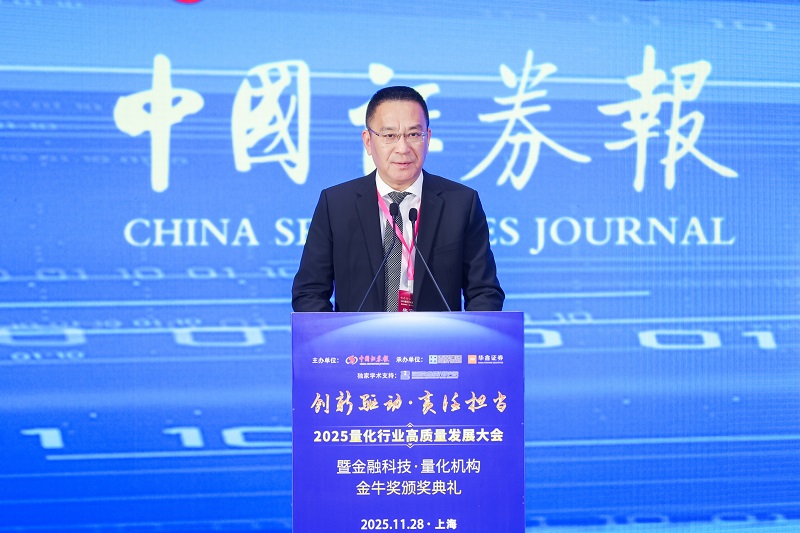
华鑫证券党委书记、董事长俞洋:兼顾创新与责任 量化投资才能行稳致远
Zhong Guo Zheng Quan Bao· 2025-11-29 02:46
Core Insights - The development of quantitative investment is at a new historical starting point, emphasizing the integration of innovation and responsibility for sustainable growth [1][3] - The 2025 Securities Industry Golden Bull Award highlights outstanding quantitative institutions, showcasing their innovation and compliance in the industry [1][3] Industry Development - Quantitative investment has evolved over more than half a century globally, significantly impacting capital market operations [3] - Despite its late start in China, quantitative investment is experiencing a golden development period characterized by innovation and responsibility, driven by a large market capacity and advancing financial technology [3][4] Technological Innovation - Quantitative investment is a core application of financial technology, integrating big data, artificial intelligence, and cloud computing to shift investment management from experience-driven to data-driven and intelligent [3][4] - The focus on rational investment principles enhances decision-making logic and objectivity, reducing irrational trading impacts on the market [3][4] Market Efficiency - Quantitative investment acts as an engine for market efficiency, improving trading liquidity and price discovery mechanisms through innovative trading tools and pricing models [4] Social Responsibility - Financial institutions, including quantitative firms, must uphold social responsibility while innovating, ensuring the protection of investors' legal rights [6] - Quantitative institutions play a crucial role in guiding investor structure optimization and providing professional investment channels [6] Regulatory Alignment - The development of quantitative investment aligns with the regulatory focus on enhancing capital market functions, particularly in technology finance, green finance, and inclusive finance [6] Company Strategy - The company has positioned financial technology at the core of its development strategy since 2017, focusing on technology-driven competitive differentiation [7] - A comprehensive service ecosystem is being built, covering product design, strategy incubation, trading execution, risk control, and custody services [7] Future Outlook - The company aims to leverage this event to reinforce its innovation-driven path and fulfill its industry mission, contributing to the high-quality development of the capital market and the transformation of the real economy [8]
智简不凡,甘心相伴——甘肃银行手机银行8.0正式发布
Zheng Quan Shi Bao Wang· 2025-11-28 07:33
Core Viewpoint - Gansu Bank has launched its new mobile banking version 8.0, emphasizing digital finance and customer needs, aiming to provide safer, more convenient, and warmer mobile financial services [1] Group 1: Service Features - The new mobile banking 8.0 integrates a one-stop service for retirement planning, pension inquiries, and policy interpretations, covering the entire lifecycle from young savings to retirement [2] - A new "certificate aggregation" feature allows users to consolidate their certificates in the mobile app, with automatic maturity reminders and real-time interest calculations for easier asset management [2] - The app collaborates with UnionPay to offer exclusive service areas for local life scenarios, including payment discounts, fuel recharges, and ride-hailing services [2] Group 2: User Experience Enhancements - The app provides a comprehensive view of personal accounts, managing deposits, investments, insurance, and loans, with frequently used functions optimized for easy access on the homepage [3] - A large cash withdrawal appointment feature allows users to select the branch and time online, eliminating the need to queue for in-person services [3] - The bank has developed a service chain based on customer segmentation, offering personalized benefits such as birthday gifts and holiday payment discounts [3] Group 3: Security Measures - AI facial recognition technology enables instant identity verification regardless of lighting or network conditions, enhancing transaction security [4] - Real-time monitoring of mobile threats provides immediate risk alerts, ensuring a secure transaction environment [4] - The updated privacy policy uses plain language to explain permissions, ensuring users are informed about their personal information usage [4] Group 4: Technological Integration - The app integrates Huawei's native smart features, introducing exclusive "small card" and "tap to share" functionalities for HarmonyOS users [5] - Desktop small cards display balance and payment information without needing to open the app, enhancing user convenience [5] - The bank aims to deliver seamless digital financial services across various regions, maintaining a commitment to collaboration, intelligence, and openness [5]
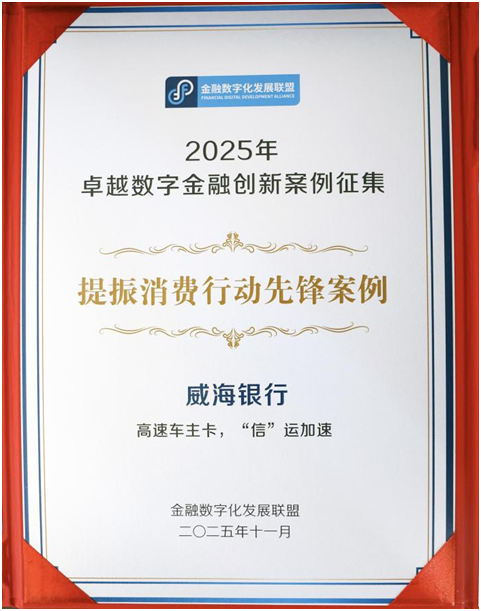
威海银行荣获2025卓越数字金融创新“提振消费行动先锋案例”
Qi Lu Wan Bao· 2025-11-28 05:37
此次获奖是行业对威海银行数字金融创新实践的认可,更是威海银行持续深化消费金融服务的新起点。 未来,威海银行将继续以数字技术为引擎,紧密围绕消费提质升级需求,在产品创新、场景拓展与服务 优化等方面持续发力,进一步扩大金融服务覆盖面,降低消费融资成本,让金融服务更广泛、更精准地 惠及民生消费各领域,为推动经济高质量发展注入更强劲的金融动能。 本次活动聚焦"五篇大文章""消费与经济""数字与科技""风控与治理"等四大关键领域,吸引了近60家金 融机构的百余件案例参与角逐。经过公开征集、人气投票、专家评审及AI评估等多轮严格筛选,一批 具有行业引领性的优秀案例脱颖而出。威海银行申报的案例在产品创新、场景融合等方面表现突出,得 到评审委员会的高度认可。 作为数字金融的坚定践行者,威海银行始终秉持"金融为民"理念,积极响应国家提振消费政策导向,以 科技赋能多元消费场景。此次获奖案例"高速车主卡,'信'运加速",融合ETC通行与信用卡消费双场 景,通过"0元送设备"及高速公路通行优惠等举措,形成了"硬件保障+长期权益"吸引力,将金融工具转 化为客户的"出行伙伴",切实达成"通行省时、用车省钱、支付省心"的便民体验。 近日, ...
德林控股发布中期业绩:净利润增超25倍至2亿港元,数字金融战略加速落地
IPO早知道· 2025-11-28 01:16
Core Insights - Delin Holdings Group reported significant financial growth, with a net profit of HKD 202 million, a year-on-year increase of 2511%, and main revenue of HKD 118 million, up 43% [2] - The company has made substantial progress in four key areas: asset digitization, digital asset investment, global top-tier real estate investment, and global market expansion [2] Group 1: Financial Performance - The company achieved a net profit of HKD 202 million, marking a 2511% increase year-on-year [2] - Main revenue reached HKD 118 million, reflecting a 43% growth compared to the previous period [2] - Other income surged to HKD 194 million, a 528% increase [2] Group 2: Asset Digitization - Delin Holdings initiated the tokenization process for its physical asset, Delin Tower, valued at HKD 500 million, with a tokenized value of HKD 60 million [2] - The tokenization plan for the luxury real estate project ONE Carmel, valued at HKD 312 million, aims to innovate shareholder return models, with special dividends planned for shareholders [2][6] - The company completed the tokenization of equity stakes in tech firms like ByteDance and Kraken, valued at nearly HKD 40 million [2] Group 3: Digital Asset Investment - The group invested HKD 320 million in high-performance mining machines and plans an additional HKD 800 million in digital asset investments, including HKD 560 million in computing power and HKD 240 million in gold digital assets [3] - A partnership with Antalpha has progressed, with an initial investment of nearly HKD 40 million in gold tokens completed [3] - Continuous investment in NeuralFin has resulted in a platform valuation of HKD 546 million, with plans for a U.S. listing [3] Group 4: Global Top-tier Real Estate Investment - The luxury real estate project ONE Carmel in California has received a sales white paper from the California Bureau of Real Estate, passing over 300 strict government approvals [5] - The land valuation for ONE Carmel exceeds HKD 1.56 billion (approximately USD 200 million), with an expected total development value exceeding HKD 15.6 billion (approximately USD 2 billion) [5] Group 5: Global Market Expansion - The group subscribed to new shares of Swiss-listed Youngtimers AG for up to USD 12 million, becoming its largest institutional shareholder, thus expanding its business network to Zurich and Sydney [5] - The company is actively converting physical assets into direct shareholder benefits through innovative digital financial methods, including special dividends from tokenized assets [6] Group 6: Commitment to Shareholders - Major shareholders have committed to lock their shares for 12 months, ensuring no reduction during this period [6] - The company has implemented a stock incentive strategy, utilizing 160 million shares for core team incentives without diluting existing shareholder equity [6] - The CEO emphasized the commitment to financial equality and inclusive finance through the tokenization of scarce assets [7]

高质量发展故事汇丨做好“五篇大文章” 推动金融高质量发展
Xin Hua Wang· 2025-11-27 23:48
Core Viewpoint - The article emphasizes the importance of finance as a vital component of national economic strength and highlights the Chinese government's commitment to developing five key areas of finance: technology finance, green finance, inclusive finance, pension finance, and digital finance, as outlined by President Xi Jinping [2][4][12]. Group 1: Financial Development Strategies - The Chinese government aims to deepen the understanding of the essence of socialist finance with Chinese characteristics, focusing on serving the real economy, risk prevention, and promoting financial innovation [3][9]. - The "five major articles" in finance are identified as key areas for high-quality financial development, which include technology finance, green finance, inclusive finance, pension finance, and digital finance [12]. Group 2: Policy Implementation and Achievements - Recent years have seen the introduction of various policies and frameworks to support the development of the "five major articles," including the establishment of a 200 billion yuan technology innovation relending program and a 5,000 billion yuan technology innovation and transformation relending program [5][6]. - By the end of September 2023, technology loans accounted for 30.5% of all new loans, with a year-on-year growth of 22.3% in loans to technology SMEs, significantly outpacing overall loan growth [7]. Group 3: Sector-Specific Developments - The green finance sector has seen a loan balance of 43.5 trillion yuan, with a year-on-year increase of 22.9%, and a total issuance of green bonds reaching 4.9 trillion yuan [7]. - Inclusive finance has expanded from simple credit offerings to a comprehensive service model that includes credit, insurance, and wealth management, ensuring financial services are accessible at the community level [6][10]. Group 4: Future Directions - The government plans to enhance support for technology finance by improving incentive mechanisms and providing comprehensive financial services for technology enterprises, aiming to create a virtuous cycle between technology, industry, and finance [9]. - There is a strong focus on developing green finance to facilitate a comprehensive green transformation of the economy, with an emphasis on funding for environmentally friendly projects [10].
深耕数字金融 服务政企民生
Nan Fang Du Shi Bao· 2025-11-27 23:14
Group 1 - The core viewpoint of the article highlights the innovative initiatives by China Construction Bank's Jiangmen branch in integrating digital financial services into various sectors, particularly focusing on the digital RMB and its applications in public services and education [2][3][4] - The Jiangmen branch has launched a "Smart Canteen System" that utilizes technology to enhance the efficiency of traditional canteen operations, providing a new approach for digital transformation in consumption scenarios [3][4] - The digital RMB fiscal distribution solution introduced by the bank aims to provide secure, efficient, and intelligent salary payment services for government departments, marking a significant step in the development of digital governance [2][4] Group 2 - The "Smart Canteen System" incorporates data analysis capabilities to create a fully digital management process, including online meal ordering, intelligent meal preparation, and facial recognition payment, thereby reducing food waste and improving service efficiency [4] - The system allows students to make payments through facial recognition without the need for physical cards or mobile phones, addressing common issues such as long queues and payment difficulties in traditional canteens [4] - The initiatives by the Jiangmen branch not only enhance the efficiency of fund circulation but also promote the digital transformation of management models, contributing to the digital development of the Guangdong-Hong Kong-Macao Greater Bay Area [4]

