
战略性新兴产业

Search documents
重庆计划构建世界级智能网联新能源汽车产业集群
Zhong Guo Xin Wen Wang· 2025-11-25 17:43
Core Viewpoint - Chongqing aims to establish itself as a global hub for intelligent connected new energy vehicles during the 14th Five-Year Plan period, focusing on enhancing its manufacturing competitiveness and modern industrial system [1][2] Group 1: Intelligent Connected New Energy Vehicles - Chongqing's intelligent connected new energy vehicle industry has entered the national first tier since the beginning of the 14th Five-Year Plan [1] - The city plans to strengthen leading enterprises, enhance the automotive industry chain's control, and develop world-class high-end automotive brands over the next five years [1] - The initiative includes forming an "AI + Automotive" ecological alliance to accelerate the development of a convenient ultra-charging city [1] Group 2: Modern Industrial System Development - The proposal emphasizes the creation of a trillion-level industrial cluster and the upgrade of traditional industries, focusing on enhancing manufacturing capabilities and quality standards [2] - Chongqing will implement a new generation of electronic information manufacturing innovation plan to elevate the scale and capability of leading industries [2] - The city aims to cultivate strategic emerging industries in fields such as biomedicine and smart medical equipment, and develop a low-altitude economy [2] Group 3: Technological Innovation and Manufacturing - The city will promote technological innovation to lead the construction of a modern industrial system, aiming to establish a competitive advanced manufacturing center and an influential industrial innovation center [2]
学习规划建议每日问答丨为什么要着力打造新兴支柱产业
Xin Hua Wang· 2025-11-25 05:49
Group 1 - The core idea emphasizes the importance of developing emerging pillar industries for the qualitative enhancement of the economy, which is crucial for meeting the evolving social contradictions in China [2] - The strategic emerging industries are characterized by high knowledge and technology intensity, low material resource consumption, significant growth potential, and comprehensive benefits, contributing to the improvement of economic development quality [2] - By 2025, the added value of strategic emerging industries is expected to account for over 17% of GDP, an increase of 5.3 percentage points compared to the end of the 13th Five-Year Plan, significantly contributing to high-quality economic development [2] Group 2 - The urgency of developing emerging pillar industries is highlighted due to challenges faced by key industries such as mining, metallurgy, and chemicals, which are experiencing supply-demand imbalances and low price levels [3] - Maintaining reasonable economic growth requires accelerating the development of emerging pillar industries to provide solid support for job expansion and income increase [3] Group 3 - The development of emerging pillar industries is crucial for advancing the modernization of the industrial system, as historical evidence shows that technological revolutions lead to the emergence of new industries [4] - Countries that seize opportunities during technological revolutions successfully modernize their industrial systems, while those that fail to do so risk losing international competitiveness [4] - The current technological revolution and industrial transformation present both opportunities and challenges for China's industrial development, necessitating the establishment of new emerging pillar industries such as new energy and aerospace [4]
学习规划建议每日问答|为什么要着力打造新兴支柱产业
Sou Hu Cai Jing· 2025-11-25 04:10
第三,着力打造新兴支柱产业对推进产业体系现代化举足轻重。历史证明,每一次科技革命都会催生出 一批新兴支柱产业,推动产业体系"新陈代谢"。抓住机遇的国家成功实现产业体系现代化,有的保住强 国地位,有的新进入发达国家行列;没有抓住机遇的国家失去国际竞争力,有的退出强国行列,有的掉 入"中等收入陷阱"。当今世界,新一轮科技革命和产业变革加速突破,辐射范围之广、影响程度之深前 所未有,涌现出一大批新技术、新产业、新业态、新模式,引发全球产业结构和布局趋势性调整甚至重 塑。"十五五"时期,我国产业发展面临机遇与挑战并存、竞争加剧的严峻复杂形势,必须把握住新一轮 科技革命和产业变革机遇,将新能源、新材料、航空航天、低空经济等打造成为新兴支柱产业,加快建 设现代化产业体系。(完) 新华社北京11月25日电 支柱产业是国民经济的基本盘,在现代化产业体系建设中居于牵一发而动全身 的重要地位。《中共中央关于制定国民经济和社会发展第十五个五年规划的建议》提出:"着力打造新 兴支柱产业。"这是时代所需、发展所需,意义重大、影响深远。 第二,着力打造新兴支柱产业对保持经济量的合理增长尤为迫切。近年来,在国际贸易环境恶化、国内 市场需求 ...
上海松江:执绿绘新城 生态护山水
Zhong Guo Huan Jing Bao· 2025-11-25 01:51
Core Viewpoint - The article highlights the ecological and sustainable development initiatives undertaken by Songjiang District during the "14th Five-Year Plan" period, emphasizing the integration of ecological preservation with economic growth and urban development. Group 1: Ecological Development - Songjiang District is committed to an ecological priority and green development path, launching a national ecological civilization construction demonstration zone and promoting a "waste-free city" initiative [1][4] - The agricultural green development index ranks among the top in the country, with a green food certification rate of 48.9%, maintaining the first position in the city for five consecutive years [1] - The forest coverage rate in the district increased from 18.57% to 19.42%, and it has received "excellent" ratings in water source ecological compensation assessments for five consecutive years [1] Group 2: Green Technology and Industry - Songjiang District focuses on strategic emerging industries such as integrated circuits, biomedicine, artificial intelligence, and new materials, driving the economy towards greener practices [2] - AkzoNobel's Shanghai decorative paint factory has achieved 45% of its electricity from clean energy and aims to increase this to over 90% by 2026 [2] - The district has nurtured 17 national-level green factories and one national-level green park, showcasing its commitment to green manufacturing [2] Group 3: Water and Air Quality Management - The district has implemented a comprehensive "five waters coordination" action plan, improving water quality and managing over 20,000 kilometers of river channels [3] - By 2024, the average PM2.5 concentration is expected to drop to 31.5 micrograms per cubic meter, with an air quality good rate stabilizing at 86.3% [3] Group 4: Waste Management - Songjiang has established a "waste-free city" action system, achieving a household waste recycling rate of 46.65% [4] - The Tianma solid waste disposal project has significantly enhanced the region's waste disposal capacity, earning multiple national honors [4] Group 5: Biodiversity and Ecological Integration - The district is enhancing biodiversity protection, with a focus on creating habitats for protected species and conducting biodiversity baseline surveys [5] - In 2024, the district recorded various protected plant and animal species, indicating successful ecological conservation efforts [5] Group 6: Environmental Governance - Songjiang is improving its modern environmental governance system by enhancing government responsibility and encouraging corporate self-regulation [7] - The district has established a comprehensive ecological environment monitoring platform, covering air, surface water, and soil [7] Group 7: Business Environment and Community Engagement - The district is optimizing its business environment, focusing on enhancing enterprise experiences and achieving efficient administrative processes [8] - Low-carbon living practices are being promoted, with communities like Thames Town achieving significant reductions in carbon emissions [8] Group 8: Future Development Goals - Songjiang aims to continue transforming ecological advantages into developmental benefits, focusing on advanced manufacturing, new productivity, and rural revitalization [8]


这家券商首席经济学家,获任副总裁
中国基金报· 2025-11-24 15:40
中国基金报记者 江右 粤开证券 还公告拟 通过子公司粤开资本设立总规模40亿元的产业升级股权投资合伙企业。该基金将重点布局电子信息、生物医药、新型储 能等战略性新兴产业,培育产业新动能。 【导读】粤开证券启动新一轮战略布局 11月24日晚间, 粤开证券 一口气发布多条公告,官宣 启动新一轮战略布局 。 这一系列公告中,包括 设立战略协同部门、 任命高级管理 人员 、设立40亿元产业基金等举措 。 首席经济学家罗志恒获任副总裁 粤开证券公告显示,任命公司首席经济学家、 研究院院长罗志恒 为 公司副总裁,总裁崔洪军 代行 首席信息官 职责 ,同时 公司 新设立 一级 战略协同部门。 粤开证券表示, 这一系列调整旨在进一步 打破 业务壁垒, 提升公司整体运营效率 。 罗志恒成为又一位"研而优则仕"的券商首席经济学家。资料显示,罗志恒为经济学博士,主要研究方向为宏观经济、财政理论与政策。 近 年来,粤开 证券 研究院率先走出了一条有别于传统卖方研究的、具有粤开特色的研究之路,研究成果尤其是财政与地方债务研究成果展现 出了良好的品牌效应与市场影响力。 " 此次 晋升体现了粤开证券对研究业务的高度重视,研究支持业务的战略 ...

上半年我国市场主体总量超1亿户 新设外商投资企业增长97.4%
Mei Ri Jing Ji Xin Wen· 2025-11-24 04:09
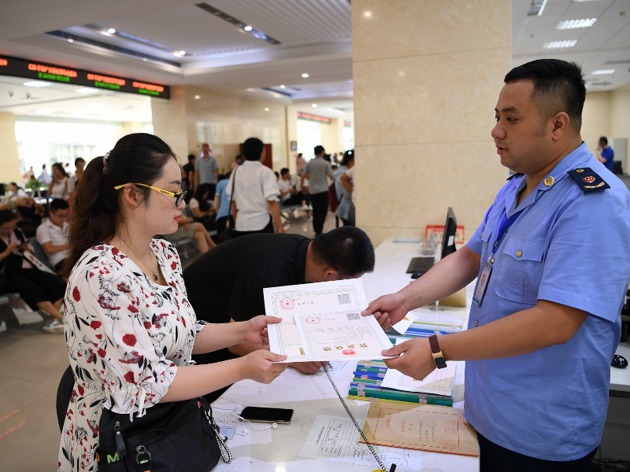
Group 1 - The total number of market entities in China exceeded 100 million, reaching 103 million by the end of June 2018, with enterprises accounting for 32.3 million, or 31.4% of the total [1] - In the first half of 2018, 9.983 million new market entities were established, representing a year-on-year growth of 12.5%, with an average of 55,200 new entities created daily [1] - The structure of newly established enterprises is continuously optimizing, with the service sector seeing a significant increase of 14.3% year-on-year, while the secondary industry grew by 11.7% [1] Group 2 - In key industries, the growth rate of newly established manufacturing enterprises improved from a decline of 1.9% in the first quarter to a growth of 1.9% [2] - Foreign-invested enterprises showed rapid growth, with 45,000 new establishments, marking a 97.4% increase, particularly in the Guangdong-Hong Kong-Macao Greater Bay Area [2] - The emergence of a large number of new market entities is a significant indicator of entrepreneurial and innovative vitality, contributing to employment, tax revenue, and healthy economic development [2]
演话剧、科技秀、微宣讲……一堂别样思政课激发青年“踏浪新质潮”
Xin Hua She· 2025-11-24 01:58
新华社天津11月23日电(记者宋瑞)日前,在天津天开高教科创园,一场别开生面的思政课——"青春华章·踏浪新质潮"学习贯彻党的二十届 四中全会精神网络主题宣传和互动引导活动,引发了广大青年的共鸣与思考。 "父亲一生基于国家需要做出三次重大选择。"于敏之子于辛深情讲述时,台下青年学子聆听得格外专注。 "新质生产力不再是传统的要素叠加,而是由科学突破、技术裂变、要素重构与产业跃迁共同催生的新的先进生产力质态。"中国新一代人工智 能发展战略研究院执行院长龚克的解读,为青年学子打开了通向未来的视野。 展望未来,龚克描绘了令人振奋的发展图景:以人工智能为代表的新一代信息技术和新能源、新材料、航空航天、低空经济等战略性新兴产业 集群发展将蓬勃发展;量子科技、生物制造、脑机接口等未来产业将蓄势待发;更具全球影响力的教育中心、科学中心、人才中心将加速崛 起。 中国社会科学院学部委员、中国社会科学院大学社会与民族学院院长张翼说:"新质生产力最大的特点是创新,本质是先进生产力。它既包括 理工科的科学、技术和业态创新,也包括文科的文化制度、管理和制度创新。" 张翼认为,青年一代具备快速学习的能力,能够将科技创新成果迅速转化为实际生产 ...

信银金投落户广州助力科创与产业升级
Zhong Guo Jing Ying Bao· 2025-11-23 23:56
Core Viewpoint - The establishment of Xinyin Financial Asset Investment Co., Ltd. (Xinyin Jintou) in Guangzhou marks a significant step in enhancing the financial ecosystem in the region, supporting the development of strategic emerging industries and the "specialized, refined, distinctive, and innovative" sectors [1][2][3]. Group 1: Company Establishment and Objectives - Xinyin Jintou has received approval to commence operations with a registered capital of RMB 10 billion, making it the second financial asset investment company approved in China [1]. - The company aims to engage in market-oriented debt-to-equity swaps and equity investment, focusing on strategic emerging industries and supporting the private economy [1][3]. Group 2: Impact on Guangzhou's Financial Landscape - The establishment of Xinyin Jintou will enhance the diversity and depth of Guangzhou's financial services, contributing to the construction of a modern financial service system [2]. - It is expected to attract various investment institutions to Guangzhou, strengthening the resource allocation function of the financial market and guiding more financial capital towards key sectors of the real economy [2][3]. Group 3: Support for Innovation and Industry - Xinyin Jintou will provide crucial capital support for Guangzhou's technology innovation industry, optimizing the synergy between finance and industry [2]. - The company plans to focus on early-stage, small, long-term, and hard technology investments, facilitating the transformation of technological achievements and promoting the development of new productive forces [2][3]. Group 4: Future Plans and Government Support - The Guangzhou government will support Xinyin Jintou's operations by improving work mechanisms and policy services to create a favorable environment for quality capital to settle in the city [4]. - Future initiatives include integrating government investment funds, establishing a regular communication platform, optimizing project recommendations, and expanding the local private equity management base to attract more social and foreign long-term capital [4].


保险业支持科技自立自强存量资金同比增长107%
Zheng Quan Shi Bao· 2025-11-23 23:05
Core Insights - The China Insurance Industry Association released the "2024 China Insurance Industry Social Responsibility Report," highlighting the industry's commitment to social responsibility through detailed data and over 630 case studies [1] Group 1: Service to National Strategy - The insurance industry focuses on supporting national strategies and key areas, acting as an economic stabilizer and social stabilizer [2] - Insurance funds are being directed towards strategic emerging industries, advanced manufacturing, and new infrastructure, with significant investments in rural revitalization and technological self-reliance [2] Group 2: Consumer Protection and Welfare - In 2024, the long-term health insurance sector issued 44.89 million new policies with a total insurance amount of 150.30 trillion yuan, while life insurance saw 67.03 million new policies with an insurance amount of 18.68 trillion yuan [3] - The industry provided personal insurance coverage for over 760 million elderly individuals, marking a 55% increase [3] Group 3: Risk Management and Emergency Response - The insurance sector provided disaster risk coverage for 64.39 million households, amounting to 22.36 trillion yuan in 2024 [4] - Liability insurance offered coverage of 70.53 trillion yuan, with claims payments increasing by 12.34% [4] Group 4: International Cooperation and Trade Support - The insurance industry provided risk coverage for cross-border trade amounting to 2.37 trillion USD, reflecting an 8% increase [4] - Insurance support for Belt and Road Initiative projects reached 1.14 trillion USD, with a 14% growth in international cooperation activities [4]
信银金投落户广州 助力广州AIC生态布局完善
Zhong Guo Jing Ying Bao· 2025-11-23 22:57
Core Viewpoint - The establishment of Xinyin Financial Asset Investment Co., Ltd. (信银金投) marks a significant step for CITIC Bank in supporting the development of technology finance and enhancing its comprehensive financial services capabilities [1][2]. Group 1: Company Overview - Xinyin Financial Asset Investment Co., Ltd. has received approval to commence operations with a registered capital of RMB 10 billion, making it the second licensed financial asset investment company among joint-stock banks in China [1]. - The company is strategically located in Guangzhou, which is expected to enhance the financial ecosystem and diversify the financial services landscape in the region [2]. Group 2: Strategic Focus - Xinyin Financial will focus on market-oriented debt-to-equity swaps and equity investment in strategic emerging industries and specialized sectors, thereby supporting technology enterprises and the private economy [1][3]. - The company aims to leverage CITIC Group's comprehensive financial resources to create a closed-loop service model for technology enterprises, integrating equity, debt, and other financial services [3]. Group 3: Regional Impact - The establishment of Xinyin Financial is anticipated to provide significant capital support to Guangzhou's innovation-driven industries, optimizing the synergy between finance and industry [2][4]. - The local government plans to support Xinyin Financial's operations by enhancing mechanisms and policies to attract more quality capital to Guangzhou, thereby fostering a robust financial environment [4].