生态文明建设

Search documents
以“生态文明建设”之笔绘就绿色发展新图景 大美中国画卷徐徐铺展
Yang Shi Wang· 2025-08-10 05:56
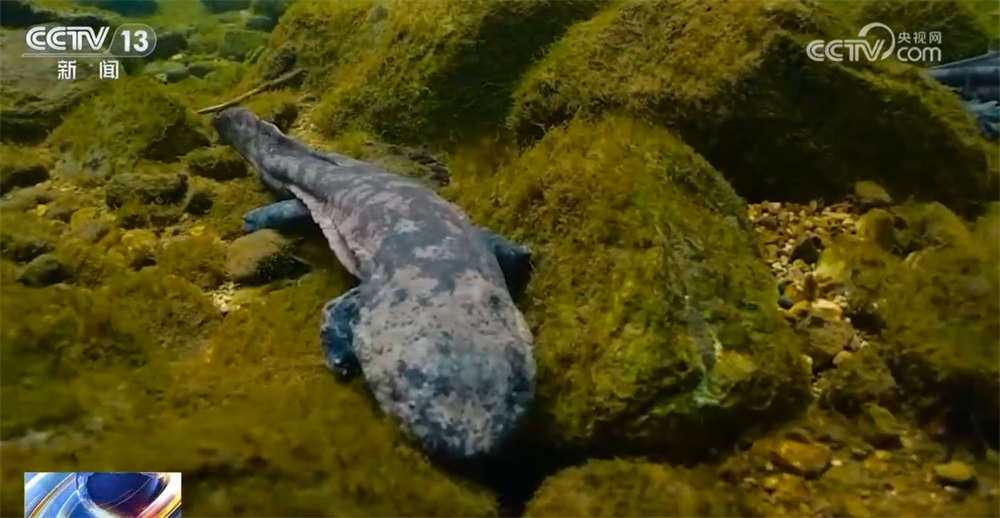
新疆巴里坤:天山深处已入秋 松林泼金染翠 立秋之后,新疆哈密市巴里坤县东天山的松林迎来了一年中最富诗意的时刻,黄绿交织的枝叶为天山脚下展开一幅灵动的秋日画卷。 这两天,山西省大同市云州区的火山群出现了如梦似幻的云海景观。 央视网消息:透过大美中国,聚焦生态文明建设。湖南张家界大鲵国家级自然保护区是我国最大的以大鲵及其栖息地资源环境为主要保护 对象的自然保护区,保护范围涉及745条河流。 在大鲵救护繁育中心,科研人员模拟大鲵在野外的栖息地环境,人工搭建溪沟及洞穴,让大鲵安居其中,实现自然配对繁殖。目前,大鲵 中心已建成仿生态繁殖区近3000平方米,共100多个大鲵洞穴。最新数据显示,张家界野生大鲵数量增长至1.38万尾,相较于2015年的7000余 尾增加近1倍。 漫步山间,松林俨然成为天地间最灵动的调色盘。墨绿色的松针沉稳如历经沧桑的卫士,挺立枝头;新生的松针则被秋阳披上浅黄,在深 绿林海中跳跃闪烁。深入林间,阳光穿透枝叶缝隙,在林地织就跃动的光斑。据了解,东天山秋松的最佳观赏期在8月中下旬至10月中旬,可 沿巴里坤东天山森林公园步道深入松林秘境,感受这幅大自然挥就的金秋油画。 山西大同:云漫山间 火山群出现 ...

感知生态之变丨绿水青山就是金山银山
国家能源局· 2025-08-10 03:09
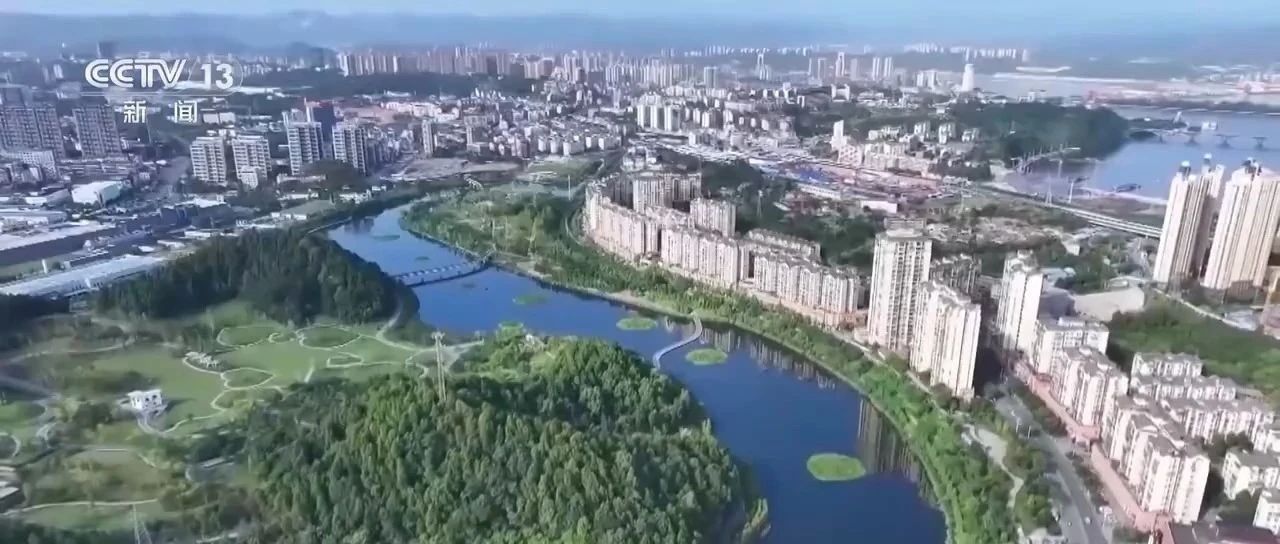
Core Viewpoint - The article emphasizes the transformation of ecological civilization in China, highlighting the "Two Mountains" theory proposed by Xi Jinping, which integrates ecological protection with economic development, leading to significant advancements in building a beautiful China [2]. Group 1: Ecological Transformation in Anji - Anji has seen a remarkable shift from a "stone economy" to a "green economy," with the GDP increasing from 8.896 billion to 67.557 billion [12]. - The carbon sequestration capacity of bamboo forests has increased to 6.6 tons per hectare, generating over 28 million yuan in annual income for local bamboo farmers [5]. - Water quality in local streams has improved from class IV to class II, with summer tourism revenue exceeding 200 million yuan [7]. Group 2: Broader Implications of Ecological Practices - The successful implementation of the "Two Mountains" theory in Anji has become a national consensus and action guide, promoting ecological civilization across China [12]. - The restoration of former mining areas into eco-tourism sites has attracted over 1.2 million visitors annually, showcasing the economic benefits of ecological restoration [11]. - The establishment of pilot mechanisms for realizing the value of ecological products in 12 regions has generated over one trillion yuan in market vitality [22].
从环保设施开放看见治理之道
Ren Min Ri Bao· 2025-08-10 02:09
Core Viewpoint - The opening of environmental protection facilities to the public is a practical measure to build and improve the ecological environment governance system, enhancing public awareness and participation in ecological civilization [1][2][3] Group 1: Public Engagement - The number of open environmental protection facilities has reached 2,512 across all prefecture-level cities, covering both traditional and new categories of facilities [1] - Public visits to these facilities help to visually demonstrate the effectiveness of environmental protection efforts and disseminate knowledge about environmental issues [1][2] - Engaging the public in monitoring and understanding environmental processes fosters trust between the government, enterprises, and the community, reducing misconceptions about industries like petrochemicals [2] Group 2: Innovative Approaches - The methods of opening environmental facilities have evolved from traditional site visits to include online live streaming, allowing real-time access to operational data [3] - This shift towards digital engagement encourages proactive environmental governance, pushing companies to take more responsibility for their environmental impact [3] - Expanding the frequency, range, and methods of facility openings can invigorate public enthusiasm for environmental protection and contribute to the construction of a beautiful China [3]
新华社权威快报丨《绿水青山绘就美丽画卷——生态文明建设的中国创新与世界意义》智库报告发布
Xin Hua She· 2025-08-10 01:59
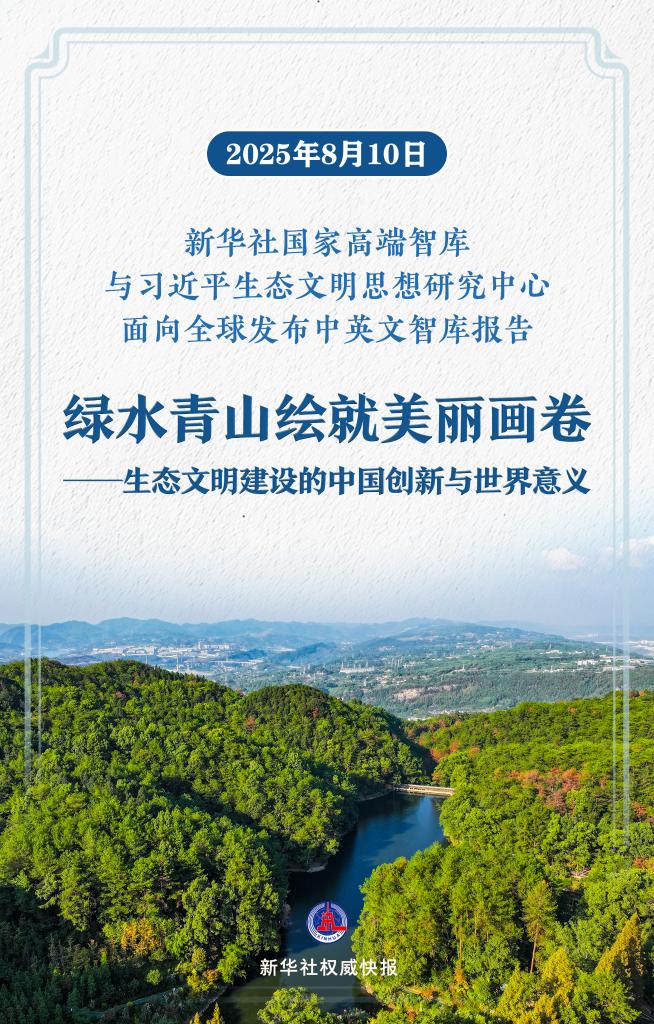
Core Insights - The report titled "Green Water and Green Mountains Paint a Beautiful Picture: China's Innovations in Ecological Civilization Construction and Their Global Significance" was jointly released by the National High-end Think Tank of Xinhua News Agency and the Xi Jinping Ecological Civilization Thought Research Center [3] - The report emphasizes the concept that "Green water and green mountains are as valuable as mountains of gold and silver," highlighting China's unique philosophical thought and cultural heritage in ecological civilization [3] - Over the past 20 years, under the guidance of this concept, China has integrated ecological environment protection as a fundamental aspect of development, transforming ecological advantages into economic benefits and achieving remarkable ecological and green development miracles [3] Summary by Sections - **Ecological Civilization Concept** - The report reveals the multiple value pursuits of harmony between humans and nature, humans and each other, and humans and economic society [3] - It showcases the philosophical thought, cultural depth, and linguistic charm unique to the Chinese nation [3] - **Global Contribution** - Since the 18th National Congress of the Communist Party of China, there has been a strong emphasis on promoting the concept globally and participating in global environmental governance [3] - The report asserts that the concept is not only China's but also belongs to the world, contributing to the construction of a community with a shared future for mankind and sustainable development [3] - **Report Distribution** - The full report is approximately 16,000 words and is being disseminated globally in both Chinese and English through various platforms including websites, journals, and social media [3]
“两山”理念重塑美丽中国
Xin Hua Wang· 2025-08-09 02:21
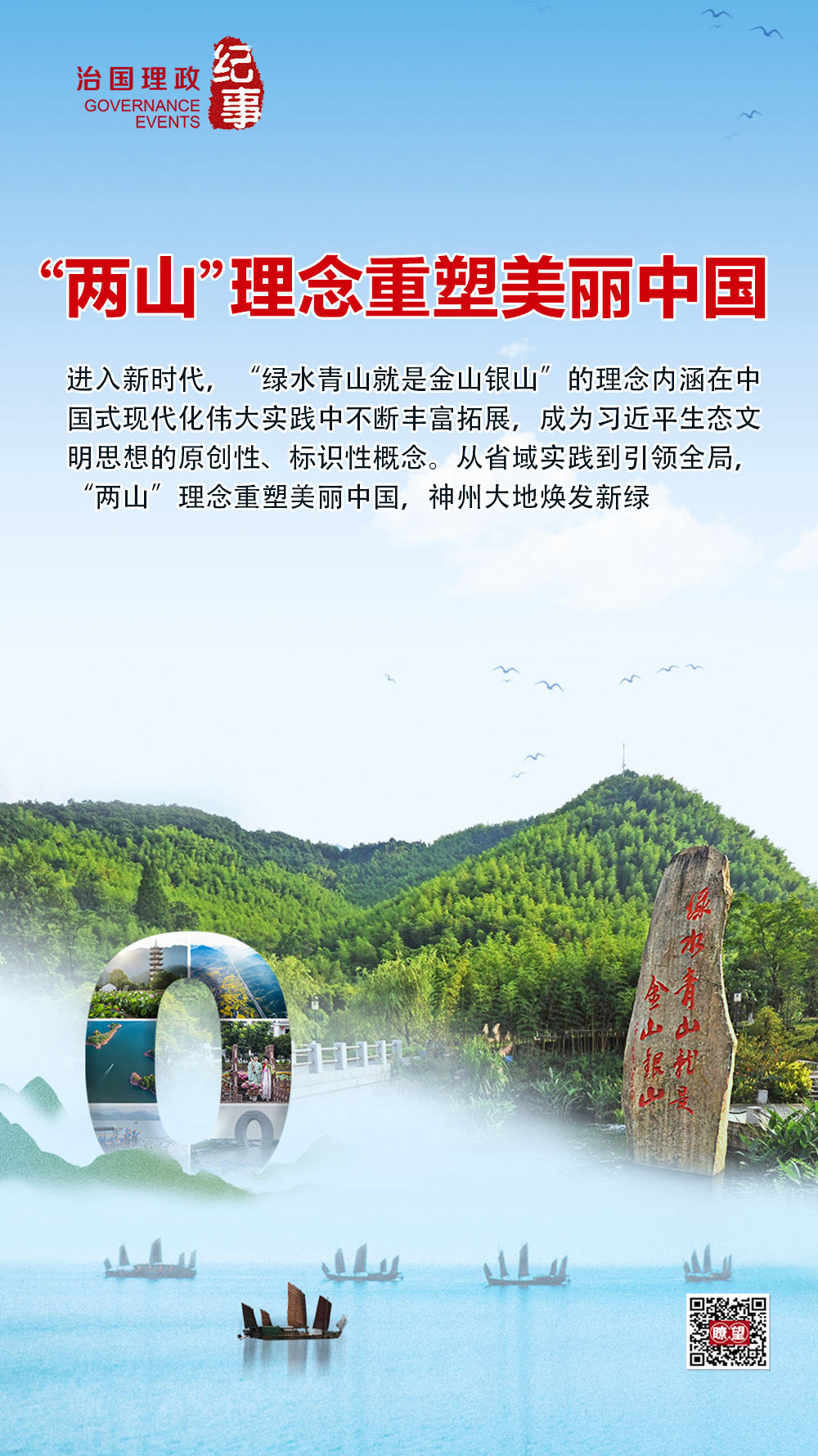
Core Concept - The "Two Mountains" concept, which emphasizes the unity of ecological protection and economic development, has been pivotal in reshaping China's ecological civilization and promoting sustainable development practices across the nation [1][5][17]. Group 1: Historical Context and Development - The "Two Mountains" concept was first introduced by Xi Jinping in 2005 during a visit to Anji County, Zhejiang, highlighting the need for harmony between economic growth and environmental protection [3][4]. - Since the 18th National Congress of the Communist Party, this concept has fostered a broad consensus on ecological protection and green development, leading to significant changes in ecological civilization practices in China [5][18]. Group 2: Regional Initiatives and Achievements - Zhejiang Province has implemented five rounds of the "811" action plan, focusing on environmental protection and green development, resulting in substantial improvements in ecological conditions [3][8]. - By the end of 2022, Zhejiang established its first regional ecological product trading center, facilitating the trading of ecological resources and generating significant economic activity, with a total transaction amount of 13.101 billion yuan [3][14]. Group 3: Economic and Environmental Metrics - China's renewable energy generation capacity has surpassed that of coal, with a 21% year-on-year increase in new renewable energy installations in the first quarter of 2025, accounting for approximately 90% of new installations [4][23]. - In 2024, China's production of new energy vehicles is expected to exceed 10 million units, representing 65% of the global total, marking a decade of leadership in this sector [4][23]. Group 4: Global Contributions and Recognition - China's efforts in ecological civilization have been recognized globally, with significant contributions to sustainable development and environmental governance, positioning the country as a leader in global ecological initiatives [29][28]. - The "Two Mountains" concept has not only transformed China's development path but also offers a model for sustainable development that can be applied globally, addressing the challenges of environmental degradation [26][29].
辉煌60载·魅力新西藏|高原绿 幸福路
Xin Hua Wang· 2025-08-08 17:02
0:00 配音:王帅龙 新华社新媒体中心 新华社西藏分社 联合出品 2025年是西藏自治区成立60周年。今年6月27日,习近平总书记给西藏林芝市巴宜区林芝镇嘎拉村全体 村民回信。一封穿越青藏高原的回信,字里行间饱含着总书记对西藏生态建设的殷切嘱托。 监制:翟永冠、洛登 编导:邱星翔、陈倩 记者:黄智琪、丁增尼达、庄云凯、普布次仁、潘一景 从一棵百年桃树的生态守护,到全区47个自然保护区的系统建设。西藏各族人民用60年的接续奋斗,在 雪域高原谱写了生态文明建设的时代华章。 ...

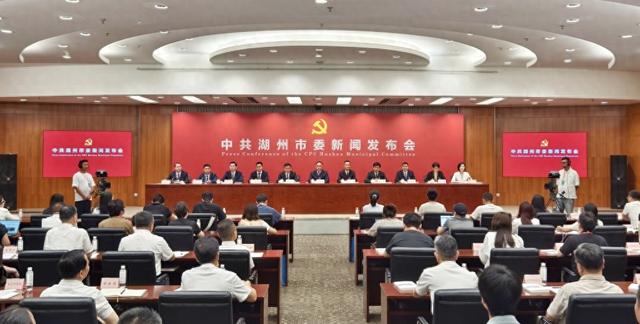
逐绿之城湖州,交卷
Xin Lang Cai Jing· 2025-08-08 13:17
Core Insights - Huzhou has made significant progress in implementing the "Lucid waters and lush mountains are invaluable assets" concept over the past 20 years, transitioning from an ecological civilization "pioneer" to a "demonstration" city, and achieving a shift from extensive economic growth to green and low-carbon development [1][3] Group 1: Ecological and Environmental Achievements - Huzhou has established over 130 ecological civilization construction standards, with 13 local standards elevated to national standards [3] - The city has seen a 57.03% improvement in PM2.5 concentration and a 56.51% increase in air quality over the past years, with the water quality entering Taihu Lake maintaining Class III or above for 17 consecutive years [3][4] - Huzhou has been recognized as the first city in China to achieve full coverage of national ecological civilization demonstration zones at the district and county levels [3] Group 2: Economic Transformation and Innovation - Huzhou's energy consumption per unit of GDP has decreased by approximately 48% over the past 20 years, while the number of high-tech enterprises has surged from 58 in 2008 to 2,071 in 2024 [4] - The city has focused on transforming its industrial structure, reducing the number of battery companies from 175 to 16, while increasing sales revenue by 14 times [4] - Huzhou is developing a "2+8" high-energy platform system, focusing on emerging industries such as new energy vehicles, semiconductors, and biomedicine [5] Group 3: Social and Economic Equity - The income disparity among urban and rural residents in Huzhou has narrowed to 1.53, significantly lower than national and provincial averages, making it one of the most balanced development regions in China [6] - Innovative models have been introduced to promote dual income growth for village collectives and farmers, with 95% of administrative villages achieving over 800,000 yuan in annual operating income [6] - The city has attracted nearly 43,000 young people to rural areas since 2022, contributing to a sustainable development model that transforms ecological resources into green capital [6]
本报评论员:立足岗位职责 展现责任担当|五论贯彻落实《地方党政领导干部生态环境保护责任制规定(试行)》
Zhong Guo Huan Jing Bao· 2025-08-08 06:04
Core Viewpoint - The "Regulations on the Responsibility System for Ecological and Environmental Protection of Local Party and Government Leaders (Trial)" establishes clear responsibilities for local leaders in ecological protection and creates a comprehensive responsibility system to support the goal of building a beautiful China [1] Group 1: Implementation of Responsibilities - Local ecological and environmental departments play multiple roles, including policy advisor, coordinator, and supervisor, which are crucial for transforming institutional advantages into governance effectiveness [1] - There is a need for strong commitment and practical efforts to ensure the implementation of the responsibility system, leading to tangible results in ecological protection [1] Group 2: Strategic Direction - Local ecological and environmental departments must enhance political awareness and align their actions with national ecological civilization goals, ensuring that policies are tailored to local realities [2] - The focus should be on addressing prominent ecological issues that affect the public, ensuring that ecological protection benefits the people [2] Group 3: Collaborative Efforts - Ecological protection requires collaboration across various sectors, necessitating a "big environmental protection" mindset to achieve coordinated efforts [3] - Local departments are responsible for overseeing ecological protection within their jurisdictions and must work together with other relevant departments to enhance effectiveness in carbon reduction, pollution control, and ecological restoration [3] Group 4: Enforcement and Accountability - The responsibility system includes strict supervision and management to ensure compliance, with local departments tasked with monitoring environmental protection efforts [3] - There is an emphasis on combating environmental violations to maintain a strong deterrent effect and safeguard ecological safety [3] Group 5: Future Outlook - The current phase of ecological civilization construction is challenging, and local ecological departments must take on responsibilities and demonstrate results in improving environmental quality [4]
2500余套路灯灯箱 用三组故事“讲”杭州文化
Hang Zhou Ri Bao· 2025-08-08 02:40
Group 1 - The Hangzhou Municipal Comprehensive Administrative Law Enforcement Bureau has upgraded over 2,500 streetlight auxiliary light boxes to enhance the city's unique charm with innovative design featuring "three storylines" [2] - The upgraded light boxes utilize environmentally friendly and weather-resistant materials to ensure color stability and reduce fading, deformation, or damage under extreme weather conditions [2] - The design introduces a "three-city linkage" theme, showcasing Hangzhou's historical and cultural heritage, innovation in technology, and achievements in ecological civilization [2] Group 2 - The new light box group is arranged in a "three-in-one" layout, creating a continuous animation effect for commuters to "read" the city's stories while traveling [2] - The light boxes serve not only as a display of the city's image but also as an atmospheric element for citizens' daily lives, with plans for a dynamic update mechanism to continuously narrate Hangzhou's development stories [3]

中共国家发展改革委党组:绘就美丽中国画卷 推动生态文明建设再上新台阶
国家能源局· 2025-08-07 06:24
Core Viewpoint - The construction of a beautiful China is positioned as a key goal in the modernization of the socialist state and is essential for the realization of the Chinese Dream of national rejuvenation [3][4]. Group 1: Importance of Building a Beautiful China - Building a beautiful China is a significant strategic deployment by the central leadership, focusing on harmonious coexistence between humans and nature, and responding to the people's aspirations for a better life [4]. - The commitment to ecological priority is essential for achieving modernization that harmonizes human and natural relationships [5]. - A good ecological environment is fundamental for sustainable development, and the central government has prioritized ecological civilization since the 18th National Congress [4][5]. Group 2: Progress and Achievements - Since the 18th National Congress, significant progress has been made in ecological protection and restoration, with policies and actions being implemented effectively [8]. - The green industry transformation is accelerating, with coal consumption projected to decrease to 53.2% by 2024, a reduction of over 15 percentage points since 2012 [8]. - The national forest coverage rate is expected to exceed 25% by the end of 2024, surpassing the targets set for the 14th Five-Year Plan [9]. Group 3: Ecological Protection and Compensation - The establishment of a comprehensive ecological protection compensation mechanism has been a major achievement, with over 200 billion yuan allocated for ecological protection compensation by 2024 [9]. - More than half of the forests and grasslands in the country are now included in the compensation scope, with 30 cross-provincial ecological compensation mechanisms established [9]. - The introduction of market-based ecological protection compensation funds aims to enhance the effectiveness of ecological protection efforts [11][12]. Group 4: Future Directions - The focus will be on promoting a comprehensive green transformation of economic and social development, with an emphasis on energy conservation and carbon reduction [10]. - The development of a circular economy and resource recycling systems will be prioritized to improve resource utilization efficiency [10]. - Major ecological projects will be advanced, emphasizing integrated protection and systematic governance of natural ecosystems [11].