资本市场改革

Search documents
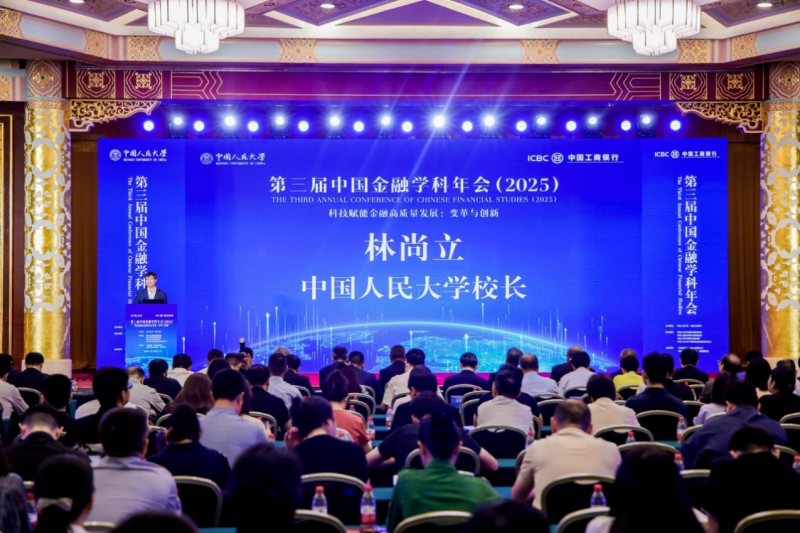
第三届中国金融学科年会在京举办 聚焦“科技赋能金融高质量发展”
Zhong Guo Fa Zhan Wang· 2025-09-15 09:04
Core Insights - The third Annual Conference of Chinese Financial Studies (2025) focuses on "Technology Empowering High-Quality Financial Development: Transformation and Innovation" to explore trends, challenges, and opportunities in financial innovation and the future direction of financial disciplines [1][2][3] Event Overview - The conference is co-hosted by Renmin University of China and the Industrial and Commercial Bank of China, featuring various forums and discussions among financial scholars and industry representatives [1][2] - Over 500 participants, including leaders from financial disciplines and young scholars, attended the conference to discuss key issues such as AI and fintech innovation, financial regulation, and sustainable development strategies [1][2][3] Key Themes and Discussions - The conference emphasizes the need for interdisciplinary collaboration and innovation in financial education to adapt to the evolving digital economy [3][5] - Discussions highlighted the shift from capital-centric to technology-centric financial systems, necessitating a reevaluation of risk management and resource allocation [5][9][14] - The importance of developing a robust capital market and enhancing direct financing to address the challenges posed by low interest rates was underscored [9][10] Awards and Recognitions - The "Huang Da-Mundell" Economic Award was presented to three doctoral candidates for their impactful research papers, recognizing contributions to the field of economics and finance [6][7] Research and Innovation - Eight influential papers were awarded for their contributions to financial research, covering topics such as cross-border capital flows and the impact of fintech on financial services [8][23] - The conference facilitated discussions on the integration of AI in finance, emphasizing the need for a skilled workforce that understands both technology and finance [16][19] Future Directions - The establishment of a Chinese Financial Discipline Autonomous Knowledge System Alliance aims to enhance collaboration among leading universities and promote innovative research in finance [22][24] - The conference serves as a platform for high-level academic exchange, addressing critical questions related to China's financial landscape and its role in global finance [24]


沪指突破前高,关注证券ETF(512880),规模近500亿元居同类规模第一!
Mei Ri Jing Ji Xin Wen· 2025-09-12 07:04
Group 1 - The securities industry is experiencing improved market sentiment and high trading activity, benefiting from both valuation and performance aspects [1] - The launch of a new round of reforms in the capital market is expected to provide significant growth opportunities for brokerage firms in the long term [1] - The Securities Association has released evaluation measures focusing on key financial sectors such as technology finance, green finance, inclusive finance, pension finance, and digital finance, which will enhance assessment and incentive mechanisms [1] Group 2 - The China Securities Regulatory Commission has revised regulations on the management of sales expenses for publicly raised securities investment funds, aiming to lower investor costs and promote high-quality development in the public fund industry [1] - The brokerage sector is characterized by strong beta attributes, with its main business performance closely linked to capital market performance, which is currently experiencing a resurgence [1] - The securities ETF (512880) with a scale of 49.96 billion, ranking first among 21 similar products, is recommended for investment opportunities [2]
沪指又新高,“旗手”回调接人,机构:高景气券商攻守兼备!顶流券商ETF(512000)连续11日揽金37亿元
Xin Lang Ji Jin· 2025-09-12 05:33
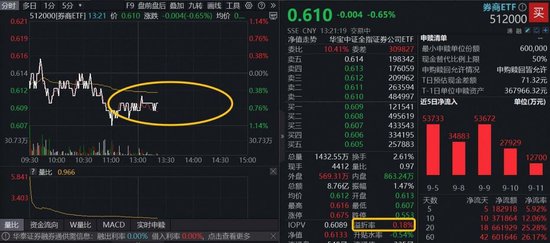
Core Viewpoint - The A-share market is experiencing fluctuations, with the brokerage sector showing mixed performance, but overall, there are positive indicators for the sector's growth potential due to increased trading activity and favorable policies [1][3]. Group 1: Market Performance - On September 12, the A-share market showed volatility, with the Shanghai Composite Index reaching a new high during the session [1]. - The brokerage sector, which had a strong performance previously, saw a slight pullback, with individual stocks like China Merchants Securities rising by 2.76% [1]. - The brokerage ETF (512000) experienced a price drop of over 1% at one point but showed resilience with a real-time transaction volume of 8.76 billion yuan [1]. Group 2: Sector Analysis - Analysts suggest that the brokerage sector may benefit from a combination of favorable capital, policy, and fundamental factors, leading to potential performance improvements [3]. - Open-source Securities highlighted that the brokerage sector's valuation remains low, with institutional holdings being relatively low, indicating potential for growth driven by trading volume and policy catalysts [3]. - Dongwu Securities noted that the non-bank financial sector has a low average valuation, providing a safety margin, and the transformation within the brokerage industry could lead to new growth opportunities [3]. Group 3: ETF Insights - The brokerage ETF (512000) has surpassed 33.6 billion yuan in size, setting a new historical high, with an average daily trading volume of 9.57 billion yuan this year [5]. - The ETF passively tracks the CSI All Share Securities Company Index, encompassing 49 listed brokerage stocks, with nearly 60% of its holdings concentrated in the top ten leading brokerages [5]. - The ETF serves as an efficient investment tool, balancing investments in leading brokerages while also considering the high growth potential of smaller brokerages [5].






十大券商一周策略:短期调整接近尾声,上行逻辑仍未改变,资金聚焦高低切
Zheng Quan Shi Bao· 2025-09-07 22:34
Group 1 - Recent market liquidity characteristics show a clear divergence in ETF fund flows, with broad-based funds decreasing while industry/theme funds are increasing, indicating a high-cut low characteristic in institutional allocation [1] - The market may be entering the last round of intensive subscription and redemption phase for active public funds since 2021, which could alleviate redemption pressure as core assets held by institutions rise [1] - The pressure from high debt funding rates and passive interest rate cuts from central banks coexist, suggesting that China's manufacturing sector may gradually regain pricing power and profit margins in the long term [1] Group 2 - Current market risk appetite is high, supporting equity asset performance, with recommendations to overweight AH shares and US stocks while maintaining bond and gold allocations [2] - A-shares are expected to remain optimistic due to capital market reforms, stable market liquidity, and improving risk preferences, with no significant overheating observed [2] - Incremental economic support measures are anticipated, providing sustainable upward momentum for the Chinese stock market [2] Group 3 - A-share market is experiencing increased volatility due to profit-taking pressures, but the core driving forces for the recent upward trend remain intact [3] - The market is in a phase of resonance inflow from both institutions and individuals, with a focus on low-position themes driven by financing [3] - TMT sectors are expected to remain the main line in the medium to long term, with recommendations to focus on AI, pharmaceuticals, and financial sectors [3] Group 4 - Recent adjustments in the A-share market are viewed as part of an upward trend, with expectations for a low-slope upward movement to continue [4] - The strategy should focus on sectors with low penetration rates, particularly in AI computing, solid-state batteries, and humanoid robots [4] - Mid-year performance revisions are concentrated in TMT, high-end manufacturing, and pharmaceuticals, with specific recommendations for digital chip design and lithium batteries [4] Group 5 - The current market is in a consolidation phase after a slow bull market, with a focus on high-low switching during this period [5] - The core logic of AI computing remains valid, with recommendations to pay attention to sectors like new energy and innovative pharmaceuticals [5] - The market is expected to experience a healthy rhythm of incremental funds post-adjustment [5] Group 6 - A-share market is likely to continue a trend of oscillation and upward movement, with a focus on short-term volatility risks [6] - Growth sectors have shown high prosperity, and industries like machinery and power equipment may have rebound potential [6] - Attention should be given to low-position sectors benefiting from policy support and the "anti-involution" concept [6] Group 7 - Current market volatility remains high, with a likelihood of entering a sideways consolidation phase [7] - Focus on new directions such as power equipment and non-ferrous metals for future opportunities [7] - The performance of gold stocks is expected to be more elastic compared to gold prices due to their current low valuation [7] Group 8 - A-share market is expected to experience wide fluctuations, with potential sector rotations within prosperous segments [8] - Hong Kong stocks are becoming more attractive due to expectations of US interest rate cuts and a weaker dollar [8] - The AI industry remains a mid-term focus, with attention on sectors with improving fundamentals and potential catalysts [8] Group 9 - The long-term trend for indices remains optimistic, with a focus on structural investment over overall market performance [9] - The current investment strategy emphasizes a dual-driven market, prioritizing technology sectors [9] - For investors seeking lower-position varieties, sectors like gaming and internet are recommended [9] Group 10 - High turnover rates indicate potential short-term adjustment pressures in the market [10] - Historical patterns suggest that high turnover during a bull market can lead to structural shifts and consolidation [10] - The market is expected to see style rotation as policy expectations evolve, particularly in the fourth quarter [10]
【十大券商一周策略】短期调整接近尾声,上行逻辑仍未改变,资金聚焦高低切
券商中国· 2025-09-07 14:43
Group 1 - The article highlights three liquidity characteristics in the markets, including a clear divergence in ETF fund flows, with broad-based funds decreasing while industry/theme funds are increasing, and A-shares decreasing while Hong Kong stocks are increasing [2] - The market is entering a final round of intensive subscription and redemption for actively managed public funds since 2021, which may alleviate redemption pressure as core assets held by institutions rise [2] - The pressure from high debt funding rates and passive interest rate cuts from central banks coexists, with China's manufacturing sector gradually easing competitive pressures, indicating a potential long-term recovery in profit margins for Chinese manufacturing [2] Group 2 - The current market risk appetite is high, supporting equity asset performance, with recommendations to overweight AH shares and US stocks while maintaining standard allocations to bonds and gold [3] - A-shares are expected to remain optimistic due to capital market reforms, stable liquidity, and improving risk preferences, with no significant concerns over short-term adjustments [3] - The probability of the Federal Reserve lowering interest rates in September may provide room for adjustments in China's monetary policy, supporting the upward momentum in the Chinese stock market [3] Group 3 - The A-share market is experiencing increased volatility due to profit-taking pressures, but the core driving forces for the current upward trend remain intact [4] - The market is in a phase of resonance inflow from both institutions and individuals, with a focus on low-position themes driven by financing [4] - The recommendation is to focus on sectors with strong industrial trends such as TMT, while also considering low-crowding sectors for short-term opportunities [4] Group 4 - The recent market adjustment is characterized as a correction within an ongoing upward trend, with expectations for a more sustainable low-slope rise following the adjustment [5] - The strategy emphasizes embracing low-penetration sectors, particularly in AI computing, solid-state batteries, humanoid robots, and commercial aerospace/satellite internet [5] - Key areas of focus include quality growth in sectors such as digital chip design, communication network devices, gaming, and lithium batteries [5] Group 5 - The market has entered a consolidation phase after a slow bull market, with significant trading activity concentrated in the TMT sector [6] - The recommendation is to maintain positions in dividend stocks while focusing on sectors that have lagged but still have positive growth logic [6] - Key sectors to watch include new energy, new consumption, innovative pharmaceuticals, and non-bank financials [6] Group 6 - The A-share market is expected to continue its upward trend, but caution is advised due to increased volatility and the need to monitor marginal changes in market volume [7] - Growth sectors have shown high levels of prosperity, with potential for rotation among sectors as industry trends develop [7] - Low-position sectors, particularly in consumer segments supported by policy, may strengthen in the short term [7] Group 7 - The current market volatility remains high, with a likelihood of entering a sideways trading phase, necessitating attention to new directions such as power equipment and non-ferrous metals [8] - The fourth quarter is anticipated to catalyze global cyclical trading, with a focus on inflation-driven industrial products and gold [8] - Gold stocks, currently undervalued, may exhibit greater elasticity compared to gold prices following recent highs [8] Group 8 - The A-share market is expected to experience wide fluctuations, with potential sector rotations within prosperous segments [9] - The Hong Kong market's attractiveness is increasing due to expectations of US interest rate cuts and a weaker dollar [9] - Key sectors to focus on include new energy, internet, innovative pharmaceuticals, and semiconductors [9] Group 9 - The long-term outlook for the market remains optimistic, with a focus on structural investment over overall market trends [10] - The current investment strategy emphasizes a dual-driven market with technology leading the way, suggesting that sector selection may be more critical than stock selection [10] - Growth sectors are favored, with recommendations to explore lower-position varieties in gaming, media, and the Huawei supply chain [10] Group 10 - High turnover rates in the market often indicate increased short-term adjustment pressures, but do not alter the long-term upward trend [11] - The TMT sector has seen significant trading activity, suggesting potential structural shifts and consolidation [11] - The fourth quarter is expected to see an acceleration of incremental capital entering the market, driven by policy expectations [11]

北交所四周年:百分之一的分量
Jing Ji Guan Cha Bao· 2025-09-06 09:10
Core Insights - The Beijing Stock Exchange (BSE) has shown significant growth in its four years of operation, with 274 listed companies and a total market capitalization exceeding 900 billion yuan [2] - The BSE is increasingly attracting institutional investors, with over 9 million qualified investors participating, and monthly trading volume rising from approximately 20 billion yuan in 2022 to around 600 billion yuan currently [2] - The BSE aims to enhance its market recognition and sector identity through the upcoming "920 new code" switch [2] Group 1: Importance of Innovative SMEs - Innovative small and medium-sized enterprises (SMEs) are crucial for China's economy, yet they face multiple financing challenges due to their asset-light business models and the financial system's mismatch [3] - The establishment of the BSE has opened up capital market channels for SMEs to achieve technological breakthroughs and scale up, stimulating investment from venture capital and private equity funds [3] - Over 90% of companies listed on the BSE are high-tech, with more than half being national-level specialized "little giant" enterprises, indicating a strong clustering effect for innovative SMEs [3] Group 2: Market Function and Institutional Improvements - The BSE is continuously improving its foundational market systems, including listing standards that accommodate both profitable and non-profitable companies, thus providing opportunities for SMEs at different development stages [4] - Recent revisions to restructuring rules have introduced a "small and fast" review mechanism, enhancing the efficiency of mergers and acquisitions for listed companies [4] - The increase in new stock profitability has attracted more funds, boosting market activity and establishing a positive ecosystem for innovative SMEs [4] Group 3: Future Challenges and Opportunities - Despite significant trading volume growth, some stocks on the BSE experience low trading activity, indicating liquidity gaps that need to be addressed [5] - The BSE may need to expedite the introduction of index funds and other tools to attract more institutional investment and enhance market liquidity [5] - The valuation system requires improvement, and a more diverse investor structure could lead to more reasonable company valuations [5]
易会满执掌证监会5年,任内IPO融资总额超2万亿
Di Yi Cai Jing Zi Xun· 2025-09-06 05:35
Core Viewpoint - The investigation of Yi Huiman, the former chairman of the China Securities Regulatory Commission (CSRC), highlights ongoing anti-corruption efforts within the regulatory system, particularly in the securities sector, where multiple officials have faced scrutiny and disciplinary actions [1][6]. Group 1: Background of Yi Huiman - Yi Huiman served as the chairman of the CSRC from January 2019 to February 2024, overseeing significant reforms in China's capital markets, including the launch of the Sci-Tech Innovation Board and the implementation of a comprehensive registration system [1][4]. - Prior to his role at the CSRC, Yi worked in the Industrial and Commercial Bank of China (ICBC) for over 30 years, holding various leadership positions [2][3]. Group 2: Reforms Under Yi Huiman - During Yi's tenure, the A-share market saw the issuance of over 1,800 new stocks, with total IPO financing exceeding 2 trillion yuan from 2019 to 2023 [4]. - Yi emphasized that the registration system reform was a transformative change aimed at enhancing market efficiency and regulatory effectiveness, rather than a relaxation of oversight [4][5]. Group 3: Anti-Corruption Measures - The CSRC has intensified its anti-corruption campaign, resulting in the investigation of several high-ranking officials, including former vice-chairman Wang Jianjun and others who have been implicated in various forms of misconduct [6][7]. - Yi Huiman had previously advocated for a "zero tolerance" approach to corruption within the CSRC, stressing the importance of maintaining integrity among public officials [5][6].
执掌证监会5年 易会满接受调查 数月前曾赴浙江调研
Di Yi Cai Jing· 2025-09-06 04:24
Core Viewpoint - The former chairman of the China Securities Regulatory Commission (CSRC), Yi Huiman, is under investigation for serious violations of discipline and law, marking a significant event in the ongoing anti-corruption efforts within the securities regulatory system [1][2]. Group 1: Background of Yi Huiman - Yi Huiman served as the chairman of the CSRC for five years, from January 2019 until February 2024, during a critical period of reform and innovation in China's capital markets, including the establishment of the Sci-Tech Innovation Board and the implementation of a comprehensive registration system [1][5]. - Prior to his role at the CSRC, Yi worked in the Industrial and Commercial Bank of China (ICBC) for over 30 years, holding various senior positions [2][3]. Group 2: Recent Developments - Yi Huiman's investigation follows a series of disciplinary actions against other officials within the CSRC, including former vice-chairman Wang Jianjun and several other senior officials, indicating a broader crackdown on corruption within the regulatory body [1][7]. - The investigation into Yi comes after a period of reduced public appearances and increasing rumors regarding his status, culminating in the official announcement of the investigation by the Central Commission for Discipline Inspection [2][6]. Group 3: Impact on Capital Markets - Under Yi's leadership, the A-share market saw significant changes, with over 1,800 new companies listed and total IPO financing exceeding 2 trillion yuan from 2019 to 2023 [6]. - Yi emphasized the importance of anti-corruption measures during his tenure, advocating for a "zero tolerance" approach to corruption within the CSRC [6][7].
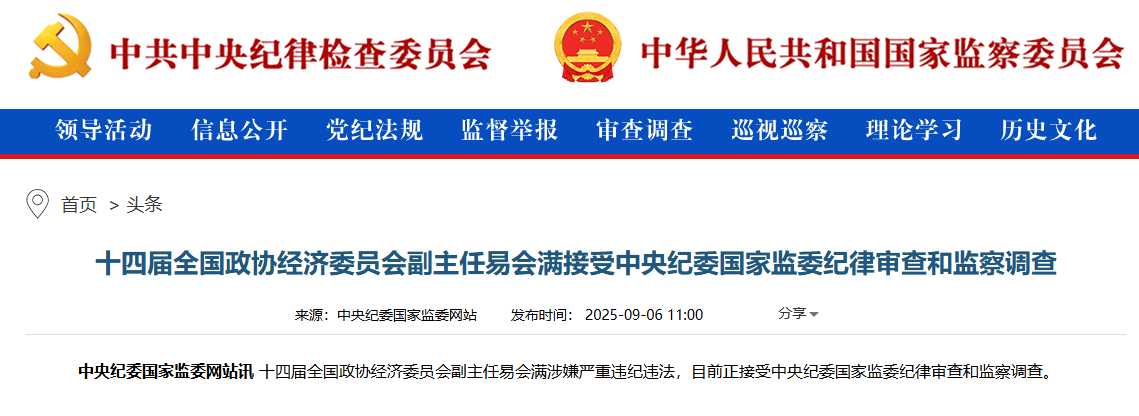
执掌证监会5年,易会满接受调查,数月前曾赴浙江调研
Di Yi Cai Jing· 2025-09-06 03:50
原标题:执掌证监会5年,易会满接受调查 9月6日,中央纪委国家监委网站发布消息称,证监会原主席易会满涉嫌严重违纪违法,目前正接受中央 纪委国家监委纪律审查和监察调查。 公开履历显示,易会满曾在工行系统任职30余载,于2019年初接棒刘士余之后,成为证监会第九任主 席。彼时,资本市场进入深化改革与创新发展时期,在其任职的5年期间,经历了科创板开板、北交所 开市、推行全面注册制、推动常态化退市机制等多项重要改革。 直至2024年2月,执掌证监会刚满5年的易会满卸任证监会主席一职,四个月后被增补为第十四届全国政 协委员,任经济委员会驻会副主任。 2019年,资本市场正值深化改革与创新发展重要时期,科创板开板并试点注册制,新三板、创业板等板 块也迎来改革。此后几年间,资本市场还经历了新《证券法》实施、北交所开市、推行全面注册制、推 动常态化退市机制等多项对资本市场影响重大的改革。 近年来,随着证监系统反腐的持续深入,已有多名证监系统人士被查,包括证监会原副主席王建军、中 央纪委驻证监会纪检组原组长王会民、证监会科技监管司原司长姚前、证监会原发行监管部副主任李筱 强、证监会原法律部副主任吴国舫等。 数月前曾赴浙江调研 ...
前证监会主席易会满被查:在任5年1700家IPO,3000点20次失守-股票-金融界
Jin Rong Jie· 2025-09-06 03:42
Core Viewpoint - Yi Huiman, the Vice Chairman of the Economic Committee of the 14th National Committee of the Chinese People's Political Consultative Conference, is under investigation for serious violations of discipline and law [1] Group 1: Background Information - Yi Huiman was born in December 1964 in Cangnan, Zhejiang, and has a long career at the Industrial and Commercial Bank of China (ICBC), serving as Vice President in 2008 and President in 2013 [2] - He became the Chairman and Party Secretary of ICBC in May 2016 and later served as the Chairman and Party Secretary of the China Securities Regulatory Commission (CSRC) from January 2019 until his removal in February 2024 [2] Group 2: Performance and Market Impact - During Yi Huiman's five-year tenure at the CSRC, approximately 1,700 new companies were listed on the A-share market, despite the Shanghai Composite Index experiencing fluctuations, including about 20 instances of closing below 3,000 points [3][5] - Significant reforms were implemented in the Chinese capital market, including the launch of the Sci-Tech Innovation Board in July 2019, the establishment of the Beijing Stock Exchange in November 2021, and the full implementation of the registration system in February 2023 [3] Group 3: Market Stability and Challenges - Yi Huiman acknowledged the challenges of his role, likening it to a "volcano" due to the market's impact on millions of investors [4] - He emphasized the importance of maintaining market stability and proposed measures to monitor trading behaviors and fund flows, as well as to combat fraudulent activities in the capital market [4]