
科技自立

Search documents
【华创策略】十五五专栏看行业配置线索
Huachuang Securities· 2026-03-16 07:45
Core Conclusions - The report highlights the dual emphasis on "technology" and "international" in the latest five-year plan, indicating a strengthened focus on technological self-reliance and open cooperation, while also prioritizing the enhancement of development efficiency and solidifying industrial foundations [3] - The analysis of policy intensity reveals an increase in the focus on "new quality productivity," "strong domestic economy," "cultural construction," "population development," "green development," and "safe China," reflecting a heightened concern for sustainable development and social stability [6][11] - The report identifies over 100 specific industry allocation clues under 15 major themes, with a focus on sectors such as innovative pharmaceuticals, deep-sea technology, the inaugural economy, catering and tourism, Hainan Free Trade Port, urban village renovation, vocational education, and cybersecurity, which show favorable valuation and profit matching [3] Frequency Statistics of Keywords in Previous Five-Year Plans - The report utilizes keyword frequency analysis to show that "development" and "construction" remain dominant themes across five-year plans, with "technology" and "international" entering the top twenty for the first time in the latest plan, indicating a shift towards practical guidance focused on enhancing development efficiency [4] - The report provides a detailed frequency count of keywords across different five-year plans, showing the evolution of policy focus over time [4] Chapter Arrangement and Length Statistics of Previous Five-Year Plans - The report analyzes the chapter arrangement and length of previous five-year plans, noting that the latest plan has improved rankings in chapters related to modern industrial systems, digital China, and foreign openness, with significant increases in chapter length for themes such as foreign openness and cultural construction [5] - The report highlights the percentage increase in chapter length for various themes, indicating a shift in policy focus and priorities [5] Policy Intensity Analysis - The report assesses the policy intensity of various themes, noting that "new quality productivity" and "strong domestic economy" have seen increases in both intensity and chapter length, reflecting a more proactive policy stance [6] - The report also indicates that "cultural construction" and "population development" have increased in policy intensity and length, emphasizing the importance of investing in human capital [11] - The report highlights the increased focus on "green development" and "safe China," indicating a strategic direction towards sustainable development and social stability [25]
国泰海通香江策论之数据周报:伊朗战事驱动能源价格,港股硬核资产继续战略重估
海通国际· 2026-03-08 02:25
Liquidity Data - The US dollar index rose 1.3% to 98.96, briefly hitting a three-month high before easing[2] - Brent crude oil surged 9.3% to US$93.3 amid geopolitical tensions[2] - The 10-year US Treasury yield increased by 18.4 basis points to 4.13% due to rising inflation concerns[2] - Hong Kong equities saw net inflows of HK$8 billion from foreign investors during Feb 26–Mar 4, but reversed to net outflows of HK$29.9 billion during Mar 5–6[2] Sector Trends - Southbound capital significantly increased exposure to energy and banks while accelerating outflows from e-commerce and reducing holdings in biotech and insurance[2] - In the Hong Kong market, hard assets like oil & petrochemicals and non-ferrous metals led gains, while gold prices retreated[6] - The strategic revaluation of oil and gas resources is ongoing, with global oilfield service capital expenditures recovering[6] Risks and Economic Outlook - Risks include the potential for Fed rate cuts to fall short of expectations and uncertainties surrounding China's economic recovery and local government debt resolution[49] - A prolonged blockade in the Strait of Hormuz could drive oil prices towards US$100+ per barrel, with a potential nominal supply shock of up to 20 million barrels per day[34]
国泰海通香江策论之数据周报:伊朗战事驱动能源价格,港股硬核资产继续战略重估-20260308
Haitong Securities International· 2026-03-08 01:02
Liquidity Data - The US dollar index rose 1.3% to 98.96, briefly hitting a three-month high before easing[2] - Brent crude oil surged 9.3% to US$93.3 amid geopolitical tensions[2] - The 10-year US Treasury yield increased by 18.4 basis points to 4.13% due to rising inflation concerns[2] - Hong Kong equities saw net inflows of HK$8 billion from foreign investors during Feb 26–Mar 4, but reversed to net outflows of HK$29.9 billion during Mar 5–6[2] Sector Trends - Southbound capital significantly increased exposure to energy and banks while accelerating outflows from e-commerce and reducing holdings in biotech and insurance[2] - The strategic revaluation of oil and gas resources is ongoing, with global oilfield service capital expenditures recovering[7] - The report highlights a potential supply shock in oil prices, with Brent crude possibly reaching US$100+ per barrel if geopolitical tensions escalate[34]
马年投资锦囊|招商证券张夏:A股慢牛行情持续,看好内需复苏与科技自立等主线
Sou Hu Cai Jing· 2026-02-23 09:17
Core Viewpoint - The A-share market is expected to continue a slow bull market in 2026, driven by a recovery in corporate earnings and moderate valuation expansion, with the Shanghai Composite Index projected to rise between 10% and 15% [1]. Group 1: Market Dynamics - The current upward cycle of the A-share market is transitioning from a liquidity-driven phase to a profitability-driven phase, with key indicators such as PPI recovery signaling substantial improvements in corporate earnings [5]. - Daily trading volume in the A-share market has remained above 2 trillion yuan since 2026, indicating strong market activity [5]. - A net inflow of approximately 1.56 trillion yuan is anticipated in 2026, supported by favorable conditions in the past two years and a high return rate environment [5]. Group 2: Fund Supply and Demand - Public funds are expected to continue their recovery trend, with potential improvements in active fund redemptions if they can overcome profitability challenges [5]. - Insurance funds are projected to see improved premium income, supported by policies encouraging increased stock market investments [5]. - Private equity funds are likely to attract high-net-worth individuals, contributing significant incremental capital to the market [5]. - The appreciation of the renminbi is expected to attract foreign capital inflows, further supporting A-share valuations [5]. Group 3: Investment Opportunities - Investment strategies for the year should focus on two main themes: domestic demand recovery and technological self-sufficiency, creating a dual-driven growth pattern [6]. - The recovery of the consumer services sector is anticipated to be driven by multiple factors, including policy support and economic recovery, leading to a shift towards high-value experience consumption [6]. - In the realm of technological self-sufficiency, the domestic AI chip market is expected to surpass foreign competitors, driven by both external pressures and internal demand for AI [6]. - Key areas for self-sufficiency include integrated circuits, industrial mother machines, and foundational software [6].



打醒了美国华盛顿!特朗普即将访华,中方或将拒绝美方的G2提议
Sou Hu Cai Jing· 2026-02-22 09:04
Group 1 - The recent performance of humanoid robots during the Chinese Spring Festival Gala showcased significant advancements in robotics, indicating China's transition from a manufacturing powerhouse to a stronghold in intelligent manufacturing [1][3] - The performance of robots, which included complex movements and recovery from falls, has drawn international attention, with foreign media highlighting the impressive capabilities of Chinese robotics companies [1][3] - The rise of Chinese robotics and AI technology signals a potential shift in global automation standards, with predictions that by 2025, Chinese robots will be capable of performing advanced stunts [1][3] Group 2 - The upcoming visit of Trump to China is seen as a necessity for the U.S. to reassess its trade strategies, particularly in light of the Supreme Court ruling that may require the refund of over $175 billion in tariffs [1][3] - The U.S. is facing the reality that the trade war has not yielded the desired results, as China remains a critical supplier for various industries, including rare earths and pharmaceuticals [3][5] - The technological restrictions imposed by the U.S. have inadvertently accelerated China's advancements in key sectors, such as AI and semiconductor manufacturing, with significant breakthroughs achieved in domestic production capabilities [3][5] Group 3 - The interdependence of the U.S. and Chinese economies suggests that a decoupling would be detrimental to both parties, emphasizing the need for dialogue to resolve trade disputes [5][7] - The focus on innovation in robotics and semiconductor technology indicates that the country is positioning itself to lead in future technological developments, reducing reliance on foreign technologies [7] - The combination of China's technological advancements and the need for the U.S. to engage in constructive dialogue reflects a shift in the dynamics of U.S.-China relations, with implications for global technology trends [7]
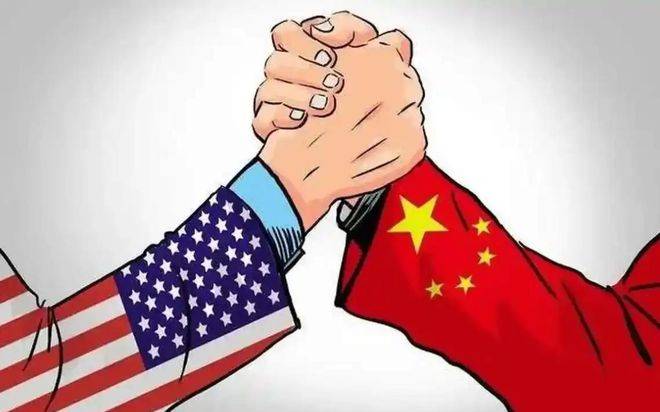
核电站“心脏外科医生”的春节坚守
Xin Lang Cai Jing· 2026-02-18 14:15
Core Viewpoint - The article highlights the successful implementation of a domestically developed remote underwater repair technology for the CRDM (Control Rod Drive Mechanism) heat sleeve at the Ningde Nuclear Power Station, marking a significant advancement in China's nuclear power maintenance capabilities [2][6]. Group 1: Technology Development - The CRDM is crucial for controlling nuclear reactions, and its heat sleeve is essential for precise control rod movement. Any defects can lead to unplanned shutdowns [2]. - Historically, the repair technology for CRDM heat sleeves has been monopolized by foreign companies, but recent advancements by China National Nuclear Corporation (CNNC) have led to a breakthrough in this area [2][5]. - The project initiated in 2021 aimed to develop an advanced solution for CRDM heat sleeve repairs, overcoming previous limitations imposed by foreign service providers [2][3]. Group 2: Project Challenges - The project faced numerous challenges, including the need for high-precision repairs in a submerged environment, which required the development of new tools and techniques from scratch [3][4]. - A critical moment occurred in early 2022 when a key valve leak threatened to delay the project. The team innovatively proposed an "online repair" solution to address the issue without draining the system [4][5]. - The project team demonstrated exceptional collaboration and problem-solving skills, working through the night to ensure the success of the repairs [4][6]. Group 3: Implementation and Results - The implementation phase involved using a specially designed long tool to perform intricate repairs, akin to "embroidery on an eggshell" [6]. - The project team maintained a rigorous training regimen, emphasizing precision and attention to detail, which contributed to the successful execution of the repairs [6]. - In 2024, the technology was successfully applied to address similar defects in CNNC's reactors, achieving the world's first remote underwater online repair of CRDM heat sleeves, which outperformed traditional foreign methods [6][7].
货运突围看“大秦”:一条重载铁路的中国力量
Huan Qiu Wang· 2026-02-12 03:36
Core Viewpoint - The Daqin Railway has evolved into a vital component of China's logistics and energy supply, achieving significant milestones in freight transportation and technological advancement over the past 30 years [1][2][3]. Group 1: Achievements and Impact - Daqin Railway, as the world's leading single railway in freight volume, has transported over 9 billion tons of goods, accounting for 20% of China's coal transport with only 0.5% of the national railway mileage [1]. - The railway has become a crucial lifeline for over 300 power plants and more than 6,000 enterprises, significantly contributing to the national economy [1]. - Annual freight volume has increased from 42.59 million tons to 450 million tons, demonstrating the railway's capacity to support economic growth [1]. Group 2: Technological Advancements - The Daqin Railway has undergone a transformation through digital and intelligent technologies, enhancing inspection efficiency by five times and implementing automated systems for cargo handling [2]. - Key technologies, such as wireless synchronous control, have been domestically developed, allowing for the safe operation of heavy freight trains [2]. - The railway's intelligent freight system has been replicated in other railways, setting standards for China's freight transport [2]. Group 3: Service and Sustainability - The Daqin Railway has shifted from a passive to an active service model, improving logistics efficiency and reducing transport times by six days through integrated multi-modal transport solutions [2]. - Revenue from logistics services has increased significantly, with total logistics business rising from 2.7% to 23.3%, generating over 190 million yuan [2]. - The railway's operations have contributed to substantial environmental benefits, saving 99 million tons of standard coal and reducing carbon dioxide emissions by 24 million tons [2]. Group 4: Future Outlook - The Daqin Railway represents a microcosm of China's railway evolution, showcasing the transition from following to leading in freight transport and energy supply [3]. - The railway continues to play a pivotal role in supporting national strategies, meeting public demand, and driving economic development [3].

押注“双碳”与新基建,统一石化悄然布局两条黄金赛道
Sou Hu Cai Jing· 2026-02-09 11:38
Core Viewpoint - The article highlights how Chinese companies, particularly Unified Petrochemical, are adapting to national strategies focused on "technological self-reliance" and global trends towards "green low-carbon" initiatives, thereby reshaping industry dynamics through innovation in low-carbon lubricants and smart liquid cooling technologies [1][6]. Group 1: Low-Carbon Lubricants - Unified Petrochemical has developed low-carbon lubrication technology that significantly extends product lifespan by restructuring base oil molecules and upgrading additive formulations, moving away from traditional high-energy consumption and short-cycle lubricants [2]. - The company has made breakthroughs in biodegradable technology, creating biodegradable hydraulic oils for outdoor applications, addressing soil pollution issues caused by traditional lubricant leaks [2]. Group 2: Smart Liquid Cooling Technology - The smart liquid cooling technology targets the digital economy's infrastructure, addressing cooling bottlenecks faced by traditional air cooling methods as data center computing density increases and the demand for thermal management in electric vehicle batteries rises [4]. - Unified's immersion liquid cooling solution utilizes nano-level thermal conductive media and intelligent temperature control algorithms, achieving a near-theoretical limit for Power Usage Effectiveness (PUE) in data centers [4]. Group 3: Company Growth and Market Expansion - Unified Petrochemical's R&D investment has consistently increased over the past three years, establishing the industry's first "Lubrication + Liquid Cooling" joint laboratory, reflecting the company's commitment to innovation [4]. - The company's products are exported to 56 countries, with a significant increase in overseas revenue share, demonstrating its ability to connect green products with global markets [4][6].
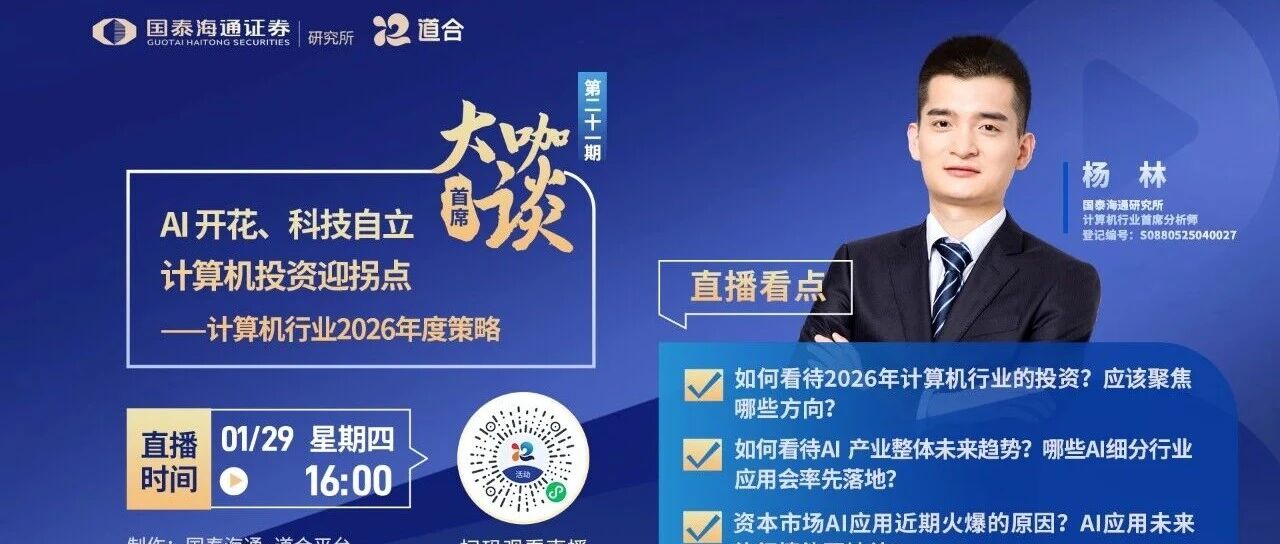
【直播预告】国泰海通 · 首席大咖谈|计算机杨林:AI开花、科技自立,计算机投资迎拐点
国泰海通证券研究· 2026-01-29 03:54
Group 1 - The core viewpoint of the article emphasizes the investment opportunities in the computer industry, particularly focusing on the technological independence and advancements in AI as pivotal factors for growth by 2026 [2][3]. Group 2 - The article suggests that investors should concentrate on specific directions within the computer industry, highlighting the importance of AI development and self-sufficiency in technology as key areas for future investment [2][5].
硬科技“吃肉”,软应用“挨打”,资金再次选择方向!
Sou Hu Cai Jing· 2026-01-16 05:02
Core Viewpoint - The A-share market is experiencing extreme structural differentiation, with the Sci-Tech 50 index rising by 0.48% while major indices like the Shanghai Composite and Shenzhen Component are slightly down, indicating a significant shift in market dynamics driven by industry and policy changes [1] Group 1: Leading Sectors - The strong performance of sectors such as electronics, automotive, and machinery is attributed to the resonance between global industrial cycles and domestic precise policies [2] - TSMC's recent earnings report, projecting a 35% year-on-year increase in net profit by Q4 2025 and a gross margin exceeding 60%, signals robust AI computing demand and boosts confidence across the semiconductor supply chain [2] - Domestic policies are facilitating a "targeted" structural easing, with the central bank adjusting monetary policy tools to lower costs and direct financial resources towards hard technology and high-end manufacturing [3] Group 2: Lagging Sectors - The media and computer sectors are experiencing significant adjustments due to external technical frictions, such as the U.S. imposing tariffs on certain semiconductor manufacturing equipment, which heightens concerns over global tech supply chain stability [4] - The shift in market style reflects a migration of funds from high-growth, exploratory business models in "soft" applications to "hard" technology and high-end manufacturing with visible orders and clear policy support [4] Group 3: Market Outlook - The dual themes of "technological self-reliance" and "manufacturing upgrades" remain strong, with investments in semiconductors, AI hardware, robotics, and smart vehicles expected to be market focal points [5] - The market is balancing the pursuit of high growth with a search for certainty, as evidenced by the activity in power and grid equipment sectors and sustained interest in high-dividend assets [6] - The current market environment emphasizes the need for investors to focus on industry trends and company fundamentals, constructing resilient portfolios that include both hard technology and stable value assets [6]