人工智能数据中心

Search documents
储能锂电景气延续,风能展指引乐观
2025-10-27 15:22
Summary of Conference Call Records Industry Overview - **Energy Storage Sector**: The outlook for the energy storage sector remains optimistic, driven by cost reductions and policy support. Expected growth rates are approximately 50% this year and 45-50% next year. Notable developments include the release of supportive policies in Henan, the addition of about 2 GWh of reserve projects in the U.S. in September, a 145% increase in installed capacity in the UK in Q3, and significant new projects in Chile, indicating sustained global demand growth [1][5]. - **Photovoltaic Industry**: The photovoltaic sector is facing challenges, with stock prices at low levels within the battery cell segment. Profitability pressures are anticipated in 2026, necessitating close attention to policy impacts. Exports in September and August saw a year-on-year increase of 20-30%, aligning with annual growth expectations, but high base effects are limiting supply-side impacts [1][3][4]. Key Investment Opportunities - **Recommended Companies**: - **Sungrow Power Supply**: Noted for its advantages in energy storage and data center support, offering high cost-performance [6]. - **Contemporary Amperex Technology Co., Ltd. (CATL)**: Identified as a top pick in the current market [6]. - **Emerging Trends**: The potential for data center energy storage solutions in the U.S. is significant, with future orders expected to validate this demand and further drive industry growth [6]. Important Trends and Events to Monitor - **Capacity Pricing**: Continuous announcements of capacity pricing across domestic regions are crucial, with 313 GWh of tenders recorded from January to September, a year-on-year increase of 186% [7]. - **Policy Developments**: Monitoring the implementation of relevant domestic and international policies is essential, along with potential price increases expected in Q4 [7]. Sector-Specific Insights - **Telecommunications Sector**: The telecommunications sector is performing well, particularly in energy storage, lithium batteries, and wind energy. Notable companies to watch include DeYee and Airo in energy storage, and Hunan Youneng and Shengtai in lithium batteries, with significant price increases in lithium hexafluorophosphate [2][8][9]. - **Wind Energy**: The wind energy sector shows positive developments, with optimism for 2026 highlighted at the wind energy exhibition. Key recommendations include focusing on offshore wind projects and companies like Goldwind Technology and Daikin [10]. - **Traditional Power Equipment**: The performance of traditional power equipment has been average, but companies like Siyuan have shown good order and performance metrics. Companies related to AI applications, such as Sifang Co. and Jinpan Technology, are also gaining attention [11]. Conclusion - The energy storage and lithium battery sectors are expected to continue their upward trajectory, with a focus on companies that demonstrate dual logic support in the wind energy sector. Close monitoring of AIDC technology advancements and the robotics supply chain is recommended, while traditional sectors should be analyzed based on policy changes and market demand [12].
澄天伟业(300689.SZ):拟投资合资公司专注于机柜级液冷解决方案
Ge Long Hui A P P· 2025-10-09 15:21
Core Viewpoint - The company is advancing its overseas business development by forming a joint venture with key partners to invest in liquid cooling solutions for artificial intelligence data centers, aiming to leverage combined strengths in customer resources and technology [1][2] Investment Details - The total investment in the joint venture, SuperXCooltech, amounts to 2 million Singapore dollars, with contributions from various parties: 500,000 SGD (approximately 2.75 million RMB) from Hong Kong Cheng Tian, 600,000 SGD (approximately 3.3 million RMB) from Song Jiabin, 200,000 SGD (approximately 1.1 million RMB) from Shen Lei, and 700,000 SGD (approximately 3.85 million RMB) from SuperX [1] - The equity stakes in the joint venture are distributed as follows: Hong Kong Cheng Tian holds 25%, Song Jiabin 30%, Shen Lei 10%, and SuperX 35% [1] Strategic Objectives - The joint venture aims to capitalize on the rapid growth of the global artificial intelligence data center (AIDC) industry by focusing on cabinet-level liquid cooling solutions, which involve comprehensive heat management for server clusters [2] - The collaboration seeks to create a brand, "SuperXCooltech," to provide efficient and reliable liquid cooling solutions to international data center clients, promoting the industrialization and large-scale application of these products [2] - The company plans to enhance its business growth path by leveraging partner resources for collaborative development and will implement a robust post-investment management and supervision mechanism to monitor the joint venture's operations and financial status [2]
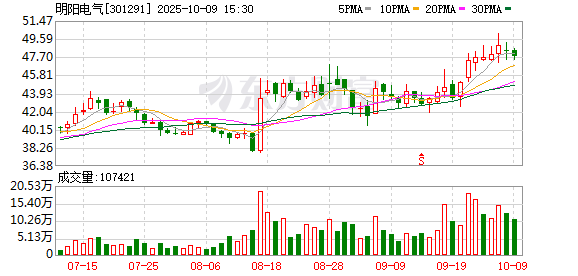
明阳电气:公司已推出满足数据中心客户需求的输变电设备,暂无液冷设备业务
Mei Ri Jing Ji Xin Wen· 2025-10-09 13:05
Group 1 - The core viewpoint is that the artificial intelligence data center (AIDC) sector is in its early explosive growth phase, with high demand for related hardware products [2] - The company, Mingyang Electric (301291.SZ), has recognized the development opportunities in electrical infrastructure for AIDC and has launched power transmission and transformation equipment to meet data center customer needs [2] - The company is actively investing in research and development in this area to align with future demand for related products [2] Group 2 - Currently, the company does not have any liquid cooling equipment business [2]

美股异动丨比特币挖矿概念股盘前普涨 受比特币价格和数据中心推动
Ge Long Hui A P P· 2025-10-07 11:33
Core Viewpoint - The recent surge in Bitcoin prices has significantly increased the value of mining tokens, leading to notable pre-market gains for companies like Iren, Bitfarms, and Hive Digital Technologies [1] Group 1: Company Performance - Iren and Bitfarms saw pre-market gains exceeding 11% [1] - Hive Digital Technologies experienced a nearly 7% increase [1] - TeraWulf's pre-market rise was over 3% [1] - Other companies such as CleanSpark and BitFuFu also followed the upward trend [1] Group 2: Market Dynamics - The increase in Bitcoin prices is attributed to its recent all-time high, which has positively impacted the mining token market [1] - Mining companies are diversifying into the artificial intelligence data center sector [1]
300274,一个月涨超1000亿
Di Yi Cai Jing· 2025-09-25 13:56
Group 1 - The core viewpoint of the article highlights that Sunshine Power has achieved a market capitalization of 331.4 billion yuan, making it the leading company in the A-share photovoltaic storage sector [1][2] - Sunshine Power's market value increased by over 100 billion yuan in just one month, reaching 331.4 billion yuan as of September 25, surpassing the combined market capitalization of its closest competitors [1][2] - The company reported a revenue of 43.533 billion yuan for the first half of the year, representing a year-on-year growth of 40.34%, and a net profit of 7.735 billion yuan, up 55.97% year-on-year [2] Group 2 - Sunshine Power's main revenue source is its energy storage systems, which are also the most profitable segment of its business [2] - The company is optimistic about the growth potential of the energy storage market, with management projecting a compound annual growth rate of 20% to 30% over the next few years [3] - Sunshine Power has recently announced its entry into the Artificial Intelligence Data Center (AIDC) power supply market, which is expected to open new growth opportunities [3] Group 3 - Despite its current market success, Sunshine Power has experienced significant stock price volatility, with a more than 20-fold increase in stock price over three years followed by a substantial decline [4] - The company faced challenges in the past due to high expectations and valuation, leading to a drop in stock price from 2022 to 2023 [4]

300274,一个月涨超1000亿
第一财经· 2025-09-25 13:33
Core Viewpoint - The article highlights the significant rise in the market value of Sungrow Power Supply Co., Ltd. (阳光电源), which reached 331.4 billion yuan, making it the leading company in the A-share photovoltaic storage sector, with a notable increase of over 100 billion yuan in just one month [3][4]. Financial Performance - As of September 25, 2023, Sungrow's stock price closed at 159.84 yuan per share, marking a new high since its listing in 2011 [3]. - In the first half of the year, Sungrow achieved a revenue of 43.533 billion yuan, representing a year-on-year growth of 40.34%, and a net profit of 7.735 billion yuan, up 55.97% year-on-year [4]. Market Position - Sungrow is the top player in the global energy storage system market, leading in shipment volumes, alongside Tesla and BYD [5]. - The company's market capitalization surpasses the combined market values of its closest competitors, Longi Green Energy and Lead Intelligent Equipment [4]. Growth Prospects - The management of Sungrow is optimistic about the future growth of the energy storage market, projecting a conservative compound annual growth rate (CAGR) of 20% and an optimistic CAGR of 30% over the next few years [5]. - The company has established a new division focused on Artificial Intelligence Data Center (AIDC) power solutions, which is expected to open new growth avenues [6]. Risks and Challenges - Despite strong performance, there are potential risks related to accounts receivable turnover, declining gross margins, and the long repayment cycles associated with new energy project investments [5]. - The company has experienced significant stock price volatility in the past, with a dramatic increase followed by a decline due to high expectations and performance issues [6].

一个月市值涨超1000亿!阳光电源受何驱动?
Di Yi Cai Jing· 2025-09-25 12:08
Core Viewpoint - The company, Sunshine Power, has shown strong fundamentals in the first half of the year, with significant growth in market capitalization and revenue, particularly in the energy storage sector [1][2]. Group 1: Market Performance - As of September 25, Sunshine Power's stock price reached 159.84 CNY per share, with a total market capitalization of 331.4 billion CNY, marking a new high since its listing in 2011 [1]. - On August 25, the company's market capitalization was 212.7 billion CNY, making it the only company in the photovoltaic index to exceed 200 billion CNY at that time, with a market value increase of over 100 billion CNY in just one month [1][2]. - Sunshine Power's market capitalization surpasses the combined total of the second and third-ranked companies in the photovoltaic index [2]. Group 2: Financial Performance - In the first half of the year, Sunshine Power achieved operating revenue of 43.533 billion CNY, representing a year-on-year growth of 40.34% [2]. - The net profit attributable to shareholders was 7.735 billion CNY, reflecting a year-on-year increase of 55.97% [2]. - The company's energy storage systems are its primary source of revenue and the most profitable segment, leading in global shipment volumes for energy storage products [2]. Group 3: Market Outlook and Expansion - The management is optimistic about the growth potential in the energy storage market, estimating a conservative compound annual growth rate of 20% and an optimistic estimate of 30% over the next few years [3]. - Sunshine Power has announced plans to enter the Artificial Intelligence Data Center (AIDC) power supply sector, which is seen as a new growth opportunity [3]. - The AIDC business aims to provide power solutions for high-performance computing centers, with a dedicated division established to expedite product development [3]. Group 4: Historical Context - Despite its current market success, Sunshine Power has experienced significant volatility, with a stock price increase of over 20 times from October 2018 to October 2021, followed by a substantial decline due to high expectations and performance issues [4].
科技巨头注资千亿打造数据中心,关注储能电池ETF(159566)等产品投资机会
Mei Ri Jing Ji Xin Wen· 2025-09-23 07:07
Group 1 - Nvidia commits to invest up to $100 billion in OpenAI, primarily to help build a 10-gigawatt data center, indicating a significant increase in AIDC (Artificial Intelligence Data Center) construction expectations [1] - The energy storage industry is experiencing a major development turning point since the release of Document No. 136 at the beginning of the year, with the full market entry of renewable energy leading to a decrease in electricity prices and a significant increase in the necessity for energy storage [1] - The construction of AIDC is expected to greatly increase electricity consumption, thereby enhancing the demand and value of related power supply equipment [1] Group 2 - Both the energy storage industry and AIDC represent rare long-term high-growth sectors, highlighting their investment value [1] - The Guozhen New Energy Battery Index focuses on the energy storage industry chain, with solid-state battery-related companies accounting for over 35% of the index weight, while AIDC power and liquid cooling-related companies account for nearly 30% [1] - The energy storage battery ETF (159566) currently ranks first in scale among similar indices, facilitating convenient investment in industry-leading companies [1]

合肥“曹老师”反杀特斯拉,8万本金冲顶3000亿
Xin Lang Cai Jing· 2025-09-22 05:23
Core Viewpoint - The recent surge in stock prices of Sungrow Power Supply Co., Ltd. is attributed to its strong performance in the energy storage business, which has surpassed its traditional photovoltaic inverter segment, indicating a strategic shift and growth potential in the renewable energy sector [2][3][4]. Group 1: Company Performance - Sungrow Power's stock price increased over 10% on September 15, reaching a historical high, with a market capitalization of 295.5 billion yuan as of September 18 [2]. - The company reported a net profit of 7.7 billion yuan in the first half of the year, positioning it as the "profit king" in the renewable energy sector, contrasting with losses faced by many competitors in the photovoltaic industry [3][4]. - The revenue from the energy storage business exceeded that from photovoltaic inverters for the first time in the first half of the year, marking a significant milestone for the company [3][4]. Group 2: Strategic Moves - CEO Cao Renxian has employed a "subtraction then addition" strategy, initially divesting from traditional power supply businesses to focus on photovoltaic inverters, and now expanding into energy storage, wind energy, and hydrogen energy [4][16]. - The company has established an artificial intelligence data center and plans to explore the energy demands of data centers, indicating a forward-looking approach to market opportunities [5][21]. - Sungrow Power is preparing for a potential IPO in Hong Kong, with fundraising expectations exceeding 10 billion yuan based on current valuations [5][24]. Group 3: Market Trends - The energy storage sector is recognized as a core driver of growth in the renewable energy landscape, with projections indicating a sixfold increase in global energy storage capacity by 2030 [3][22]. - The company has positioned itself as a leader in the energy storage market, surpassing Tesla in shipment volumes in the first half of the year [3][19]. - The competitive landscape in the energy storage market is intensifying, with price wars and safety concerns emerging as significant challenges [21][22]. Group 4: Future Outlook - Sungrow Power is strategically focusing on the European market, where the total installed capacity for energy storage is expected to grow tenfold by 2030 [22][23]. - The company aims to leverage its strengths in system integration and customer understanding to capture market share in the rapidly evolving energy storage sector [18][19]. - Cao Renxian's approach emphasizes timely decision-making in business expansion, suggesting that the company is preparing for aggressive growth rather than merely weathering market fluctuations [24].
“纯属骗局”,美国女子不开空调、拔掉所有插头,每月电费却从2100元飙升至2500元
Xin Lang Cai Jing· 2025-09-19 17:14
Core Insights - A woman's attempt to reduce her electricity bill resulted in an increase, highlighting broader issues in the energy market [1][4] - The average electricity price has risen by 5.5% compared to last year, with natural gas prices increasing by 13.8% [4] - Nearly 60 utility companies plan to raise rates, affecting 57 million Americans, with a total increase exceeding $38 billion [4] Group 1: Consumer Experience - The woman, Jules, reported her electricity bill rose from $300 to $360 despite efforts to cut costs by using blackout curtains and fans [1][4] - Many social media users shared similar experiences, indicating that the issue may not be individual consumption but rather rising supply costs [1][3] - Comments on social media suggested that the costs associated with large data centers are being passed on to residential users [3] Group 2: Market Dynamics - Experts attribute rising electricity costs to increased demand from AI data centers, oil and gas extraction, electrification of transportation, and space heating [4] - The U.S. power grid is facing transmission backlogs and equipment shortages, with over 2,600 gigawatts of power waiting to connect to the grid [4] - Renewable energy projects are hindered by permitting and policy changes, slowing down potential solutions to rising costs [4]