
光储

Search documents
欧洲阳台光储:地缘政策刺激销量增长
数说新能源· 2026-03-27 03:02
Group 1 - The article discusses the impact of new policies in Europe, including simplified approval processes and direct subsidies for solar energy systems, which are driven by the aging power grid and increasing energy demands [2] - The return on investment (ROI) for balcony solar storage systems is highlighted as a key factor for their popularity, with a payback period of only 3-4 years [2] - The article compares balcony solar storage systems with traditional home storage systems, noting differences in installation ease, costs, and functionality during power outages [2] Group 2 - Sales data indicates that approximately 1 million units of balcony solar storage systems are expected to be sold in Europe in 2023/24, with projections of 1.7 million units in 2025 and around 2.5 million units by 2026, maintaining a growth rate of 60%-70% [2] - Germany is identified as the largest market for these systems, accounting for 40%-45% of sales, although growth is slowing compared to faster-growing markets like Austria and France [2] - The competitive landscape includes major players such as Anker, Huamei Xingtai, and Zhenghao, with Anker holding a market share of approximately 35% [2]


光储行业跟踪:3月光伏组件排产提升,硅料价格下探
Shanghai Aijian Securities· 2026-03-16 07:22
Investment Rating - The industry is rated as "Outperform" compared to the market [2][34]. Core Insights - In March 2026, the production of photovoltaic (PV) modules is expected to increase significantly, with overall production reaching 44-45 GW, a month-on-month increase of approximately 28-29%. Domestic production is projected to be 32-33 GW, while overseas production is expected to rise to 11-12 GW [2]. - The lithium battery production in China is forecasted to reach 219 GWh in March 2026, reflecting a month-on-month increase of 16.5%, indicating a strong recovery in industry capacity [2]. - The prices of polysilicon and silicon wafers have shown a downward trend, with polysilicon prices at 46.50 CNY/kg and N-type silicon wafers at 105 CNY/piece as of March 11, 2026 [2][8]. - The average bidding price for lithium iron phosphate battery energy storage systems has increased by 1.62% month-on-month and 11.69% year-on-year, indicating rising cost pressures in the supply chain [2]. Summary by Sections Production - The production of PV modules is expected to rise significantly in March 2026, with domestic and overseas markets showing varied performance [2][5]. Prices - Polysilicon prices have decreased slightly, while the prices of various PV components have shown mixed trends, with some remaining stable and others declining [2][8]. Domestic Demand - In December 2025, the domestic PV installation capacity reached 40.11 GW, a year-on-year increase of 82.15%, despite a month-on-month decline of 43.40% [2][21]. Overseas Demand - In December 2025, the export value of PV modules was approximately 2.314 billion USD, reflecting a year-on-year growth of 18.22%. The inverter export value also increased significantly, indicating strong overseas demand [2][27].





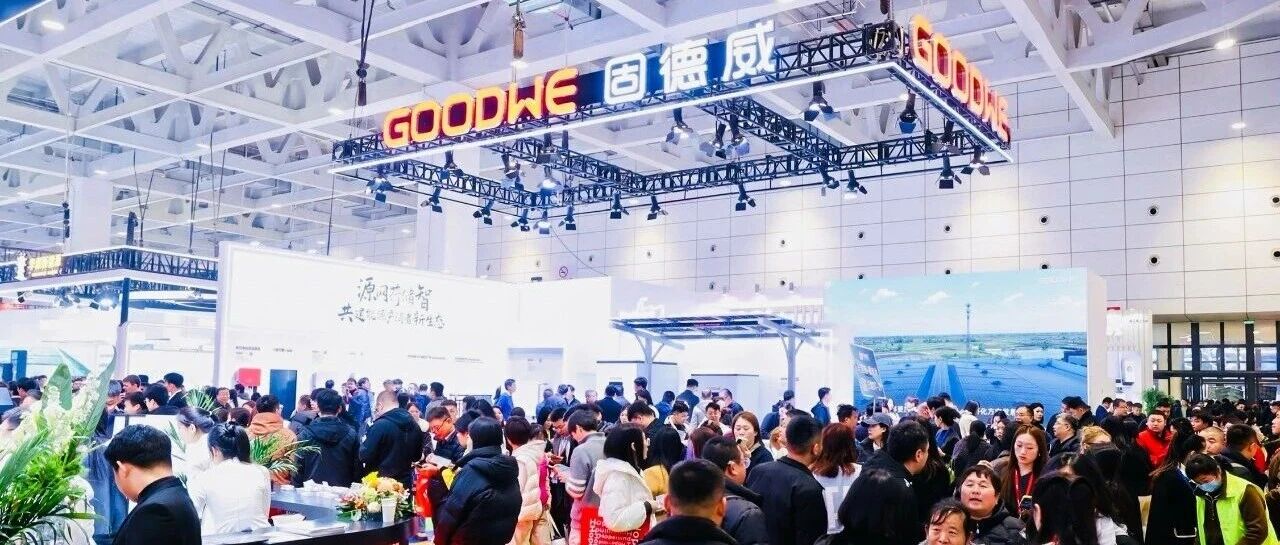
固德威亮相济南国际光储利用大会,做能源产消者的“共赢伙伴”
中国能源报· 2026-03-10 07:29
Core Viewpoint - The article highlights the significant advancements and product offerings of GoodWe at the 21st China (Jinan) International Conference on Photovoltaic Storage Utilization, emphasizing the company's commitment to building a new ecosystem for energy producers and consumers through innovative solutions in the photovoltaic and energy storage sectors [2][17]. Group 1: Residential Solutions - GoodWe showcased its ET LV series storage inverters and Lynx A G4 series high-voltage batteries, emphasizing their seamless switching capability of less than 4ms and a 150% unbalanced output to handle single-phase load fluctuations [4]. - The Lynx A G4 series features a high energy density of 314Ah, allowing for a maximum system expansion of up to 480kWh, with a design that facilitates easy installation and maintenance [4]. - The company also presented the SDT G4 series photovoltaic inverters, which are lightweight (≤19kg) and designed for easy installation, making them ideal for upgrading existing residential photovoltaic systems [6]. Group 2: Commercial Solutions - GoodWe introduced the GT G2 series products, which are equipped with AFCI 3.0 and enhanced safety features to provide efficient and stable photovoltaic solutions for commercial users [10]. - The HCA series direct current charging piles (40-60kW) were also displayed, designed for commercial operations with multiple safety protections and the ability to operate in extreme temperatures from -30°C to 55°C [12]. Group 3: Innovation and Standards - The launch of the "Lightweight Roof Photovoltaic System Safety Technical White Paper" was a key highlight, defining industry safety standards and introducing the Galaxy 711 series as part of a comprehensive solution [14]. - GoodWe's strategy includes integrating AI into its smart energy solutions, promoting a collaborative ecosystem where users can act as both energy consumers and producers [20].

美国电力研究系列二:AI数据中心加剧电力短缺,各类电源需求大增
Soochow Securities· 2026-03-04 07:20
Investment Rating - The report recommends a positive investment outlook for the energy sector, particularly focusing on gas turbines and energy storage solutions due to the increasing demand from AI data centers [2]. Core Insights - The explosion of AI computing power is significantly widening the electricity supply gap in the U.S., with a projected cumulative AI computing power of 153GW by 2030, leading to a peak load of 963GW and a required generation capacity of 1751GW [2][27]. - Gas turbines are favored for their stability and cost-effectiveness, while solar storage is seen as a complementary solution. The trend indicates that CSP manufacturers are increasingly opting for self-built power sources [2][34]. - Chinese companies are expected to benefit from the surge in overseas orders for gas turbines, with significant technological breakthroughs in the domestic supply chain [2][34]. Summary by Sections PART 1: AI Data Centers Intensify Power Shortages and Increase Demand for Various Power Sources - The U.S. electricity supply gap is expanding due to the rapid growth of AI computing power, necessitating an average annual addition of 100GW of generation capacity over the next five years [2][27]. - The current registered new generation capacity in the U.S. is insufficient to meet this demand, with only 50GW being added annually [2][30]. PART 2: AI Data Centers Prefer Stable Power Sources, Prioritizing Gas Turbines and Solar Storage - Gas turbines are the primary choice for data centers due to their reliability and lower cost per MWh, while solar storage is increasingly adopted for its green attributes [34][35]. - The report highlights the economic advantages of gas and solar power compared to traditional fossil fuels and nuclear energy [35]. PART 3: Chinese Companies Fully Benefit from Significant Order Increases - The global gas turbine market is experiencing a surge in demand, with a projected increase in orders from 58GW in 2024 to over 90GW in 2025, driven largely by the U.S. AI data center sector [53]. - Chinese manufacturers have achieved breakthroughs in gas turbine technology, positioning them to capture a larger share of the growing market [34][53]. PART 4: Investment Recommendations - The report recommends focusing on key players in the gas turbine market, such as Dongfang Electric, and highlights the potential of solar storage leaders like Sungrow Power and CATL [2][34].


未知机构:怎么看今日下跌20260303A股复盘笔记-20260304
未知机构· 2026-03-04 02:45
Summary of Conference Call Notes Industry Overview - The notes discuss the A-share market performance, highlighting a significant downturn with over 4,800 stocks declining, while only oil and gas energy stocks showed gains. This indicates a broader market sell-off driven by panic selling [1][2]. Key Points and Arguments - The market experienced a substantial drop, with the Shanghai Composite Index showing signs of a top divergence and a need for adjustment. The decline was more severe than anticipated, with a nearly 3% drop across the entire A-share market [1]. - The panic selling led to 88 stocks hitting the daily limit down, indicating widespread fear among investors [1]. - The notes mention the geopolitical uncertainty due to the US-Iran conflict, which could potentially lead to a long-term increase in oil prices, thereby tightening monetary policy from the Federal Reserve. However, this scenario is considered low probability at the moment [1][2]. - The Korean stock market also reflected similar concerns, dropping over 7%, which underscores the regional impact of the prevailing fears [1]. Technical Analysis - From a technical perspective, the Shanghai Composite Index has shown a top divergence, suggesting a necessary adjustment period of approximately three weeks. The key support level is identified around 4,000 points [2]. - The ChiNext Index has been trading in a narrow range since January, accumulating a significant amount of similar-cost positions, and is also facing adjustment pressure after a recent drop [2]. - Despite the potential for a technical rebound, it is noted that confirming the end of the adjustment phase will be challenging due to the prevailing negative sentiment [2]. Investment Opportunities - The notes suggest that once the panic subsides and the market stabilizes, there may be new buying opportunities in sectors that have been oversold, such as strategic resources, AI power construction, and domestic computing power [2]. - Patience is advised as the market needs to clear out excess positions before identifying these new entry points [2].
光储行业跟踪:1月国内新型储能新增投运装机规模同比高增,TOPCon双玻组件价格稳定
Shanghai Aijian Securities· 2026-03-02 11:56
Investment Rating - The industry is rated as "Outperform" compared to the market [3]. Core Insights - The production of photovoltaic modules is expected to be around 34-35 GW in February 2026, with a month-on-month decrease of approximately 12-13%. Domestic production is about 25-26 GW, while overseas production remains stable at around 10 GW [3]. - The lithium battery production in March 2026 is projected to increase by 16.5% month-on-month, with a total production of 219 GWh in China and 232 GWh globally, indicating a strong recovery in industry capacity [3]. - The average price of polysilicon dense material is reported at 52.00 CNY/kg, while the price of TOPCon double-glass modules remains stable at 0.74 CNY/W [3]. - In December 2025, the export value of photovoltaic modules reached approximately 2.314 billion USD, marking an 18.22% year-on-year increase [3]. - The domestic photovoltaic installed capacity in December 2025 was 40.11 GW, showing a year-on-year growth of 82.15% [3]. Summary by Sections Production - The production of lithium batteries is expected to increase in March 2026, with a significant recovery in capacity observed [4][6]. Prices - The prices of photovoltaic components and lithium batteries have shown stability, with specific prices reported for various components [3][7]. Domestic Demand - The domestic photovoltaic installed capacity has seen significant growth, with a total of 315.00 GW added in 2025, reflecting a year-on-year increase of 13.65% [3][19]. Overseas Demand - The export of inverters and photovoltaic modules has shown varied performance, with significant growth in certain regions, particularly Australia [3][24].
开年利是!头部基金给出马年投资“寻宝图”
Zhong Guo Jing Ji Wang· 2026-02-24 05:13
Core Viewpoint - The A-share market is expected to focus on technology as the main theme for 2026, with attention also on consumer and dividend sectors as investment opportunities [1] Group 1: Investment Strategies and Themes - E Fund emphasizes the increasing value of dividend assets in a low-interest-rate environment, with dividend yields around 5% and a potential influx of funds into these assets in 2026 [1] - 华夏基金 suggests that concerns over tightening overseas liquidity may be overestimated, and long-term investors could find attractive entry points in sectors like AI, media, and lithium batteries [2] - 富国基金 predicts a "central oscillation upward" trend for the A-share market in 2026, driven by recovery opportunities in consumption and real estate [3] - 汇添富 identifies A-shares as the most promising asset for 2026, highlighting the clear trend in the AI industry and the potential for valuation increases [8] - 博时基金 recommends focusing on emerging industries, resource upgrades, and domestic demand recovery as key investment directions for 2026 [10] Group 2: Sector-Specific Insights - 国泰基金 notes a policy shift towards domestic demand, which is expected to enhance China's economic outlook and asset returns, suggesting a good time for mid-term adjustments in sectors like AI and power equipment [5] - 鹏华基金 highlights the wine sector's potential for valuation recovery in 2026, while also emphasizing the attractiveness of the tourism sector in Hong Kong stocks [6][7] - 景顺长城 focuses on the long-term structural benefits for the equity market, particularly in technology sectors like AI, semiconductors, and consumer electronics [9] - 银河基金 discusses the commercial viability of space solar power and the need for domestic companies to overcome challenges in reusable rocket technology [11] - 东方红 suggests that cyclical sectors have high potential but require supply-side adjustments, while advocating for a bottom-up approach to identify undervalued stocks [12]
TPO模式与新品迭代支撑业绩修复
HTSC· 2026-02-09 12:27
Investment Rating - The report maintains a "Buy" rating for the company, with a target price of $51 [1][4]. Core Insights - The company reported revenues of $343 million for Q4 2025 and $1.473 billion for FY 2025, reflecting a year-over-year decline of 10.3% and 10.7% respectively. The operating profit margin was 6.54% for Q4 and 10.69% for FY, with net profit showing a significant drop of 37.7% for Q4 but an increase of 67.7% for FY [1]. - The decline in Q4 revenue was attributed to demand being pulled forward due to safety net installations in Q3 2025, alongside rising tariff costs and a dilution effect on fixed costs, which impacted profit margins [1]. - The company anticipates Q1 2026 to be a low point for the year due to prior demand pull-forward and adjustments in the IRA tax credit policy. However, there is optimism regarding new product launches and the expansion of the TPO model, which, combined with rising electricity prices in the U.S. and supportive policies in Europe, could lead to a recovery in both volume and profit margins [1][2]. Summary by Sections Financial Performance - For FY 2025, the company achieved revenues of $1.473 billion, with a year-over-year growth of 10.72%. The net profit for the same period was $172 million, reflecting a 67.67% increase [10]. - The forecast for net profit from 2026 to 2028 is projected at $218 million, $312 million, and $413 million respectively, with corresponding EPS of $1.63, $2.34, and $3.10 [4][10]. Market Dynamics - The increase in electricity prices in the PJM region reached $79.3 per MWh, a 44% year-over-year increase, which is expected to support the demand for solar storage solutions [2]. - In Europe, policy changes such as the gradual exit of net metering subsidies in the Netherlands and the transition to dynamic pricing in France are favorable for integrated solar storage models [2]. Product Development - The company has launched several new products, including the fourth-generation IQ Battery, which has been approved by 52 U.S. power companies, covering approximately 30 million users and representing 70% of the U.S. home storage market [2]. - The introduction of the IQ9 micro-inverter product targets the small commercial market, with over 50,000 units pre-ordered, expected to generate $5-10 million in revenue [2]. - The fifth-generation battery, featuring a modular design with a 50% increase in energy density and a 40% reduction in cost, is set for pilot testing in Q3 2026 and commercial release in Q4 2026 [2]. TPO Model Expansion - The TPO model is being implemented to help users secure tax credits by meeting compliance requirements, which is expected to mitigate the impact of policy fluctuations on end-user demand [3]. - The company has secured two TPO orders totaling approximately $123 million, which will help in meeting initial investment requirements and substantial commencement criteria [3].

光储行业跟踪:电网侧独立新型储能容量电价机制建立,光伏组件价格持续上涨
Shanghai Aijian Securities· 2026-02-03 10:24
Investment Rating - The industry is rated as "Strongly Outperforming the Market" [2][34]. Core Insights - The report highlights a significant increase in the price of photovoltaic components and a decrease in lithium battery production in February 2026. The overall production of photovoltaic components is expected to decline by 13.58% month-on-month, while the production of lithium batteries is projected to decrease by 10.5% in China [2][3]. - The report emphasizes the establishment of a new pricing mechanism for independent energy storage capacity, which is expected to provide stable revenue for new energy storage solutions. This is part of a broader trend towards optimizing capacity structures in the renewable energy sector [2][32]. Summary by Sections Production - Photovoltaic component production is forecasted to decrease by 13.58% month-on-month in December 2025. The lithium battery production in China is expected to be 188 GWh, reflecting a 10.5% month-on-month decline [2][3][10]. Prices - As of January 28, 2026, the price of polysilicon remains stable at 54.00 CNY/kg, while the average price of TOPCon double-glass components has increased by 3.07% to 0.74 CNY/W. The average price of lithium battery storage systems has risen by 2.82% to 0.5882 CNY/Wh [2][11][17]. Domestic Demand - In November 2025, the domestic photovoltaic installation capacity reached 22.02 GW, a month-on-month increase of 74.76%. The cumulative installed capacity for the year reached 274.89 GW, marking a year-on-year growth of 33.25% [2][23]. Overseas Demand - In December 2025, the export value of photovoltaic components was approximately 2.314 billion USD, representing a year-on-year increase of 18.22%. The inverter export value reached 839 million USD, showing a year-on-year increase of 26.12% [2][27][25].
华宝新能:自然灾害的发生对公司消费级光储产品的销售有显著的促进作用
Zheng Quan Ri Bao Wang· 2026-02-02 12:49
Core Viewpoint - The severe winter storm in North America in January has significantly impacted the local power system, leading to widespread power outages, which in turn has created a favorable market condition for the company's consumer-grade energy storage products [1] Group 1: Company Response - The company has identified North America as its core strategic market, and the occurrence of natural disasters has positively influenced the sales of its energy storage products [1] - In response to the unstable power supply and fluctuating electricity prices, the company has proactively launched high-capacity home backup power products, including 5 kWh and 3.6 kWh options, to meet local households' needs for stable energy supply during power supply fluctuations [1]