
制造业采购经理指数

Search documents
【环球财经】5月澳大利亚制造业扩张速度有所放缓 或为暂时现象
Xin Hua Cai Jing· 2025-06-02 02:47
Core Insights - The S&P Global Australia Manufacturing PMI decreased from 51.7 to 51 in May 2025, marking the lowest level since February of the same year, indicating a slowdown in the expansion of the manufacturing sector [1][2] - The manufacturing sector has remained above the neutral level of 50 for five consecutive months, suggesting ongoing expansion despite the reduced pace [1] Manufacturing Sector Performance - In May, the growth of new orders in the Australian manufacturing sector was at its lowest in three months, partially influenced by the recent federal election [1][2] - New export orders saw their first increase in three months, indicating potential recovery in international demand [1][2] Production and Employment Trends - Factory output experienced its second decline of the year in May, alongside decreases in purchasing activity and inventory levels [1] - Despite the drop in output, manufacturing firms continued to increase employment, leading to the fastest reduction in backlogs since November of the previous year [2] Cost and Pricing Dynamics - Average input costs in the manufacturing sector rose due to increased raw material and transportation costs, but the rate of increase was lower than in April and the lowest since November of the previous year [2] - The ability of manufacturing firms to raise sales prices at a rate below historical averages suggests a cautious approach to pricing amid fluctuating costs [2] Future Outlook - Forward-looking indicators suggest that manufacturing output may rebound in the coming months, supported by the growth in new export orders and a rise in business confidence [2] - The stabilization of the macroeconomic and trade environment is expected to contribute positively to sales growth over the next 12 months [2]

5月份制造业采购经理指数回升 我国经济总体产出保持扩张
Yang Guang Wang· 2025-06-01 02:08
Group 1 - The manufacturing Purchasing Managers' Index (PMI) for May is reported at 49.5%, indicating an improvement in economic activity compared to the previous month [1] - New export orders index increased to 47.5%, up by 2.8 percentage points from last month, reflecting a recovery in foreign trade orders [1] - The production index rose to 50.7%, an increase of 0.9 percentage points, indicating a faster pace of production activities in the manufacturing sector [1] Group 2 - The large enterprises PMI stands at 50.7%, up by 1.5 percentage points from the previous month, signaling a positive trend in large-scale manufacturing [2] - High-tech manufacturing PMI is at 50.9%, maintaining expansion for four consecutive months, indicating a stable development trend [2] - The production and business activity expectation index is at 52.5%, reflecting stable confidence among manufacturing enterprises regarding market development [2] Group 3 - The non-manufacturing business activity index is at 50.3%, slightly down by 0.1 percentage points but still above the critical point, indicating ongoing economic recovery [3] - The service industry business activity index increased to 50.2%, up by 0.1 percentage points, driven by the effects of the May Day holiday [4] - Significant recovery in business activity indices for sectors such as railway transport, air transport, accommodation, and catering, all remaining in the expansion zone [4]
经济运行具备继续回升向好基础!5月经济数据释放多重积极信号
Yang Shi Wang· 2025-05-31 08:36
Group 1 - In May, the manufacturing Purchasing Managers' Index (PMI) in China rose to 49.5%, indicating an improvement in manufacturing sentiment and economic stability [1] - Both supply and demand in the manufacturing sector showed recovery, with the production index exceeding 50%, signaling accelerated manufacturing activities [3] - The high-tech manufacturing PMI has remained in the expansion zone for four consecutive months, indicating a positive development trend [3] Group 2 - The production and new order indices for industries such as agricultural processing, specialized equipment, and aerospace have exceeded 54%, reflecting rapid growth in supply and demand [4] - The PMI for large enterprises has rebounded above 50%, showing a swift recovery, while small enterprises also experienced significant improvements, demonstrating the resilience of the Chinese economy [6] - The non-manufacturing business activity index for May was 50.3%, indicating continued expansion, with positive performances in investment, consumption, and export-related sectors [6]

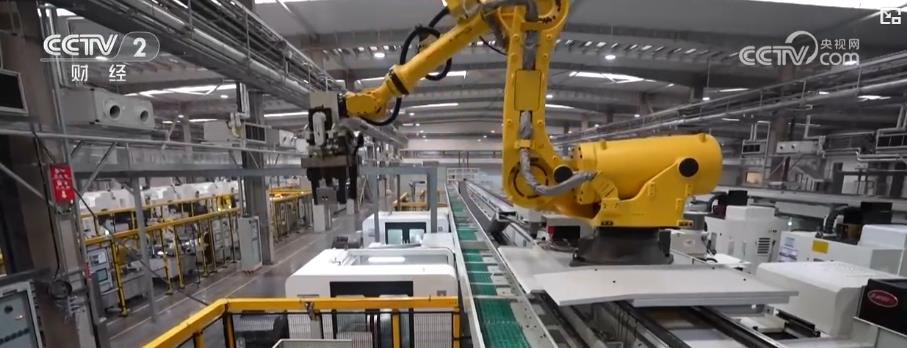
国家统计局:5月份制造业采购经理指数回升,非制造业商务活动指数延续扩张
news flash· 2025-05-31 01:34
Group 1: Manufacturing PMI Insights - In May, the manufacturing PMI rose to 49.5%, an increase of 0.5 percentage points from the previous month, indicating an improvement in economic conditions [1][2] - The production index reached 50.7%, up 0.9 percentage points, signaling accelerated manufacturing activity, while the new orders index increased to 49.8%, up 0.6 percentage points [2] - Large enterprises saw their PMI rise to 50.7%, returning to the expansion zone, with production and new orders indices at 51.5% and 52.5%, respectively [2] Group 2: High-Tech and Export Performance - High-tech manufacturing PMI stood at 50.9%, maintaining expansion for four consecutive months, while equipment manufacturing and consumer goods sectors also showed improvement [3] - New export orders and import indices increased to 47.5% and 47.1%, respectively, reflecting a recovery in foreign trade orders, particularly from companies engaged with the U.S. market [3] Group 3: Non-Manufacturing Sector Performance - The non-manufacturing business activity index was 50.3%, slightly down by 0.1 percentage points but still indicating expansion [4] - The service sector's business activity index rose to 50.2%, driven by increased consumer activity during the "May Day" holiday, with significant growth in transportation and hospitality sectors [4] - The construction sector maintained expansion with a business activity index of 51.0%, although it showed a slight decline from the previous month [4] Group 4: Composite PMI Overview - The composite PMI output index increased to 50.4%, up 0.2 percentage points, indicating continued expansion in production and business activities across sectors [5][6] - The manufacturing production index and non-manufacturing business activity index contributed to the composite PMI, standing at 50.7% and 50.3%, respectively [6]
制造业PMI有所回落,非制造业PMI继续扩张—— 我国经济总体产出持续扩张
Jing Ji Ri Bao· 2025-05-02 22:08
Core Viewpoint - The manufacturing Purchasing Managers' Index (PMI) in April dropped to 49%, indicating a contraction, while the non-manufacturing business activity index and the composite PMI output index remained in the expansion zone at 50.4% and 50.2% respectively, reflecting a stable economic foundation despite external uncertainties [1][5]. Manufacturing Sector - The manufacturing PMI decreased by 1.5 percentage points in April, attributed to external environmental changes and seasonal factors, as March is typically a peak season for manufacturing [1][2]. - The new orders index for manufacturing was significantly higher than the new export orders index, indicating stable domestic demand despite a decline in export orders [2]. - High-tech manufacturing sectors continued to expand, showing resilience in production activities [5]. Non-Manufacturing Sector - The non-manufacturing PMI stood at 50.4%, down 0.4 percentage points from the previous month, but still indicating stable expansion [3]. - The construction sector showed robust activity, particularly in infrastructure, with the civil engineering business activity index rising over 5 percentage points to above 60% [3]. - Consumer sectors, including travel and leisure, experienced increased activity, with indices for air transport and entertainment rising above 55% and 51% respectively [3]. Economic Outlook - The composite PMI output index was at 50.2%, down 1.2 percentage points, but still above the critical point, indicating overall production expansion [5]. - Experts suggest that despite short-term disruptions from global uncertainties, the economic foundation remains solid, supported by a large domestic market and effective policy measures [2][4]. - The business activity expectation index for non-manufacturing remained high at over 56%, reflecting optimism among enterprises regarding future market conditions [4][6].
5月2日电,法国4月份制造业采购经理指数报48.7,初步数据为48.2。
news flash· 2025-05-02 07:52
Group 1 - The manufacturing Purchasing Managers' Index (PMI) for France in April reported at 48.7, showing an increase from the preliminary data of 48.2 [1]
4月份制造业PMI公布 如何看待这一指标变化?专家解读
Yang Shi Xin Wen· 2025-04-30 11:25
Group 1 - In April, China's manufacturing Purchasing Managers' Index (PMI) fell to 49%, a decrease of 1.5 percentage points from the previous month, indicating a contraction in the manufacturing sector [1] - The decline in the manufacturing PMI is attributed to external factors, particularly the impact of U.S. tariffs, as well as a correction following a significant rebound in March [1][2] - The new export orders index dropped by 4.3 percentage points in April, reflecting a tightening in short-term export demand and overall market demand [1] Group 2 - Despite the challenges in foreign trade, China's economic foundation remains solid, supported by its large market size and complete industrial supply chain, which can effectively withstand external shocks [1] - In the context of weak overall market demand, new momentum in the manufacturing sector continues to show stable growth, with high-tech manufacturing new orders index above 53% and equipment manufacturing new orders index above 51% [2] - The production index for high-tech manufacturing remains at a favorable level of 52%, while the production index for consumer goods manufacturing stays above 50%, indicating ongoing stability in these sectors [2] Group 3 - The manufacturing activity expectation index for April remains optimistic at over 52%, suggesting that enterprises maintain a positive outlook for future production and operations [2] - The recent meeting of the Central Political Bureau emphasized the need for proactive macroeconomic policies and measures to support struggling enterprises, aiming to stabilize economic growth [2][3] - Globally, major economies are experiencing a contraction in manufacturing due to increased uncertainty in trade environments, highlighting the need for high-quality development to address external challenges [3]
4月份制造业PMI公布 企业生产经营总体稳定
news flash· 2025-04-30 01:39
Core Insights - The manufacturing purchasing managers' index (PMI) in April decreased to 49%, a decline of 1.5 percentage points from the previous month, indicating a contraction in the manufacturing sector [1] - Despite the overall decline in the PMI, high-tech manufacturing industries continue to expand, suggesting resilience in specific sectors [1] - Manufacturing enterprises that focus on domestic sales are maintaining stable production and operations, reflecting a degree of stability in the industry [1]
4月份中国制造业采购经理指数为49% 企业生产经营总体稳定
news flash· 2025-04-30 01:33
Core Viewpoint - In April, China's manufacturing Purchasing Managers' Index (PMI) decreased to 49%, reflecting a decline of 1.5 percentage points from the previous month, influenced by rapid changes in the external environment, while high-tech manufacturing sectors continued to expand [1] Group 1: Manufacturing PMI - The overall manufacturing PMI for April is reported at 49%, indicating a contraction in the manufacturing sector [1] - The decline in the manufacturing PMI is attributed to external environmental changes [1] Group 2: High-Tech Manufacturing - The high-tech manufacturing PMI stands at 51.5%, significantly above the overall manufacturing level, indicating a sustained positive development trend [1] - The demand in the new momentum market remains stable with an overall increase [1] Group 3: Consumer Goods Manufacturing - The new orders index for consumer goods manufacturing is at the critical point of 50%, suggesting a good release of domestic market demand [1] Group 4: Business Expectations - The production and business activity expectation index for April is at 52.1%, remaining in the expansion zone [1]
沪铜产业日报-2025-04-01
Rui Da Qi Huo· 2025-04-01 09:30
1. Report Industry Investment Rating No information provided. 2. Core View of the Report - The fundamentals of Shanghai copper may be in a stage of slightly shrinking supply, steadily increasing demand, and positive expectations. It is recommended to conduct short - term long - position trading at low prices with a light position, while paying attention to controlling the rhythm and trading risks [2]. 3. Summary According to Relevant Catalogs 3.1 Futures Market - The closing price of the main futures contract of Shanghai copper was 80,430 yuan/ton, up 480 yuan; the price of LME 3 - month copper was 9,752 dollars/ton, up 42 dollars. The spread between the main contract and the next - month contract was 10 yuan/ton, up 50 yuan. The trading volume of the main contract of Shanghai copper was 198,319 lots, down 5,412 lots. The net position of the top 20 futures holders of Shanghai copper was - 7,218 lots, up 534 lots [2]. - LME copper inventory was 211,375 tons, down 1,550 tons; SHFE cathode copper inventory was 235,296 tons, down 21,032 tons; SHFE cathode copper warehouse receipts were 136,003 tons, down 2,856 tons [2]. 3.2 Spot Market - The price of SMM 1 copper spot was 80,015 yuan/ton, up 70 yuan; the price of Yangtze River Non - ferrous Market 1 copper spot was 80,015 yuan/ton, up 30 yuan. The CIF (bill of lading) price of Shanghai electrolytic copper was 98 dollars/ton, unchanged; the average premium of Yangshan copper was 66 dollars/ton, unchanged [2]. - The basis of the CU main contract was - 415 yuan/ton, down 410 yuan; the LME copper spread (0 - 3) was - 71 dollars/ton, down 16.5 dollars [2]. 3.3 Upstream Situation - The import volume of copper ore and concentrates was 218.25 million tons, down 34.88 million tons. The rough smelting fee (TC) of domestic copper smelters was - 24.14 dollars/kiloton, down 1.26 dollars/kiloton [2]. - The price of copper concentrates in Jiangxi was 70,270 yuan/metal ton, up 30 yuan; the price of copper concentrates in Yunnan was 70,970 yuan/metal ton, up 30 yuan. The processing fee of blister copper in the south was 1,100 yuan/ton, up 250 yuan; the processing fee of blister copper in the north was 900 yuan/ton, up 100 yuan [2]. 3.4 Industry Situation - The output of refined copper was 1.242 billion tons, up 0.109 billion tons; the import volume of unwrought copper and copper products was 420,000 tons, unchanged. The social inventory of copper was 418,200 tons, up 4,300 tons [2]. - The price of 1 bright copper wire in Shanghai was 57,590 yuan/ton, down 300 yuan; the price of 2 copper (94 - 96%) in Shanghai was 67,650 yuan/ton, down 650 yuan. The ex - factory price of 98% sulfuric acid of Jiangxi Copper was 600 yuan/ton, unchanged [2]. 3.5 Downstream and Application - The output of copper products was 2.2728 billion tons, up 0.1323 billion tons; the cumulative completed investment in power grid infrastructure was 43.62 billion yuan, down 564.638 billion yuan. The cumulative completed investment in real estate development was 1,071.974 billion yuan, down 8,956.048 billion yuan [2]. - The monthly output of integrated circuits was 4,277,402,800 pieces, up 521,990,500 pieces [2]. 3.6 Option Situation - The 20 - day historical volatility of Shanghai copper was 13.82%, up 0.02%; the 40 - day historical volatility of Shanghai copper was 12.13%, down 0.03%. The implied volatility of the current - month at - the - money IV was 14.41%, down 0.0032%. The call - put ratio of at - the - money options was 1.06, up 0.0652 [2]. 3.7 Industry News - In March, affected by the fading of the Spring Festival factor, the manufacturing PMI, non - manufacturing business activity index, and comprehensive PMI output index were 50.5%, 50.8%, and 51.4% respectively, up 0.3, 0.4, and 0.3 percentage points from the previous month, indicating that China's economy generally maintained an expansion [2]. - Fed's Williams said that the full impact of tariffs may gradually emerge over a long period, and it is necessary to focus on data to measure the impact of tariffs. Fed's Barkin said he was not in a hurry to cut interest rates. ECB President Lagarde said that US tariff policies would push Europe towards "economic independence", and the ECB estimated that US tariff policies might cause the eurozone GDP to decline by 0.3% in the first year [2]. - IMF President Georgieva said that the global economic outlook might be slightly revised downward, but there were no signs of recession. From January to March, the total sales of TOP100 real - estate enterprises were 810.1 billion yuan, a year - on - year decrease of 9.8%. In March, the sales of TOP100 real - estate enterprises decreased by 10.6% year - on - year [2].