
区域合作

Search documents
牛津亚太首席经济学家:科创将长期支撑中国增长|全球财经连线
2 1 Shi Ji Jing Ji Bao Dao· 2025-09-30 10:48
Core Insights - Asian economies are showing resilience amid global economic uncertainties, with optimistic growth prospects for several countries in the coming quarters due to supportive government policies and regional cooperation mitigating the impact of U.S. protectionism [1][3][5] Group 1: Economic Performance - Many Asian economies, including China, India, and Southeast Asian nations, have performed well this year, partly due to the "advance ordering" effect from U.S. tariff policies, which has bolstered exports [1][3] - The manufacturing sector in China, which constitutes about 25% of its GDP, is crucial for long-term growth, with technology and innovation being key drivers for productivity enhancement [2][7] Group 2: Regional Cooperation - The Regional Comprehensive Economic Partnership (RCEP) and other free trade agreements are enhancing regional economic cooperation, which could provide significant GDP gains and offset some negative impacts from U.S. tariffs [5] - The shift towards regionalization in trade is expected to strengthen as Asian economies establish more free trade agreements, creating opportunities for specialization in different products across various economies [5][4] Group 3: Impact of U.S. Tariffs - U.S. tariffs have created challenges for Asian economies reliant on exports, but they are also prompting governments to consider regional trade strategies and potential shifts towards domestic demand [7] - The reliance on Asian manufacturing in global supply chains remains strong, despite increased costs due to tariffs, indicating the continued importance of Asia in global production [4] Group 4: Future Outlook - The outlook for Asian economies remains positive, with expectations of sustained growth driven by technological advancements and innovation, particularly in China and South Korea [7] - The recent U.S. Federal Reserve interest rate cut is expected to positively influence capital flows into emerging Asian markets, enhancing investor sentiment [6]
青岛市政府与3家银行签署战略合作协议
Zhong Guo Jing Ying Bao· 2025-09-26 08:14
其中,中国邮政储蓄银行在战略合作期内将为青岛市提供5000亿元人民币意向性融资支持,重点合作领 域包括重大项目建设、乡村振兴、航运金融与普惠金融等。 中经记者 郝亚娟 夏欣 青岛、北京报道 9月26日,在2025·青岛创投风投大会上,青岛市政府分别与中国邮政储蓄银行股份有限公司、汇丰银行 (中国)有限公司、东亚银行(中国)有限公司3家银行以及中国国新控股有限责任公司签署战略合作 协议,覆盖宏观规划、央企合作与外资赋能三大领域,将推动区域与多类型机构合作迈向深度协同,开 启合作"新篇章"。 据了解,青岛市政府引导基金联合8家市属国企及科创母基金等,共同发起总规模58亿元的市级基金, 重点投向青岛"10+1"创新型产业体系,支持科技创新与现代化产业体系建设,加速优质项目落地。 (编辑:朱紫云 审核:何莎莎 校对:颜京宁) ...

第13届“中国—亚洲论坛”在韩国首尔举行
Xin Hua Wang· 2025-09-16 07:52
Core Viewpoint - The 13th "China-Asia Forum" held in Seoul aims to explore cooperation opportunities between China, South Korea, and other Asian countries in various fields such as trade, technology, green transformation, and cultural exchange, promoting regional cooperation and shared prosperity [1] Group 1: Forum Overview - The forum was attended by over 200 participants from political, economic, media, and academic sectors of both China and South Korea, including notable figures such as South Korean President Lee Jae-myung and Chinese Ambassador to South Korea Fang Kun [1] - The event serves as a dialogue platform to provide practical solutions for enhancing cooperation and achieving mutual benefits among Asian nations [1] Group 2: Key Speeches and Discussions - Fang Kun emphasized the need for Asian countries to work together to build a shared future and maintain peace and stability amid a rapidly changing international landscape [1] - Professor Yang Baoyun from Peking University discussed the current state of China-South Korea relations and potential areas for deepening cooperation [1] - Professor Jeong In-kyu from Inha University analyzed the second round of negotiations for the China-South Korea Free Trade Agreement and its outlook [1] - Discussions also included bilateral and regional cooperation among Asian countries, highlighting the importance of collaboration [1]
外滩大会首届全球主题日召开 探讨亚洲及全球金融科技发展路径
Yang Guang Wang· 2025-09-13 02:20
Group 1 - The 2025 Inclusion·Bund Conference hosted its first "Global Theme Day," bringing together major fintech events from Singapore and Hong Kong to discuss the development paths of fintech in Asia and globally [1] - Key discussions emphasized the deep integration of technology and industry, robust innovation under regulatory compliance, and collaborative win-win strategies as core consensus for high-quality fintech development [1][2] - The focus in the AI sector has shifted from technical potential to application benefits, with numerous practical cases shared on enhancing financial service efficiency, strengthening risk control, and optimizing business decisions [1] Group 2 - The conference highlighted the importance of balancing innovation incentives with risk prevention, with discussions on the development trends and regulatory frameworks for tokenized products in Hong Kong [2] - The Hong Kong government aims to create a conducive environment for digital asset development by optimizing legal and regulatory frameworks, as outlined in the "Hong Kong Digital Asset Development Policy Declaration 2.0" [2] - A McKinsey report indicated that Asia is a vibrant corridor for global trade growth, with 18 out of the 20 fastest-growing trade corridors located in Asia, prompting discussions on deepening cooperation in finance, technology, and innovation across the region [2] Group 3 - The CEO of Global Finance & Technology Network (GFTN) identified four characteristics of the emerging Asian market: a large and fast-paced market culture open to new technologies, youth-driven innovation, traditional industry leaders seeking digital transformation, and a strong regulatory focus on inclusivity and consumer protection [3] - The conference maintained a high level of international participation, featuring 62 international guests from 15 countries and regions, reinforcing Shanghai's role as a global financial and tech innovation center [5]

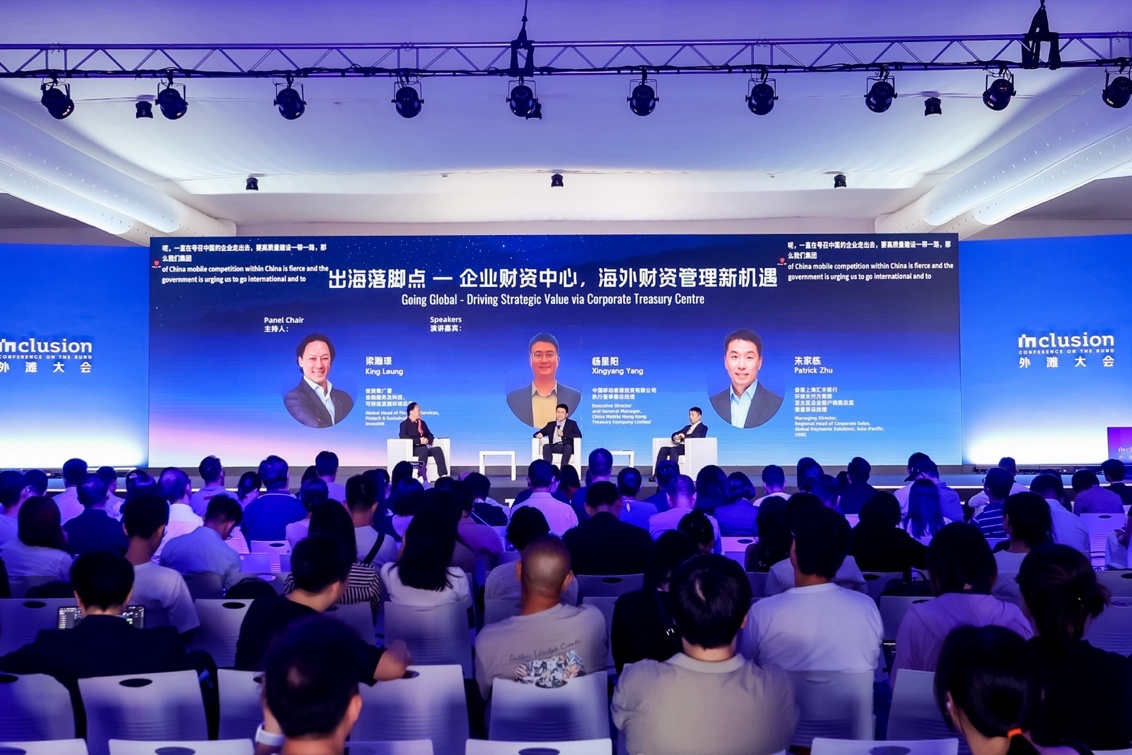
外滩大会首届全球主题日召开,三大共识引领金融科技发展
Guo Ji Jin Rong Bao· 2025-09-12 15:44
Core Insights - The 2025 Inclusion Bund Conference held in Shanghai focused on the future of fintech in Asia and globally, emphasizing the integration of technology and industry, compliance-driven innovation, and regional collaboration as key drivers for high-quality fintech development [1][3]. Group 1: Technology and Industry Integration - The conference highlighted the importance of deep integration between emerging technologies and traditional industries, with a shift from conceptual discussions to practical applications that create real value [5]. - In the field of artificial intelligence, discussions centered on the application benefits, showcasing AI's role in enhancing financial service efficiency, risk control, and optimizing business decisions [5]. - Blockchain technology was identified as a crucial component for building a new generation of financial infrastructure, particularly in cross-border payments and asset tokenization [5]. Group 2: Regulatory Environment - A robust regulatory environment is essential for the sustainable development of fintech, with a focus on balancing innovation incentives and risk prevention [6]. - The Hong Kong Securities and Futures Commission discussed the development trends and regulatory frameworks for tokenized products, emphasizing the need for a comprehensive compliance and security system in the Web3 era [6]. - European representatives shared insights on how favorable regulatory measures enhance fintech competitiveness, highlighting consumer protection, digital security, and fair competition as key regulatory priorities [6]. Group 3: Regional Cooperation - Strengthening regional cooperation is seen as a vital pathway for Asian economies to achieve common development, with Asia being a significant driver of global trade growth [8]. - The Global Finance & Technology Network organized discussions on cross-border financial innovation, showcasing successful cases of payment system connectivity through bilateral cooperation among Southeast Asian banks and payment institutions [8]. - The CEO of GFTN summarized four characteristics of Asia's emerging markets: a large and fast-paced market culture open to new technologies, youth-driven innovation, traditional industry leaders seeking digital transformation, and a regulatory focus on inclusivity and consumer protection [9].

“津”彩上合 | 东盟秘书长高金洪:共绘区域合作蓝图
人民网-国际频道 原创稿· 2025-09-02 12:01
Core Insights - The Shanghai Cooperation Organization (SCO) summit held in Tianjin from August 31 to September 1, 2025, marked a significant milestone in deepening cooperation between ASEAN and the SCO, with a focus on addressing global governance challenges and promoting regional peace, stability, and prosperity [1][2] Group 1: ASEAN and SCO Cooperation - ASEAN Secretary-General Kao Kim Hoon highlighted the signing and implementation of a memorandum of understanding between ASEAN and the SCO, exploring further cooperation [1] - The summit was the largest since the establishment of the SCO, with members discussing the "Shanghai Spirit" and reaching broad consensus on various development proposals [1] Group 2: Economic and Trade Relations - ASEAN and China have established a comprehensive strategic partnership, with 2026 designated as the 5th anniversary of this partnership, emphasizing the importance of trade, connectivity, digital transformation, and clean energy cooperation [2] - China has been ASEAN's largest trading partner for 16 consecutive years, with the upgrade of the China-ASEAN Free Trade Area expected to elevate cooperation to a higher level [2] Group 3: Future Outlook - The focus on long-term sustainable development through collaboration is essential, with a call to leverage current opportunities and the potential of artificial intelligence and emerging technologies to support global economic growth [3]
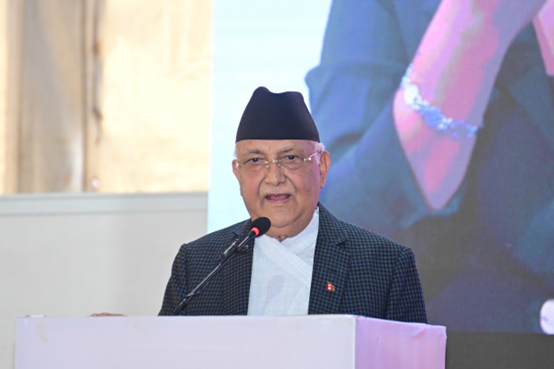
尼泊尔总理奥利:尼泊尔期望成为上合组织正式成员国
Huan Qiu Wang· 2025-09-02 01:24
Core Points - Nepal's Prime Minister Oli expressed the country's aspiration to become a full member of the Shanghai Cooperation Organization (SCO) [1][3] - During the "SCO+" meeting, Oli emphasized the importance of regional cooperation in addressing economic, technological, and ecological challenges [3] - Oli highlighted the need for stronger multilateralism to tackle global issues such as climate change, cyber threats, and economic shocks [3] Group 1 - Nepal is currently a dialogue partner of the SCO and is looking to upgrade its status to that of a full member [3] - Oli stated that Nepal is committed to regional cooperation and has strong relations with SCO member states [3] - The Prime Minister called for greater unity, integration, and resilience within the SCO to address urgent global challenges [3] Group 2 - Oli outlined a multilateral development path based on enhanced connectivity, consultation, and cooperation [3]
跨越山海共筑经贸共赢之路—— 豫见上合 和合共生
He Nan Ri Bao· 2025-09-01 23:33
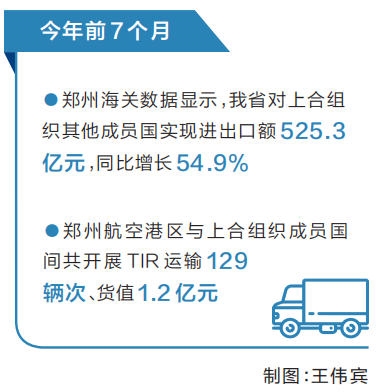
Economic Cooperation - Henan province has significantly deepened its economic cooperation with the member countries of the Shanghai Cooperation Organization (SCO), achieving an import and export volume of 52.53 billion yuan in the first seven months of this year, representing a year-on-year increase of 54.9% [2] - The SCO summit has been described as the largest in its 24-year history, reflecting the high level of trust and cooperation willingness among participating countries [3] - The summit is expected to further enhance consensus among parties and promote practical cooperation across broader fields, providing favorable signals for enterprises seeking mutually beneficial market opportunities [5] Trade and Investment - Companies in Henan, such as the Jierguge Intelligent Technology Company, are actively engaging with SCO member countries, with an expected export transaction volume of 375 million yuan in 2024 [4] - The Luoyang Northern Easy Initial Motorcycle Company has been focusing on markets in Belt and Road countries, successfully expanding its customer base through participation in exhibitions in Kazakhstan, Kyrgyzstan, and Pakistan [6] - The Zhengzhou Aviation Port Area has established 29 TIR transport routes to SCO member countries, with a total cargo value of 120 million yuan from TIR transport in the first seven months of this year [7] Future Opportunities - The strengthening of economic cooperation within the SCO framework is anticipated to create new opportunities, leveraging China's economic development and innovation capabilities in manufacturing and infrastructure [8]
全球记者共话天津峰会成果丨全球财经连线
2 1 Shi Ji Jing Ji Bao Dao· 2025-09-01 15:50
Group 1: Core Insights - The Shanghai Cooperation Organization (SCO) summit hosted by China is the largest since its establishment, with over 20 national leaders and 10 international organization heads participating [1] - China proposed a global governance initiative emphasizing sovereignty equality, adherence to international law, multilateralism, a people-centered approach, and action-oriented strategies [1] - The SCO, representing about half of the world's population and a quarter of the global economy, is reshaping regional governance and actively participating in global governance reform [1] Group 2: Economic Cooperation - Trade between China and other SCO member countries is projected to reach approximately $512.4 billion in 2024, reflecting a year-on-year growth of 2.7% [1] - The economic cooperation within the SCO is expected to enhance its influence and contribute stability to the global economy [1] - China is establishing three major cooperation platforms focused on energy, green industries, and digital economy, along with centers for technology innovation and education [2] Group 3: Sustainable Development - Multiple photovoltaic and wind power projects are being accelerated to inject new momentum into regional economic cooperation and sustainable development [2] - The SCO is expanding its influence, becoming one of the largest regional cooperation organizations in terms of population and coverage [2]
“津”彩上合|巴基斯坦萨玛电视台主持人:中国是区域合作的强大推动者
人民网-国际频道 原创稿· 2025-08-31 10:38
Core Points - The 2025 Shanghai Cooperation Organization (SCO) Summit is being held in Tianjin from August 31 to September 1, marking China's fifth time hosting the summit and the largest since the organization's inception [2] - Over 20 foreign leaders and 10 heads of international organizations are attending to summarize SCO's successful experiences and outline its development blueprint [2] - The "Shanghai Spirit," which emphasizes mutual trust, mutual benefit, equality, consultation, respect for diverse civilizations, and common development, is increasingly relevant in building a community with a shared future for SCO [2] Industry Insights - The China-Pakistan Economic Corridor (CPEC) has had a profound impact on Pakistan, with several milestone projects being implemented as a result of its promotion [2] - Gwadar Port, a significant outcome of CPEC, has become a symbol of China-Pakistan cooperation [2] - China's efforts in promoting regional development and deepening regional cooperation have been recognized as vital contributions to regional prosperity and demonstrate China's commitment to a win-win cooperation path [2]