
大数据

Search documents
光模块龙头出手,拟3.75亿元收购光通信上游资产
Zhong Guo Zheng Quan Bao· 2026-02-27 07:36
Core Viewpoint - Longxin Bochuang, a leading optical module company with a market value of 48 billion yuan, announced a preliminary agreement to acquire 93.8108% of Shanghai Honghui Optical Communication Technology Co., Ltd. for approximately 375 million yuan, aiming to expand its upstream presence in the optical communication industry [1][2]. Group 1: Acquisition Details - The acquisition is intended to enhance Longxin Bochuang's capabilities in optical device production, thereby improving profitability and operational sustainability [2]. - Longxin Bochuang is required to pay a deposit of 1 million yuan within 10 working days after signing the letter of intent, which will convert into part of the purchase price upon signing the formal agreement [4]. - A four-month exclusivity period is established, during which neither party can negotiate with third parties regarding the relevant equity or assets without written consent [4]. Group 2: Shareholder Activity - Prior to the announcement, major shareholders Zhu Wei and Wang Xiaohong reduced their holdings by a total of 6.9153 million shares, while other executives also made minor reductions in their shareholdings [5]. Group 3: Financial Performance - Longxin Bochuang's 2025 semi-annual report indicates a focus on integrated optoelectronic devices for telecommunications and data communication, with significant revenue growth driven by demand from cloud computing, AI, and big data [6]. - The company forecasts a net profit of 320 million to 370 million yuan for 2025, representing a year-on-year increase of 344.01% to 413.39% [6]. - The increase in net profit is also attributed to the substantial growth of its subsidiary, Changxin Sheng, and an increase in its ownership stake from 42.29% to 60.45% [6].


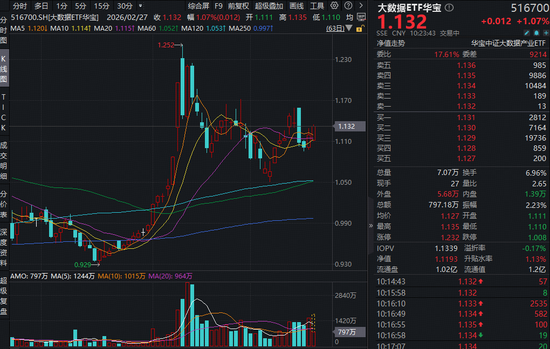
ETF盘中资讯|云计算进入密集涨价周期,厂商有望迎来估值重构!大数据ETF华宝(516700)大涨3.3%,拓维信息等3股涨停
Sou Hu Cai Jing· 2026-02-27 07:19
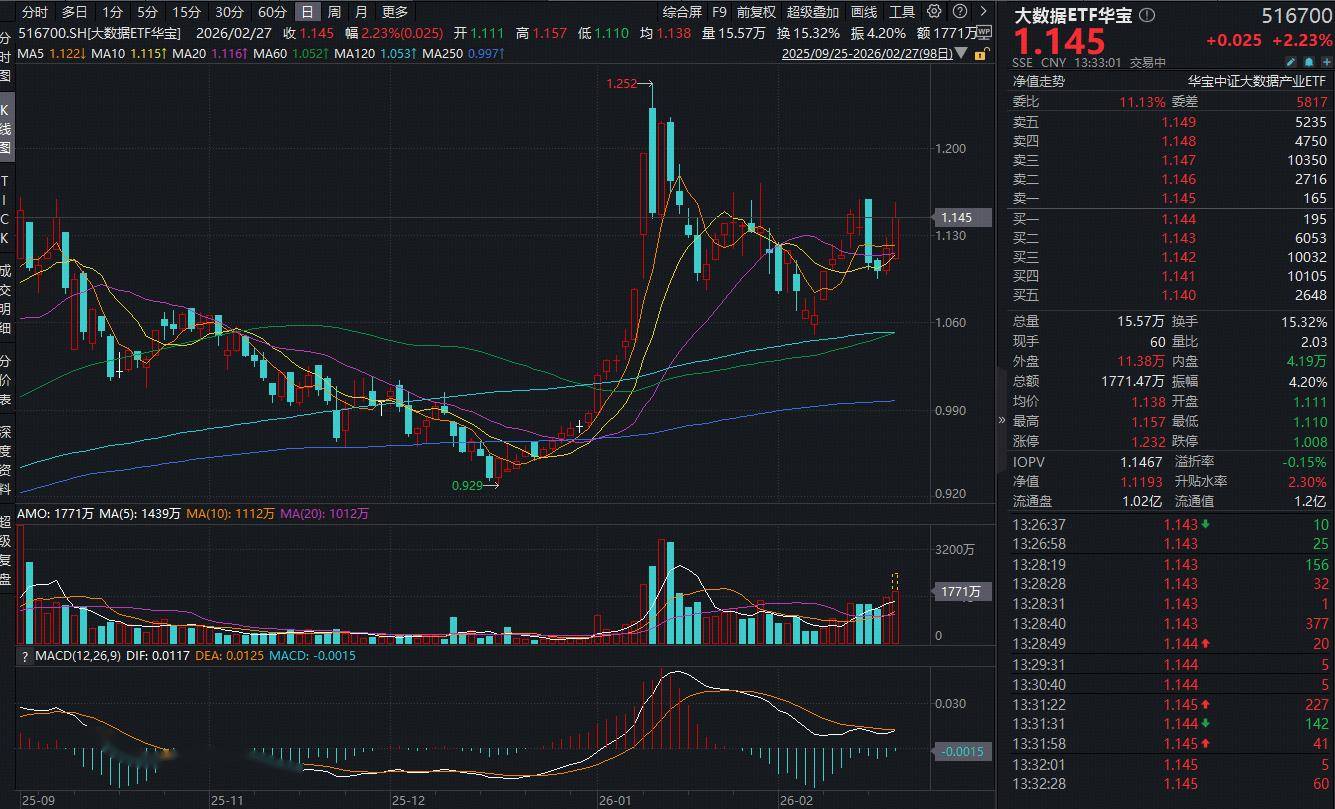
Group 1 - The cloud computing sector is experiencing a rise, particularly in domestic computing power (IDC, servers) and AI application areas, with the big data ETF (516700) seeing an intraday increase of 3.3% and currently up 2.23% [1] - Major stocks in the sector include YunDaliChuang-U, ChengDiXiangJiang, and TuoWeiInformation, which have seen significant price increases of 20.00%, 10.01%, and 10.00% respectively [2] - Hetzner, a leading European data center operator, announced a price increase for all products and services starting April 1 due to rising costs in multiple IT sectors, marking the second price hike this month [3] Group 2 - The IDC market in China is projected to reach approximately 430 billion yuan by 2026, surpassing 550 billion yuan by 2028, and reaching 650-680 billion yuan by 2030, with a compound annual growth rate of about 18% [3] - The demand for domestic AI computing power is expected to drive growth in cloud computing infrastructure, with companies that have a strong domestic computing base and overseas capabilities gaining a competitive edge [3] - The big data ETF managed by Huabao tracks the CSI Big Data Industry Index, which includes leading stocks such as ZhongKeShuGuang, KeDaXunFei, and others, focusing on various big data sectors [4]

前方声音
Xi An Ri Bao· 2026-02-27 07:15
Group 1 - The focus on community governance and the importance of addressing issues in old residential areas and public services is emphasized, aiming to enhance grassroots governance and improve residents' quality of life [1] - The commitment to food safety and consumer welfare is highlighted, with a focus on ensuring safe food for the public and enhancing community welfare projects [2] - The development of vocational education is seen as crucial for empowering youth and contributing to high-quality educational growth [2][3] Group 2 - The importance of improving oral health services is stressed, with a commitment to enhancing medical service quality for better community health outcomes [3] - The proposal to optimize reading spaces and create a distinctive reading brand that reflects local culture is presented, aiming to support cultural development in Xi'an [4] - The need for financial innovation in the elderly care sector is addressed, with suggestions for improving financial products and services to support the aging population [5] Group 3 - The proposal for enhanced safety management of electric bicycles is discussed, advocating for comprehensive regulation across all stages of production and use to ensure public safety [6] - The commitment to creating a high-quality business environment and promoting green and low-carbon development is highlighted, with multiple proposals aimed at supporting Xi'an's economic growth [7] - The focus on ensuring the healthy development of children and adolescents is emphasized, with suggestions for collaborative education mechanisms and outdoor sports programs [8]
市场监管总局:力争2027年底建成全国统一检验检测智慧监管平台
Xin Lang Cai Jing· 2026-02-27 07:06
观点网讯:2月27日,市场监管总局办公厅印发《检验检测智慧监管能力提升攻坚行动方案。 免责声明:本文内容与数据由观点根据公开信息整理,不构成投资建议,使用前请核实。 方案显示,力争到2027年底,全国统一的检验检测智慧监管平台基本建成,数据集成共享全面实现,人 工智能、大数据等新技术深度应用,智慧化审评、穿透式监管等新方式广泛推行,上下贯通、左右联通 的智慧监管格局有效建立,检验检测监管效能显著提升。 ...
AI应用强势领涨,大数据ETF(515400)盘中涨幅达3.19%
Mei Ri Jing Ji Xin Wen· 2026-02-27 05:56
Group 1 - The market sentiment is gradually improving, with the three major indices rising, particularly in AI applications and big data sectors, with significant gains in related ETFs [1] - The big data ETF (515400) saw an intraday increase of 3.19%, while the ChiNext software ETF (159107) rose by 3.01%, indicating strong investor interest in these sectors [1] - Notable stocks within the big data ETF, such as Yuntian Lifeng, reached a daily limit increase of 20%, alongside other companies like Chengdi Xiangjiang and Yunsai Zhiliang also hitting their daily limits [1] Group 2 - Huawei announced the release of an AI code intelligent agent on February 26, which enhances developer efficiency by covering code generation, testing, and knowledge Q&A, integrating models like GLM-5 and DeepSeek [1] - NVIDIA's GTC 2026 event, scheduled for March 16-19 in San Jose, California, will showcase the first inference-specific LPU chip and new architectures, focusing on low-latency and high-efficiency inference, which is expected to reshape the AI industry chain [1] - The big data ETF closely tracks the CSI Big Data Industry Index, selecting 50 stocks from the Shanghai and Shenzhen markets, including major tech companies like iFlytek, Sugon, and Unisplendour among its top holdings [2]
云计算进入密集涨价周期,厂商有望迎来估值重构!大数据ETF华宝(516700)大涨3.3%,拓维信息等3股涨停
Xin Lang Ji Jin· 2026-02-27 05:53
Group 1 - The cloud computing sector is experiencing a rise, particularly in domestic computing power (IDC, servers) and AI application areas, with the big data ETF (516700) seeing an intraday increase of 3.3% and currently up 2.23% [1] - Major data center operator Hetzner announced a price increase for all products and services starting April 1 due to significant cost increases in multiple IT sectors, marking the second price hike this month [2][3] - The IDC market in China is projected to reach approximately 430 billion yuan by 2026, surpassing 550 billion yuan by 2028, and reaching 650-680 billion yuan by 2030, with a compound annual growth rate of about 18% [3] Group 2 - The demand for AI computing power is expected to drive growth in cloud computing infrastructure, with companies possessing independent computing capabilities and overseas expansion advantages becoming more prominent [3] - The big data ETF (516700) passively tracks the CSI Big Data Industry Index, focusing on areas such as big data storage devices, analysis technologies, and applications, with key stocks including Inspur Information and China Software [6] - By the end of 2025, the index's weight for computing power concepts is expected to reach 40.91%, while AI application concepts will account for 37.43% [6]
云计算板块低开高走,关注云计算ETF易方达(516510)等产品投资价值
Sou Hu Cai Jing· 2026-02-27 04:42
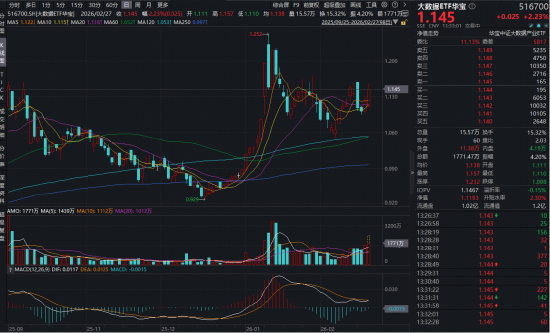
Group 1 - The China Securities Cloud Computing and Big Data Theme Index rose by 1.9%, while the China Securities Chip Industry Index fell by 1.5%, and the China Securities Semiconductor Materials and Equipment Theme Index decreased by 2.9% as of the midday close [1] - The Cloud Computing ETF managed by E Fund (516510) attracted approximately 140 million yuan in the last five trading days [1] Group 2 - The Semiconductor Equipment ETF by E Fund tracks the China Securities Semiconductor Materials and Equipment Theme Index, which consists of 40 companies involved in semiconductor materials and equipment, focusing on the hardware foundation for future computing [4] - The Semiconductor Industry Index is composed of 50 stocks related to chip design, manufacturing, packaging, testing, and semiconductor materials and production equipment, emphasizing the core hardware aspects of future computing [3]
食品电子商务行业:发展现状、市场运行态势、企业竞争格局及未来前景预测报告(2026版)
Sou Hu Cai Jing· 2026-02-27 04:31
Core Insights - The food e-commerce industry is rapidly growing, driven by technological advancements and changing consumer preferences, with a projected market size increase from 130 billion yuan in 2016 to 1,279.4 billion yuan by 2025, reflecting a compound annual growth rate (CAGR) of 28.93% [1][5][10]. Industry Overview - Food e-commerce refers to the business model of selling food products through online platforms, encompassing B2C, C2C, and O2O operational models [1][5]. - The industry has evolved through distinct phases: exploration (2005-2009), initiation (2009-2012), development (2012-2017), and maturity (2017-present) [5][11]. Market Dynamics - The food e-commerce market is characterized by diverse participants, including self-operated platforms (e.g., COFCO Womai), vertical e-commerce (e.g., Benlai Life), comprehensive platforms (e.g., JD.com), and marketplace platforms (e.g., Taobao) [1][13]. - The increasing penetration of online food sales is attributed to consumer demand for convenience, product variety, and promotional offers, alongside improvements in logistics and delivery systems [1][2]. Future Trends - The integration of IoT, AI, and big data will enhance consumer experience and operational efficiency, creating a fully digital traceability system from production to consumption [2]. - Sustainability will become a focal point, with a push towards green supply chains, including reduced packaging and low-carbon logistics, to meet environmental concerns and consumer preferences [3]. - The industry will shift towards niche market segments, offering customized products and health-oriented solutions for specific consumer groups, thereby transforming food e-commerce into a promoter of healthy lifestyles [4].
华为云CodeArts重磅上线!算力价格20年首次反转,Token五年暴增400倍!大数据ETF(516700)拉升1.2%
Xin Lang Cai Jing· 2026-02-27 02:37
Core Viewpoint - The focus is on the active performance of the domestic computing power (IDC, servers) and domestic AI application sectors, particularly through the big data ETF (516700), which has shown a price increase of over 1.2% and currently stands at a 1.07% rise, recovering the 5-day moving average [1]. Group 1: Market Performance - The big data ETF (516700) is heavily weighted towards computing power concepts (40.91%) and AI application concepts (37.43%) as of the end of 2025 [5][10]. - Key stocks in the ETF include Zhongke Shuguang, Keda Xunfei, Unisplendour, Inspur Information, China Greatwall, and China Software, focusing on data centers, cloud computing, and big data processing [12]. Group 2: Stock Movements - Notable stock performances include: - Yuntian Lifa-U with a rise of 13.34% [2][11] - Yuwei Information increasing by 10% [2][11] - Wangsu Science and Technology up by 6.68% [2][11] - Other stocks like UCloud, Yunsai Zhili, Qi Anxin-U, and Tuolisi also showed positive movements [4][11]. Group 3: Industry Trends - Morgan Stanley predicts a compound annual growth rate of approximately 330% for AI inference token consumption in China from 2025 to 2030, with a projected growth of about 370 times over five years [3][10]. - The domestic cloud service provider UCloud announced a price increase for all products starting March 1, breaking a two-decade trend of declining prices in the cloud service industry [3][10]. - The global cloud computing market is entering a price increase cycle, driven by rising hardware costs and high demand for AI inference, as evidenced by price hikes from major players like Google Cloud and Amazon AWS [3][10].
江苏省财会监督条例
Xin Lang Cai Jing· 2026-02-26 21:46
Core Viewpoint - The article outlines regulations for financial and accounting supervision in a specific province, emphasizing the importance of maintaining fiscal discipline and promoting healthy economic development through structured oversight mechanisms. Group 1: General Principles - The regulations aim to strengthen and standardize financial and accounting supervision, ensuring compliance with laws such as the Budget Law and Accounting Law [1] - Financial supervision applies to all entities within the province, including government agencies, enterprises, and individuals [1] Group 2: Supervision Framework - Financial supervision should adhere to principles of leadership by the Communist Party, legality, objectivity, and problem orientation, integrating preemptive, ongoing, and retrospective oversight [2] - Local governments are responsible for organizing and leading financial supervision efforts, establishing a comprehensive supervision system involving various departments and agencies [2][3] Group 3: Supervision Matters - Supervision of fiscal activities includes monitoring compliance with fiscal laws, budget management, tax collection, and government procurement activities [7] - Financial activities supervision encompasses the establishment and execution of financial systems, management of budgets, and compliance with relevant laws [11] - Accounting activities supervision focuses on the authenticity and completeness of accounting records and the professional conduct of accounting personnel [12] Group 4: Responsibilities and Reporting - Entities must implement internal supervision of their financial activities, with the main responsible person being accountable for financial supervision [9] - Financial departments and relevant agencies must report significant issues discovered during supervision to higher authorities and ensure timely communication of findings [22][23] Group 5: Legal Responsibilities - Violations of the regulations can lead to administrative penalties, including warnings and fines, depending on the severity of the infraction [24][25] - There are specific penalties for retaliating against whistleblowers or financial supervision personnel [25]