房企债务重组

Search documents
利好!头部房企宣布:境外债基本清零
中国基金报· 2025-11-06 01:05
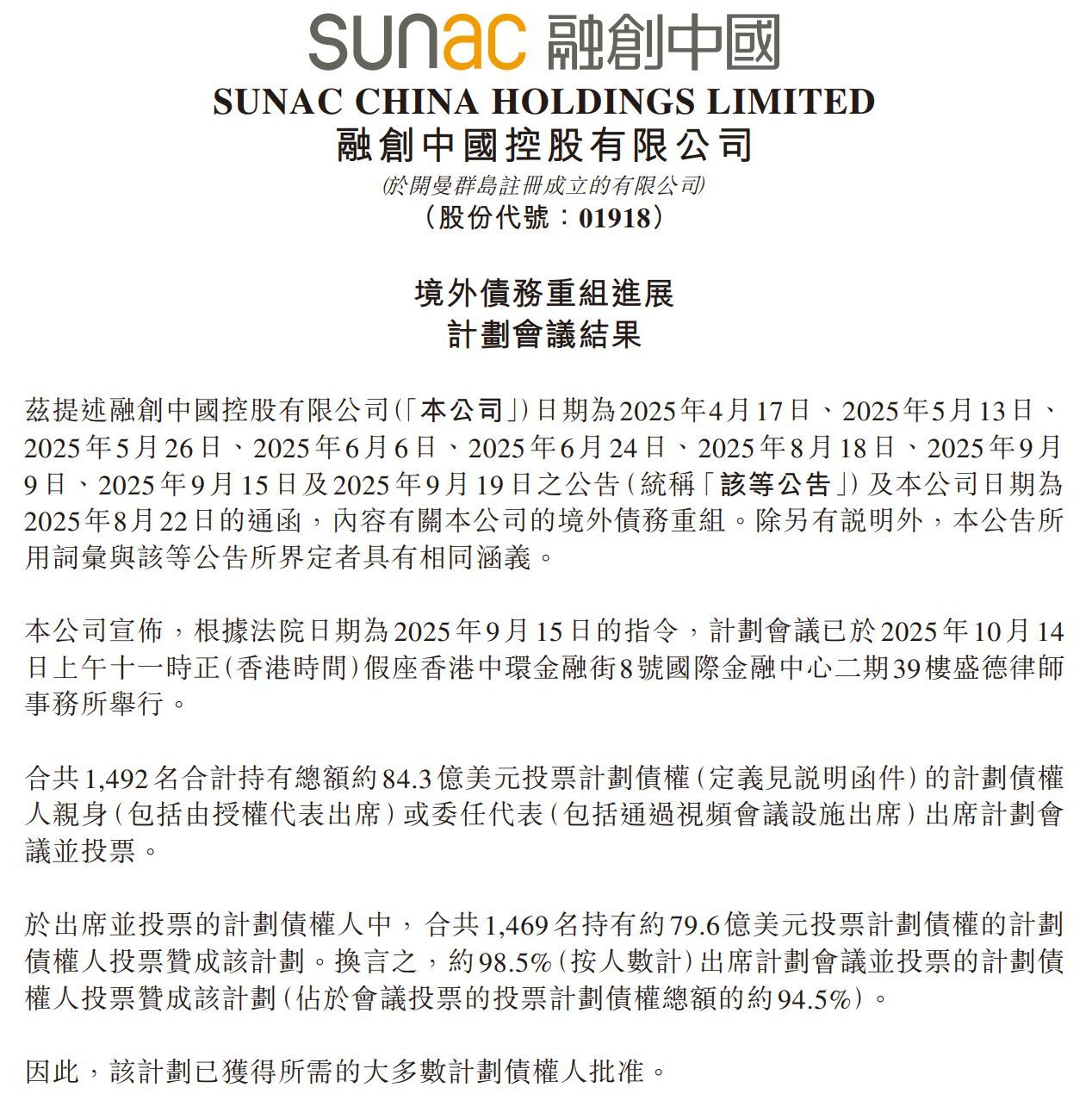
11 月 5 日晚,融创中国发布公告,公司约 96 亿美元的境外债务重组获香港高等法院批准。 至此,融创中国重组计划条件均已达成, 成为首家境外债基本清 零 的大型房企。 【导读】融创中国约 96 亿美元境外债重组方案获法院批准 中国基金报记者 南深 有业内人士称,这一案例向市场传递积极信号,大型房企的复杂债务问题是可以被有效化解 的,这也是行业信心重建的标志性事件。 回顾来看, 2023 年融创率先完成第一轮境外债重组,依照 " 化债 + 展期 " 主体思路,创 新引入强制可转债选项,推出含有新票据、可转换债券、强制可转换债券、融创服务股票的 可选 " 菜单 " ,受到债权人支持。大股东此前提供的 4.5 亿美元无息借款,也和债权人同等 条件同期转股。 然而到了今年初,市场融资功能尚未恢复、销售尚未整体回暖,境外债权人开始期待更彻底 的重组样本,既能从根本上化解房企债务风险,又能满足债权人的流动性需求,还能帮助房 企更快脱困、构建可持续经营所需的平稳局面。此背景下,融创推出了新一轮重组方案。 根据计划,融创推出全额债转股选项,向债权人分派两种新的强制可转换债:一类转股价为 6.8 港元 / 股,可在重组生效 ...


利好!头部房企宣布:境外债基本清零
Zhong Guo Ji Jin Bao· 2025-11-05 23:52
【导读】融创中国约96亿美元境外债重组方案获法院批准 自今年初宣布启动以来,融创境外债重组稳步推进,4月公布重组方案,6月迈过75%支持率门槛,10月获98.5%债权人投票赞成,如今则获得香港高等法 院批准生效。此次债务出清,将为公司接下来的保交楼收官、资产盘活和经营恢复打下基础。 据克而瑞统计,目前完成境内或境外债务重组的房企有11家,融创是第一家完成境内、境外债务全部重组的大型房企。内外债重组完成后,预计将使融创 整体偿债压力下降近600亿元,每年可节约大量的利息支出,资产负债表迎来实质性修复。 11月5日晚,融创中国发布公告,公司约96亿美元的境外债务重组获香港高等法院批准。至此,融创中国重组计划条件均已达成,成为首家境外债基本清 零的大型房企。 有业内人士称,这一案例向市场传递积极信号,大型房企的复杂债务问题是可以被有效化解的,这也是行业信心重建的标志性事件。 回顾来看,2023年融创率先完成第一轮境外债重组,依照"化债+展期"主体思路,创新引入强制可转债选项,推出含有新票据、可转换债券、强制可转换 债券、融创服务股票的可选"菜单",受到债权人支持。大股东此前提供的4.5亿美元无息借款,也和债权人同等 ...
96亿美元债“一笔勾销”,融创的境外债主集体变股东
第一财经· 2025-11-05 14:55
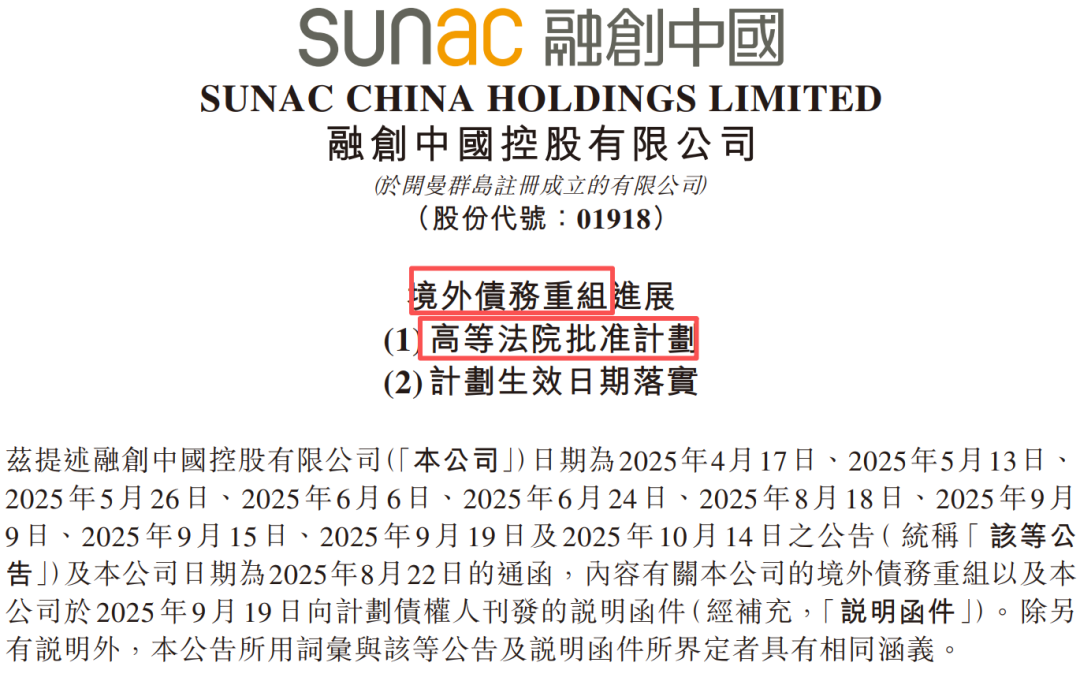
2025.11. 05 出险房企债务重组的典型方式包括债转股、以资抵债、全额长展期等,核心是通过削债降低实际债务 负担,并改善资产负债表,为长期恢复经营创造有利条件。 本文字数:1343,阅读时长大约3分钟 作者 | 第一财经 孙梦凡 11月5日,融创中国(01918.HK)发布公告称,约96亿美元的境外债务重组获香港高等法院批 准,重组计划条件均已达成。融创将成为首家境外债基本清"零"的大型房企。 自2023年以来,融创中国的境外债重组几经波折。第一轮方案中,该集团采取了"化债+展期"的思 路,推出含有新票据、可转换债券、强制可转换债券、融创服务股票的方案。 但因行业持续深度调整,市场融资功能尚未恢复,各方开始考虑更彻底的重组样本:既能从根本上化 解房企债务风险,又能满足债权人的流动性需求,帮助企业构建更可持续的局面。 于是,今年融创中国推出了境外债二次重组方案——全额"债转股"。新方案将向债权人分派两种新 的强制可转换债:一类转股价为6.80港元/股,可在重组生效日起6个月内转股;另一类转股价为 3.85港元/股,可在重组后18至30个月内转股。 与此同时,二次重组方案还引入了股权结构稳定计划、团队稳定计 ...

21家出险房企已化债约1.2万亿元!房企压力显著减轻
2 1 Shi Ji Jing Ji Bao Dao· 2025-11-05 14:32
Core Viewpoint - The acceleration of debt restructuring among real estate companies is significantly reducing their short-term debt repayment pressure, with a total debt restructuring scale of approximately 1.2 trillion yuan as of October 2023, which is expected to facilitate the industry's risk clearing process [1] Group 1: Debt Restructuring Progress - As of October 2023, 21 distressed real estate companies have a total debt restructuring scale of about 1.2 trillion yuan, which is expected to alleviate their short-term debt repayment pressure [1] - Companies like Country Garden, Sunac, and CIFI are actively engaging in overseas debt restructuring, with some already receiving creditor approval for their debt restructuring plans [3][4] - The debt restructuring strategies have shifted from merely extending repayment periods to directly reducing debt amounts, with many companies aiming to significantly lower their debt principal repayment ratios [5][6] Group 2: Impact on Investment Decisions - Following debt restructuring, many real estate companies are resuming investments, indicating that those who manage debt negotiations effectively can still find opportunities in the current market [4][9] - For instance, Gemdale Group has restarted land acquisitions in major cities after successfully repaying approximately 20 billion yuan in public market debts, citing reduced debt pressure and improved market conditions as key factors [9] Group 3: Future Strategic Focus - Post-restructuring, many companies are expected to shift their focus towards light asset operations, emphasizing development in areas such as property management and asset management, which require less capital investment [10] - The industry is anticipated to transition from incremental development to stock operation, with significant opportunities in property and asset management sectors [10]
21家出险房企已化债约1.2万亿元
21世纪经济报道· 2025-11-05 13:57
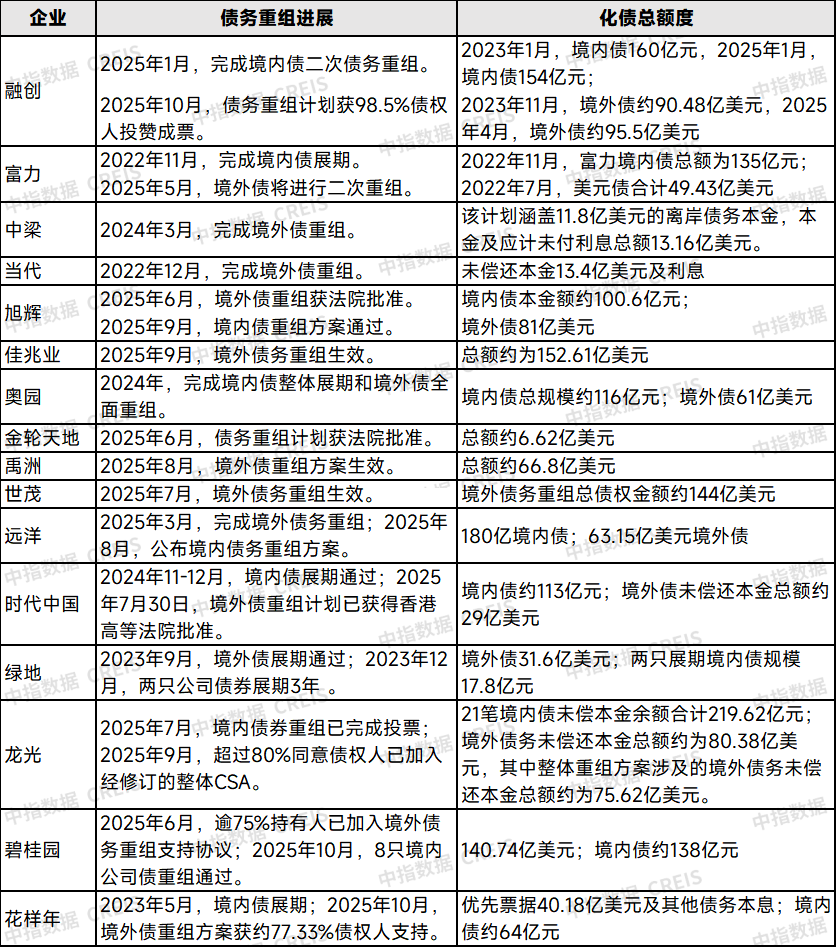
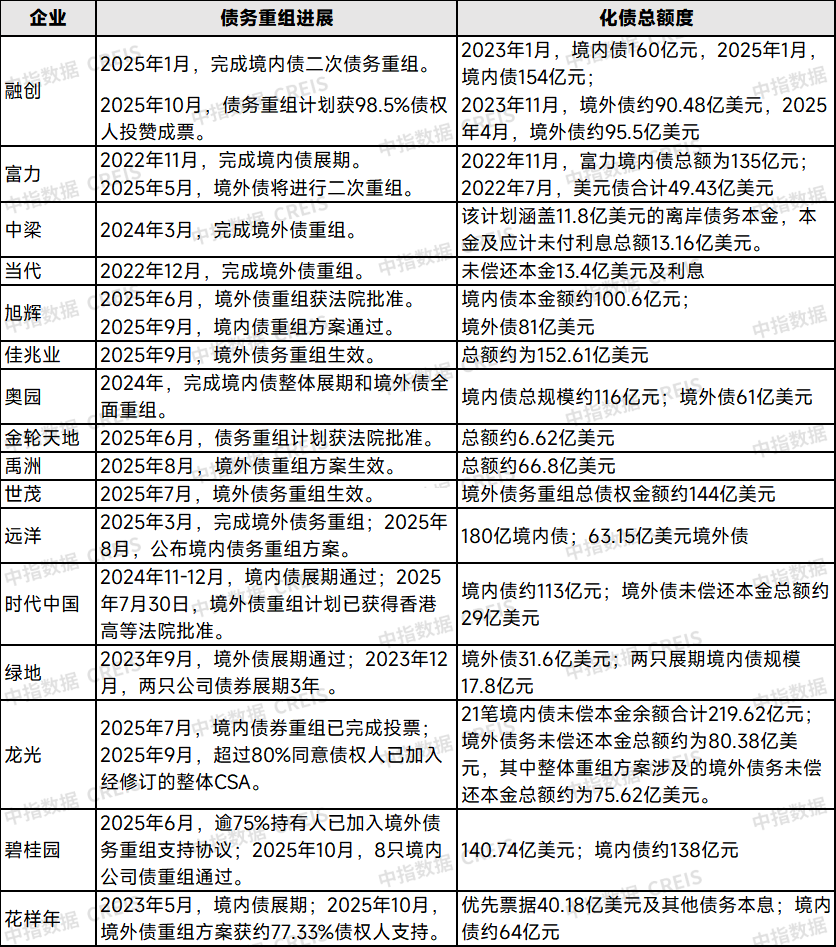
记者丨吴抒颖 编辑丨张伟贤 代表房企之中, 碧桂园、融创和旭辉等也在近期陆续进行境外债重组投票,其中已有房企获 得债权人的批准,债务重组方案获批成行。 房企本轮化债受到市场关注的缘由是,多数债务重组方案的核心已经不是展期,而是直接削 债,通过大幅降低债务规模获得"重生"的机会。此前,房企与债权人双方博弈强烈,债权人议 价空间较大,但随着市场境况未曾发生扭转,债权人对房企债务的清偿率预期也已经降低。 随着房企债务压力减轻,已有部分此前曾遭遇短期流动性压力的房企重新恢复投资。这也表 明,房企在债务谈判中处理得当的前提下,仍能够在当前的市场之中拥有一席之地,而如果市 场筑底回稳,这类房企也有望得到新生。 大规模削债 房企此轮化债,多数是与债权人的二次博弈。在前次化债的基础上,多数房企寻求降低债务本 金偿还的比例,以此减轻负担。 房企化债加速推进。 中指研究院近期发布的数据显示, 截至今年10月底,21家出险房企化债规模约1.2万亿元,有 望极大减轻这些企业短期内公开债务偿还压力。 同时,出险房企通过多种方式削债,改善资 产负债表,也有利于行业风险出清进程。 | 企业 | 债务重组进展 | 化债总额度 | | --- ...


房企万亿债务化解加速,房企经营重回轨道
2 1 Shi Ji Jing Ji Bao Dao· 2025-11-05 11:47
Group 1 - The core viewpoint of the articles is that real estate companies are accelerating their debt restructuring efforts, with a total debt reduction scale of approximately 1.2 trillion yuan, significantly alleviating short-term repayment pressures [1][3][4] - The debt restructuring plans are shifting from merely extending repayment periods to directly reducing debt amounts, providing companies with a chance for "rebirth" [3][4] - Major companies like Country Garden and Sunac have recently made progress in their overseas debt restructuring, with significant support from creditors [5][7] Group 2 - As of October 2023, 21 distressed real estate companies have made substantial progress in debt restructuring, with many achieving over 50% debt reduction in their overseas debt [7][8] - Companies that have successfully managed their debt negotiations are beginning to resume investments, indicating a potential recovery in the market [4][8] - The focus for many companies post-restructuring is shifting towards light asset operations, such as property management and asset management, to enhance their financial stability [9][10]
报告:当前全国平均住房断供率为3.7% 较2022年已翻倍
Ge Long Hui· 2025-11-04 05:37
Core Viewpoint - The Chinese real estate market is facing significant pressures on both supply and demand sides, with rising mortgage default rates and ongoing challenges for property developers [1] Demand Side - The national average mortgage default rate has increased to 3.7%, up from 1.6% in 2022, with some third and fourth-tier cities exceeding 5% [1] - Factors contributing to this trend include declining employment quality and falling property prices, with some properties losing value below their loan balances [1] - The market for auctioned properties remains high, with 170,000 residential properties listed for auction in the first half of 2025, unchanged from the previous year, while transaction volume decreased by 2.3% to 51,000 units [1] - The average transaction price for auctioned properties is 8,817 yuan per square meter, reflecting a year-on-year decline of 7.8%, with a slight increase in the discount rate [1] Supply Side - Property developers continue to face severe debt issues, with overall financing scales contracting [1] - A peak in debt maturities is approaching, leading to accelerated debt restructuring efforts [1] - Since 2025, there has been a notable increase in debt restructuring among property developers, particularly for overseas debts, characterized by higher debt reduction ratios, extended maturity periods, and lower coupon rates [1] - Debt-to-equity swaps are gradually becoming a primary tool for property developers to manage their debts [1]
俊发引入外资企业化债,房企债务重组加速推进
2 1 Shi Ji Jing Ji Bao Dao· 2025-10-31 06:52
房企化债新样本。 从俊发2022年出险以来,这家房企的化债相对积极而且行动迅速。 从公开的时间线梳理,2023年10月,俊发就曾与九家意向参与债务重组的金融机构,就重组方案细节进 行磋商;两个月后,俊发与信达资产达成债务重组协议,重点化解中豪公司的金融债务;去年3月,俊 发又与中信金融资产、中信城开三方签署海南南燕湾项目合作开发协议;4月,俊发则与东方资产以项 目债务固化的方式,推动昆明俊发彩云城A6地块项目重启。 房企化债出现新样本。 近日,欧力士集团、民生银行昆明分行、东方资产、俊发集团与龙湖集团达成了战略合作。作为债务重 组投资方的欧力士集团计划投入约5亿美元,专项用于解决俊发集团旗下多个项目的续建保交房以及烂 尾遗留问题,龙湖集团则提供商业运营及代建服务。 俊发曾经是云南当地规模最大的房企之一。在出险之后,俊发也多番寻求自救的方法,期间也努力完成 保交楼的目标。此次俊发与合作方达成新的战略合作协议,也为出险房企纾困提供了新的思路。俊发此 次的合作方中,既有外资企业参与,又有产品力较强的同行相助,市场对这次纾困的结局也相对看好。 除了俊发以外,近期多家房企的债务重组进程也在加速。融创中国本月宣布,其境外 ...
房企化债迎实质性突破:融创方案获高票通过
Mei Ri Jing Ji Xin Wen· 2025-10-28 13:52
Core Viewpoint - Recent debt restructuring efforts among major real estate companies have made significant progress, with notable advancements in the restructuring plans of companies like Sunac China and CIFI Holdings [1][3][4]. Group 1: Sunac China's Debt Restructuring - Sunac China announced that 98.5% of its creditors voted in favor of its offshore debt restructuring plan, with a corresponding debt amount support rate of 94.5% [6][7]. - The restructuring plan covers approximately $9.55 billion in offshore debt, including public market bonds and private loans, aiming to eliminate debt risks at the listed company level [5][9]. - If successful, the restructuring could reduce Sunac China's overall repayment pressure by nearly 70 billion yuan and save tens of billions in annual interest expenses [7]. Group 2: Other Companies' Restructuring Efforts - CIFI Holdings plans to hold a special shareholders' meeting on October 31 to review its offshore debt restructuring actions, indicating it is close to finalizing its restructuring [3][8]. - Country Garden is set to convene two creditor meetings on November 5 to consider and approve its proposed debt arrangements [3][8]. - Since Q3 2025, several companies, including Kaisa Group and Longfor Group, have reported substantial breakthroughs in their debt restructuring efforts, accelerating the industry's debt risk clearance process [3][8]. Group 3: Industry Trends and Support from Major Shareholders - The current wave of debt restructuring reflects a shift from merely alleviating liquidity pressures to substantial adjustments in debt scale through methods like debt-to-equity swaps and asset disposals [9][10]. - Major shareholders have provided significant financial support during this restructuring wave, with examples including Sunac China's major shareholder converting loans into equity and CIFI's major shareholder converting over 500 million HKD in loans into equity [10]. - As of August 2025, a total of 77 real estate companies have experienced debt defaults, with 20 companies having their restructuring plans approved, amounting to a total debt restructuring scale exceeding 1.2 trillion yuan [9].
房企化债迎“关键突破”:融创获高票通过
Mei Ri Jing Ji Xin Wen· 2025-10-28 08:55
Core Viewpoint - The debt restructuring process for several large real estate companies has made significant progress, with major players like Sunac China, CIFI Holdings, and Country Garden moving closer to finalizing their restructuring plans [1][2][7]. Group 1: Sunac China - Sunac China announced that 98.5% of creditors voted in favor of its offshore debt restructuring plan, corresponding to a debt amount support rate of 94.5% [1][7]. - The restructuring plan is expected to reduce overall debt repayment pressure by nearly 70 billion yuan and save tens of billions in interest expenses annually [7]. - The company has completed a previous domestic debt restructuring, which involved a total of 16 billion yuan [3][4]. Group 2: CIFI Holdings - CIFI Holdings plans to hold a special shareholders' meeting on October 31 to review its offshore debt restructuring actions, indicating it is close to finalizing its restructuring [1][9]. - The restructuring plan includes issuing mandatory convertible bonds to significantly reduce debt and a 10-year equity incentive plan for team stability post-restructuring [9]. Group 3: Country Garden - Country Garden is set to hold two creditor meetings on November 5 to consider and approve its proposed debt arrangement plan [1][11]. - The company aims to unify its debt handling by seeking consent to change the governing law of its existing convertible bonds to Hong Kong law as part of the overall restructuring plan [11]. Group 4: Industry Overview - Since the third quarter of this year, several real estate companies, including Kaisa Group and Longfor Group, have reported substantial breakthroughs in their debt restructuring efforts, accelerating the industry's debt risk clearance process [1][12]. - A total of 11 real estate companies have achieved partial debt restructuring, with the overall debt restructuring scale exceeding 1.2 trillion yuan [12][14]. - The restructuring trend reflects a shift in creditors' expectations, who are now more inclined to accept restructuring plans to improve debt recovery rates rather than pursuing bankruptcy [11][14].