
教育强国建设

Search documents
国常会,重要部署!
中国基金报· 2025-11-14 14:09
Group 1 - The meeting emphasized the importance of integrating the "two重" construction into the overall planning of the 14th Five-Year Plan, focusing on strategic, forward-looking, and holistic requirements, while enhancing departmental collaboration and promoting the implementation of national strategies [2] - It was highlighted that enhancing supply-demand adaptability is an effective measure to release consumption potential and facilitate economic circulation, with a focus on leading industrial upgrades through consumption upgrades and better meeting diverse demands [3] - The meeting discussed the need for innovation in new technologies and models, particularly in key industries, to develop new products and value-added services, thereby expanding new consumption increments [3] Group 2 - The meeting noted that significant progress has been made in building an education powerhouse, with a call for continued efforts to establish a coordinated mechanism for promoting education, technology, and talent development in line with national strategic needs [4] - The draft revision of the Trademark Law was discussed and approved in principle, emphasizing the need for stronger trademark management and protection to enhance its role in economic and social development [4] - The meeting approved the revised draft of the Funeral Management Regulations, indicating a regulatory update in this sector [5]


李强主持召开国务院常务会议
证监会发布· 2025-11-14 14:05
Group 1 - The meeting emphasized the importance of integrating the "two重" construction into the overall planning of the 14th Five-Year Plan, focusing on strategic, forward-looking, and holistic requirements, while enhancing departmental collaboration and promoting the implementation of national strategies [2] - It was highlighted that enhancing supply-demand adaptability is an effective measure to unleash consumption potential and facilitate economic circulation, with a focus on leading industrial upgrades through consumption upgrades and meeting diverse demands with high-quality supply [3] - The meeting discussed the need for innovation in new technologies and models, particularly in key industries, to develop new products and value-added services, thereby expanding new consumption increments [3] Group 2 - The meeting reviewed and approved the draft amendment of the Trademark Law of the People's Republic of China, emphasizing the need for legal strengthening of trademark management and protection to promote economic and social development [4] - The meeting also approved the draft amendment of the Funeral Management Regulations, indicating a regulatory update in this sector [5]
李强主持召开国务院常务会议
国家能源局· 2025-11-14 13:28
Group 1 - The meeting emphasized the importance of implementing the "Two Heavy" construction within the context of the 14th Five-Year Plan, focusing on strategic, forward-looking, and holistic requirements, while enhancing departmental collaboration and promoting the integration of soft and hard elements [2] - It was highlighted that enhancing supply-demand adaptability is an effective measure to release consumption potential and facilitate economic circulation, with a focus on leading industrial upgrades through consumption upgrades and meeting diverse demands with high-quality supply [3] - The meeting discussed the need for accelerating the application of new technologies and models, particularly in key industries, to develop new products and value-added services, thereby expanding new consumption increments [3] Group 2 - The meeting reviewed and approved the draft amendment of the Trademark Law of the People's Republic of China, emphasizing the need for legal enhancement of trademark management and protection to promote economic and social development [4] - The meeting also approved the revised draft of the Funeral Management Regulations, indicating a regulatory update in this sector [5]

教育部、国家发改委、科技部、财政部、人社部、中国科学院、中国科协联合发文
券商中国· 2025-11-12 03:39
Core Viewpoint - The article discusses the joint issuance of the "Opinions on Strengthening Science and Technology Education in Primary and Secondary Schools" by seven government departments in China, aiming to enhance the foundation for cultivating innovative talents in science and technology education by 2030 and 2035 [1][2]. Summary by Sections Key Tasks - Construct a collaborative and integrated education system that strengthens the synergy between science and technology education and humanities education, encouraging students to develop scientific interest and methods through hands-on practice [2]. - Build an open and integrated curriculum ecosystem and teaching methods that reshape the curriculum ecology through interdisciplinary integration, guiding students to apply knowledge from multiple disciplines to solve problems [2][3]. - Strengthen research-led teaching and comprehensive evaluation focused on competencies, establishing a sound evaluation mechanism for science and technology education and promoting the integrated development of research and teaching [3]. - Emphasize diverse resource development and environmental construction, optimizing teaching spaces to provide platforms for students to experience real-world technology exploration and engineering practice [3]. - Promote high-quality and efficient teacher training and collaboration among families, schools, and communities, integrating science and technology education into teacher training systems to enhance teachers' capabilities [3]. - Foster extensive and in-depth international exchanges and cooperation, building a multilateral cooperation network to promote research and practice in science and technology education globally, enhancing international influence and competitiveness [3]. Implementation and Support - The article emphasizes the need for strong organizational support and implementation, positioning science and technology education as a crucial lever for building an education powerhouse, establishing a unified leadership mechanism among local party committees and governments, and coordinating resources effectively [3].
6大重点任务!教育部等7部门发文部署加强中小学科技教育
Yang Shi Wang· 2025-11-12 02:35
Core Viewpoint - The Ministry of Education and six other departments have jointly issued the "Opinions on Strengthening Science and Technology Education in Primary and Secondary Schools," aiming to enhance the cultivation of innovative talents and support high-quality integrated development of education, science, and talent [1][2]. Group 1: Key Tasks - Construct a collaborative and integrated education system that strengthens the synergy between science education and humanities education, encouraging students to develop scientific interest and methods through hands-on practice [2]. - Build an open and integrated curriculum ecosystem and teaching methods that reshape the curriculum by integrating multiple disciplines, guiding students to apply interdisciplinary knowledge to solve problems [2]. - Strengthen competency-oriented research guidance and comprehensive evaluation by establishing a sound evaluation mechanism for science education, promoting the integrated development of research and teaching [2]. Group 2: Resource Development and Teacher Training - Focus on diverse resource development and environmental construction by optimizing teaching spaces to provide platforms for students to experience real-world technology exploration and engineering practices [2]. - Promote high-quality and efficient teacher training and collaboration among families, schools, and communities by integrating science education into teacher training systems and enhancing teachers' capabilities [2]. Group 3: International Cooperation and Implementation - Promote extensive and in-depth international exchanges and cooperation by building a multilateral cooperation network to enhance the global influence and competitiveness of primary and secondary school science education [2]. - Emphasize the need for organizational guarantees and implementation by establishing a work mechanism led by local party committees and governments, coordinating resources, and fostering a supportive social environment for science education [3].
教育部等七部门:加强中小学科技教育
智通财经网· 2025-11-12 02:21
Core Viewpoint - The recent joint opinion from seven departments, including the Ministry of Education, emphasizes the importance of strengthening science and technology education in primary and secondary schools to support national innovation and talent development by 2030 and 2035 [1][2][3]. Group 1: Overall Requirements - The initiative aims to establish a basic science and technology education system by 2030, with a comprehensive ecosystem by 2035, focusing on practical, project-based, and interdisciplinary teaching methods [3][4]. Group 2: Collaborative Education System - The program emphasizes cultivating scientific interest and spirit across different educational stages, from primary to high school, promoting hands-on exploration and interdisciplinary connections [4][5]. Group 3: Curriculum and Teaching Methods - A new curriculum ecosystem will be developed based on real-world problem-solving, integrating cutting-edge technology and fostering a "three-in-one" curriculum model [6][7]. Group 4: Research and Evaluation - The initiative encourages the formation of specialized research teams for technology education and the implementation of diverse evaluation methods to track student progress and innovation capabilities [8][9]. Group 5: Resource Development and Environment - The plan includes enhancing teaching facilities and utilizing digital resources to create engaging learning environments, promoting collaboration between schools and external organizations [10][11]. Group 6: Teacher Development and Community Collaboration - There will be a focus on strengthening the teacher workforce through targeted training and collaboration with higher education institutions and community resources to enhance technology education [12][14]. Group 7: International Cooperation - The initiative aims to enhance international collaboration in technology education, sharing experiences and establishing networks to promote global educational development [13]. Group 8: Organizational Support and Implementation - Local governments are urged to systematically deploy and implement the technology education measures, ensuring adequate funding and resources for effective execution [14][15].
新时代人民教育论坛(2025)在京举办
Xin Hua Wang· 2025-11-07 07:16
Core Viewpoint - The forum aims to deepen educational reform and support the construction of a strong education nation, highlighting the importance of mainstream media in shaping educational discourse [1] Group 1: Forum Objectives and Themes - The forum is themed "Deepening Educational Comprehensive Reform and Strengthening the Construction of a Strong Education Nation" [1] - It seeks to provide strong ideological guidance and media support for accelerating the construction of a strong education nation [1] Group 2: Key Messages from Officials - Wang Guangyan, a member of the Ministry of Education, emphasized the significance of the forum in showcasing the achievements of educational reforms over the past year and in outlining the educational development blueprint for the 14th Five-Year Plan [1] - He highlighted that the 14th Five-Year Plan period is crucial for building a strong education nation and called for a deep understanding of the responsibilities and tasks in education [1] Group 3: Implementation Strategies - The forum stressed the need for comprehensive implementation of key tasks in educational reform and high-quality advancement of the strong education nation initiative [1] - It called for collaborative efforts, forward-looking research, and effective communication to ensure the successful implementation of educational reforms [1] Group 4: Forum Structure - The forum included six parallel sessions focusing on moral education, basic education, higher education, vocational education, teacher workforce development, and international communication in education [1] - Participants included officials from the Ministry of Education, universities, local education departments, vocational schools, and primary and secondary schools [1]
中国教科院 “智囊团”更新,于漪、顾明远受聘为名誉委员
Xin Jing Bao· 2025-11-01 10:23
Core Points - The new academic committee of the China Academy of Educational Sciences was officially established on October 31, consisting of 3 honorary members and 29 committee members [2][3] - The committee includes 10 external members and 19 internal members, with notable figures such as Yu Yi, Gu Mingyuan, and Andreas Schleicher serving as honorary members [2][3] - Gu Mingyuan emphasized the importance of teacher development in building a strong education system and called for a focus on basic education and quality improvement [3] Research Centers - The China Academy of Educational Sciences established three research centers: the Education Power Index Research Center, the Education Equity Research Center, and the Science Education Research Center [4] - The Education Power Index Research Center aims to monitor and evaluate the progress of education development globally, providing data support and decision-making references for China's education initiatives [4] - The Education Equity Research Center focuses on theoretical research and practical exploration to create new paradigms in education equity, aspiring to become a leading center in this field [4] - The Science Education Research Center aims to develop standardized and scalable science education practices, integrating artificial intelligence to enhance interdisciplinary curriculum [4]
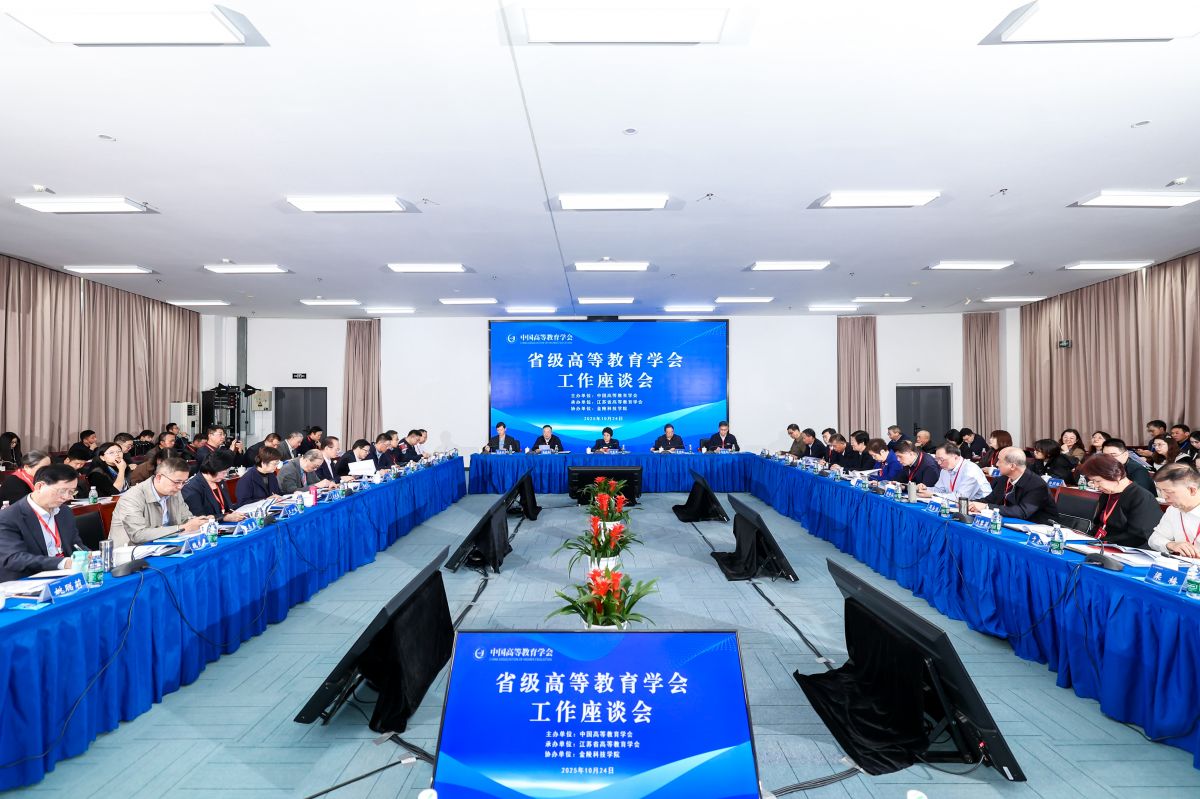
中国高等教育学会组织召开省级高等教育学会工作座谈会
Ren Min Wang· 2025-10-28 07:49
Core Points - The meeting held in Nanjing focused on strengthening collaboration and deepening cooperation to support the construction of a strong education nation, aligning with the spirit of the 20th Central Committee's Fourth Plenary Session [3][4] - The meeting emphasized the importance of the new council's mission to transform and upgrade the higher education association system, aiming for high-quality development and innovative practices [3][4] Group 1 - The meeting was the first provincial higher education association work symposium, serving as a concrete action to implement the spirit of the 20th Central Committee and the education strong nation construction plan [3][4] - The new council established a mission centered on political construction, academic integrity, openness, and contribution, with a focus on strategic research, international cooperation, and service platform development [3][4] Group 2 - The meeting highlighted the need to understand Xi Jinping's important discourse on education, focusing on the three major attributes of education and the six characteristics of a strong education nation [4] - Key areas of focus include political direction, academic research, brand activity co-construction, international cooperation, and governance improvement to enhance the effectiveness of the education strong nation initiative [4][6] Group 3 - Provincial associations discussed collaborative mechanisms, regional cooperation, and enhancing organizational vitality and service capabilities [6] - The meeting concluded with a commitment to provide comprehensive support to provincial associations through resource integration, platform building, and brand development [6]
中青年教育理论工作者学术年会举行
Jie Fang Ri Bao· 2025-10-20 01:37
Core Points - The conference focused on the theme of "Building an Academic Community" and emphasized the importance of educational theory research in constructing a strong educational nation [1] - It highlighted the need to base research on Chinese practices and to address contemporary issues such as innovating an independent knowledge system to serve national decision-making [1] - The event aimed to refine Chinese educational narratives and enhance international influence [1] Summary by Categories - **Theme of the Conference** - The conference was centered on "Building an Academic Community" [1] - **Importance of Educational Theory Research** - Educational theory research is considered a strategic move in the construction of a strong educational nation [1] - **Focus on Chinese Practices** - There is an urgent need to ground research in Chinese practices and respond to contemporary challenges [1] - **Goals for National Decision-Making** - The conference aimed to innovate an independent knowledge system that supports national decision-making [1] - **Enhancing International Influence** - The event also focused on refining Chinese educational stories to improve their international impact [1]