数字监管

Search documents
欧美贸易协议细节公布,欧盟或又接“硬茬”
21世纪经济报道· 2025-08-24 00:39
Group 1 - The core viewpoint of the article is that the recent trade agreement between the EU and the US has significant implications for various industries, particularly in terms of tariffs and market access, but it also raises concerns about the long-term economic impact on the EU [1][5][14] - The joint statement outlines that the US will impose a 15% tariff on most EU goods, while the EU will eliminate tariffs on all US industrial products and provide preferential market access for US seafood and agricultural products [1][7] - The agreement has sparked controversy within the EU, with some officials arguing that it favors the US, despite the EU's significant concessions [5][8] Group 2 - Key industries affected by the agreement include automobiles, pharmaceuticals, and semiconductors, which are major export sectors for the EU [7][14] - The agreement specifies that from September 1, 2025, the US will apply Most Favored Nation (MFN) tariffs only to certain products, easing concerns for the EU's pharmaceutical and semiconductor sectors [7][8] - The EU is expected to increase its investment in the US by $600 billion by 2028, primarily targeting strategic industries, although the feasibility of this investment remains uncertain [12][13] Group 3 - The article highlights that the EU's economic growth has shown resilience in the short term, with a GDP growth of 1.4% year-on-year in Q2, but warns of potential long-term impacts from the new tariffs [14][15] - The EU's trade surplus with the US has already begun to shrink, with a reported 10.3% decrease in exports to the US in June compared to the previous year [15][16] - The article suggests that the EU may need to implement protective measures, such as subsidies and tax reductions, to mitigate the impact of the tariffs on its industries [16]


数字监管分歧与谈判博弈,欧美贸易协议生效为何受阻
Di Yi Cai Jing· 2025-08-18 11:44
Group 1 - The core issue delaying the US-EU trade agreement is the significant disagreement over digital regulation, particularly the EU's Digital Services Act (DSA) [1][4][8] - The DSA, enacted in October 2022, establishes one of the strictest online platform regulatory frameworks globally, focusing on illegal content, advertising transparency, and misinformation, with potential fines of up to 6% of global annual revenue for violations [1][8] - The EU has explicitly excluded discussions on the DSA and the Digital Markets Act (DMA) from the trade negotiations, which has led to further complications in reaching a detailed agreement [4][5] Group 2 - The US is seeking specific commitments from the EU regarding the opening of agricultural markets and detailed plans for reducing tariffs on US industrial goods, but the EU emphasizes the complexity of its internal approval processes [6][7] - The delay in finalizing the trade agreement contrasts with the swift implementation of the Economic Prosperity Agreement (EPD) with the UK, which included specific tariff reductions announced on the same day [5][6] - Major US tech companies are facing compliance challenges due to the DSA, which requires them to enhance transparency and user protection, leading to operational adjustments within the EU [8][9]
东莞打通安全隐患“查”与“治”闭环管理 共排查重大隐患5000余项 整改完成率超98%
Nan Fang Ri Bao Wang Luo Ban· 2025-08-18 07:55
Group 1 - The core viewpoint of the articles emphasizes the systematic and technology-driven approach taken by Dongguan in addressing safety hazards, marking this year as the "Hazard Investigation and Governance Year" [1][2] - Dongguan has implemented a high-level deployment and closed-loop management mechanism for safety production, with a focus on collaboration among government, enterprises, and the public [2][4] - The city has established a comprehensive safety prevention checklist covering 13 key areas, ensuring accountability and guiding various departments in safety measures [2][5] Group 2 - In the first half of the year, Dongguan identified over 5,000 major safety hazards, achieving a rectification completion rate of over 98%, with more than 48% of these identified through self-inspections by enterprises [1][3] - The internal reward mechanism for reporting safety issues has been adopted by 14,723 enterprises, leading to the reporting of 15,016 safety hazards and over 2.08 million yuan in rewards distributed [3][6] - Dongguan has engaged experts to assist 1,601 high-risk enterprises in identifying safety hazards and developing tailored rectification plans [5][6] Group 3 - The "Enforcement + Expert + Service" model has been implemented to ensure a closed-loop management process from identification to rectification of safety hazards, with a 30% improvement in rectification timeliness [4][6] - The city has established a digital regulatory platform that includes modules for monitoring safety hazards, which has dynamically updated data for approximately 15,000 emergency regulatory enterprises [7][8] - AI technology has been integrated into safety monitoring systems, enhancing the ability to detect and respond to safety hazards in real-time [9]
苹果修改欧洲App Store规则,竭力避免5.85亿美元罚款
3 6 Ke· 2025-06-27 06:22
Core Points - Apple announced adjustments to its App Store policies in the EU to avoid potential fines of up to €500 million (approximately $585 million) under the Digital Markets Act (DMA) [1] - The company is facing increasing digital regulatory scrutiny and is balancing rules against profitability [1] - Apple plans to implement a new fee structure, including a "Core Technology Fee" of 5% for developers even for purchases made outside the App Store [1][2] - The overall cost burden for developers may increase significantly, with some facing up to three fees during a single app installation [1] - The European Commission is evaluating whether Apple's new policies comply with the DMA and will seek input from market stakeholders before making a final decision [1] Industry Context - Apple's policy shift is not isolated, as it faces regulatory challenges in the U.S., including a court ruling that prevents it from charging commissions on apps that direct users to third-party platforms [2] - Companies like Amazon and Spotify have begun incorporating direct link features in their iOS apps to bypass Apple's commission structure of 15% to 30% [2] - Despite policy changes, Apple maintains its stance that it deserves fees for "core technology support" even if transactions occur outside the App Store, which has drawn criticism as "malicious compliance" [2] - The ongoing situation may serve as a landmark case for global platform companies navigating an era of heightened regulation [2]

新疆乌苏市全面推行“扫码检查”智慧监管模式 实现“指尖监管”与“阳光执法”双提升
Zhong Guo Shi Pin Wang· 2025-06-16 07:06
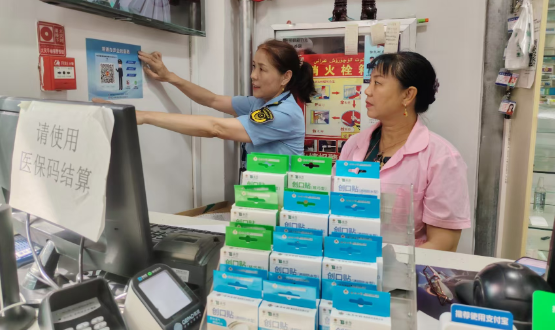
Core Viewpoint - The Xinjiang Uygur Autonomous Region's Wusu City Market Supervision Bureau has implemented a "smart supervision" model through QR code scanning to enhance regulatory efficiency and transparency in business operations [1][3]. Group 1: Innovative Model - The "one household, one code" initiative assigns a unique QR code to each of the 3,281 enterprises in the city, integrating various regulatory data such as business licenses and health certificates into a single code, replacing traditional paper records [3]. - The use of the "Tatungban Smart Supervision Platform" app allows enforcement personnel to scan the QR code, automatically identifying the business being inspected, which eliminates errors in identifying subjects and enables real-time data retrieval and result entry [3]. - The entire inspection process is now paperless, with average inspection time reduced by 50% due to electronic form submissions and instant evidence uploads [3]. Group 2: Practical Outcomes - Businesses experience reduced burdens with "zero interference," allowing them to focus on operations rather than managing extensive inspection records [3]. - Regulatory efficiency has significantly improved, with real-time data synchronization to the regional supervision platform, preventing post-inspection data entry [3]. - Public oversight has become more transparent, as citizens can scan merchant QR codes to access business qualifications, credit ratings, recent inspection results, and enforcement personnel information [3]. Group 3: Future Directions - Future upgrades will include linking the "enterprise credit code" with the regulatory QR code to enable comprehensive risk management and credit checks [4]. - The development of an "AI warning" model will utilize big data from QR code inspections to monitor high-risk industries dynamically, shifting regulatory focus from post-event responses to proactive prevention [4]. - The "smart supervision" initiative represents not only a technological innovation but also a conceptual shift in regulation, aiming to enhance the business environment and ensure efficient market supervision [4].
邹城首发电子检疫A证 铺就畜禽产品上市“数字高速路”
Qi Lu Wan Bao Wang· 2025-05-22 13:24
Core Viewpoint - The introduction of electronic animal quarantine certificates in Zoucheng City, Jining region, marks a significant shift from traditional paper-based systems to digital regulation, enhancing efficiency and traceability in the livestock industry [1][2]. Group 1: Electronic Animal Quarantine Certificates - Zoucheng City has become the first in the Jining region to implement electronic animal quarantine certificates, providing livestock products with a unique "digital ID" [1]. - The electronic certificate contains over 20 key pieces of information, including product name, quantity, quarantine results, and transportation routes, stored securely in the cloud [1]. - This digital certificate acts as a "digital pass," allowing real-time verification via mobile and computer, simplifying the application process for businesses [1][2]. Group 2: Efficiency and Cost Savings - The transition to electronic certificates has significantly reduced the time required for businesses to obtain necessary documentation, from half a day to just a few minutes [2]. - Companies can now complete the entire process online through the "Lumu Cloud" animal quarantine information platform, streamlining operations and reducing costs [2]. - Official veterinarians can issue certificates within 3 to 5 minutes after verifying the necessary data, enhancing the speed of product market entry [2]. Group 3: Digital Management and Traceability - The "Lumu Cloud" platform integrates digital management into animal product quarantine, creating a comprehensive regulatory network that ensures traceability and accountability [2]. - Each batch of livestock products is assigned a unique digital ID, allowing for better tracking of product origins and destinations [2]. - The initiative aims to achieve a "cloud-based" quarantine process, minimizing the need for physical presence and paperwork for businesses [2].
欧盟认定“TikTok违规”,广告信息披露不充分
日经中文网· 2025-05-16 07:07
Group 1 - The European Commission has found that TikTok is not sufficiently transparent regarding the disclosure of advertising funding sources, violating the Digital Services Act (DSA) [1] - The DSA mandates that platform operators must disclose information about the sources of advertising funding and the reasons for showing specific ads to viewers [1] - The European Commission is conducting multiple investigations into TikTok, suspecting it has not taken adequate measures to address risks that could affect European election outcomes and prevent minors from becoming addicted to the platform [1]