源网荷储一体化

Search documents
河南:全面推进源网荷储一体化、新型储能等新业态新模式发展
Zhong Guo Dian Li Bao· 2026-01-12 02:02
Core Insights - The Henan provincial government has reported significant achievements in energy investment and renewable energy development, with investments exceeding 100 billion yuan for three consecutive years and total installed power generation capacity surpassing 160 million kilowatts [1][2] Group 1: Energy Investment and Infrastructure - Henan has implemented a series of major projects and reforms to strengthen energy support for the private economy, enhancing energy infrastructure and ensuring stable energy supply for manufacturing and service sectors [2][3] - The province has made substantial progress in energy infrastructure, including the timely operation of the Xuchang Energy Coal Power Project and the completion of the Xinyang Wuyue Pumped Storage Power Station [2][3] Group 2: Renewable Energy Development - Henan is focusing on green energy transition, with renewable energy installed capacity exceeding 88 million kilowatts, accounting for over 50% of total capacity [3][4] - The province aims for renewable energy generation to exceed 140 billion kilowatt-hours, representing a 21% year-on-year growth, with green electricity accounting for nearly 40% of total generation [3][4] Group 3: Policy and Market Reforms - Henan has introduced policies to facilitate private sector participation in energy, including streamlined project approval processes and enhanced market access for private enterprises [6][7] - The province has implemented 781 integrated source-grid-load-storage projects, which are expected to promote green electricity consumption by 16.8 billion kilowatt-hours annually [4][6] Group 4: Private Sector Engagement - The participation of private enterprises in various energy sectors has been significant, with over 90% involvement in photovoltaic projects and more than 70% in biomass power generation [7][8] - Private capital has also made substantial investments in geothermal heating, charging stations, and new energy storage, indicating a breakthrough in market access for private enterprises in traditional energy sectors [7][8] Group 5: Future Development and Opportunities - Henan plans to accelerate the development of frontier energy industries such as hydrogen and storage, with expectations for new energy storage capacity to exceed 5 million kilowatts [4][5] - The province's ongoing policy support and market opportunities are expected to further unleash the innovative potential of the private economy, contributing to high-quality energy development [8]
天保能源(01671)获评天津售电行业AAA级最高信用评级
智通财经网· 2026-01-05 08:58
Core Viewpoint - Tianbao Energy (01671) has been awarded the AAA credit rating by the Tianjin Electric Power Trading Center, reflecting its strong comprehensive strength, compliance management, and market reputation [1] Group 1: Credit Rating Achievement - The AAA rating is the highest credit level awarded in the Tianjin electricity market, based on a comprehensive evaluation of financial status, social credit, market transaction capability, contract performance, information disclosure, and compliance management [1] - Tianbao Energy is one of the 13 electricity sales companies in Tianjin to receive the AAA rating, showcasing its robust operational style and solid comprehensive strength [1] Group 2: Business Strategy and Future Outlook - The company has been enhancing its credit system and increasing market credibility while actively expanding its renewable energy sales business and deepening its green energy strategy [1] - Moving forward, the company aims to uphold the principle of "integrity-based, service-oriented" and leverage its advantages in renewable energy development, energy management contracts, smart grid construction, and integrated energy solutions to become a nationally recognized comprehensive energy service provider [1]
云南:公布共享储能项目清单,未纳入项目不得进行容量租赁
中关村储能产业技术联盟· 2026-01-04 10:11
Core Viewpoint - The article outlines the "Yunnan Province New Energy Storage High-Quality Development Special Action Plan (2025-2027)", aiming for a new energy storage capacity of over 8GW by 2027, focusing on various technologies including lithium iron phosphate and others [1][13]. Group 1: Goals and Technology - The core goal is to achieve a new energy storage capacity of over 8 million kilowatts (8GW) by 2027 [1]. - The technology roadmap emphasizes lithium iron phosphate as the primary technology while also promoting sodium-ion, all-vanadium flow, compressed air, and aluminum-lead carbon storage technologies [1]. Group 2: Application Scenarios - On the power generation side, new energy storage will support the construction of new energy power plants without making storage configuration a prerequisite for project approval [1]. - On the grid side, shared storage will be prioritized in areas rich in new energy, with new electrochemical storage projects required to adopt grid-structured storage technology [1]. - User-side storage will focus on various applications including industrial parks, zero-carbon parks, data centers, and more, promoting innovative models like virtual power plants and smart microgrids [1][19]. Group 3: Project Management Optimization - A clear management system will be established for new energy storage projects, with strict timelines for project registration and construction [3][24]. - Projects not meeting deadlines will be removed from the demonstration project list, and any transfer of project development rights is strictly prohibited [3][24]. - Policy support will be limited to projects included in the approved list, ensuring orderly planning by local energy authorities [3][24]. Group 4: Scheduling and Operation - New energy storage scheduling management rules will be developed to ensure fair dispatch and effective operation of storage facilities [4][26]. - A mechanism for the utilization of new energy storage will be established, requiring regular reporting on operational performance to provincial energy authorities [4][26]. Group 5: Technology Diversification - The plan encourages innovation in new energy storage technologies and promotes the application of various storage technologies, including long-duration storage and hydrogen storage [5][29]. - Collaborative applications of multiple storage technologies will be explored, particularly in renewable energy hydrogen production [5][29]. Group 6: Market Mechanism Improvement - New energy storage will be encouraged to participate in the electricity market, with a focus on developing a multi-level market system that allows for integrated participation in energy transactions [6][31]. - A pricing mechanism for new energy storage will be researched to ensure reasonable compensation for reliable capacity costs [6][31]. Group 7: Project Lists and Capacity - In 2025, a list of 45 new energy storage projects will be developed, with a total planned capacity of 895.5 MW and 2,036 MWh [7][10]. - The projects will include those already in operation, under construction, and in the preliminary stage [10][37]. Group 8: Safety and Talent Development - Safety regulations will be strictly enforced for new energy storage projects, ensuring compliance with national standards [32][33]. - Talent development initiatives will be implemented to enhance the skills of personnel involved in the operation and management of new energy storage systems [33].

如何将绿电的供给优势转化为绿色转型动能?
Jing Ji Ri Bao· 2026-01-01 23:34
Core Viewpoint - The expansion of green electricity application is a clear requirement from the Central Economic Work Conference, aimed at achieving carbon neutrality goals and enhancing industrial green competitiveness [1] Group 1: Current Status and Trends - As of October 2025, the total installed capacity of renewable energy in China is expected to reach 2.22 billion kilowatts, accounting for nearly 60% of the national total installed capacity [1] - In the first half of 2025, the national green electricity trading volume reached 154 billion kilowatt-hours, a year-on-year increase of 49.3%, indicating a rapid marketization and scaling of green electricity trading [1] - Regions like Guangdong have seen green electricity trading volumes increase by over 60% year-on-year in the first half of 2025, showcasing positive development momentum [1] Group 2: Challenges and Issues - The flexibility of the power system has shortcomings, with insufficient scale of flexible resources like pumped storage and new energy storage, leading to challenges in matching supply and demand during high output periods of renewable energy [2] - The market mechanism for green electricity needs standardization, as the relationship between electricity, certificates, and emission reduction effects requires further quantification [2] - There is structural differentiation in application scenarios and consumption motivation, with high-energy-consuming industries showing more urgent demand for green electricity compared to small and medium enterprises and public service sectors [2] Group 3: Strategic Recommendations - A coordinated planning approach should be adopted to advance large-scale development of renewable energy alongside the main grid and cross-province transmission channels, focusing on a diversified regulation system [3] - The establishment of a unified national trading platform for green electricity and certificates is essential to enhance efficiency in cross-province and cross-region electricity trading [3] - Public institutions and state-owned enterprises should lead the way in green electricity consumption by signing long-term procurement agreements, while government policies should incentivize key enterprises to join zero-carbon supply chains [4]
国家级零碳园区对准锂电扩产:52个项目释放哪些信号
高工锂电· 2025-12-31 11:56
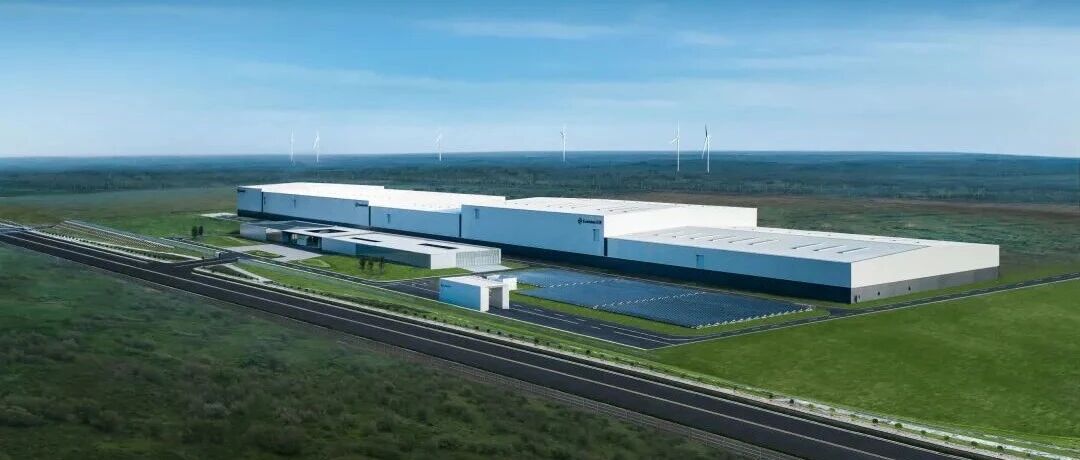
Core Viewpoint - The first batch of national-level zero-carbon parks has been announced, with nearly 40% located in key lithium battery manufacturing bases, indicating a strong alignment between zero-carbon industrial parks and China's lithium battery and new energy industries [1][3][4]. Group 1: Overview of Zero-Carbon Parks - A total of 52 parks have been selected, serving as a sample to observe the coupling of China's new energy and industrial systems [2]. - The selected parks cover various types across eastern, central, and western regions, including national economic development zones, high-tech zones, resource-based development zones, and specialized industrial parks [6]. - The construction period for these parks is required to be completed between 2027 and 2030, with local governments encouraged to provide support in funding, resources, technology, and finance [7]. Group 2: Industry Chain and Structure - The parks related to lithium battery and new energy manufacturing encompass a complete chain from resource extraction to manufacturing and application [8]. - Key parks include those in Jiangxi, Yunnan, and Xinjiang, which focus on lithium resources and new energy materials, as well as manufacturing bases for major companies like CATL and BYD [8][10]. - Downstream applications include parks focused on electric vehicles, energy storage equipment, and data centers, indicating a multi-dimensional approach to energy and storage [10]. Group 3: Zero-Carbon Parks as Experimental Models - Zero-carbon parks are not merely single-factory transformations but aim to reconstruct energy systems and carbon management logic at the industrial cluster level [11]. - The selection of lithium battery and new energy industries as pilot projects is due to their foundational role in supporting energy transition and their strong linkage to emission reduction targets [13][14]. - The parks are expected to validate a replicable set of indicators and operational mechanisms under varying regional and industrial conditions [11][21]. Group 4: Case Study of Inner Mongolia - The Inner Mongolia Ordos Mongsu Economic Development Zone serves as a concrete example of a zero-carbon park, integrating wind, solar, storage, and hydrogen energy into a closed-loop system [22][25]. - The facility aims for full carbon neutrality across its value chain, utilizing high proportions of green electricity and a digital carbon management platform [26][30]. - This model is being expanded to other regions, demonstrating the potential for replicable solutions across different resource endowments and industrial structures [33]. Group 5: Implications for Future Investments - The first batch of zero-carbon parks reflects new constraints and implicit thresholds for the next round of lithium battery and new energy industry layouts [39]. - Local governments' ability to implement green electricity direct connections and integrated carbon monitoring systems will influence the feasibility of high-value new energy projects [40]. - Parks that have established comprehensive new energy and lithium battery industry clusters are more likely to be selected for future projects, shaping the spatial layout of the new energy industry [41][42].
能源早新闻丨我国首个年注碳百万吨油田诞生!
中国能源报· 2025-12-29 22:33
Group 1: Energy Market Developments - The construction of the electricity market in the Beijing-Tianjin-Hebei region is being steadily advanced, with a focus on controlling coal consumption and promoting renewable energy participation in the market. By 2027, coal consumption in the region is expected to decline, with renewable energy consumption in Beijing increasing by approximately 10 percentage points compared to 2020 [2] - The Sichuan section of the "West-to-East Gas Transmission" pipeline has been fully commissioned, enhancing the natural gas resource export channels from the Sichuan-Chongqing region. The pipeline has a designed annual gas transmission capacity of 20 billion cubic meters [3] - The Guangxi Nanning pumped storage power station has been fully commissioned, representing the first of its kind in Guangxi. The project has a total investment of approximately 8 billion yuan and a capacity of 1.2 million kilowatts, capable of converting 1 million cubic meters of water into 1.2 million kilowatt-hours of clean electricity per hour [3] Group 2: Policy and Planning Initiatives - Yunnan's 14th Five-Year Plan emphasizes the development of a new energy system, promoting the coordinated development of coal, electricity, oil, and gas, and advancing multi-energy complementarity and integrated development [4] - Shenzhen's 14th Five-Year Plan highlights the need to accelerate the construction of smart grids and microgrids, as well as infrastructure for electric vehicles, to support the transition to a green and low-carbon economy [4] Group 3: Environmental and Resource Management - China's first oil field capable of injecting over 1 million tons of CO2 annually has been established in Xinjiang, marking a significant step in carbon capture and storage technology [2] - The first waste-to-energy project in Central Asia has been launched in Bishkek, Kyrgyzstan, representing a shift from simple landfill practices to clean incineration and energy regeneration [8]
宜兴高质量推进电网建设
Xin Hua Ri Bao· 2025-12-27 19:54
Core Viewpoint - The completion and operation of the Yixing 110 kV Yongxing Substation on December 26 marks a significant advancement in local energy infrastructure, enhancing power supply reliability for 85,000 residents and 230 enterprises in the area [1] Group 1: Infrastructure Development - The Yongxing Substation is an unmanned, intelligent facility aimed at improving the reliability of the local power grid [1] - The substation will serve a substantial number of households and businesses, indicating a strong commitment to local energy needs [1] Group 2: Industry Transformation - Yixing is accelerating the transformation and upgrading of traditional industries while actively fostering emerging industries and planning for future sectors [1] - The Yixing Power Supply Company is focusing on core business capabilities and the growth of young employees, using the Yongxing Substation project as a training ground [1] Group 3: Technological Advancements - The company is advancing the construction of smart grids and microgrids, promoting integrated development of multi-energy complementarity and source-network-load-storage [1] - There is an emphasis on increasing the proportion of electricity in terminal energy consumption to support a green and low-carbon transformation of economic and social development [1]
国网吉林电力提供优质高效服务——护航冰雪经济热潮
Xin Lang Cai Jing· 2025-12-26 23:07
Core Viewpoint - The development of the ice and snow industry in Jilin Province is transitioning from resource-driven to value-driven, with a focus on providing reliable electricity support to enhance the "cold resources" into a "hot economy" for high-quality development [1][4]. Group 1: Infrastructure and Upgrades - Jilin Province is located in the "world's golden powder snow belt," leading to continuous upgrades in ski resorts, including increased snow trails, updated cable car systems, and enhanced snow-making capabilities [2]. - The total ski area at the Zhonglv Songhua Lake Resort has expanded to 2.3 million square meters, with the addition of 150,000 square meters of new snow trails [2]. - The State Grid Jilin Electric Power Company has planned significant upgrades to the power grid, including the reinforcement of the 66 kV Qingshan substation and the installation of a 5 km cable for the Songhua Lake ski resort [2]. Group 2: Service Enhancements - The Tonghua Wanfeng Ski Resort has implemented two new 10 kV lines totaling 9.7 kilometers and established "love charging stations" for visitors to charge their mobile devices [3]. - The Jilin Province ice and snow economy has developed a "west ice, east snow" pattern, with various regions specializing in different aspects of ice and snow tourism [3]. Group 3: Future Planning - By 2025, the State Grid Jilin Electric Power Company plans to proactively engage with 708 major ice and snow industry and tourism projects, ensuring synchronized planning and construction of supporting power grids [4]. - The Long Spring Ice and Snow New World has achieved record levels of ice and snow usage, with daily electricity consumption reaching approximately 30,000 kWh [4]. Group 4: Event Support - The 24th Chagan Lake Ice and Snow Fishing Culture Tourism Festival is being prepared, with new facilities requiring high reliability in power supply, including the installation of two transformers with a total capacity of 1,030 kVA [5]. - The Yanbian Korean Ethnic Park has seen an increase in daily electricity consumption, exceeding 2,000 kWh last season, with plans for further expansion this season [5]. Group 5: Industry Support - The ice and snow industry is expanding into equipment manufacturing and functional apparel, with stable electricity supply providing essential support [6]. - The Jilin Chemical Fiber Group showcased carbon fiber skis that are 30% lighter and 3 to 5 times stronger than traditional materials, with the State Grid Jilin Electric Power Company providing tailored services for equipment checks and emergency support [6]. Group 6: Overall Strategy - The State Grid Jilin Electric Power Company aims to enhance its service system to support key projects in ice and snow tourism, sports, and equipment, fostering the growth of small and micro enterprises through technology and data-driven approaches [7].
金融赋能绿色转型——光大银行呼和浩特分行为内蒙古首个源网荷储铁合金项目注入金融“活水”
Zhong Guo Jin Rong Xin Xi Wang· 2025-12-26 09:45
Group 1 - The core viewpoint of the news is the successful financing of the integrated source-grid-load-storage project by Inner Mongolia Xinmeng New Energy Technology Co., Ltd., which received a loan of 10 million yuan from China Everbright Bank, marking a significant step in supporting green energy projects and local economic development [1][2] - The integrated source-grid-load-storage model is highlighted as a key form of the new power system, addressing challenges in renewable energy consumption and high energy consumption in traditional industries [1] - The project aims to enhance the use of green electricity in the ferroalloy production process, significantly reducing energy consumption and carbon emissions, thus setting a benchmark for industry transformation [1] Group 2 - China Everbright Bank's Hohhot branch focuses on supporting green financial needs under the "dual carbon" goals, emphasizing energy transition and industrial upgrading [2] - The bank quickly formed a professional service team to tailor financial solutions for the project, demonstrating its commitment to green finance and confidence in the development potential of the integrated model [2] - The project is expected to improve local employment and upgrade the industrial chain, contributing to Inner Mongolia's goal of becoming a national green energy industry base [2]

这个黑科技在深圳坪山投用!
Sou Hu Cai Jing· 2025-12-26 06:06
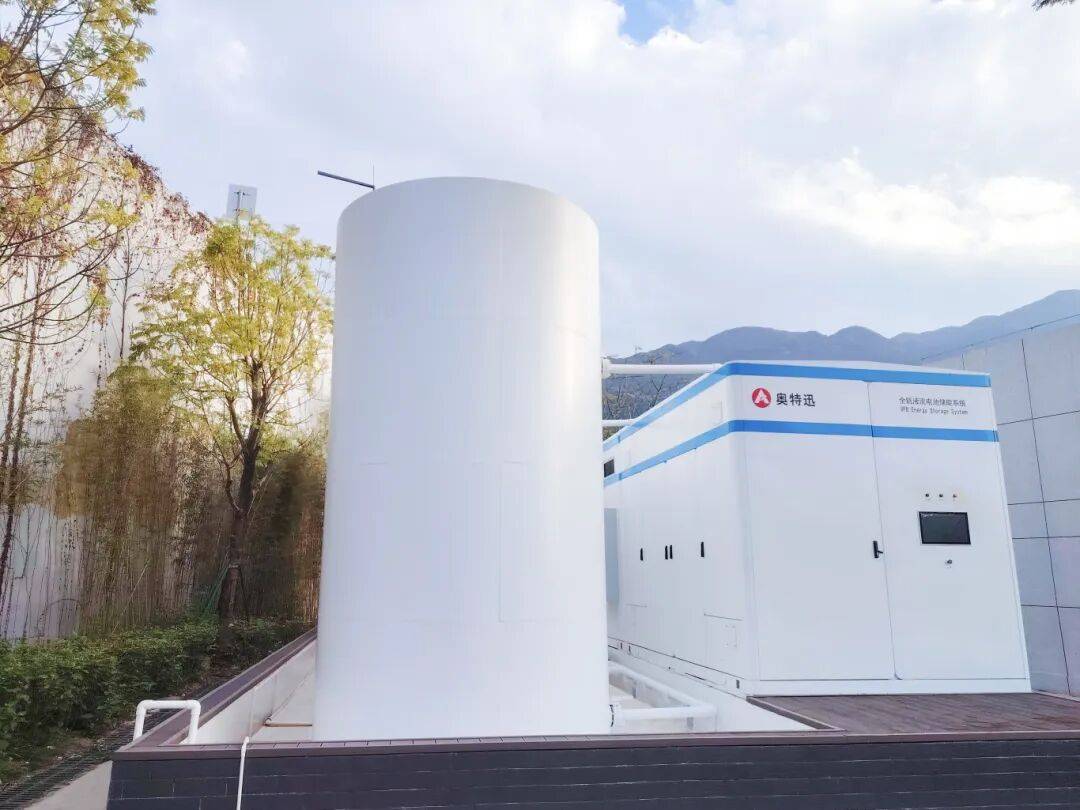
Core Insights - The first megawatt-level all-vanadium flow battery energy storage demonstration project in Shenzhen has been officially put into operation, providing energy support for the first integrated land and air intelligent transportation testing base in the Guangdong-Hong Kong-Macao Greater Bay Area [1] - This project fills the gap in large-scale long-duration energy storage applications in the region and serves as an innovative example of Shenzhen's green and low-carbon transformation [1] Group 1: Technology and Features - The all-vanadium flow battery is described as a large-capacity, reliable "green power bank" that addresses the challenges of instability in renewable energy output [3] - Key advantages include: - Safety: Operates at normal temperature and pressure, eliminating fire and explosion risks, with recyclable electrolyte ensuring zero pollution [3] - Durability: Capable of over 20,000 charge-discharge cycles with a lifespan of up to 20 years, significantly longer than conventional batteries [3] - Rapid response: Can switch between charging and discharging states in 0.02 seconds, meeting grid demand with millisecond-level responsiveness [3] - Flexibility: Power and capacity can be adjusted based on actual needs, allowing for easy expansion and upgrades [3] Group 2: Industry Development - Pingshan has cultivated a complete new energy storage industry chain, gathering strong upstream and downstream enterprises, including leading companies like BYD and Xinzhoubang [4] - The new energy storage industry has achieved a full-stack layout covering battery equipment, materials, cells, control systems, and system integration, with the electrolyte holding over 10% of the global market share [4] - Pingshan has established a self-sufficient battery industry chain, becoming a global hub for leading battery brands, supported by research institutions like the Beijing Institute of Technology's battery laboratory [4] Group 3: Future Prospects - Pingshan has accumulated a distributed photovoltaic installed capacity of 141.9 megawatts and has completed significant construction tasks in recent years [6] - The district aims to promote the large-scale application of next-generation battery technologies and collaborative development of the industry chain, leading to a new stage of green low-carbon industrial cluster development [6] - Future plans include expanding energy storage application scenarios and building an integrated energy ecosystem that combines renewable energy sources, grid, load, and storage [8]