碳排放

Search documents
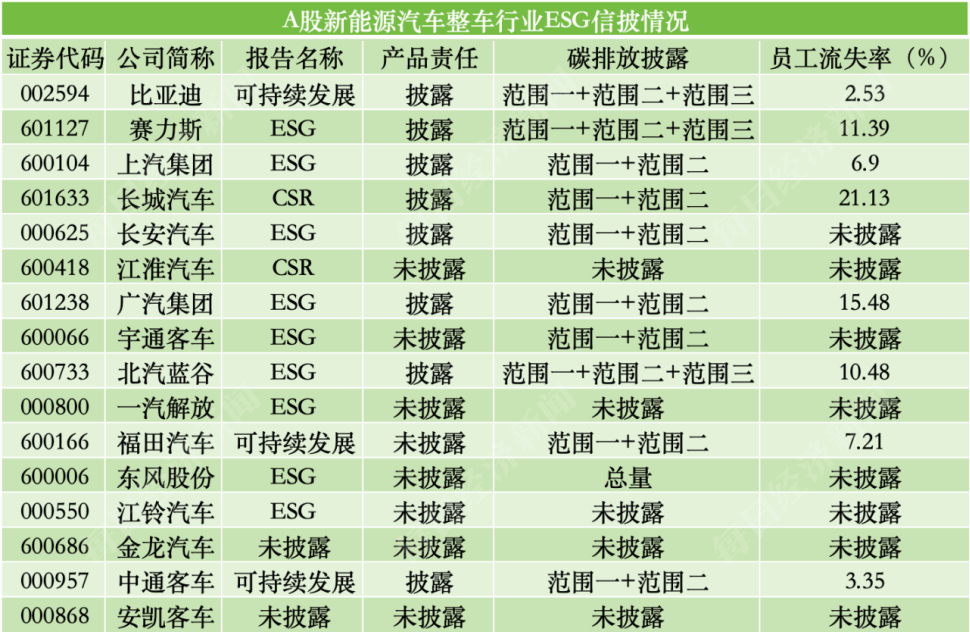
ESG信披观察 | A股新能源汽车整车行业近七成企业披露碳排放数据,产品安全披露不足
Mei Ri Jing Ji Xin Wen· 2025-06-15 13:43
Core Viewpoint - The recent release of new models by leading electric vehicle companies has drawn significant market attention, highlighting the importance of ESG (Environmental, Social, and Governance) issues for the survival and development of these companies [1] ESG Disclosure Summary - Among the 16 listed companies in the A-share electric vehicle sector, 14 have disclosed ESG-related reports, resulting in a disclosure rate of 87.5%, which is significantly higher than the overall industry rate of 45.94% [1][2] - In terms of carbon emissions, 11 companies have disclosed relevant data, achieving a disclosure rate of 68.75%. However, only 3 companies have disclosed Scope 3 emissions data, resulting in a low disclosure rate of 18.75% [2][4] - The types of reports disclosed include 3 sustainability reports, 2 corporate social responsibility reports, and 9 ESG reports, with sustainability reports being favored due to their broader applicability [2] Product Responsibility and Employee Turnover - Eight companies have disclosed product responsibility-related issues, but the quantitative data on product quality, such as recall rates and customer complaints, is limited [6][8] - Employee turnover rates have been disclosed by 8 companies, with Great Wall Motors reporting the highest turnover rate. However, most companies only report voluntary turnover rates, with little information on involuntary turnover [9] Challenges in Carbon Emission Disclosure - The ability to disclose carbon emissions varies among companies, with larger firms having more leverage to require suppliers to provide data. Smaller companies may lack this capability, affecting their disclosure practices [4][5] Market Dynamics and ESG Importance - The high ESG disclosure rates among electric vehicle companies are partly driven by the need to meet international sustainability standards, especially for those exporting to Europe [1][2]




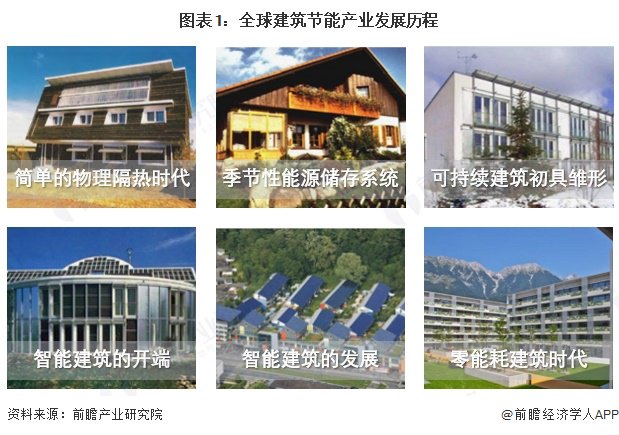
2025年全球建筑节能行业发展现状 建筑行业的能源消费及碳排放比重下降【组图】
Qian Zhan Wang· 2025-06-11 04:28
Global Building Energy Efficiency Industry Overview - The global building energy efficiency industry has experienced a growth trend in investment from 2017 to 2023, despite a decline in 2018 due to the U.S. withdrawal from the Paris Agreement. In 2023, the investment scale decreased to $243.7 billion due to global economic uncertainties and geopolitical conflicts [4] - The International Energy Agency (IEA) reported that the share of renewable energy in global building energy consumption was only 6% in 2022, with a target to increase this to 18% by 2030. Achieving this target requires an annual compound growth rate of over 15%, leading to an estimated investment scale of approximately $280.3 billion in 2024 [4] Energy Consumption and Carbon Emissions - The building sector accounted for 34% of global energy consumption and 37% of global CO2 emissions in 2022. However, in 2023, the energy consumption share decreased to 28%, primarily due to reduced heating demand in warmer regions [5] - The building industry was the only sector to see a decrease in carbon emissions in 2023, with its share of global emissions dropping to 26%. The UN Environment Programme emphasized the urgent need for accelerated action in the building sector to meet global climate goals [5][7] - By 2035, the building sector is projected to contribute approximately 11% of the global emission reduction potential, equating to 4.2 Gt CO₂e [5] Energy Consumption Distribution - In 2022, global building energy consumption slightly increased to 132 exajoules (EJ), with electricity and natural gas being the primary sources. In 2023, this consumption decreased to 130 EJ, representing 32% of global energy demand [8] - The reliance on electricity continued to grow, accounting for 37% of total building energy demand in 2023, while natural gas consumption fell by over 4% [8] - The reduction in fossil fuel usage in buildings was influenced by geopolitical factors, particularly the war in Ukraine [8] Carbon Emissions Breakdown - In 2023, residential buildings accounted for the largest share of indirect carbon emissions at 10%, although this was a 1% decrease from 2022. Non-residential buildings and emissions from the construction process each contributed 8%, also down by 1% [11]
国际航协预计今年可持续航空燃料产量料200万吨
Zheng Quan Shi Bao Wang· 2025-06-02 10:18
Core Insights - The International Air Transport Association (IATA) projects that sustainable aviation fuel (SAF) production will reach 2 million tons (25 billion liters) by 2025, accounting for 0.7% of total airline fuel consumption [1] - IATA's Director General Willie Walsh indicates that this increase in SAF production will lead to an additional $4.4 billion in global airline fuel costs, emphasizing the need for rapid production scaling and efficiency improvements [1] - The majority of SAF is currently directed towards Europe due to the EU and UK’s mandatory quota policies effective from January 1, 2025 [1] Industry Dynamics - The cost of SAF in Europe has doubled due to compliance fees charged by SAF producers or suppliers, with an estimated cost of $1.2 billion for 1 million tons of SAF needed to meet the EU quota by 2025 [1] - Compliance fees are expected to add an additional $1.7 billion, which could have been used to reduce 3.5 million tons of carbon emissions [1] - Walsh highlights the challenges of implementing mandatory quotas in an immature market lacking safeguards against unreasonable market behavior [1] Policy Recommendations - To support the global SAF market, IATA has introduced two initiatives: a SAF registry managed by the Civil Aviation Decarbonization Organization (CADO) for tracking SAF purchases and emissions reductions, and a SAF supply-demand matching platform [2] - IATA urges governments to focus on effective policies, including comprehensive energy policies that incorporate SAF, and to eliminate disadvantages faced by renewable energy producers compared to large oil companies [2] - The organization emphasizes the importance of ensuring the success of the Carbon Offsetting and Reduction Scheme for International Aviation (CORSIA) as the only market mechanism to address international aviation carbon emissions [2] Membership and Influence - IATA represents 350 member airlines worldwide, accounting for over 80% of global international passenger traffic [3]
石化民企龙头ESG报告出炉,恒力石化排放最高、增幅最大 | ESG信披洞察
Xin Lang Cai Jing· 2025-05-31 08:23
Core Insights - The petrochemical industry is a cornerstone of modern economic development and a major carbon emitter, with China's petrochemical sector emitting 1.4 billion tons of carbon in 2022, accounting for 18% of industrial carbon emissions and 12% of national emissions [1] Group 1: Carbon Emissions Data - In 2024, the total greenhouse gas emissions for four major private petrochemical companies are as follows: - Dongfang Shenghong: 30.1 million tons CO2 equivalent [4] - Hengli Petrochemical: 53.92 million tons CO2 equivalent, a year-on-year increase of approximately 64% [4][5] - Hengyi Petrochemical: 7.94 million tons CO2 equivalent, a year-on-year decrease of 1.9% [5] - Rongsheng Petrochemical: 29.39 million tons CO2 equivalent, a year-on-year increase of 1.1% [5] Group 2: Emission Breakdown - Hengli Petrochemical's emissions include: - Scope 1: 47.2 million tons CO2 equivalent, up about 51% year-on-year [4] - Scope 2: 6.72 million tons CO2 equivalent, up over three times year-on-year [4] - Dongfang Shenghong's emissions include: - Scope 1: 15.81 million tons CO2 equivalent - Scope 2: 14.29 million tons CO2 equivalent [5] - Rongsheng Petrochemical's emissions include: - Scope 1: 26.41 million tons CO2 equivalent - Scope 2: 2.98 million tons CO2 equivalent [5] - Hengyi Petrochemical's emissions include: - Scope 1: 6.13 million tons CO2 equivalent - Scope 2: 1.81 million tons CO2 equivalent [4] Group 3: Environmental Investments - Dongfang Shenghong has the highest environmental investment at 1.84 billion yuan, followed by Hengyi Petrochemical at approximately 400 million yuan, Hengli Petrochemical at 375 million yuan, and Rongsheng Petrochemical at 270 million yuan [8] Group 4: Waste Management - The hazardous waste production for the companies is as follows: - Hengli Petrochemical: 148,000 tons - Dongfang Shenghong: 91,300 tons - Hengyi Petrochemical: 437 tons - Rongsheng Petrochemical: 337,000 tons [8] Group 5: Carbon Management Initiatives - Dongfang Shenghong is advancing CO2 resource utilization by capturing CO2 to reduce emissions and exploring new carbon-neutral development pathways [9] - Hengli Petrochemical has implemented systems to reduce CO2 emissions by approximately 3,435.72 tons annually through process optimizations [9] - Hengyi Petrochemical has initiated a renewable energy project in Brunei, with a planned capacity of 476 MWp [9] - Rongsheng Petrochemical has established a high-value CO2 utilization industry chain, reducing emissions by 103,000 tons annually [10]


ESG不是选修,是必修:从一件T恤到全球气候的连锁反应
Xin Jing Bao· 2025-04-22 09:01
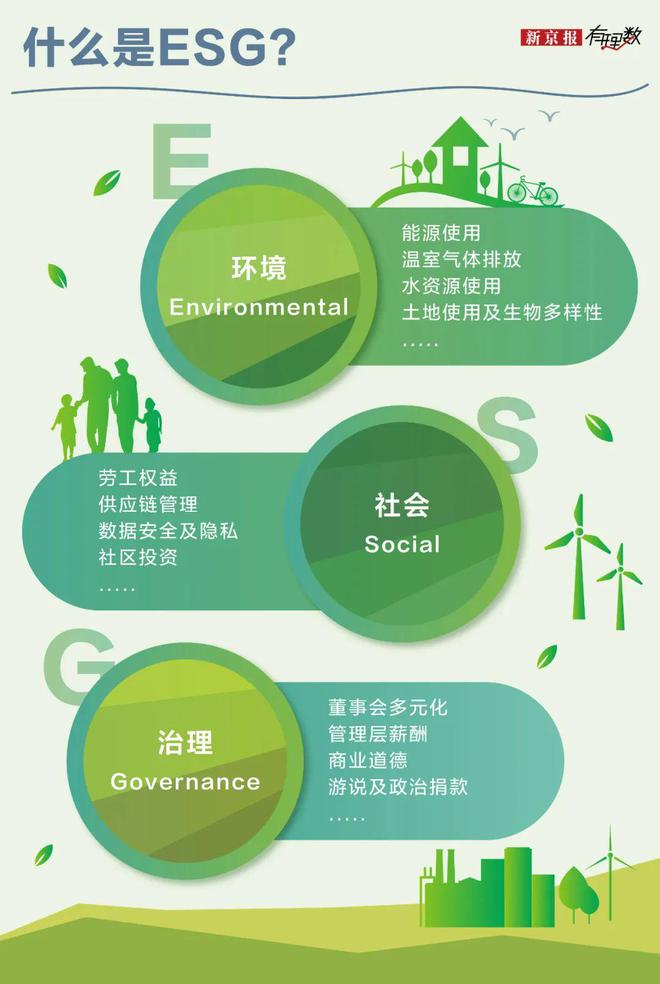
数据新闻编辑 文利新媒体设计 苗奇卉校对 张彦君 你可能没想过,衣柜里那件再普通不过的棉T恤,在和你见面之前,居然"喝掉"了2700升水,相当于一 个人近三年的饮水量;那条牛仔裤的"水账单"更惊人,高达7500升,足够你洗一个月的澡。 这些看似微不足道的生活选择,其实牵动着地球最紧要的资源账本——那上面有我们每个人的消费痕 迹。如果把目光看向上游,就会发现:真正写下"关键大头"的,是那些为我们提供衣食住行的企业。如 果企业一边高喊"绿色环保",一边却偷排污水、悄悄"漂绿",那么我们每个人的努力,终将被稀释得毫 无意义。 从纺织厂到食品加工厂,从制造业到大型零售商,尤其是肩负更高责任的上市公司,在这份关于环境、 资源与未来的"总账"中,他们是必须交代清楚的主角。于是,监管层出手了。 近日,中国证监会发布了新版《上市公司信息披露管理办法》,首次从部门规章层面要求上市公司披露 可持续发展报告。新规将于2025年7月1日正式实施,意味着ESG信息披露进入了"必须交作业"的阶段。 什么是ESG? 它为什么如此重要? ━━━━━ ESG是环境(Environmental)、社会(Social)和公司治理(Governan ...
独家洞察 | 电力行业:在AI驱动的增长与碳排放挑战之间找到平衡
慧甚FactSet· 2025-02-25 02:34
长期以来,电力公共事业公司一直是投资者眼中可靠的选择,因其稳定的收入和稳健的股息而闻名。然 而,自2020年起,电力公司的业绩表现欠佳,与标普500指数的总回报出现背离。电力行业未能达到其过 往的业绩水平,但所幸,新的乐观前景正在浮现。 全球经济从新冠疫情的影响中复苏,以及之前促使投资者转向高收益债券的高利率逐渐回落,这些都使电 力公用事业公司处于有利地位。人工智能和数据中心驱动的能源需求不断增长,进一步强化了电力公司的 业绩前景,预示着它们可能迎来更好的发展。 然而,除了这些积极因素外,电力行业也面临着挑战,特别是碳排放成本的上升。这可能会影响电力公司 运营成本和合规情况,这是公用事业企业向清洁能源和可持续实践转型的重要因素。 点击图片查看大图 国际能源署的报告称,由人工智能和传统数据中心驱动的电力需求将急剧增长,预计到2026年全球服务 器容量将翻番。数据显示,2022年,数据中心、人工智能和加密货币总共消耗了约460太瓦时(TWh)的电 力,占全球电力需求的近2%。 全球有超过8,000座数据中心,其中33%在美国,16%在欧洲,10%在中国。在美国,数据中心的用电量 预计将迅速增长,从2022年的约2 ...
Safe Bulkers(SB) - 2024 Q4 - Earnings Call Transcript
2025-02-19 17:38
Financial Data and Key Metrics Changes - The company reported adjusted EBITDA of $40.7 million for Q4 2024, down from $50.7 million in Q4 2023, indicating a decrease of approximately 19.7% [29] - Adjusted earnings per share for Q4 2024 was $0.15, compared to $0.25 in the same period of 2023, reflecting a decline of 40% [30] - Net income for Q4 2024 was $19.4 million, down from $27.6 million in Q4 2023, representing a decrease of about 29.7% [31] Business Line Data and Key Metrics Changes - The average daily charter rate for Capes was $22,000, while the Panamax charter market stood at $9,000, indicating a softening in the charter market [7] - The company operated an average of 45.9 vessels in Q4 2024, earning an average TCE of $16,521, compared to 45.93 vessels and an average TCE of $18,321 in Q4 2023 [31] Market Data and Key Metrics Changes - The Cape market segment has been declining throughout Q4 2024, impacting revenues and profitability [6] - Global dry market demand is forecasted to fall by 1% in 2025, with a subsequent growth of 2.5% in 2026, indicating a challenging market environment [11] - China's GDP growth is projected at 4.6% in 2025, which may hinder demand for dry bulk commodities [13] Company Strategy and Development Direction - The company is focused on capital allocation towards its new build program and improving operational efficiency, with a strong emphasis on environmental sustainability [5][20] - The fleet renewal strategy includes investments in older vessels and the acquisition of new eco-ships, aiming to maintain a competitive edge in the market [21][22] - The company has an order book of seven more Phase 3 vessels, which are expected to enhance its competitive position [20] Management's Comments on Operating Environment and Future Outlook - Management anticipates a relatively softer trade market in the coming quarters due to supply growth outpacing demand [9] - The company maintains a strong capital structure with a leverage of about 35% and a liquidity position of approximately $276 million [5][28] - Management expressed confidence in the company's ability to navigate the current market challenges and achieve long-term growth [32] Other Important Information - The company declared a dividend of $0.05 per share, rewarding common shareholders despite the challenging market conditions [5][31] - The consolidated debt stood at $545 million, with a comfortable leverage ratio and adequate room for capital spending [23] Q&A Session Summary Question: Regarding the share buyback program - Management indicated that share buyback programs are evaluated based on market conditions and may be paused if the market is underperforming [37][38] Question: On asset values in the current market - Management noted that older ships have seen a price drop of about 25%, while younger ships have decreased by around 15%, but buying power remains in the market [44][45]