绿电交易

Search documents
新能源成为新疆发电量增长第一动力
Xin Hua Wang· 2025-09-16 08:44
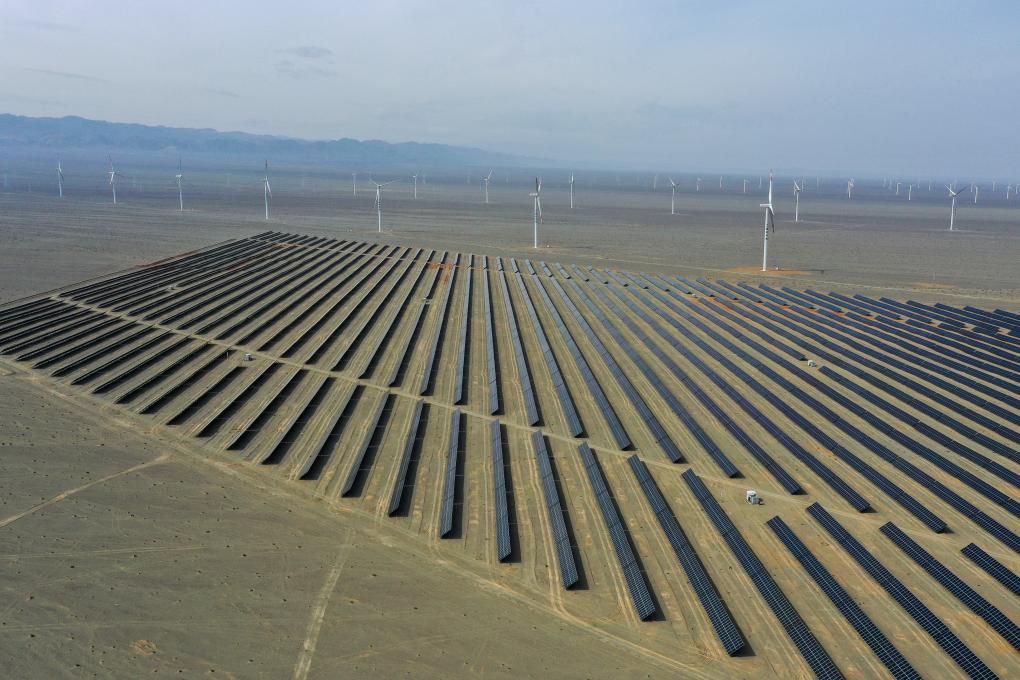
Group 1 - The core viewpoint highlights that Xinjiang's renewable energy generation has surpassed 100 billion kilowatt-hours, reaching 1009.4 billion kilowatt-hours by September 15, with a year-on-year growth of 17.2%, making it the primary driver of power generation growth in the region [2] - Among the renewable energy generation, solar power contributed 412.4 billion kilowatt-hours, showing a significant year-on-year increase of 39.2%, while wind power generated 597 billion kilowatt-hours, with a growth of 6% [2] - Xinjiang has established a robust renewable energy consumption network, forming a main grid structure that enhances the efficient utilization and optimization of renewable energy through wind-solar complementarity across different regions [2] Group 2 - Xinjiang has developed several large-scale clean energy bases, including five with a capacity of over 10 million kilowatts and more than ten with a capacity of over 1 million kilowatts, leveraging its unique energy resources and geographical advantages [3] - As of the end of August, Xinjiang's renewable energy installed capacity reached 129 million kilowatts, accounting for approximately 60% of the total installed capacity, positioning it among the top in the country [3] - The development of renewable energy in Xinjiang is continuously injecting green momentum into the region's high-quality economic growth [3]

广州:鼓励车网互动资源聚合参与电力现货市场
Mei Ri Jing Ji Xin Wen· 2025-09-15 05:52
Core Viewpoint - The Guangzhou government has issued a work plan for the pilot city of national vehicle-network interaction from 2025 to 2027, focusing on integrating vehicle-network resources into the electricity spot market and promoting green electricity trading [1] Group 1: Vehicle-Network Interaction in Electricity Market - The plan encourages vehicle-network resource aggregation to participate in the electricity spot market [1] - Charging operators are supported to regularly engage in electricity spot trading by obtaining electricity sales qualifications or collaborating with quality electricity sales companies [1] - The initiative aims to enhance the flexible adjustment potential of vehicle-network resources and guide charging operators to adjust charging loads based on actual market supply and demand [1] Group 2: Auxiliary Services Market Participation - The plan explores the aggregation of vehicle-network resources to participate in the auxiliary services market [1] - It supports the collaboration between the power grid and charging/replacement operators to engage in frequency modulation services through a virtual power plant platform [1] - The goal is to achieve participation from no less than 10 charging stations in frequency modulation by the end of 2025 [1] Group 3: Green Electricity Trading - The plan includes research and design of pilot schemes for vehicle-network resource aggregation to participate in green electricity trading [1] - It aims to promote charging operators' participation in green electricity trading trials through the virtual power plant platform [1] - The initiative seeks to enhance the role of Guangzhou's vehicle-network interaction resources in facilitating green electricity consumption and explore mechanisms for green electricity trading and carbon benefits [1]
预见2025:《2025年中国售电公司行业全景图谱》(附市场现状、竞争格局和发展趋势等)
Qian Zhan Wang· 2025-09-11 04:25
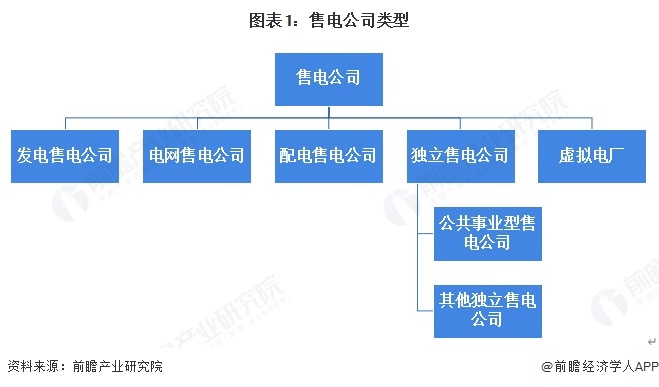
Industry Overview - The electricity sales companies are categorized into five types: generation sales companies, grid enterprise sales companies, social capital investment distribution network companies, independent sales companies, and virtual power plants [1][2][3] - The midstream is the core link in the electricity sales industry, connecting production, sales, and consumption [5][7] - The electricity sales sector is crucial for balancing electricity production and consumption, requiring a state of equilibrium to enhance economic efficiency [7] Industry Development History - The development of electricity sales companies in China has gone through three stages: from 2002 to 2014, characterized by the separation of generation and grid, leading to a competitive generation landscape; from 2015 to 2021, marked by a new round of electricity reform that opened up the sales side; and from 2022 to the present, driven by carbon neutrality goals and green electricity trading [10][11] Policy Background - The electricity generation and sales sectors are vital for the national economy, with significant reforms initiated in 2015 to create a healthy market environment [13][14] - Key policies include the establishment of a unified electricity market system by 2025 and the promotion of renewable energy integration into the market [14][15] Current Industry Status - As of the end of 2024, the number of registered electricity sales companies in China exceeds 5,000, reflecting a nearly 17-fold increase since 2016 [16][17] - The market transaction volume has been increasing annually, with a projected total of 61,796 billion kilowatt-hours in 2024 [18][19] - The market transaction amount is expected to exceed 3 trillion yuan in 2024, showing a year-on-year growth of 5.92% [22] Competitive Landscape - In 2024, the State Grid is expected to account for approximately 70% of the market transaction volume, with Southern Power Grid at 16% [23] - The majority of registered sales companies are concentrated in Guangdong, Shanxi, and Sichuan provinces [26] Future Industry Outlook - By 2030, the market transaction amount is projected to exceed 4 trillion yuan, with average settlement prices expected to decline initially and stabilize later [28] - The electricity sales industry is undergoing a transformation towards market mechanisms and carbon neutrality, requiring companies to enhance their operational capabilities [29]



2025年售电公司前景分析及设立条件流程
Sou Hu Cai Jing· 2025-09-01 10:25
Group 1: Market Outlook for Electricity Sales Companies - The market size of electricity sales companies is expected to expand continuously, with China's electricity market transaction volume reaching 56,679 billion kilowatt-hours in 2023 [3] - The normalization of cross-grid electricity transactions between State Grid and Southern Grid has significantly enhanced the activity of inter-provincial and inter-regional electricity trading, providing policy dividends for electricity sales companies to expand their business radius [3] - Electricity sales companies are transitioning from pure electricity sales to comprehensive energy services, aiming to provide one-stop energy solutions that include electricity, heat, gas, and energy-saving services, thereby improving overall energy efficiency [3] - The demand for green electricity trading is surging due to the "dual carbon" goals, with the proportion of foreign enterprises purchasing green electricity in the Yangtze River Delta and Pearl River Delta regions increasing from 12% in 2020 to 38% in 2025 [3] - Electricity sales companies need to proactively layout new energy generation assets in response to market changes and policy adjustments [3] Group 2: Core Requirements for Establishing Electricity Sales Companies - The total assets of an applicant for an electricity sales company must not be less than 20 million RMB, with specific annual electricity sales volume limits based on asset size [4] - A minimum of ten employees is required, including four certified professionals and six general staff, with at least three years of relevant experience [4] - Applicants must have a fixed business location and a technical support system capable of participating in market transactions, including functions for quoting, information reporting, contract signing, and customer service [4] - The legal representative and major shareholders must have good financial status and credit records, ensuring honest and trustworthy operations [4] Group 3: Application Process for Establishing Electricity Sales Companies - The application process requires obtaining the "electricity sales company" entity first, followed by applying for sales qualifications to avoid delays [6] - Social security records for ten professional staff must be provided for the past three months, necessitating careful planning to avoid interruptions [6] - The electricity trading management system must be capable of interfacing with the grid company's data, requiring detailed system functionality descriptions and test reports [6] - After obtaining sales qualifications, companies must also register with the electricity trading center to participate in electricity trading [6]
国盛证券:推荐布局低估绿电板块 优先关注低估港股绿电以及风电运营商
Zheng Quan Shi Bao Wang· 2025-09-01 00:43
Core Viewpoint - The report from Guosheng Securities highlights significant growth in green electricity trading and recommends investment in undervalued green electricity sectors, particularly in Hong Kong stocks and wind power operators [1] Group 1: Green Electricity Trading - From January to July, the trading volume of green electricity increased by 42% year-on-year [1] - The trading of green certificates during the same period rose by 43% year-on-year [1] Group 2: Overall Electricity Market - The overall electricity market trading volume grew by 3.2% year-on-year, accounting for 61% of the total electricity consumption in society [1] Group 3: Investment Recommendations - The report suggests prioritizing investments in undervalued green electricity sectors, specifically recommending companies such as Xintian Green Energy (H), Zhongmin Energy, and Funiu Co., Ltd. [1]
沪皖电网首签绿电协议
Jie Fang Ri Bao· 2025-08-28 01:42
Group 1 - The core point of the article is the signing of a green electricity trading cooperation agreement between Shanghai Electric Grid and Anhui Electric Grid, which expands the scale of green electricity trading in the Yangtze River Delta region [1] - Multiple Shanghai power users have signed intention agreements with Anhui renewable energy generation companies, indicating a collaborative effort to enhance green energy utilization [1] - The East China Grid has established a time-sharing mutual assistance model, where Anhui's early and midday peak electricity meets Shanghai's green electricity demand, while Shanghai supports Anhui's electricity shortages during the evening peak [1] Group 2 - Since the beginning of the year, Anhui has delivered 2.70 billion kilowatt-hours of green electricity to Shanghai, accounting for 76.3% of the total green electricity transaction volume among provinces in the Yangtze River Delta [1]
金开新能: 2025年半年度报告
Zheng Quan Zhi Xing· 2025-08-27 16:12
Core Viewpoint - The report highlights the financial performance and strategic initiatives of Jinkai New Energy Co., Ltd. for the first half of 2025, emphasizing the company's commitment to shareholder returns and its adaptation to the evolving renewable energy market [1][2]. Financial Performance - The company's operating revenue for the first half of 2025 was approximately 1.92 billion yuan, a 2.07% increase compared to the same period last year [2]. - The total profit for the period was about 559.88 million yuan, reflecting an 8.53% decrease year-on-year [2]. - The net profit attributable to shareholders was approximately 439.44 million yuan, down 9.80% from the previous year [2]. - The company plans to distribute a cash dividend of 1 yuan per 10 shares, totaling about 196.73 million yuan, which represents 44.77% of the net profit for the period [1]. Industry Overview - The renewable energy sector, particularly solar and wind power, continues to grow rapidly, with total installed capacity reaching 1.67 billion kilowatts, accounting for 45.8% of the national total [3]. - The industry is transitioning from quantity expansion to quality improvement, driven by government policies aimed at enhancing market reforms and promoting green energy applications [3][4]. - The average utilization hours for power generation equipment decreased by 162 hours year-on-year, indicating challenges in grid absorption capacity [3]. Strategic Initiatives - The company is focusing on enhancing its clean energy projects and expanding its low-carbon product offerings, particularly in economically developed regions [6][7]. - Jinkai New Energy is actively pursuing collaborations with high-energy users to explore integrated energy solutions and green electricity supply [8]. - The company has implemented a digital transformation strategy to improve operational efficiency and enhance decision-making processes [15]. Shareholder Engagement - The company emphasizes a stable cash dividend policy and has engaged in share buybacks and management team share purchases to align with shareholder interests [12][16]. - In the first half of 2025, the company distributed approximately 197 million yuan in dividends, reflecting a commitment to maximizing shareholder returns [12].

核心业务表现稳健 正泰电器上半年净利润增长32.90%
Zheng Quan Shi Bao Wang· 2025-08-27 13:02
Core Viewpoint - Zhengtai Electric reported a revenue of 29.619 billion yuan for the first half of 2025, a year-on-year increase of 2.18%, and a net profit attributable to shareholders of 2.554 billion yuan, up 32.90% year-on-year [1] Business Performance - The smart electrical industry achieved a revenue of 12.104 billion yuan in the first half of 2025, growing by 3.74% year-on-year, with a focus on expanding both domestic and overseas markets [1][2] - In the second quarter, the company recorded a revenue of 15.060 billion yuan, reflecting a 15.22% year-on-year increase, and a net profit of 1.391 billion yuan, up 65.32% year-on-year [1] Market Expansion - In the domestic market, the smart electrical industry focused on high-potential sectors, securing over 160 new high-potential clients, with key and new product sales accounting for 15% [2] - In the overseas market, Zhengtai Electric established a strong presence in Europe, North America, and Asia-Pacific, winning key projects in data centers and renewable energy sectors [2] Green Energy Business - The green energy segment, including household photovoltaic and power station businesses, saw significant growth, with the domestic photovoltaic installation capacity reaching 212 GW, a 107% year-on-year increase [3] - The household photovoltaic business generated a revenue of 14.798 billion yuan and a net profit of 1.901 billion yuan, with over 9 GW of new installation capacity [3] Future Outlook - Zhengtai Electric aims to transition from a product supplier to an energy system service provider, focusing on global expansion and technological innovation to enhance market competitiveness [5] - The company anticipates continued growth in low-voltage electrical fields, particularly in renewable energy support, smart grid solutions, and data centers [4]

一度电蕴藏绿意 一张签见证实力——“碳身份证”助力浙企出海
Xin Hua She· 2025-08-27 01:32
Core Viewpoint - The article discusses the implementation of a "carbon identity" system in Zhejiang, which allows products to display their carbon footprint and the amount of green electricity used during production, aiding local companies in meeting upcoming EU carbon tariffs [1][7]. Group 1: Carbon Identity System - The "carbon identity" system enables consumers to scan product labels to see the carbon footprint and production process in real-time [1]. - The system is being utilized by companies like Zhejiang Hars Company, which has seen a 27% reduction in carbon emissions during peak solar power production, saving over 1 million yuan in electricity costs annually [1][6]. - The platform developed by State Grid Jinhua Power Supply Company calculates hourly carbon factors, providing precise data for companies to monitor and reduce their carbon emissions [2][4]. Group 2: Impact on Export and Competitiveness - The EU's Carbon Border Adjustment Mechanism (CBAM) will impose tariffs of 60-100 euros per ton of carbon emissions starting in 2026, presenting a significant challenge for Jinhua's export businesses, which have an annual export value of 771.9 billion yuan [1]. - The introduction of the carbon identity system is expected to enhance the competitiveness of Zhejiang's products in international markets by demonstrating their low-carbon credentials [6][7]. - Feedback from international clients indicates that the carbon labels increase their recognition of the low-carbon capabilities of "Zhejiang manufacturing" [6]. Group 3: Technological Innovation and Future Prospects - The carbon management system acts like a "carbon microscope," providing real-time data on carbon emissions and energy consumption for companies [6]. - The transition from traditional electricity supply to a focus on carbon management represents a significant shift in the role of power companies in the context of carbon neutrality [7]. - The precise tracking of each unit of electricity's "green content" is seen as essential for maintaining the competitiveness of Zhejiang's manufacturing sector in the global market [7].

【宏观经济】一周要闻回顾(2025年8月20日-8月26日)
乘联分会· 2025-08-26 08:39
Core Viewpoint - In July, the total electricity consumption in the country reached 10,226 billion kilowatt-hours, marking a year-on-year increase of 8.6% [3]. Electricity Consumption by Sector - In July, electricity consumption by sector was as follows: - Primary industry: 170 billion kilowatt-hours, up 20.2% year-on-year [2][3] - Secondary industry: 5,936 billion kilowatt-hours, up 4.7% year-on-year [2][3] - Tertiary industry: 2,081 billion kilowatt-hours, up 10.7% year-on-year [2][3] - Urban and rural residential consumption: 2,039 billion kilowatt-hours, up 18% year-on-year [2][3] Cumulative Electricity Consumption - From January to July, the cumulative total electricity consumption was 58,633 billion kilowatt-hours, reflecting a year-on-year increase of 4.5% [3]. - Breakdown of cumulative consumption by sector: - Primary industry: 847 billion kilowatt-hours, up 10.8% year-on-year [3] - Secondary industry: 37,403 billion kilowatt-hours, up 2.8% year-on-year [3] - Tertiary industry: 11,251 billion kilowatt-hours, up 7.8% year-on-year [3] - Urban and rural residential consumption: 9,132 billion kilowatt-hours, up 7.6% year-on-year [3] Electricity Market Trading - In July 2025, the national electricity market trading volume reached 6,246 billion kilowatt-hours, a year-on-year increase of 7.4% [6]. - Breakdown of trading volume: - Intra-provincial trading: 4,614 billion kilowatt-hours, up 7.3% year-on-year [6] - Inter-provincial and cross-regional trading: 1,632 billion kilowatt-hours, up 7.9% year-on-year [6] - Green electricity trading: 256 billion kilowatt-hours, up 43.2% year-on-year [6] Cumulative Electricity Market Trading - From January to July 2025, the cumulative electricity market trading volume was 35,900 billion kilowatt-hours, reflecting a year-on-year increase of 3.2% [6]. - Proportions of trading volume: - Intra-provincial trading: 27,300 billion kilowatt-hours, up 1.6% year-on-year [6] - Inter-provincial and cross-regional trading: 8,558 billion kilowatt-hours, up 9% year-on-year [6] - Green electricity trading: 1,817 billion kilowatt-hours, up 42.1% year-on-year [6]