
绿色物流

Search documents
DHL快递中国区高管接受专访称以创新与绿色物流助力中国高质量发展
Ren Min Wang· 2025-11-12 01:00
Group 1 - The eighth China International Import Expo (CIIE) was held from November 5 to 10, with participation from 155 countries and regions, showcasing a record number of 290 Fortune 500 and industry-leading companies [1] - DHL Express showcased its latest automation technologies, smart devices, and green logistics solutions at the expo, emphasizing its commitment to innovation and green transformation in alignment with China's high-quality economic development [1] - DHL Express has significantly increased its investment in China, with new and upgraded projects in cities like Wuxi, Shenzhen, Chengdu, and Zhuhai to enhance sorting capacity and transfer efficiency [1] Group 2 - The CIIE reflects China's efforts to build a unified national market and promote factor circulation and regional coordinated development, aligning with DHL's strategic direction and the government's policy guidance [2] - DHL aims to increase the proportion of sustainable aviation fuel to over 30% and electrify 60% of its ground transportation by 2030, with over 30% of its delivery fleet in China already electrified [2] - The "GoGreen Plus" service allows customers to use sustainable aviation fuel during shipping, with over half of DHL's customers in China already utilizing this service [2] Group 3 - The "14th Five-Year Plan" emphasizes focusing on the real economy and advancing digitalization, intelligence, and green development, providing long-term opportunities for multinational companies like DHL [3] - DHL Express aims to leverage its comprehensive capabilities in digitalization, intelligence, and sustainability to support the new leap in China's real economy [3]
中集车辆携多款产品亮相2025中国国际商用车展(CCVS)
Zhong Guo Qi Che Bao Wang· 2025-11-11 07:31
Core Viewpoint - The 2025 China International Commercial Vehicle Show (CCVS) in Wuhan showcased CIMC Vehicles' commitment to high-quality development through the launch of 19 key products and innovative solutions in logistics and transportation [1][3]. Group 1: Company Developments - CIMC Vehicles emphasized its strategy to evolve into a "full value chain operator" in response to the national unified market and global southern markets [3]. - The launch of the "Only Star Link" semi-trailer for 2026 reflects CIMC Vehicles' technological capabilities and its vision for the future of the industry, focusing on efficient, green, and intelligent logistics [5]. - The company introduced the "Euro Champion M" series liquid food transport tankers, which integrate advanced European technology and materials science, providing a comprehensive solution for food safety and efficient transport [5]. Group 2: Industry Innovations - CIMC Vehicles initiated the Liquid Food Transport Industry Chain Ecological Safety Collaborative Development Alliance, aiming to create a closed-loop system for safe and standardized transport of liquid food [7]. - The global debut of the engineering-type pure electric head-mounted train solution showcases CIMC Vehicles' commitment to green transformation in the industry, addressing customer needs across the entire value chain [7]. - The joint display with Shaanxi Automobile highlighted innovations in integrated commercial vehicles, particularly the new energy integrated cold chain transport vehicle, showcasing forward-looking strategies in green logistics [9]. Group 3: Future Vision - The three main exhibition areas—brand leadership, technological empowerment, and value co-creation—form a cohesive "Star Link" ecosystem, redefining operational methods in the logistics industry [11]. - CIMC Vehicles aims to drive the commercial vehicle industry towards higher quality, efficiency, and sustainability, adopting a more open and innovative approach [11].


DHL快递中国区首席执行官吴东明:以创新与绿色物流助力中国高质量发展
人民网-国际频道 原创稿· 2025-11-10 06:31
Core Insights - The eighth China International Import Expo (CIIE) was held from November 5 to 10, with participation from 155 countries and regions, showcasing a record number of 290 Fortune 500 and industry-leading companies [1][4] - DHL Express showcased its latest automation technologies, smart devices, and green logistics solutions, emphasizing its commitment to innovation and green transformation in alignment with China's high-quality economic development [1][4] Company Developments - DHL Express has increased its investment in China, with new and upgraded projects in cities like Wuxi, Shenzhen, Chengdu, and Zhuhai to enhance sorting capacity and transfer efficiency [4] - The company signed a memorandum of understanding with Zhongzhou Airlines for the local operation of two DHL B777 freighters, marking the first instance of localized fleet operations in China [4] Strategic Alignment - The CIIE serves as a significant platform for global companies to share opportunities in China, aligning with the country's push for a unified national market and regional coordinated development [5] - DHL's strategic direction aligns closely with Chinese government policies, allowing the company to benefit from the industrial upgrade dividends of the unified market [5] Sustainability Initiatives - DHL aims to increase the proportion of sustainable aviation fuel to over 30% and electrify 60% of its ground transportation by 2030, with over 30% of its delivery fleet in China already electrified [5] - The company has launched the "GoGreen Plus" service, allowing customers to use sustainable aviation fuel during shipping, with over half of its customers in China already utilizing this service [5] Market Opportunities - The "14th Five-Year Plan" emphasizes the importance of focusing on the real economy and advancing digitalization, intelligence, and green development, presenting long-term growth opportunities for multinational companies [6] - DHL Express plans to leverage its comprehensive capabilities in digitalization, intelligence, and sustainability to support the new leap in China's real economy [6]

DHL再度赴约进博会 以创新科技与绿色方案赋能物流行业升级
Zhong Guo Jing Ji Wang· 2025-11-07 08:00
Core Insights - The eighth China International Import Expo (CIIE) is being held in Shanghai from November 5 to 10, showcasing advanced logistics technologies and sustainable practices by DHL [1][2] - DHL is implementing a highly intelligent logistics system that significantly enhances sorting efficiency and accuracy, addressing the growing pressures of e-commerce logistics [1] - The company has launched a "green air fuel" service, allowing customers to choose sustainable shipping options, which has gained popularity among over half of its clients in China [2] Group 1: Logistics Innovations - DHL's intelligent logistics system features robotic arms and automated guided vehicles (AGVs) that improve operational efficiency and accuracy in cargo handling [1] - The use of four-legged robots demonstrates solutions for last-mile delivery and operations in challenging environments [1] Group 2: Sustainable Practices - DHL has formed strategic partnerships with bp and Neste to procure up to 800 million liters of sustainable aviation fuel, ensuring a supply of 668 million liters [1][2] - The "green air fuel" service is designed to help clients achieve Scope 3 emissions reductions through the use of sustainable aviation fuel [2] - DHL aims for net-zero emissions in logistics by 2050, integrating sustainability into its business operations [2] Group 3: Market Commitment - DHL emphasizes its commitment to the Chinese market, planning to increase investments to connect China with the world sustainably [2] - The company positions itself as a reliable logistics partner for Chinese enterprises looking to expand internationally, contributing to the modernization of the logistics industry [2]
广东原尚物流股份有限公司 关于购买运输车辆的公告
Zhong Guo Zheng Quan Bao - Zhong Zheng Wang· 2025-11-06 23:25
Core Viewpoint - Guangdong Yuanshang Logistics Co., Ltd. plans to purchase 100 units of 18-ton fuel cell vehicles from Hyundai Motor, with a total cost of 78.32 million yuan, aiming to promote clean vehicle transformation and expand its business client base in the green logistics sector [2][6][18]. Transaction Overview - The company intends to sign a vehicle purchase contract with Hyundai Motor, acquiring 100 fuel cell vehicles at a unit price of 783,200 yuan, totaling 78,320,000 yuan [2][12]. - This transaction does not constitute a related party transaction or a major asset restructuring as defined by regulations [3][4]. - The transaction amount does not require shareholder approval [4][8]. Financial and Operational Impact - The acquisition of hydrogen vehicles is expected to enhance the company's operational performance and market influence, contributing positively to the 2026 financial results [18]. - The initiative is part of the company's strategy to replace traditional fuel vehicles and reduce emissions, aligning economic benefits with environmental goals [18]. Payment and Delivery Terms - Payment will be made in several installments, including an initial deposit of 1 million yuan and subsequent payments totaling 78.32 million yuan [14]. - Delivery of the vehicles is scheduled to occur in seven batches between November 19 and November 30, 2025 [15]. Board Meeting and Approval - The board of directors unanimously approved the vehicle purchase proposal during the fourth meeting of the sixth board on November 6, 2025 [23][24].

*ST原尚(603813.SH):拟向现代汽车采购100台18吨燃料电池翼开启厢式车 总价为7832万元
Ge Long Hui A P P· 2025-11-06 10:26
Core Viewpoint - The company aims to promote the clean transformation of its vehicle structure, reduce carbon emissions, and enhance high-quality development by entering the green logistics sector through a procurement agreement with Hyundai Motor [1] Group 1: Company Strategy - The company plans to sign a vehicle purchase contract and supplementary agreement with Hyundai Motor to acquire 100 units of 18-ton fuel cell wing-opening vans [1] - The inclusive tax unit price for each vehicle is set at 783,200 yuan, leading to a total inclusive tax price of 78.32 million yuan for the procurement of 100 vehicles [1] Group 2: Industry Context - The initiative aligns with the growing demand for green logistics solutions, indicating a strategic move to capture new market opportunities in the sector [1]
*ST原尚拟采购100台18吨燃料电池翼开启厢式车 抢占绿色物流新赛道
Zhi Tong Cai Jing· 2025-11-06 10:20
Core Viewpoint - The company aims to promote the clean transformation of its vehicle structure, reduce carbon emissions, and enhance high-quality development by entering the green logistics sector through a partnership with Hyundai Motor for the procurement of fuel cell vehicles [1] Group 1: Company Strategy - The company plans to sign a vehicle purchase contract and supplementary agreement with Hyundai Motor Fuel Cell System (Guangzhou) Co., Ltd. to acquire 100 units of 18-ton fuel cell wing-opening box trucks [1] - The inclusive tax unit price for each vehicle is set at 783,200 yuan, leading to a total inclusive tax price of 78.32 million yuan for the procurement of 100 vehicles [1] Group 2: Industry Context - The initiative aligns with the growing demand for green logistics solutions, indicating a strategic move to capture new market opportunities in the sector [1]
*ST原尚(603813.SH)拟采购100台18吨燃料电池翼开启厢式车 抢占绿色物流新赛道
智通财经网· 2025-11-06 10:19
Core Viewpoint - *ST Yuanshang (603813.SH) aims to promote the clean transformation of its vehicle structure, reduce carbon emissions, and enhance high-quality development by entering the green logistics sector through a partnership with Hyundai Motor's hydrogen fuel cell system division [1] Group 1: Company Strategy - The company plans to sign a vehicle purchase contract and supplementary agreement with Hyundai Motor to procure 100 units of 18-ton hydrogen fuel cell wing-opening box trucks [1] - The inclusive tax unit price for each vehicle is set at 783,200 yuan, leading to a total inclusive tax price of 78.32 million yuan for the 100 vehicles [1] Group 2: Industry Context - The initiative aligns with the growing demand for green logistics solutions, indicating a strategic move to capture new market opportunities in the sector [1]
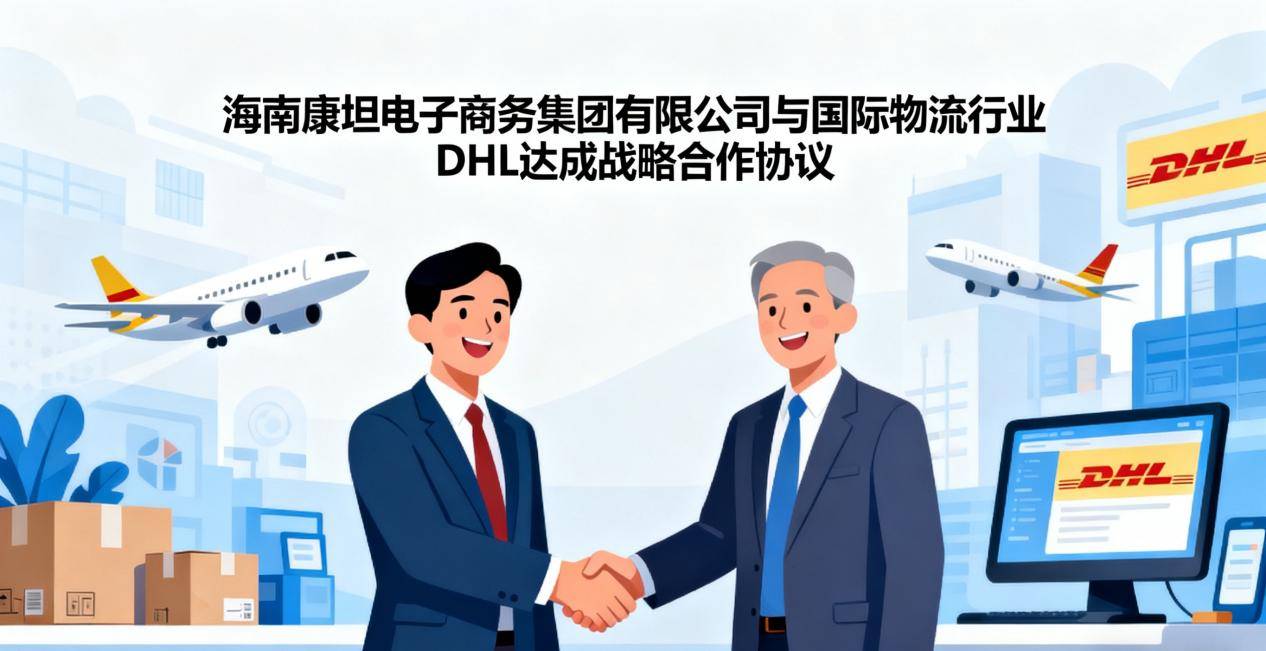
海南康坦集团:康坦e购电商平台与物流翘楚DHL达成战略合作
Sou Hu Cai Jing· 2025-11-04 04:15
Core Insights - The strategic partnership between Hainan Kantan E-commerce Group and DHL aims to create efficient, intelligent, and sustainable global logistics solutions, enhancing the development of Hainan Free Trade Port and facilitating the global reach of high-quality Chinese products [1][4]. Group 1: Partnership Overview - Hainan Kantan E-commerce, established by Zalemark Holding and Cdiscount, is emerging as a significant player in the cross-border e-commerce sector, leveraging Zalemark's capital strength and Cdiscount's operational expertise [3]. - DHL, a leading global logistics company under Deutsche Post, operates in over 220 countries and regions, providing a wide range of services including express delivery, freight, supply chain management, and e-commerce logistics [3]. Group 2: Logistics Network Development - The collaboration will integrate the strengths of both companies, creating a new ecosystem for cross-border logistics that offers efficient and convenient support for Chinese e-commerce sellers and international consumers [4]. - DHL will utilize its global transportation network to provide comprehensive logistics support to Kantan E-commerce, covering air, sea, land, and express services, thereby enhancing supply chain agility for international markets [5]. Group 3: Innovation and Sustainability - Both companies will jointly develop a data-driven smart logistics platform to optimize order processing, inventory management, and transportation processes, achieving visibility and precision in logistics management [7]. - DHL will introduce green logistics technologies, including carbon-neutral transportation and electric logistics vehicles, to help Kantan E-commerce build an environmentally sustainable logistics system [8]. Group 4: Strategic Significance - The partnership is seen as a crucial milestone in Kantan E-commerce's international expansion, with DHL's leadership in logistics expected to empower a comprehensive cross-border e-commerce logistics system [9]. - The policy advantages of Hainan Free Trade Port present significant growth opportunities for international trade and logistics companies, with both parties aiming to set a benchmark for global logistics services [9].
新能源重卡爆出个超百辆大单!
第一商用车网· 2025-11-01 13:59
Core Viewpoint - The launch of the Ouman Galaxy 5M pure electric tractor in Hebei marks a significant step in promoting green logistics and high-quality development in the region, achieving strong market response with 115 strategic orders signed and delivered [1][11][13]. Group 1: Market Context and Demand - The commercial vehicle industry is experiencing a rapid shift towards electrification, with a significant increase in the penetration rate of electric vehicles, making green and low-carbon logistics a core focus for high-quality development [3]. - Hebei province holds the highest number of new energy heavy trucks in China, serving as a crucial node for the coordinated development of the Beijing-Tianjin-Hebei region, with strong demand for energy-efficient transportation equipment due to busy logistics activities [4][3]. Group 2: Product Features and Innovations - The Ouman Galaxy 5M pure electric tractor features three core advantages: deep scene adaptation, high efficiency and energy savings, and reliable safety, addressing key industry pain points such as power fatigue and high energy consumption [6]. - The vehicle is equipped with a super electric drive system, achieving 97% efficiency and a peak power of 380 kW, making it suitable for complex mountainous terrains and diverse transportation needs [8]. - Fast charging capabilities allow the vehicle to charge from 10% to 80% in just 15 minutes, alleviating concerns about charging wait times [8]. Group 3: Safety and Reliability - The Ouman Galaxy 5M tractor incorporates a high-strength steel design and advanced battery safety features, including a temperature management system and a battery early warning platform, enhancing operational safety [10]. - The vehicle's emergency braking performance exceeds industry standards by 20%, complemented by dual warning systems and smart diagnostics to improve safety and efficiency [10]. Group 4: Strategic Partnerships and Market Position - The successful signing of 115 orders during the launch event underscores the market's trust and recognition of Ouman's pure electric products, positioning the company as a benchmark for green transportation solutions in North China [11][13]. - Ouman aims to continue focusing on scenario-based innovations to provide precise solutions for the logistics industry's green transformation, contributing to high-quality development nationwide [15].
